

Hear from Our Customers

You’re running a tight operation. Every day your truck sits idle costs you money, and every compliance deadline you miss puts your registration at risk.
California’s Clean Truck Check program isn’t optional anymore. If you’re operating a diesel truck with a 2013 or newer engine and a GVWR over 14,000 pounds, you need to pass CARB emissions testing to keep your DMV registration active. Miss your deadline and the state puts a hold on your registration. That means no legal operation, no income, and fines that start at $10,000 per vehicle per day.
We handle the testing so you can focus on what actually makes you money. We’re CARB-credentialed, which means we’re authorized to perform the OBD testing your truck needs to stay compliant. You schedule your test within the 90-day window before your deadline, we run the diagnostics, and you submit your passing results to CARB. No registration holds. No enforcement letters. No panic at the weigh station.
We serve the Florence-Graham trucking community with the same understanding we bring to every diesel operator trying to make a living in California. We know you’re not sitting around waiting for a testing appointment. You’re on tight delivery schedules, dealing with brokers who demand compliance documentation, and managing a business where downtime equals lost revenue.
That’s why we keep the process straightforward. Our CARB-credentialed testers have completed the state’s certification training and use approved OBD testing equipment. We know which test type your truck needs based on your engine year and weight class, and we get you in and out so you can get back on the road.
Florence-Graham has one of the highest concentrations of working-class truck operators in Los Angeles County. We’re here because this community needs accessible, reliable CARB diesel compliance testing that doesn’t waste your time or talk down to you.

First, you need to know if your truck qualifies. The Clean Truck Check program applies to diesel trucks with 2013 or newer engines and a gross vehicle weight rating over 14,000 pounds. If your truck is older or lighter, this isn’t the test you need.
If you’re in the program, you’ll receive a compliance deadline from CARB. You can submit your passing test results up to 90 days before that deadline, which gives you a buffer if something needs repair.
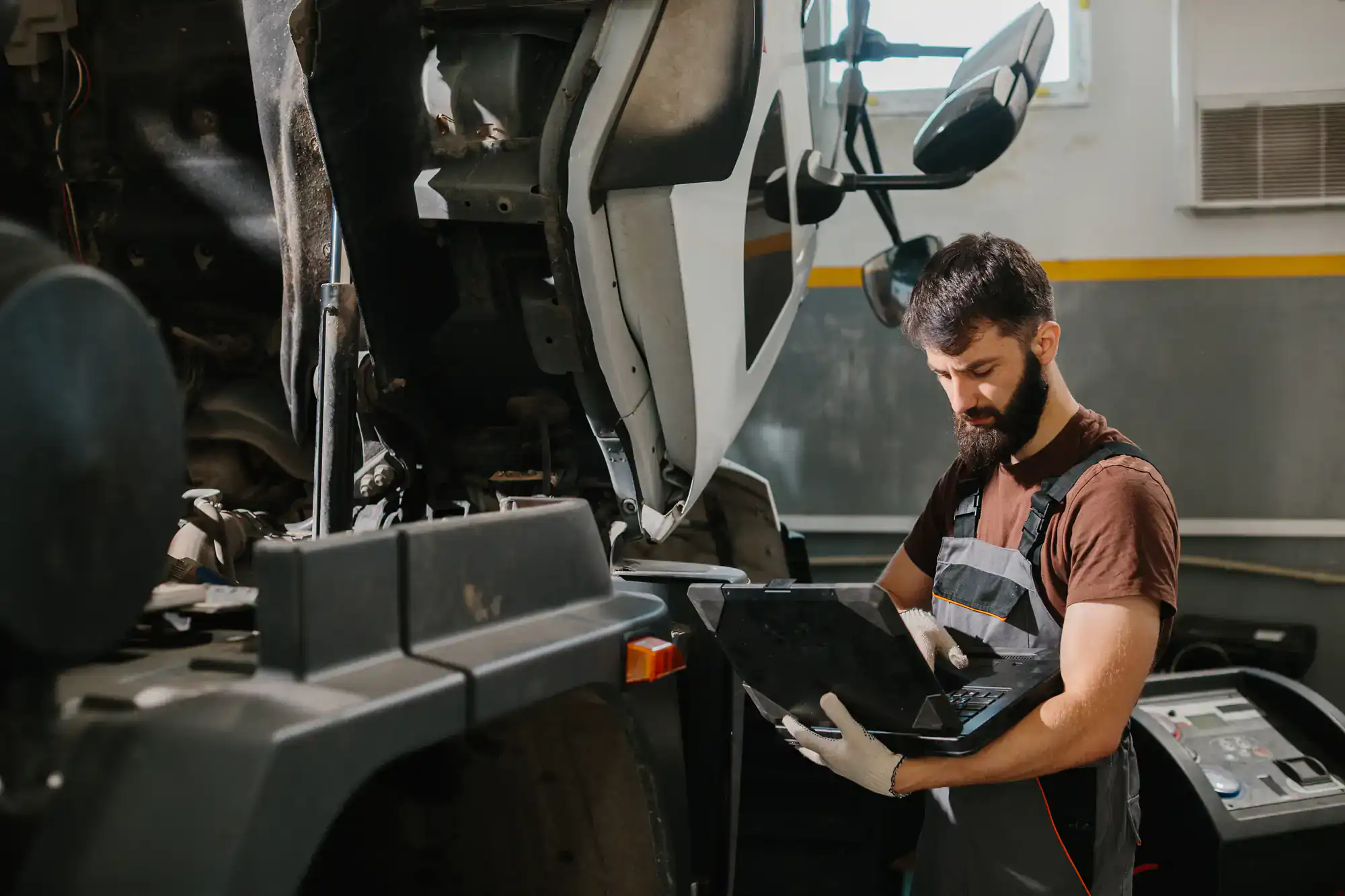
When you bring your truck to us, we connect a CARB-approved OBD diagnostic device to your truck’s onboard computer system. The device reads your emissions data and checks for any fault codes or readiness monitors that would trigger a failure. The test itself takes about 20 minutes if everything’s running clean.
If your truck passes, we provide the documentation you need to submit to CARB through their online system. If it doesn’t pass, we’ll tell you what triggered the failure so you know exactly what needs fixing. Once repairs are done, you come back for a retest. No guessing, no surprises.

Ready to get started?
You’re paying for a CARB-credentialed tester to run an OBD emissions test on your heavy-duty diesel truck using state-approved diagnostic equipment. That’s it. No upsells, no “while you’re here” pitches.
The test checks your truck’s onboard diagnostics system for emissions-related fault codes and verifies that all required readiness monitors have completed their self-checks. California requires this data to confirm your truck isn’t operating as a high emitter.
In Florence-Graham and across Los Angeles County, CARB enforcement and CHP conduct roadside inspections at weigh stations and near port facilities. If your truck isn’t compliant, you can be denied entry to railyards and shipping terminals. That’s lost work you can’t get back. Brokers and fleet operators increasingly require proof of CARB compliance before they’ll contract with owner-operators, which means your compliance status directly affects your ability to book loads.
The test also matters because California ties your compliance status to your DMV registration. Fall out of compliance and the state puts a hold on your registration renewal. You can’t legally operate, and every day you’re non-compliant adds to potential penalties that start at $10,000 per vehicle per day.
Your truck needs Clean Truck Check testing if it has a 2013 or newer diesel engine and a gross vehicle weight rating over 14,000 pounds. That’s the cutoff. If your truck is a 2012 model or older, or if it weighs less than 14,000 pounds GVWR, this program doesn’t apply to you.
CARB sends compliance notices to registered owners based on DMV records, so if you’ve received a notice with a testing deadline, that’s your confirmation. You can also check your status by logging into the CTC-VIS system on CARB’s website using your VIN. The system will tell you which test type your truck requires and when your deadline falls.
Don’t assume you’re exempt just because you have out-of-state plates or a DMV-exempt registration. California applies Clean Truck Check requirements to any qualifying heavy-duty diesel truck operating in the state, regardless of where it’s registered.
If your truck fails, you’ll get a report showing exactly which fault codes or readiness monitors triggered the failure. That gives you a clear starting point for repairs. Most failures come from emissions system malfunctions like faulty sensors, exhaust leaks, or issues with the diesel particulate filter or selective catalytic reduction system.
You’ll need to get those issues repaired by a qualified diesel mechanic, then bring your truck back for a retest. There’s no penalty for failing the initial test as long as you’re still within your compliance window. The problem starts if you miss your deadline without a passing test on file.
Once repairs are complete, schedule your retest before your compliance deadline. CARB gives you a 90-day window before your deadline to submit passing results, so use that time wisely. If you’re cutting it close and repairs are taking longer than expected, document everything. CARB does offer extensions in some cases, but you need to request them before your deadline passes, not after.
Testing fees vary by provider, but you’re typically looking at $150 to $300 for the OBD test itself. That covers the CARB-credentialed tester’s time, the use of approved diagnostic equipment, and the documentation you need to submit your results to CARB.
That fee doesn’t include repairs if your truck fails. Repair costs depend entirely on what’s wrong. A simple sensor replacement might run a few hundred dollars. A diesel particulate filter that needs replacement can cost several thousand. That’s why testing early in your 90-day window matters. It gives you time to budget for repairs if something comes up.
You’ll also pay CARB’s annual compliance fee, which is $31.18 per vehicle for 2025. That’s separate from the testing fee and goes directly to the state. Factor in both costs when you’re planning your compliance budget, and remember that these are recurring expenses. You’ll need to retest according to CARB’s schedule, which means this becomes part of your annual operating costs.
Schedule your test as soon as you’re within the 90-day window before your compliance deadline. Don’t wait until the last week. If your truck fails and needs repairs, you’ll be scrambling to get everything fixed and retested before your deadline hits.
CARB’s system shows your specific deadline when you log into CTC-VIS using your VIN. Mark that date, then count back 90 days. That’s when you can start submitting passing test results. Testing earlier than 90 days out won’t count, so timing matters.
If you’re running multiple trucks, stagger your testing dates so you’re not trying to get everything done in the same week. Spread the appointments out, keep your documentation organized, and treat this like any other maintenance schedule. The operators who stay compliant are the ones who build testing into their regular business rhythm instead of treating it like a last-minute emergency every cycle.
No. Regular smog check stations that test passenger cars and light-duty trucks aren’t equipped or certified to perform Clean Truck Check testing. You need a CARB-credentialed tester who’s specifically trained and authorized to test heavy-duty diesel vehicles under the HD I/M program.
CARB maintains a public list of credentialed testers on their website. We’re on that list because our testers have completed CARB’s certification course, passed the required exam with a minimum 80% score, and use approved OBD diagnostic equipment. That credentialing gets renewed every two years, so it’s not a one-time thing.
When you’re looking for a testing location, verify they’re actually credentialed for Clean Truck Check. Some shops advertise “diesel testing” but aren’t authorized for the specific OBD testing CARB requires. If you get tested by someone who isn’t credentialed, your results won’t be valid and you’ll have to retest with an authorized provider. Save yourself the hassle and confirm credentials before you schedule.
Bring your vehicle registration and your VIN. That’s the minimum. We need to verify your truck’s information matches what’s in CARB’s system, and the VIN is how everything gets tracked.
If you’ve had recent repairs done to your emissions system, bring those service records too. They won’t affect whether you pass or fail, but they’re helpful context if something comes up during testing. Same goes for any previous test results if you’ve been through this process before.
You don’t need to bring your compliance notice from CARB, but it doesn’t hurt to have it. The notice includes your deadline and your CTC-VIS account information, which can be useful if there are any questions about your testing schedule. Most importantly, make sure your truck is in normal operating condition when you bring it in. Don’t show up right after a battery disconnect or with the check engine light already on. That’s an automatic failure and you’ll just be wasting your time and money.
Useful Links
Other Services we provide in Florence-Graham