
Check Out Our Reviews!

East Los Angeles sits at the center of one of the most freight-dense intersections in the world. The East Los Angeles Interchange where I-5, I-10, US-101, and SR-60 converge moves hundreds of thousands of vehicles every single day, and a significant share of them are commercial trucks. CARB knows this. That’s why this corridor has been the target of documented, named enforcement campaigns, run jointly with the CHP, specifically targeting heavy-duty trucks traveling in and around East Los Angeles.
When your truck is compliant, you don’t have to think about any of that. You run your route, make your deliveries, and keep your registration clean. When it’s not, a DMV hold can ground your truck overnight and CARB updates the DMV nightly. That’s not a slow process. It’s a fast one, and it moves against you.
SR-60 is a federally designated Super Truck Route. It begins right here at the East LA Interchange and carries port-bound freight east and west daily. If your truck is model year 2013 or newer with a GVWR over 14,000 pounds, it needs a Clean Truck Check and in this corridor, getting it done before enforcement finds you is the only version of this story that ends well.
We do one thing: Clean Truck Check OBD testing for model year 2013 and newer heavy-duty trucks with a GVWR over 14,000 pounds. That’s our entire scope. No passenger cars, no older trucks, no smoke opacity tests just the specific test that applies to the trucks running SR-60, I-10, and the I-710 port connector through Los Angeles County.
CARB publishes a public directory of credentialed HD I/M testers at arb.ca.gov. We’re on it. That’s not a marketing claim it’s a verifiable fact you can confirm before you ever pick up the phone. In a market where the Clean Truck Check program is still new and providers are still proliferating, that distinction matters.
Our service is fully mobile. Whether your truck is staged near the interchange, sitting at a yard in Commerce, or parked at a dock in Montebello, we bring the test to you. No repositioning, no wasted hours, no driving across the county to a facility.
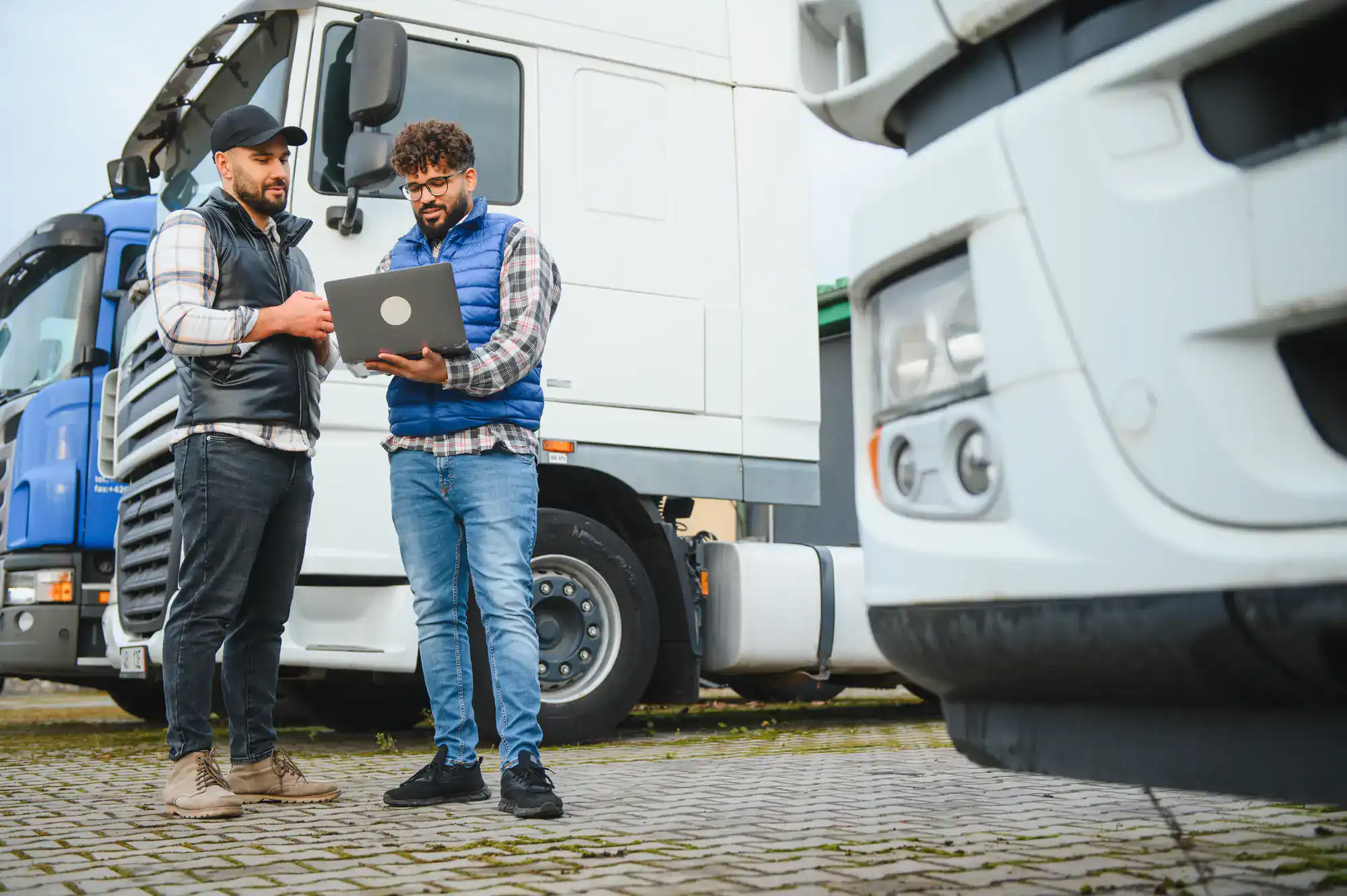
The process is straightforward. You schedule a time, tell us where your truck is located, and one of our credentialed technicians comes to you whether that’s your yard, your dock, or wherever your truck is parked in the East Los Angeles area. There’s no facility to find, no waiting room, and no repositioning a semi through interchange traffic just to get a test done.
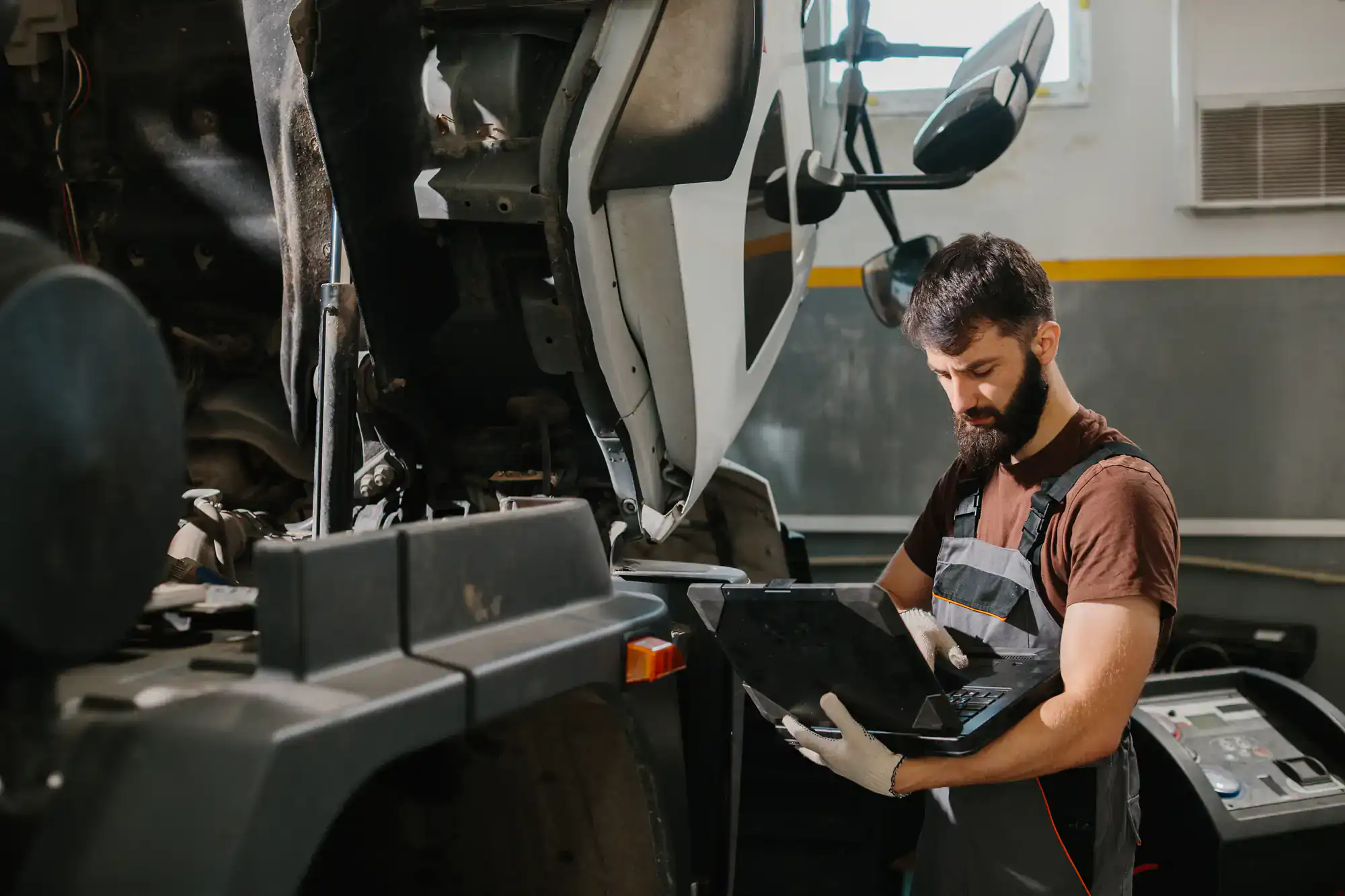
When our technician arrives, they connect CARB-certified OBD equipment directly to your truck’s ECU and perform a data download. The equipment we use holds CARB Executive Order approval meaning the results are legally valid and accepted by CTC-VIS. This isn’t a generic diagnostic scan. It’s the specific test CARB requires, performed with the specific tools CARB has certified for it.
Once the test is complete, we submit results electronically to CARB’s CTC-VIS database the same day. You don’t touch the portal. You don’t file paperwork. CARB receives the data, your VIN shows compliant in their system, and the DMV gets updated within 3 to 5 business days. If you’ve received a Notice to Submit to Testing, that 30-day window closes fast but the test itself takes minutes, and same-week scheduling is available for trucks running the East Los Angeles corridor.
Ready to get started?
The Clean Truck Check program under California’s SB 210 applies to diesel-powered trucks that are model year 2013 or newer with a GVWR over 14,000 pounds. If your truck is older than 2013 or falls under that weight threshold, this test does not apply and we won’t tell you it does. The service is specific, and so is the eligibility.
As of 2025, qualifying vehicles require OBD testing twice per year semi-annually. That frequency increases to four times per year starting October 1, 2027. For fleet operators running multiple trucks through the SR-60 and I-10 corridors in and around East Los Angeles, that’s a meaningful jump in compliance workload. The operators who build a testing process now, before quarterly requirements kick in, will be in a significantly better position than those who scramble in 2027.
There’s also a common misconception worth clearing up: the $31.18 annual compliance fee that CARB charges is separate from the emissions test itself. Paying that fee does not make your truck compliant. The OBD test is a distinct, required step and it’s the one that actually updates your status in CTC-VIS and clears your DMV record. East Los Angeles is an AB 617 priority community, which means CARB and the South Coast AQMD both maintain active monitoring and enforcement presence in this corridor. Compliance here isn’t theoretical it’s operational.
If your truck is a diesel-powered model year 2013 or newer with a GVWR over 14,000 pounds, yes it needs a Clean Truck Check regardless of where it’s registered or where it primarily operates. The requirement is tied to the vehicle, not the route. That said, if your truck runs SR-60, I-10, or the I-710 connector through East Los Angeles, you’re operating in one of the most actively enforced freight corridors in California. CARB has conducted documented joint enforcement campaigns with the CHP specifically targeting heavy-duty trucks in and around East Los Angeles this isn’t a corridor where non-compliance tends to go unnoticed.
The test needs to happen twice per year under current rules, and that increases to four times per year beginning October 1, 2027. If you’re unsure whether your specific truck qualifies, the two factors to check are model year and GVWR both are on your registration. We test only trucks that meet both criteria.
You’re not compliant. This is one of the most common misunderstandings in the Clean Truck Check program, and it catches a lot of truck owners off guard. The $31.18 annual compliance fee and the OBD emissions test are two completely separate requirements. Paying the fee registers your vehicle in CARB’s system it does not satisfy the testing requirement. Your VIN will still show as non-compliant in CTC-VIS until a passing OBD test is submitted by a credentialed tester.
If CARB’s system flags your truck as non-compliant, that information gets transmitted to the DMV nightly. A registration hold can follow quickly and clearing it requires a passing test submission, not just a fee payment. If you’ve been operating under the assumption that the fee was enough, the fastest fix is scheduling an OBD test with a credentialed provider who submits directly to CTC-VIS. We handle that submission the same day the test is performed.
The test itself takes minutes once our technician is connected to your truck’s ECU. The OBD data download is fast the time investment on your end is mostly in the scheduling, not the test. And with our mobile model, you don’t bring your truck anywhere. Our technician comes to your location your yard, your dock, your regular parking spot in or around East Los Angeles.
For owner-operators running freight through the SR-60 and I-10 corridors, repositioning a semi to a testing facility means time off the road, fuel cost, and navigating interchange traffic that can back up significantly during peak hours near the East LA Interchange. Mobile testing eliminates all of that. You stay where your truck earns money, the test happens on-site, and results go directly to CARB’s CTC-VIS database the same day no portal, no paperwork on your end.
Thirty calendar days from the date on the notice. That’s the window CARB gives you to submit a passing OBD test after receiving an NST. It sounds like enough time, but it moves fast especially if you’re trying to schedule around freight runs, coordinate yard access, or manage multiple trucks at once. If a passing test isn’t submitted within that window, you’re looking at potential fines and a DMV registration hold that can ground your truck.
The good news is the test itself is quick. We offer mobile scheduling for trucks in the East Los Angeles area, which means you’re not waiting for a facility opening or driving across the county. Once the test is done, results go directly to CTC-VIS the same day. CARB updates the DMV within 3 to 5 business days after that. If you’ve received an NST, the right move is to schedule as soon as possible don’t use up the 30 days waiting.
You can and for most fleet operators, testing early is the smarter approach. CARB allows OBD test results to be submitted up to 90 days before a compliance deadline. That means you can get your truck tested on your schedule, not CARB’s, and have the result already in CTC-VIS before the deadline arrives.
This matters especially for fleets running multiple trucks through the East Los Angeles corridor on SR-60 and I-10. If a truck fails its OBD test meaning the ECU returns fault codes or readiness monitors aren’t set you need time to diagnose and repair before the deadline closes. Testing 60 to 90 days out gives you that buffer. Testing two weeks before the deadline doesn’t. With quarterly testing beginning October 1, 2027, building a proactive testing schedule now will save a significant amount of operational stress later.
Not exactly. The Clean Truck Check is a separate CARB program under SB 210, specifically designed for heavy-duty diesel trucks that are model year 2013 or newer with a GVWR over 14,000 pounds. It uses an OBD data download a direct read from the truck’s ECU rather than the tailpipe emissions test most people associate with a smog check. The two programs are administered differently, use different equipment, and apply to different vehicles.
East Los Angeles falls under both South Coast AQMD jurisdiction and CARB’s AB 617 priority community designation which means the regulatory environment here is more active than in many other parts of Los Angeles County. The Clean Truck Check program is enforced at the state level through CARB, and non-compliance is reported directly to the DMV. If your truck is a qualifying 2013-or-newer heavy-duty diesel, the Clean Truck Check is the compliance requirement that applies and it needs to be performed by a CARB-credentialed tester using CARB-certified OBD equipment, with results submitted directly to CTC-VIS. A standard smog station that doesn’t specialize in HD I/M testing cannot fulfill this requirement.
Useful Links
Other Services we provide in East Los Angeles