Check Out Our Reviews!

East Los Angeles sits at the convergence of I-5, I-10, US-101, and SR-60 the busiest freeway interchange on the planet, with over 550,000 vehicles moving through daily. CARB knows exactly where to deploy its Remote Emissions Monitoring Devices, and high-volume freight corridors like the ones cutting through East LA are exactly where those devices show up. If your truck is flagged, you have 30 days to respond with a passing test from a credentialed tester. That clock doesn’t pause.
East LA is also an AB 617 CARB priority community. That’s not a general designation it’s a named, active regulatory focus on this specific geography, targeting diesel particulate matter from truck and freeway traffic. Operators running the SR-60 corridor between the Port of LA and the Inland Empire are running through one of CARB’s most closely monitored stretches in the state. Compliance here isn’t theoretical enforcement. It’s already happening.
When your truck has a valid compliance certificate on file, you keep your DMV registration current, your port access open, and your loads moving. The moment that certificate lapses, the consequences stack fast registration holds, potential fines, and freight brokers who won’t assign you a load. Getting tested and staying current is the simplest way to keep your business operating without interruption.
We hold a state-issued CARB credential for heavy-duty inspection and maintenance testing. That’s not a marketing claim it’s a listing on CARB’s publicly searchable database of credentialed HD I/M testers. You can look it up before you ever call. In a market where some operators have paid for tests that CARB never accepted, that kind of transparency matters.
We serve Los Angeles County which means East Los Angeles, as an unincorporated LA County community, falls directly within our service area. Whether your yard is near Whittier Boulevard, you’re running loads out of Commerce, or you’re dispatching from somewhere along the Atlantic Boulevard corridor, this isn’t a provider stretching their coverage map to include you. You’re already in it.
We work exclusively with model year 2013 and newer heavy-duty vehicles over 14,000 lbs GVWR the exact trucks subject to CARB’s Clean Truck Check program. This isn’t an add-on service. It’s the only service we offer.

The process starts when you reach out to schedule. Before anything else, it helps to have your truck’s VIN and registration information ready that’s what’s needed to pull up your vehicle in CARB’s CTC-VIS system and confirm your current compliance status. If you’ve already received a Notice to Submit to Testing, bring that too. The 30-day window on an NST is a hard deadline, and knowing where you stand on that timeline helps prioritize scheduling.
On the day of testing, we connect CARB-certified OBD equipment directly to your truck’s diagnostic port. This is not a generic scanner it’s equipment specifically approved by the California Air Resources Board for use in the HD I/M program. The test checks your vehicle’s onboard diagnostic system for active fault codes, monitors emissions readiness, and in applicable cases includes a smoke opacity check. The whole process is straightforward for a truck that’s running clean.
Once the test is complete, we submit results electronically and directly to CARB’s CTC-VIS database immediately. You don’t log in to any portal. You don’t upload anything. You don’t follow up with a government website. The record is updated the moment the test is done. For owner-operators in East LA who are running loads on tight schedules and don’t have time to manage compliance paperwork between pickups, that direct submission is the part that makes the biggest practical difference.

Ready to get started?
We test model year 2013 and newer heavy-duty diesel and alternative fuel vehicles with a GVWR over 14,000 pounds the specific vehicle class covered under California’s Clean Truck Check program. If your truck doesn’t meet both of those criteria, this test doesn’t apply to you. If it does, this test is required, and it needs to come from a credentialed tester using CARB-approved equipment.
For East Los Angeles operators, that requirement hits close to home. Drayage trucks running SR-60 to the Port of Los Angeles, regional carriers using the I-10 east-west corridor, and construction and distribution operators serving the Commerce industrial corridor are all in this vehicle class. Port terminal access requires a valid compliance certificate on file. Freight brokers verify compliance before assigning loads. A lapsed certificate doesn’t just create a regulatory problem it creates a revenue problem, fast.
Testing frequency under Clean Truck Check is currently semi-annual twice per year in 2025. By October 2027, that escalates to quarterly testing for most trucks, meaning four compliance appointments per year. For an owner-operator running one or two trucks out of East LA, that’s a recurring commitment, not a one-time fix. We handle the testing and the CARB submission every time, so the process stays consistent and your records stay current without you having to manage the backend.
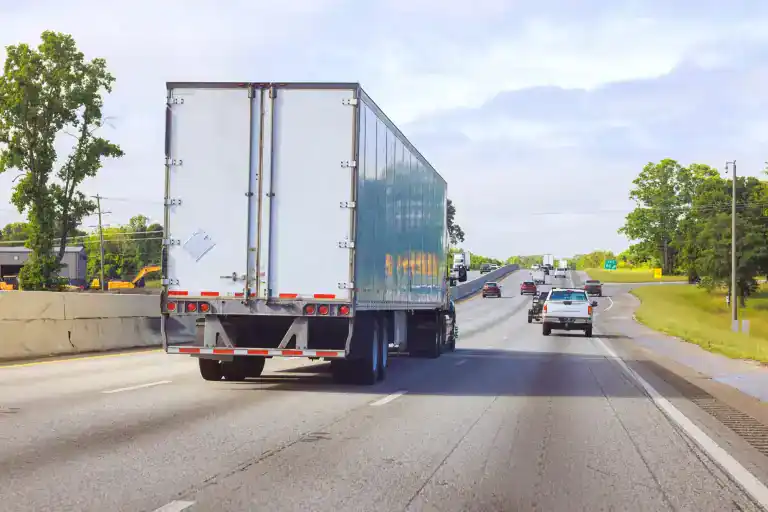
If your truck is a 2013 or newer model year and has a GVWR over 14,000 pounds, yes California’s Clean Truck Check program applies to you regardless of where your truck is registered. That includes trucks registered in other states. If you’re operating on California public roads, including the freight corridors that run directly through East Los Angeles I-5, I-10, SR-60 you’re subject to the program.
East Los Angeles is also an AB 617 CARB priority community, which means this area sees active enforcement attention specifically focused on diesel emissions from truck traffic. CARB’s Remote Emissions Monitoring Devices are deployed along high-volume corridors, and the East LA Interchange the busiest freeway interchange in the world is exactly the kind of location where that monitoring happens. Getting your compliance certificate on file before your truck is flagged is always the better path.
A Notice to Submit to Testing is a 30-day hard deadline. From the date you receive it, you have 30 calendar days to complete a passing emissions test with a CARB-credentialed tester and get the results submitted to CARB’s CTC-VIS system. There’s no extension process built into that window missing it creates additional compliance exposure and can accelerate enforcement action.
The first thing to do when you receive an NST is contact a credentialed tester immediately not at the end of the month. If your truck needs repairs to pass, you want as much of that 30-day window available for mechanical work as possible. We can test your truck, submit the results directly to CARB, and give you a clear picture of where you stand. If the truck fails, you’ll know exactly what needs to be addressed before your deadline runs out.
The Clean Truck Check program covers heavy-duty diesel and alternative fuel vehicles that are model year 2013 or newer and have a Gross Vehicle Weight Rating over 14,000 pounds. Both conditions have to be true the vehicle must meet the model year requirement and the weight requirement. Trucks that are older than 2013, or that come in under 14,000 lbs GVWR, are not subject to this program.
We test exclusively within this vehicle class. If you’re not sure whether your specific truck qualifies, the quickest way to find out is to check your registration documents for the listed GVWR and confirm your model year. For most owner-operators in East Los Angeles running semi trucks, drayage equipment, or heavy commercial vehicles on the SR-60 or I-710 corridor, the answer is almost always yes these trucks fall squarely within the covered class.
As of 2025, Clean Truck Check testing is required semi-annually twice per year. That schedule is set to increase to quarterly testing by October 2027, which means four compliance appointments per year going forward. CARB built the escalating schedule into the program from the start, so this isn’t a surprise change it’s a known timeline that every truck operator in California needs to plan around.
For East Los Angeles operators who are already running tight schedules on the SR-60 or I-10 corridor, building compliance appointments into your calendar twice a year now and four times a year by 2027 is the practical move. Missing a testing cycle creates a compliance gap that shows up in CARB’s CTC-VIS system and can trigger an NST. Staying ahead of the schedule is always easier than responding to a notice after the fact.
No. The standard smog check stations you see along Whittier Boulevard or Atlantic Boulevard in East Los Angeles are licensed for passenger vehicle testing under California’s Smog Check program. That’s a completely separate program from CARB’s Clean Truck Check, and those stations are not authorized to perform heavy-duty compliance testing even if they offer to try.
A valid Clean Truck Check requires a tester who holds a CARB HD I/M credential, equipment that is specifically certified by CARB for heavy-duty OBD testing, and direct electronic submission to CARB’s CTC-VIS database. None of those elements exist at a standard smog station. A test performed without the proper credential and equipment produces a result that CARB will not accept and the truck owner is the one left without a valid compliance record. Always verify a tester’s credential on CARB’s public database before booking.
Yes. California’s Clean Truck Check program applies to any qualifying heavy-duty vehicle operating on California public roads regardless of where the truck is registered. If your truck is a 2013 or newer model year with a GVWR over 14,000 pounds and you’re running loads into or through East Los Angeles, you’re required to register in CARB’s CTC-VIS system, pay the annual compliance fee, and complete testing with a credentialed tester.
This catches a lot of out-of-state operators off guard, particularly those running freight into the Port of Los Angeles via SR-60 or I-710 from distribution points in Nevada, Arizona, or other western states. Port terminals and freight brokers verify compliance status directly in the CTC-VIS system an out-of-state registration doesn’t exempt you from the requirement, and it won’t prevent a load denial or a DMV hold if your record isn’t current. If you’re running California routes regularly, getting registered and tested is a one-time setup that keeps you operating without interruption.
Useful Links
Other Services we provide in East Los Angeles