
Hear from Our Customers

If you’re running a 2013 or newer truck over 14,000 pounds in California, you already know CARB isn’t messing around. Starting January 1, 2025, every compliance deadline requires a passing Clean Truck Check test. Miss it, and you’re looking at registration blocks, fines up to $10,000 per vehicle per day, and trucks sitting idle instead of earning.
That’s where we come in. We provide CARB-certified heavy-duty vehicle compliance testing right here in Cherry Valley. We handle the OBD scanning, submit your results to CARB, and make sure you’re squared away before your deadline hits. No surprises. No last-minute scrambles.
You get back on the road with proof of compliance, a clear registration, and one less thing threatening your bottom line. This isn’t about checking a box—it’s about keeping your operation running without interruption.
We’ve been serving Cherry Valley and the surrounding Riverside County area with emissions testing expertise for years. Now we’re bringing that same level of professionalism to the heavy-duty market with full CARB credentialing for Clean Truck Check services.
Our technicians completed CARB’s official training course and passed the certification exam. We use state-approved OBD test devices and follow every protocol CARB requires. That means your test results hold up, your compliance is legitimate, and you’re not dealing with rejected submissions or wasted time.
Cherry Valley sits right in the heart of Southern California’s trucking corridor. We know the trucks that move through here, the operators who depend on them, and what’s at stake when compliance becomes a problem. You’re not getting a generic service—you’re working with people who understand the local landscape and the pressure you’re under to stay compliant.

First, you bring your truck in. We verify it’s a 2013 or newer model with a GVWR over 14,000 pounds—that’s the only type of vehicle this CARB HD I/M testing applies to. If your truck doesn’t meet those specs, we’ll tell you upfront so you’re not wasting time.
Next, we connect our CARB-certified OBD test device to your truck’s diagnostic system. For 2013 and newer diesel engines, this means pulling data directly from your onboard computer. We’re checking emissions performance, fault codes, and readiness monitors to confirm your truck meets CARB’s standards.
Once the test is complete, we submit your results directly to CARB through their system. You’ll get documentation showing you passed, and that submission counts toward your compliance deadline. The whole process is designed to be straightforward—you’re in, you’re tested, you’re documented, and you’re back to work.
If something comes up and your truck doesn’t pass, we’ll walk you through what needs attention. You’ll know exactly what the issue is and what it takes to fix it before you retest.

Ready to get started?
This service covers CARB-mandated emissions testing for heavy-duty trucks operating in California. That means model year 2013 or newer, GVWR over 14,000 pounds. If your truck falls outside those parameters, this isn’t the right test.
Here in Cherry Valley and across Riverside County, we’re seeing more owner-operators and fleet managers dealing with these new CARB truck regulations for the first time. The program started October 1, 2024, and compliance deadlines are now in full effect. You need a passing test submitted within 90 days before your deadline, and starting in 2025, that’s happening twice a year—not once.
When you come in, you’re getting a full OBD scan performed by a credentialed tester using equipment CARB validated. We’re not cutting corners or guessing. The test follows the exact protocol CARB requires, and the results go straight into their system. You’ll also need to pay the annual compliance fee—$31.18 for 2025—but that’s separate from the testing itself.
This isn’t a traditional smog check. It’s a specialized compliance test for heavy-duty diesel vehicles, and it requires specific credentials and equipment. That’s why not every smog test location can do it, and why finding a credentialed provider matters.
If your truck is model year 2013 or newer and has a gross vehicle weight rating over 14,000 pounds, yes—you need a Clean Truck Check to stay compliant with CARB regulations. This applies whether your truck is registered in California or out of state, as long as it operates here.
The program became mandatory for all compliance deadlines starting January 1, 2025. That means if your deadline falls on or after that date, you’re required to submit a passing test within 90 days before it hits. Starting in 2025, testing happens twice a year—not annually.
If you’re not sure whether your truck qualifies, check your GVWR and model year. Those are the two factors that determine eligibility. Older trucks and lighter vehicles aren’t part of this program yet, but 2013+ heavy-duty trucks are fully subject to these requirements right now.
CARB doesn’t play around with compliance deadlines. If you miss yours, the DMV will place a registration hold on your vehicle. That means you can’t renew your registration, and technically, you can’t legally operate the truck on California roads.
Beyond the registration block, you’re also looking at potential enforcement action. CARB can issue fines up to $10,000 per vehicle per day for non-compliance. That’s not a scare tactic—it’s the actual penalty structure they have in place.
If you receive a Notice to Submit to Testing from CARB, you’ve got 30 days to get a passing test submitted. That’s a hard deadline, and it’s not negotiable. The best move is to stay ahead of your compliance dates and get tested well before the 90-day window closes. Waiting until the last minute just increases the risk of something going wrong and leaving you stuck.
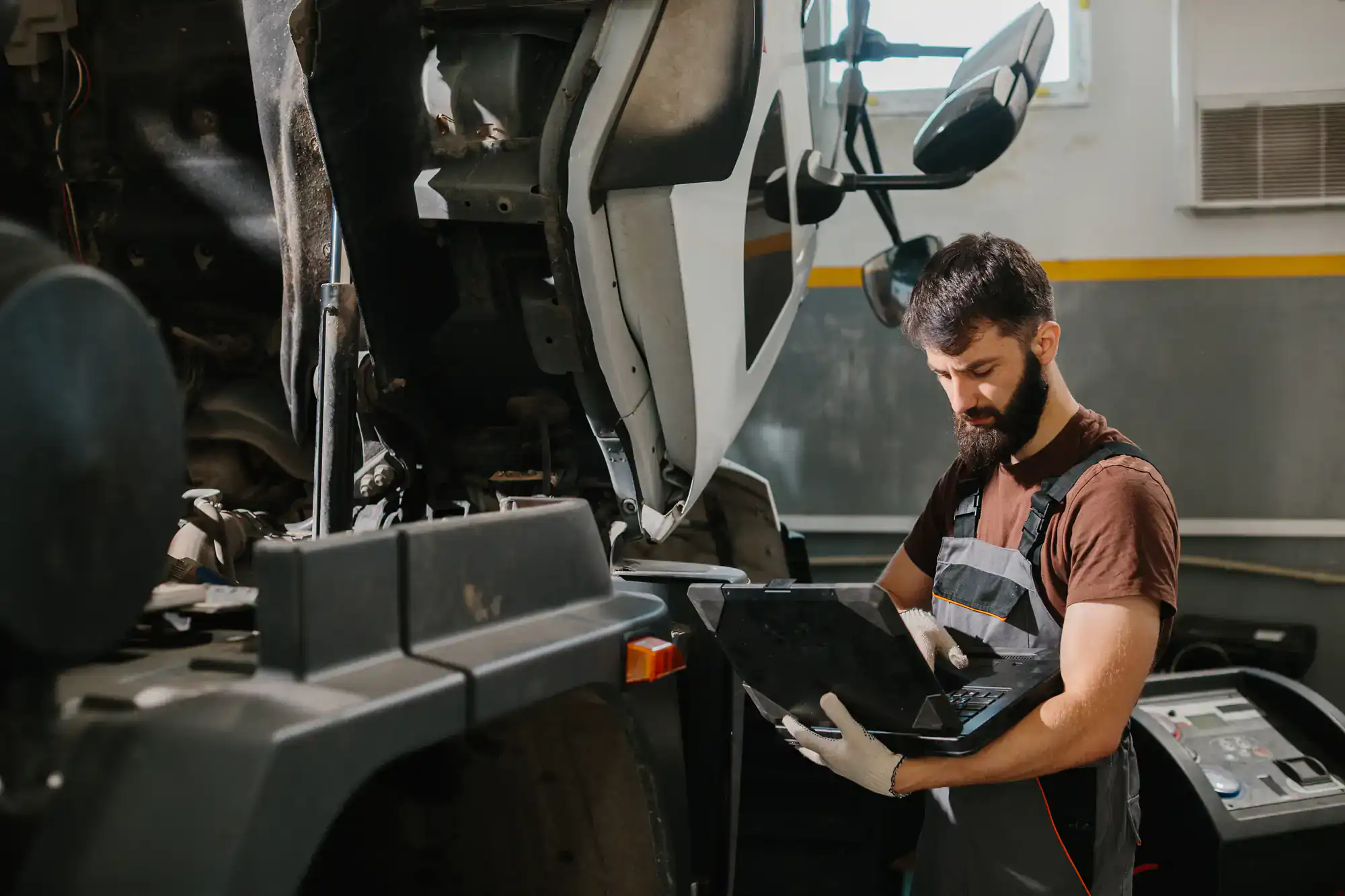
The actual testing process is pretty efficient. For a 2013 or newer truck, we’re doing an OBD scan, which means connecting to your truck’s diagnostic system and pulling emissions data. That part usually takes 15 to 30 minutes, depending on the truck and whether everything reads clean the first time.
You’re not looking at the multi-hour inspections some people assume. This is a data-based test, not a visual inspection or a traditional smog test with a tailpipe probe. The equipment does most of the work once it’s connected.
The key is making sure your truck is ready before you come in. If your check engine light is on, or if your readiness monitors aren’t set, that can extend the process or result in a failed test. Bring your truck in good working order, and you’ll be in and out without eating up half your day.
No—only CARB-credentialed testers can perform Clean Truck Check testing. That’s a specific certification that requires completing CARB’s training course, passing their exam, and using approved equipment. Not every smog check station has it.
We’re credentialed to perform these tests here in Cherry Valley. We’ve got the certification, the equipment, and the experience to handle heavy-duty diesel compliance testing. If you’re operating in Riverside County or the surrounding area, you don’t need to drive hours out of your way to find a qualified provider.
When you’re looking for a testing location, make sure they’re actually certified for Clean Truck Check services. Some places advertise smog testing but don’t have the credentials for heavy-duty vehicles. You don’t want to show up and find out they can’t help you, especially if you’re running close to a deadline.
If your truck doesn’t pass, we’ll give you a breakdown of what triggered the failure. Most of the time, it’s a fault code, an emissions system issue, or readiness monitors that aren’t set. You’ll know exactly what needs attention before you retest.
From there, you’ll need to get the issue repaired. Depending on what’s wrong, that could mean a sensor replacement, a DPF cleaning, or addressing an engine fault. Once the repair is done, you can come back for a retest.
The important thing is not to ignore a failed test. You still have a compliance deadline, and that clock doesn’t stop just because your truck didn’t pass the first time. Get it fixed, get it retested, and get your passing results submitted to CARB before your deadline hits. We’ll work with you to make sure the retest goes smoothly and you’re back in compliance as quickly as possible.
The biggest thing is making sure your truck is in good working order before you come in. If your check engine light is on, that’s an automatic red flag. Get that diagnosed and cleared before you schedule your test.
Your truck’s readiness monitors also need to be set. These are internal checks the OBD system runs to confirm emissions components are working properly. If you’ve recently cleared codes or disconnected the battery, those monitors might not be ready, and that can cause a failed test even if nothing’s actually wrong.
Drive your truck normally for a few days before testing. That gives the system time to complete its checks and set the monitors. If you’re not sure about your truck’s status, most repair shops can run a quick pre-scan to see if you’re ready. Coming in prepared means you pass the first time and avoid the hassle of a retest.
Useful Links
Other Services we provide in Cherry Valley