
Hear from Our Customers

Your DMV registration goes through without a hold. Your trucks stay on the road instead of sitting in a yard racking up lost revenue. You’re not scrambling to figure out why CARB flagged your fleet or staring down a five-figure penalty that showed up out of nowhere.
Starting January 1, 2025, California’s Clean Truck Check program requires semi-annual emissions testing for heavy-duty diesel trucks. That means every six months, your 2013 or newer trucks with a GVWR over 14,000 pounds need a passing CARB emissions test on file. Miss it, and the state can hit you with fines up to $10,000 per vehicle per day. They can also freeze your registration and pull your trucks off the road until you fix it.
This isn’t about being difficult. It’s about knowing the rules, getting tested by someone who’s actually certified to do it, and keeping your operation moving without surprises. You’ve got enough to manage without wondering if your trucks are legal.
We specialize in CARB compliance testing for commercial fleets operating in and around Downey, CA. We’re CARB credentialed testers, which means we’ve completed the state-required training and we’re authorized to perform the emissions testing that actually counts when CARB or the DMV comes looking.
Downey sits right in the middle of Southern California’s logistics corridor. You’ve got the 5, the 605, the 710—access to the ports, the rail yards, and every major route that keeps freight moving. That also means you’re operating in one of the most heavily regulated air quality zones in the country. We get it. You’re not trying to cut corners. You just need someone who knows the system and can get your trucks tested without the runaround.
We keep digital records, we’re available when you need us, and we can come to you if that’s easier. No drama. Just certified testing that keeps you compliant.
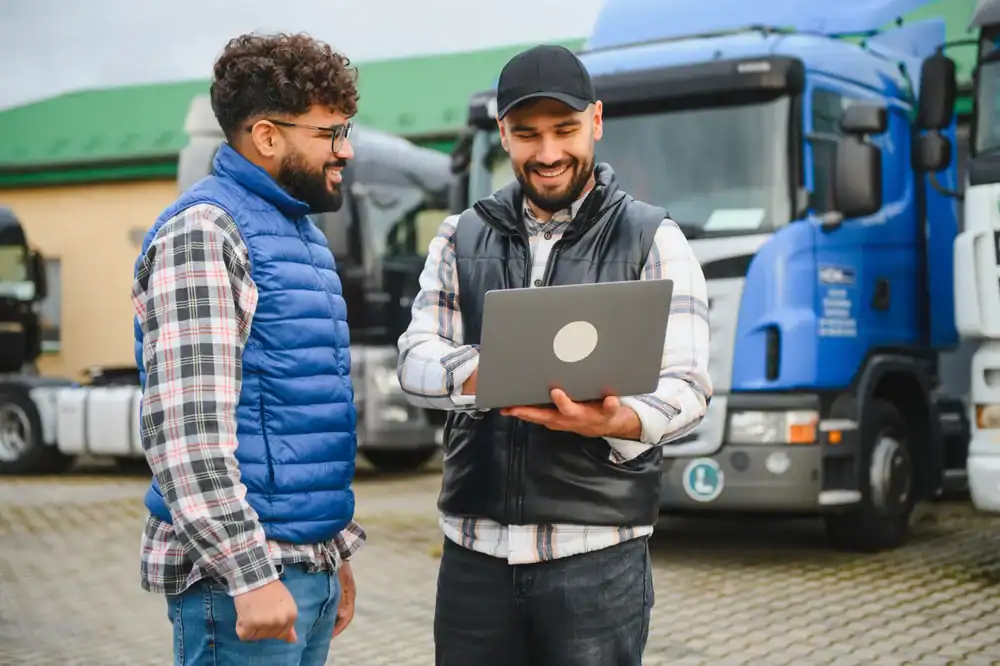
First, we confirm your truck qualifies. This service is only for model year 2013 or newer heavy-duty vehicles with a GVWR over 14,000 pounds. If your truck has OBD J1937 or J1979 connectors, we can test it. Older trucks or lighter vehicles don’t fall under this program.
Once we verify eligibility, we connect to your truck’s onboard diagnostics system and run the emissions compliance test. This isn’t a visual inspection or a guess. It’s a data pull that CARB requires, and it has to be done by a credentialed tester or it doesn’t count. The test checks your emissions control systems to make sure everything is functioning within California’s limits.
After the test, we submit the results directly to CARB’s Clean Truck Check system. You get a record of the passing test, and that data goes on file with the state. If your truck passes, you’re good for the next six months. If something flags, we’ll tell you what needs attention before you can retest. No surprises, no guessing.
Because testing is required every six months, we can set reminders so you’re not caught off guard when your next deadline hits. And starting in 2027, the state is moving to quarterly testing for OBD-equipped trucks. We’ll keep you in the loop as those changes roll out.
Ready to get started?
Downey is home to over 1,200 carriers, most of them small operations running fewer than six trucks. If you’re an owner-operator or a small fleet, you’re not staffed like a national carrier. You don’t have a compliance department. You’re the one making sure your trucks are legal, and the rules keep changing.
California’s Clean Truck Check program is part of a larger push to reduce diesel emissions across the state. CARB estimates the program will prevent thousands of hospitalizations and deliver tens of billions in health benefits by 2050. That’s the big picture. For you, it means stricter testing requirements, more frequent deadlines, and real consequences if you fall behind.
In 2022 alone, CARB collected over $21 million in penalties. Most of those were avoidable. The state isn’t interested in excuses. They want proof that your trucks are compliant, and they want it on file before your registration comes due. If it’s not there, they’ll freeze your registration and your truck stays parked.
We work with fleets throughout Downey and the surrounding area. We understand the logistics of operating near the ports, the pressure of tight delivery windows, and the cost of downtime. Our job is to make sure your CARB diesel compliance is handled so you can focus on everything else. We test, we report, we keep records. You stay on the road.
If your truck fails to meet CARB compliance requirements, the state can issue fines starting at $1,000 per vehicle per day and going as high as $10,000 depending on the violation. The California DMV will also place a registration hold on non-compliant vehicles, which means you can’t renew your registration until you submit a passing emissions test.
Beyond fines and registration issues, CARB has the authority to pull non-compliant trucks off the road. That means lost revenue, missed deliveries, and potential damage to customer relationships. The penalties are designed to be expensive enough that it’s not worth trying to operate without compliance.
The good news is that staying compliant isn’t complicated if you know the deadlines. For trucks model year 2013 and newer with a GVWR over 14,000 pounds, you need a passing emissions test every six months. As long as that test is on file with CARB before your deadline, you’re clear. Miss it, and the consequences stack up fast.
Right now, heavy-duty trucks subject to California’s Clean Truck Check program need emissions testing every six months. That’s twice a year. Your testing schedule is based on your vehicle’s compliance deadline, which you can find through the CARB Clean Truck Check portal or by checking your DMV registration paperwork.
Starting in October 2027, CARB is moving to quarterly testing for OBD-equipped heavy-duty vehicles. That means four times per year instead of two. The state is tightening the requirements to get more frequent data on emissions performance across California’s commercial truck fleet.
If you’re running multiple trucks, each one has its own testing schedule based on when it was registered and when its last test was completed. Keeping track of those deadlines is critical, because missing even one can trigger a registration hold or a penalty. We keep digital records for all the trucks we test, and we can help you stay on top of upcoming deadlines so nothing slips through.
No. CARB compliance testing for heavy-duty vehicles has to be performed by a CARB credentialed tester who has completed the state’s official training program. Regular smog shops that test passenger cars aren’t automatically qualified to test commercial trucks under the Clean Truck Check program.
The testing process is different. Heavy-duty trucks use onboard diagnostics systems with J1937 or J1979 connectors, and the test pulls data directly from the truck’s emissions control systems. It’s not a tailpipe test like you’d see with a passenger vehicle. The tester also has to submit results directly to CARB’s system, and that requires specific credentials and access.
If you take your truck to someone who isn’t credentialed, the test won’t count. You’ll have wasted time and money, and you’ll still need to get it done again by someone who’s actually certified. Before you schedule testing, confirm that the shop is a CARB credentialed tester for heavy-duty vehicles. That’s the only way the results will be valid.
No. The Clean Truck Check program applies specifically to heavy-duty diesel vehicles that are model year 2013 or newer and have a gross vehicle weight rating over 14,000 pounds. If your truck is older than 2013 or weighs less than 14,000 pounds GVWR, it’s not subject to this program.
The 2013 cutoff is based on when California started requiring onboard diagnostics systems in heavy-duty trucks. Those OBD systems are what make the emissions testing possible. Older trucks don’t have the same diagnostic capabilities, so they’re not included in the current testing requirements.
If you’re running a mixed fleet with some trucks that fall under the program and others that don’t, you’ll need to track which vehicles require testing and which don’t. It’s easy to assume all your trucks need it, but that’s not the case. Make sure you’re clear on the year and weight requirements before you schedule testing, because paying for a test on a truck that doesn’t need it is a waste of your money.
The test starts with verifying your truck’s eligibility. We check the model year, confirm the GVWR is over 14,000 pounds, and make sure the truck has the right OBD connectors. Once that’s confirmed, we connect a diagnostic tool to your truck’s onboard system and run the emissions compliance test.
The test pulls data from your truck’s emissions control systems, including the diesel particulate filter, the NOx sensors, and other components that manage exhaust output. We’re checking to see if those systems are working properly and if your truck is operating within California’s emissions limits. The whole process usually takes less than 30 minutes if everything checks out.
After the test, we submit the results to CARB’s Clean Truck Check database. If your truck passes, the state records that data and your compliance status is updated. If something fails, we’ll give you a breakdown of what flagged so you know what needs to be repaired before you can retest. You’ll also get a copy of the test results for your records.
Yes. We offer mobile CARB emissions testing throughout Downey and the surrounding areas. If you’ve got multiple trucks or you can’t afford the downtime of driving each one to a shop, we can bring the testing equipment to you.
Mobile testing works the same way as in-shop testing. We show up with the diagnostic tools, connect to your trucks, run the compliance tests, and submit the results to CARB. The only difference is location. You save time, your trucks stay on-site, and you’re not juggling schedules to get each vehicle tested separately.
This is especially useful for fleets with tight delivery windows or trucks that are actively running routes. Instead of pulling a truck off the road for half a day, we can test it during a break or at the end of a shift. If you’re managing a small fleet in Downey and you need testing done without disrupting your operation, mobile testing is the easiest way to stay compliant without losing revenue.
Useful Links
Other Services we provide in Downey