Check Out Our Reviews!

When your truck is your business, a DMV registration hold doesn’t just create paperwork it stops revenue cold. In Santa Fe Springs, where 845 trucking carriers are registered and the I-5 corridor connects directly to the Ports of Los Angeles and Long Beach, a lapsed compliance certificate can mean losing port access, losing loads, and losing the freight broker relationships you’ve spent years building.
Passing your Clean Truck Check puts a current, verifiable compliance record in CARB’s CTC-VIS database which is exactly what port facilities, freight brokers, and DMV registration require. For fleet managers running trucks out of industrial corridors like Carmenita Road or Rosecrans Avenue in Santa Fe Springs, that means your entire roster stays operational and your contracts stay intact. For the owner-operator pulling containers from the port to an Amazon or Weber Logistics facility, it means you don’t show up to the gate and get turned away.
This isn’t about checking a box. It’s about keeping your trucks on the road, your loads assigned, and your business running without interruption in one of the most freight-intensive cities in Los Angeles County.
We hold a state-issued CARB credential earned by completing CARB’s official HD I/M Tester Training Course and passing the required exam. That credential is publicly searchable on CARB’s website before you ever book. It’s not a marketing claim. It’s a verifiable authorization that CARB’s own system recognizes when results are submitted.
Every test we perform uses CARB-certified OBD testing devices not generic diagnostic tools that the system won’t accept. Results are submitted electronically and directly to CARB’s CTC-VIS database immediately after the test. No manual uploads. No portal confusion. No waiting to find out if your submission went through.
We serve Los Angeles County, which means Santa Fe Springs and the surrounding Gateway Cities corridor Downey, Norwalk, Commerce, Pico Rivera, and beyond fall squarely within our service area. This is the freight corridor we know, and the compliance requirements here are exactly what we’re built for.

It starts with confirming your vehicle qualifies. The Clean Truck Check applies specifically to diesel trucks that are model year 2013 or newer with a GVWR over 14,000 pounds the OBD-equipped heavy-duty vehicle population CARB targets. If that’s your truck, you’re in the right place. If you’re not sure, a quick call gets it sorted before you waste anyone’s time.
Once you’re scheduled, the test itself is an OBD scan performed using CARB-certified testing equipment. The device connects to your truck’s onboard diagnostic system and reads the emissions-related data CARB requires. For trucks operating on the I-5 corridor through Santa Fe Springs one of the most heavily monitored freight routes in the state having a clean, documented test result on file is especially important, because CARB’s roadside emissions monitoring devices flag trucks on high-traffic corridors regularly.
After the scan, results are submitted electronically and directly to CARB’s CTC-VIS database. Your compliance record is updated the same day. If you received a Notice to Submit to Testing with a 30-day deadline, that clock stops the moment your passing result hits the system. For fleet operators managing multiple vehicles across the Gateway Cities area, we can handle volume scheduling so your entire roster gets tested without disrupting daily operations.

Ready to get started?
The Clean Truck Check is a CARB-mandated OBD-based emissions compliance test for qualifying heavy-duty diesel vehicles. To be clear about scope: this applies only to trucks that are model year 2013 or newer with a GVWR over 14,000 pounds. Older trucks and lighter vehicles fall outside this program. If your vehicle meets both criteria and operates on California public roads including I-5 through Santa Fe Springs compliance is required regardless of where the truck is registered. Out-of-state carriers running freight through the Gateway Cities corridor are not exempt.
What you get with every test from us is a scan performed with CARB-certified OBD equipment, direct electronic submission to the CTC-VIS database, and a current compliance record in CARB’s system by the end of the day. There’s no paper result to upload yourself, no portal to navigate, and no guessing whether the submission was accepted. The $31.18 annual CARB compliance fee is paid separately through CARB’s system that’s distinct from the testing service fee, and we’ll make sure you understand exactly what’s what before anything is charged.
For 2025, qualifying trucks must test twice per year. By October 2027, that requirement escalates to four times per year. If you’re managing a fleet out of Santa Fe Springs, now is the time to establish a reliable testing relationship before the schedule tightens and the window to get it done without disruption gets shorter.
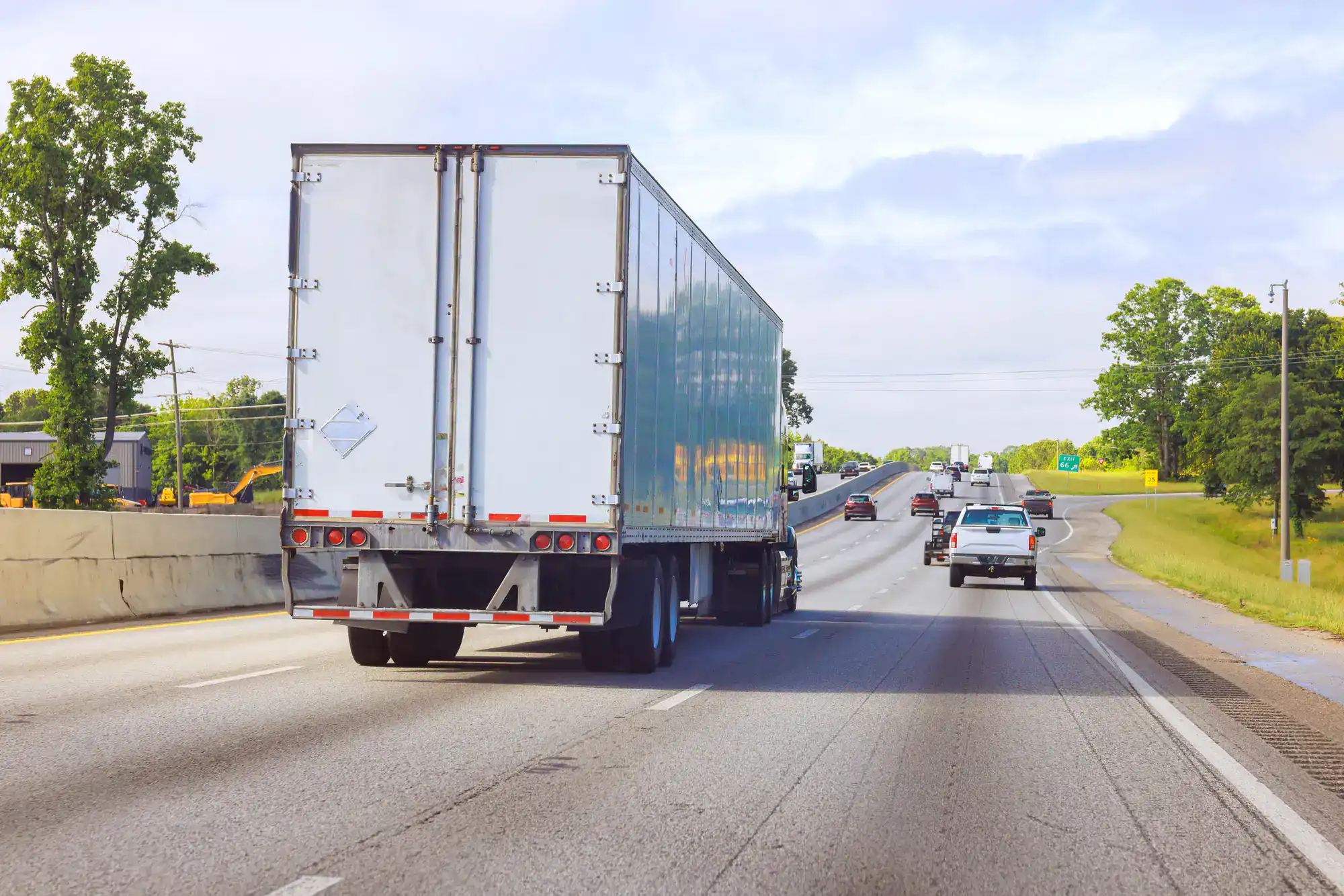
If your truck is model year 2013 or newer and has a GVWR over 14,000 pounds, yes it needs to pass a Clean Truck Check under California’s CARB compliance program. This applies to any truck operating on California public roads, which includes every freight route in and out of Santa Fe Springs, including I-5, Carmenita Road, and Rosecrans Avenue. It doesn’t matter where the truck is registered. An Arizona-plated semi running loads through the Gateway Cities corridor is subject to the same requirement as a truck registered in Los Angeles County.
The consequences for non-compliance are concrete and immediate: DMV registration holds that ground your truck, fines of up to $10,000 per vehicle per day, and denial of access to port facilities at the Ports of Los Angeles and Long Beach. For drayage operators running the port-to-Santa Fe Springs corridor daily, a lapsed compliance certificate isn’t a future problem it’s a problem at the gate, on the day it expires.
A failing result means your truck has one or more active emissions-related fault codes that CARB’s system flagged during the OBD scan. The most important thing to understand is that a failed test result is still submitted to CARB’s CTC-VIS database which means CARB knows the test was performed and knows the outcome. That’s not the same as ignoring the requirement entirely, but it does mean your truck is not currently in compliance, and you’ll need to address the underlying issue and retest.
For fleet operators in Santa Fe Springs managing trucks that run daily routes to the ports or to distribution facilities along the I-5 corridor, a failed test should be treated as urgent. The truck isn’t compliant, and operating it on California roads while a known failure is on record creates real regulatory exposure. Getting the fault codes diagnosed and repaired quickly, then scheduling a retest, is the right move. We can walk you through what the test flagged so you’re not going into a repair shop blind.
For 2025, most qualifying heavy-duty diesel vehicles model year 2013 or newer, GVWR over 14,000 pounds are required to pass a Clean Truck Check twice per year. That semi-annual schedule is already in effect. What a lot of fleet managers in Santa Fe Springs don’t realize yet is that the frequency escalates: by October 2027, the requirement moves to four times per year for most trucks in this category.
For a city with 845 registered trucking carriers, that escalation is significant. A fleet of 10 trucks that currently needs 20 tests per year will need 40 by late 2027. The operators who establish a reliable testing relationship now with a credentialed tester who submits directly to CTC-VIS and can handle volume scheduling will be in a much better position when that change hits than those scrambling to find a tester at the last minute. The compliance calendar only gets tighter from here.
A Notice to Submit to Testing, or NST, means CARB has identified your truck as a vehicle that needs to submit a compliance test. From the date on the letter, you have 30 calendar days to complete a passing Clean Truck Check performed by a CARB-credentialed tester and have the results submitted to the CTC-VIS database. That 30-day clock doesn’t pause, and missing it escalates the situation significantly including potential fines and a DMV registration hold that grounds the truck.
Given that I-5 through Santa Fe Springs is one of the highest-volume truck freight corridors in California, and CARB uses roadside emissions monitoring devices at various locations statewide, trucks operating on this corridor have meaningful exposure to being flagged. If you’ve received an NST, the priority is scheduling the test as quickly as possible. We can get you in, perform the OBD scan with CARB-certified equipment, and submit the results to CARB the same day giving you the maximum possible time to address any repair needs if the truck doesn’t pass on the first attempt.
Yes, it applies. California’s Clean Truck Check program covers any qualifying heavy-duty diesel vehicle operating on California public roads and that requirement is based on where the truck operates, not where it’s registered. If your trucks are registered in Nevada, Arizona, Texas, or any other state but regularly haul freight through Santa Fe Springs or anywhere else in California, they’re subject to the same CARB compliance requirements as California-registered trucks.
This is one of the most common misunderstandings among out-of-state carriers running the I-5 corridor through the Gateway Cities area. Freight brokers and port facilities at the Ports of Los Angeles and Long Beach enforce compliance at the point of entry they’re not checking registration state, they’re checking CTC-VIS compliance status. If your truck isn’t in the system with a current passing result, you don’t get the load. We can test out-of-state trucks operating in California and submit results directly to CARB, getting you into compliance before it becomes a gate-level problem.
Yes. Fleet testing is a core part of what we do in the Santa Fe Springs area. Whether you’re managing five trucks out of a yard on Carmenita Road or a larger fleet running daily routes between the Gateway Cities and the Ports of Los Angeles and Long Beach, the process scales. Volume scheduling means your trucks get tested in a sequence that minimizes operational disruption you’re not pulling your entire fleet off the road on the same day to meet a compliance deadline.
Every truck in the fleet gets the same thing: a CARB-certified OBD scan, direct electronic submission to CTC-VIS, and a current compliance record in CARB’s system by end of day. With semi-annual testing already required in 2025 and quarterly testing on the horizon by October 2027, fleet operators in Santa Fe Springs who establish a consistent testing cadence now are the ones who won’t be scrambling when the schedule tightens. Reach out directly to discuss your fleet size, vehicle roster, and the best way to structure your compliance calendar going forward.
Useful Links
Other Services we provide in Santa Fe Springs