Check Out Our Reviews!

If your truck runs loads through the Coachella Valley whether you’re delivering to resorts along SR-111, supplying construction sites in the University Neighborhood, or hauling freight through Palm Desert on I-10 CARB’s Clean Truck Check program applies to you. It doesn’t matter what state your truck is registered in. If it’s on California roads, it’s subject to the rules.
The consequences of non-compliance aren’t just paperwork. A failed compliance check triggers an automatic DMV registration hold. Fines can reach up to $10,000 per vehicle per day. And CARB deploys roadside remote emissions monitoring equipment on major corridors including I-10 meaning your truck can be flagged without ever being pulled over.
Here’s what changes when your compliance is current: your truck keeps moving, your contracts stay intact, and you’re not scrambling to fix a problem that snowballed from a missed deadline. For operators running the hospitality supply chain into Palm Desert’s resort properties or managing a construction fleet in the desert heat, that kind of certainty isn’t a luxury it’s how you stay in business.
We are a CARB-credentialed Clean Truck Check testing provider serving Riverside County the county Palm Desert calls home. Every tester on our staff has completed CARB’s official HD I/M Tester Training Course, passed the required exam, and holds a current credential that’s renewed every two years. That credential isn’t self-declared it’s listed on CARB’s publicly searchable database, and you can confirm it before you ever call.
The testing equipment matters too. We use CARB-certified OBD devices not generic code readers, not shop-floor diagnostic tools. The kind of equipment CARB actually accepts for Clean Truck Check submissions.
Our service is built specifically for model year 2013 or newer heavy-duty vehicles with a GVWR over 14,000 pounds. That’s the exact population the Clean Truck Check program targets. When your test is complete, results go directly and electronically to CARB’s CTC-VIS database no portal login required on your end, no submission risk, no follow-up needed.

The process is straightforward. You schedule your Clean Truck Check with us, confirm your truck meets the eligibility criteria model year 2013 or newer, GVWR over 14,000 pounds and bring it in for the OBD scan. The test itself uses a CARB-certified testing device connected directly to your truck’s onboard diagnostics. It reads the emissions-related fault codes and readiness monitors that determine a pass or fail result.
One thing worth knowing if you’re running trucks in the Palm Desert area: the desert heat accelerates wear on the emissions control systems the OBD scan evaluates diesel particulate filters, SCR systems, EGR systems. A truck that passed its last test in January can be running active fault codes by July after a summer of 110-degree days. Testing 60 to 90 days before your compliance deadline CARB allows early submission within that window gives you time to address any issues before they become a crisis.
Once your truck passes, results are submitted electronically to CARB’s CTC-VIS database immediately. You don’t log into a government portal. You don’t upload anything. We handle the submission at the time of testing, and your compliance record is updated in CARB’s system the same day.

Ready to get started?
Every Clean Truck Check we perform includes a CARB-certified OBD scan using state-approved testing equipment, a credentialed tester review, and direct electronic submission to CARB’s CTC-VIS database. The annual CARB compliance fee currently $31.18 per vehicle for 2025 is separate from the testing fee and paid directly to CARB. Both are required. We handle the testing side; the annual fee is your responsibility through CARB’s portal.
Our service applies strictly to diesel and alternative-fuel heavy-duty vehicles that are model year 2013 or newer with a GVWR over 14,000 pounds. If your truck doesn’t meet both of those criteria, this isn’t the right test. If it does, this is exactly what you need.
For Palm Desert operators managing multiple trucks construction fleets working the valley’s active development pipeline, distribution operators running SR-111 routes, or carriers making regular runs through the Coachella Valley on I-10 the direct CTC-VIS submission on every test means no loose ends. As of 2025, the program requires semi-annual testing. That escalates to quarterly testing for most trucks by October 2027. Knowing that schedule now, and having a reliable testing provider already in place, is how you stay ahead of it rather than react to it.
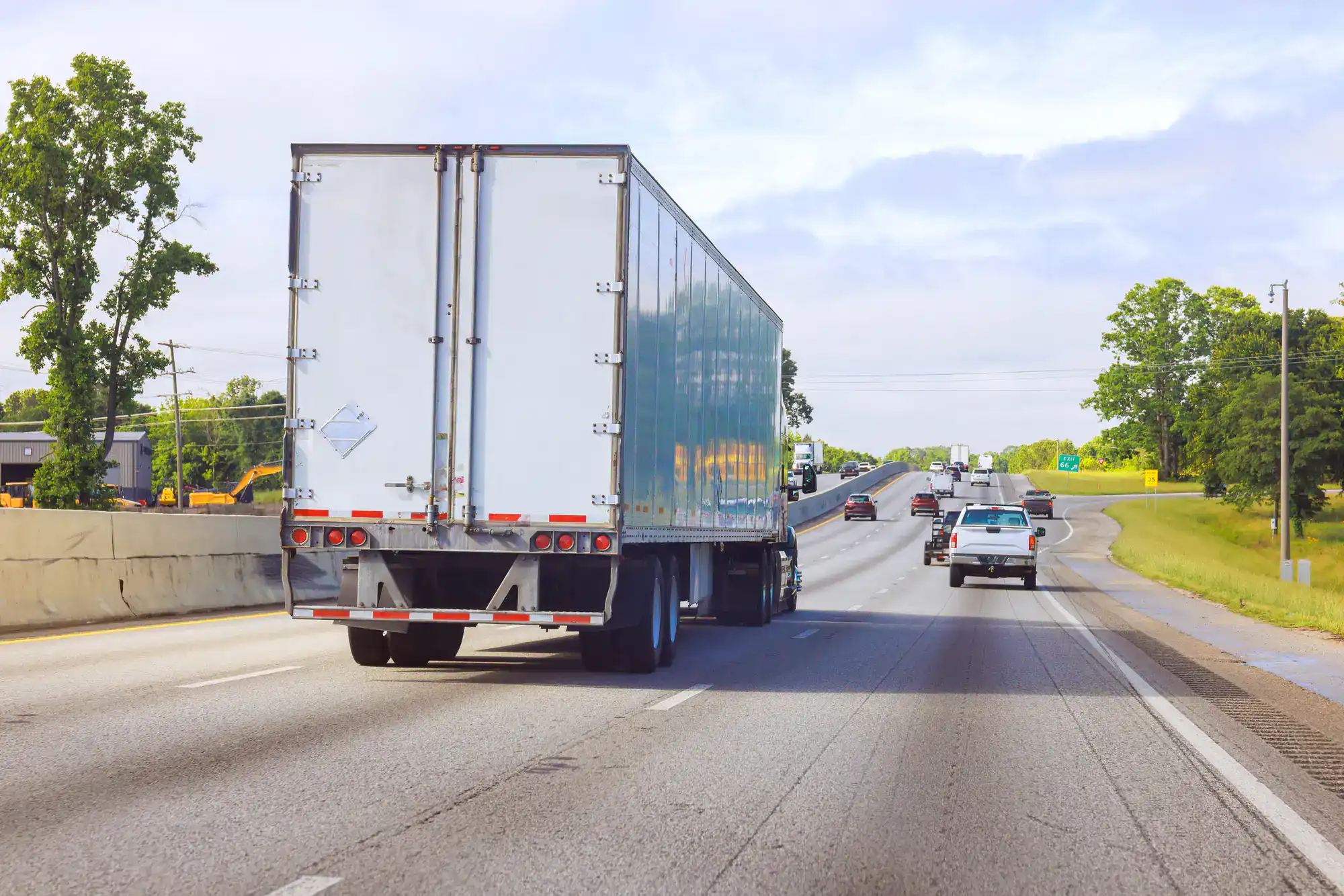
Yes and this is one of the most commonly misunderstood parts of California’s Clean Truck Check program. CARB’s HD I/M regulation applies to any diesel or alternative-fuel heavy-duty vehicle with a GVWR over 14,000 pounds and a model year of 2013 or newer that operates on California public roads. It doesn’t matter where the truck is registered. If you’re based in Arizona, Nevada, or any other state and you run regular routes through Palm Desert on I-10 or make deliveries into the Coachella Valley, your truck is subject to the same compliance requirements as a California-registered vehicle.
This is especially relevant for interstate carriers using I-10 as a transcontinental freight corridor. CARB deploys roadside remote emissions monitoring equipment on major routes, and out-of-state trucks are not exempt from being flagged. If you receive a Notice to Submit to Testing, you have 30 calendar days to produce a passing test from a CARB-credentialed tester regardless of where your truck is plated. We serve Riverside County and can get your test completed and submitted to CARB’s database before that deadline.
A Notice to Submit to Testing commonly called an NST means CARB has flagged your vehicle for a compliance check, typically through roadside remote emissions monitoring or a compliance review. Once you receive it, the clock starts: you have 30 calendar days from the date on the notice to submit a passing emissions compliance test from a CARB-credentialed tester. That’s a hard deadline, not a suggestion.
Missing it leads to enforcement action fines, DMV registration holds, and potential restrictions on operating in California. For operators supplying Palm Desert’s resort hotels, retail corridors, or active construction sites, a grounded truck isn’t just a compliance problem it’s a revenue problem. The right move when an NST arrives is to schedule your test immediately, not on day 28. We perform the OBD scan using CARB-certified equipment and submit results directly to CTC-VIS the same day, so your compliance record is updated in CARB’s system without delay.
As of 2025, trucks subject to California’s Clean Truck Check program are required to pass a test twice per year once every six months. That semi-annual schedule is already in effect. By October 2027, the requirement escalates to four times per year for most trucks in the program.
For Palm Desert operators, the practical implication is that this is a recurring business cost and scheduling responsibility not a one-time event. A good approach for operators in the Coachella Valley is to use the summer slowdown (June through September, when the valley’s hospitality economy is at its quietest) as a natural window for proactive testing. That gives you time to address any emissions issues before the busy October-through-May season kicks in and your trucks are running at full capacity. Testing 60 to 90 days before your compliance deadline is allowed under CARB’s rules and is the smarter move than waiting until the last week before a deadline.
It can, and it’s something Palm Desert operators should take seriously. The OBD scan that Clean Truck Check uses evaluates the emissions control systems on your truck specifically the diesel particulate filter, the selective catalytic reduction system, and the exhaust gas recirculation system. These components are sensitive to heat, and Palm Desert’s summer temperatures regularly exceed 110°F. Extended exposure to that kind of heat accelerates wear and can trigger active fault codes that will cause a test failure.
A truck that passed its compliance test in the cooler months may be showing fault codes by midsummer if those systems haven’t been properly maintained. This is not a reason to panic it’s a reason to test proactively rather than waiting until the last possible day before your deadline. If your truck fails the OBD scan, you’ll need to address the underlying issue before retesting. Testing early gives you that buffer. We use CARB-certified equipment to run the scan accurately, so if there’s a problem, you’ll know exactly what it is before it becomes a compliance emergency.
California’s Clean Truck Check program applies to diesel and alternative-fuel heavy-duty vehicles that meet two specific criteria: the truck must be model year 2013 or newer, and it must have a gross vehicle weight rating (GVWR) over 14,000 pounds. Both conditions must be true. If your truck is a 2012 or older model, or if it comes in under 14,000 pounds GVWR, it falls outside the scope of this program.
We test only trucks that meet both criteria that’s the entire scope of our service. This matters because the OBD testing technology the program relies on wasn’t standardized across heavy-duty trucks until the 2013 model year, which is why that cutoff exists. For Palm Desert operators running construction trucks, flatbeds, dump trucks, delivery vehicles, or semi-trucks that meet the 2013-and-newer, 14,000-plus-pound threshold, the Clean Truck Check requirement applies and compliance is not optional. The South Coast AQMD, which has jurisdiction over Riverside County including Palm Desert, is active in enforcing California’s mobile source emissions regulations.
Yes. Whether you’re managing two trucks or twenty, the process is the same on a per-vehicle basis each truck gets its own OBD scan using CARB-certified equipment, and each result is submitted directly to CARB’s CTC-VIS database individually. For fleet operators, that direct submission on every vehicle is especially valuable because it eliminates the risk of a result sitting unsubmitted while your compliance window closes.
Palm Desert’s commercial economy resort supply chains, construction fleets working the valley’s ongoing development projects, retail distribution running the SR-111 corridor means there are operators in this area managing multiple heavy-duty vehicles with staggered compliance deadlines. Staying on top of that schedule across a fleet is genuinely complex, and it only gets more demanding as the program moves toward quarterly testing by October 2027. If you’re managing multiple trucks in the Coachella Valley and want a reliable testing provider who handles the submission side completely, we serve Riverside County and can work through your fleet efficiently.
Useful Links
Other Services we provide in Palm Desert