
Hear from Our Customers
Your truck can’t be registered if it’s not compliant. The DMV will block your renewal, and CARB can fine you up to $10,000 per vehicle for operating without current testing. That’s not a scare tactic—it’s the regulation.
What you need is simple: valid OBD testing performed by a CARB certified smog check facility, submitted electronically to the state database, and documented properly for your records. If your truck is model year 2013 or newer with a GVWR over 14,000 pounds, you’re required to test twice a year under California’s Clean Truck Check program.
We handle the testing, the submission, and the paperwork. You get a certificate that keeps your registration active and your operation running. No guesswork, no delays, no compliance gaps that put your business at risk.
We focus exclusively on CARB emissions testing for heavy-duty diesel trucks in Greater Los Angeles. We’re not a general repair shop trying to do everything—we’re a compliance testing facility with CARB-credentialed testers who understand the regulations that apply to your equipment.
Greater Los Angeles is one of the busiest freight corridors in the country, with port traffic, interstate commerce, and thousands of commercial trucks moving through daily. CARB’s regulations hit this region harder than anywhere else in California, and the enforcement is real. You need testing done right the first time, by people who know the difference between a Clean Truck Check requirement and a standard smog test.
We’re set up to handle the specific OBD testing required for 2013 and newer diesel engines. That’s it. If your truck doesn’t meet those criteria, we’ll tell you upfront—we don’t waste your time or ours.

You bring your truck in, and we connect to the onboard diagnostics system using CARB-approved equipment. The OBD test pulls data directly from your engine’s computer—no tailpipe sniffing, no opacity testing for newer trucks. It’s a digital readout that checks emission control systems, fault codes, and readiness monitors.
If everything passes, we submit the results electronically to the CARB database that same day. You get a certificate showing your compliance status, your test date, and your next due date. The DMV pulls from that same database when you go to renew your registration, so there’s no gap or delay.
If something fails, you’ll know exactly what triggered it—a specific fault code, a monitor that isn’t ready, or a system malfunction. We don’t do repairs, but we’ll tell you what needs fixing so you can get it handled and come back for a retest.
The test itself takes under 30 minutes for most trucks. You’re not sitting around all day. You’re in, tested, documented, and back on the road.

Ready to get started?
California’s Clean Truck Check program requires semi-annual testing for all heavy-duty trucks with 2013 or newer engines and a GVWR over 14,000 pounds. That means every six months, your truck needs an OBD test submitted to the state. Starting in October 2027, that frequency increases to four times per year.
You also have to register your vehicle in the CTC-VIS database and pay an annual compliance fee of $31.18 per truck. That’s separate from the testing—it’s an administrative requirement managed directly through CARB’s system.
If you operate in California but your truck is registered out of state, you still have to comply. The regulation applies to any qualifying truck operating on California roads, regardless of where it’s plated. That catches a lot of interstate operators off guard, but CARB enforcement doesn’t care where your registration is—they care where you’re driving.
Greater Los Angeles sees heavy enforcement because of air quality mandates tied to port operations and freight volume. CARB estimates that heavy-duty trucks produce over half of California’s smog-forming pollution, even though they’re only 3% of vehicles on the road. That’s why the testing requirements are strict, and why the penalties for non-compliance are severe.
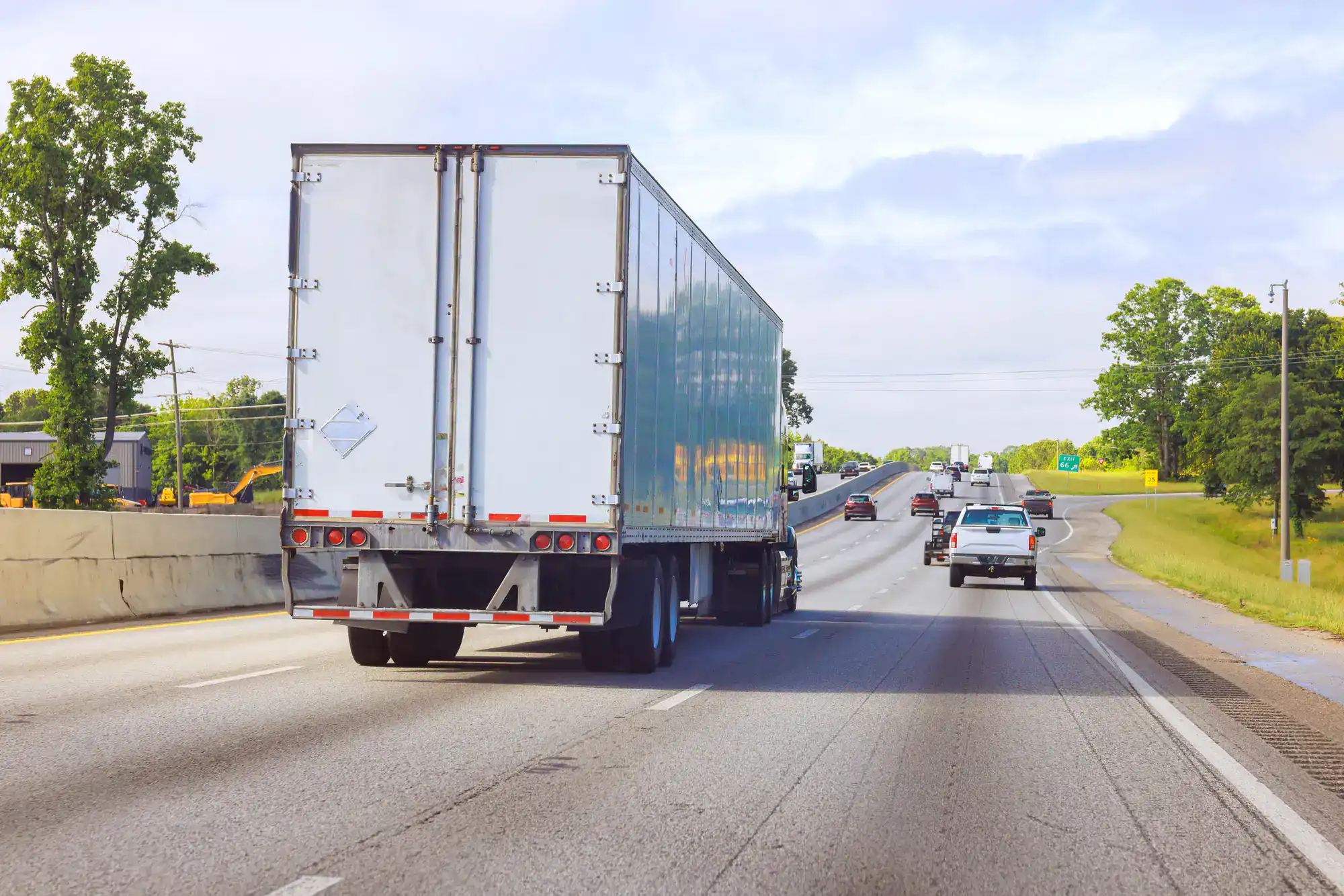
Your truck qualifies if it has a model year 2013 or newer engine and a gross vehicle weight rating over 14,000 pounds. That includes most Class 7 and Class 8 trucks—semi-trucks, heavy-duty box trucks, and commercial diesel vehicles in that weight range.
If your truck is older than 2013 or weighs less than 14,000 pounds GVWR, it falls under different testing requirements that we don’t handle. The Clean Truck Check program specifically targets newer, heavier diesel engines because those are the ones equipped with advanced emissions controls and OBD systems.
You can check your GVWR on the door placard or your registration. If you’re not sure whether your truck qualifies, call us with your VIN and we’ll confirm before you drive over.
Right now, you need testing every six months—twice a year. Your compliance deadline is tied to your vehicle’s registration, and you can submit a test up to 90 days before that deadline without losing time on your next cycle.
In October 2027, the requirement increases to four times per year for OBD-equipped trucks. That’s a significant change, and it means you’ll need to plan testing into your schedule more frequently to avoid lapses.
If you miss a deadline, the DMV can place a registration hold on your truck, which means you can’t renew until you’re compliant. CARB can also issue citations and fines if you’re caught operating a non-compliant vehicle. The penalties stack quickly, so staying on schedule is the only smart move.
If your truck fails, the test results will show exactly which fault code or monitor triggered the failure. Common reasons include a check engine light, incomplete readiness monitors, or a malfunction in the emissions control system like the DPF or SCR.
We’ll give you a printed report that explains what failed and what needs attention. You’ll need to take that to a repair shop that works on heavy-duty diesel emissions systems. Once the issue is fixed, you come back for a retest.
The retest follows the same process—we connect to the OBD system and check whether the fault has cleared and the monitors have reset. If everything passes, we submit the clean results to CARB and you’re compliant. There’s no penalty for failing a test, but you do need to get it resolved before your compliance deadline or you’ll face registration issues.
Yes. If you operate in California, you’re required to comply with CARB regulations regardless of where your truck is registered. That includes out-of-state plates, interstate carriers, and trucks that only pass through California occasionally.
You still need to register in the CTC-VIS database, pay the annual compliance fee, and complete the required testing on the same schedule as California-registered trucks. CARB enforcement applies to any qualifying vehicle operating on state roads, and they actively check compliance at weigh stations and inspection points.
A lot of out-of-state operators don’t realize this until they get pulled over or cited. If you’re running freight into or through California with a 2013+ heavy-duty truck, you’re subject to the same rules as everyone else. Getting tested before you have a problem is a lot easier than dealing with fines and registration blocks after the fact.
The OBD test itself takes about 20 to 30 minutes for most trucks. That includes connecting the equipment, running the diagnostic scan, and printing your results. You’re not waiting around for hours—it’s a quick process.
We recommend calling ahead to confirm availability, especially if you’re coming during peak hours or need to test multiple trucks. Walk-ins are usually fine, but scheduling ensures you’re not sitting in line behind other commercial vehicles.
Once the test is complete and you pass, we submit the results electronically to CARB the same day. You’ll leave with a compliance certificate that you can keep in your truck for records. If you need copies for your fleet files or your accountant, we can print those too.
A regular smog check applies to passenger vehicles and light-duty trucks under 14,000 pounds. It’s the test you’d get on a personal car or pickup at any smog station. CARB compliance testing under the Clean Truck Check program is completely different—it’s designed specifically for heavy-duty diesel trucks with OBD-equipped engines.
The equipment is different, the certification is different, and the reporting requirements are different. A standard smog station can’t perform Clean Truck Check testing unless they’re specifically certified for it, and most aren’t. That’s why you can’t just take your semi to the shop that does your personal vehicle.
We’re set up exclusively for the heavy-duty side. Our testers are CARB-credentialed for OBD testing on 2013 and newer diesel engines over 14,000 pounds GVWR. If that’s your truck, we can test it. If it’s not, you need a different type of facility.
Useful Links
Other Services we provide in Greater Los Angeles