Check Out Our Reviews!

Paramount sits right between the Ports of Los Angeles and Long Beach which means the trucks operating out of this city don’t have the luxury of compliance being an afterthought. Freight brokers check. Port terminals check. And CARB’s roadside monitoring equipment on the I-710 corridor doesn’t care whether you forgot your deadline or just didn’t know it changed.
When your Clean Truck Check is current and on file in CARB’s system, you’re not just avoiding a fine you’re protecting your access to every load that depends on it. A valid compliance certificate means the port gate opens, the broker assigns the run, and your truck earns what it’s supposed to earn. That’s the real outcome here.
Paramount is also formally designated within CARB’s Southeast Los Angeles AB 617 Community Emissions Reduction Program, which means this corridor gets elevated enforcement attention not occasional sweeps, but consistent, funded monitoring. Owner-operators running out of Paramount are operating in one of the most actively watched freight zones in California. Staying current on your CARB compliance isn’t just smart it’s the cost of doing business here.
We hold a CARB-issued credential for Clean Truck Check testing not a self-declared certification, but a state-listed authorization you can look up on CARB’s public database before you ever book. That matters in a market where unqualified testers have taken money for tests that CARB never accepted.
Every test we perform uses CARB-certified OBD equipment built specifically for this program not a generic diagnostic scanner. Results go directly into the CTC-VIS system at the end of the test. You don’t have to touch the portal, manage an upload, or wonder whether the submission went through.
We serve Los Angeles County, including the trucking community in and around Paramount, and work exclusively with model year 2013 or newer diesel trucks and heavy-duty vehicles with a GVWR over 14,000 pounds the exact population the Clean Truck Check program targets. If your truck qualifies, you’re in the right place. If it doesn’t, we’ll tell you upfront.

It starts with confirming your truck qualifies. The Clean Truck Check program applies to diesel trucks and heavy-duty vehicles that are model year 2013 or newer and have a GVWR over 14,000 pounds. If your vehicle meets both criteria, you’re subject to the program and testing is required on a semi-annual basis in 2025, escalating to quarterly by October 2027.
Once that’s confirmed, the test itself is an OBD-based emissions scan performed with CARB-certified testing equipment. Our technician connects to your truck’s onboard diagnostic system, runs the scan, and reviews the output against CARB’s compliance thresholds. For most well-maintained trucks, this process is straightforward. If something flags during the scan, you’ll know exactly what it is and what needs to be addressed before resubmission.
The moment your truck passes, we submit results electronically and directly to CARB’s CTC-VIS database. Your compliance record is updated in the state’s system immediately no lag, no manual steps on your end. For operators in Paramount running drayage routes where port access depends on that certificate being on file, that immediate submission isn’t a small detail. It’s the whole point.

Ready to get started?
Every Clean Truck Check test we perform includes the full OBD emissions scan using CARB-certified equipment, direct electronic submission to CARB’s CTC-VIS database, and confirmation that your compliance record has been updated. You’re not handed paperwork to submit yourself the result goes to the state the moment the test is complete.
This service is built specifically for model year 2013 or newer diesel trucks and heavy-duty vehicles with a GVWR over 14,000 pounds operating in California. That includes trucks registered in other states that operate within California out-of-state registration doesn’t exempt a vehicle from Clean Truck Check requirements if it’s running California roads. We serve Paramount truckers with mobile diesel smog checks and complete Clean Truck Check compliance. For Paramount-area operators staging equipment near the I-710 and running loads to the Port of Long Beach, that distinction matters.
The annual compliance fee of $31.18 (adjusted annually by the California CPI) is paid separately to CARB that’s a state-collected fee, not part of the testing service cost. What you’re paying for with us is the credentialed test, the certified equipment, and the direct submission that puts your certificate on record. With semi-annual testing already in effect for 2025 and quarterly testing coming by 2027, having a reliable, credentialed tester in your corner for Los Angeles County is worth locking in now not after a deadline slips.
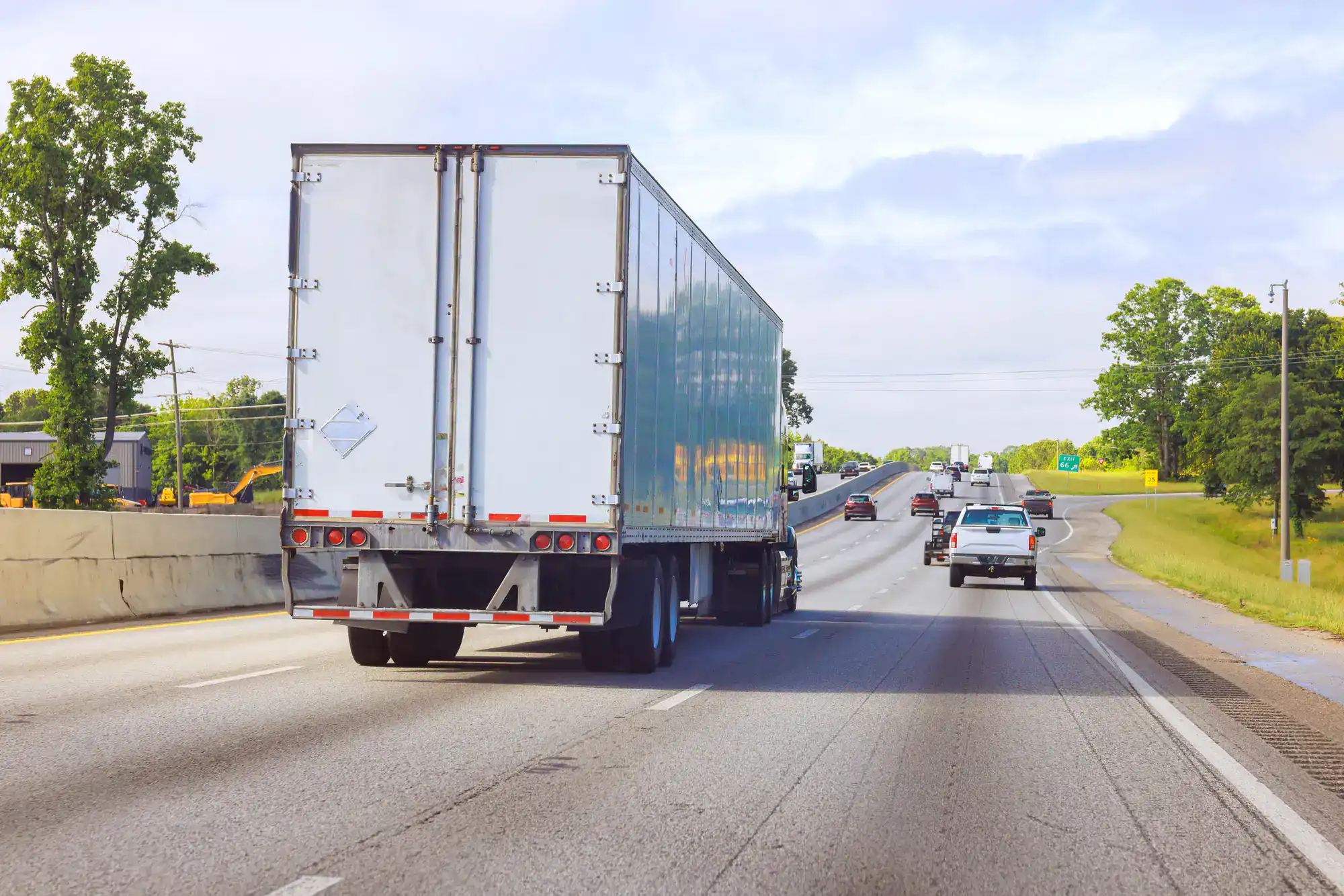
If your truck is a model year 2013 or newer diesel with a GVWR over 14,000 pounds, yes it’s subject to California’s Clean Truck Check program regardless of where in the state it’s based. Being in Paramount doesn’t change that requirement, and it doesn’t soften the enforcement environment either. Paramount falls within CARB’s Southeast Los Angeles AB 617 Community Emissions Reduction Program, which means this area sees consistent, funded enforcement activity not occasional spot checks.
The program requires semi-annual testing in 2025. That means if you tested once last year, that’s no longer enough. Your truck needs to pass a Clean Truck Check twice per year now, with each result submitted to CARB’s CTC-VIS system by a credentialed tester using approved equipment. If you’re not sure when your next deadline falls, it’s tied to your vehicle’s registration expiration date and missing it triggers an automatic DMV registration hold.
A failed test means your truck’s OBD system flagged an emissions issue that exceeded CARB’s compliance thresholds. The most common causes are active fault codes, a malfunctioning emissions control component, or a system that hasn’t completed its readiness monitors sometimes because the truck was recently serviced or the battery was disconnected. The test result will identify what triggered the failure, so you’re not left guessing.
From there, the truck needs to be repaired and retested. The clock on your compliance deadline doesn’t pause during that process, which is why it’s worth testing well before your deadline rather than the week it’s due. For Paramount-area operators running port drayage routes, a failed test close to a deadline can mean losing freight assignments while repairs are completed. Getting ahead of the schedule especially with semi-annual testing now in effect gives you room to address issues without it turning into a business disruption.
Yes, and it happens. The Ports of Los Angeles and Long Beach both require proof of Clean Truck Check compliance as part of their clean truck access requirements. If your compliance certificate is expired or not on file in CARB’s CTC-VIS system, port terminals and freight brokers can and do deny entry or withhold load assignments. For owner-operators in Paramount who depend on port drayage for their income, this is one of the most immediate and costly consequences of a lapsed certificate.
What makes this particularly urgent is that there’s no grace period at the gate. The system either shows your truck as compliant or it doesn’t. We submit your test results directly to CARB’s CTC-VIS database the moment the test is complete, so your compliance record is updated in real time not after a processing delay that costs you a run. If you’re staging out of Paramount and running the I-710 to the ports, staying current on your Clean Truck Check is as much a business requirement as it is a regulatory one.
A Notice to Submit to Testing, or NST, means CARB’s roadside emissions monitoring system flagged your truck likely on a high-traffic corridor like the I-710, which runs directly through Paramount and is one of the most actively monitored freight routes in the state. The letter gives you 30 calendar days to submit a passing emissions compliance test performed by a credentialed tester. There is no extension to that window.
The first thing to do is not panic but also not wait. Thirty days sounds like enough time, but if your truck has an underlying emissions issue that needs repair before it can pass, you want to find that out on day one, not day twenty-eight. Book the test as soon as possible. If the truck passes, results go directly to CARB’s system and your NST is resolved. If it doesn’t pass, you have time to make repairs and retest before the deadline. We serve Los Angeles County and can get your qualifying 2013 or newer diesel truck tested without unnecessary delay.
In 2025, qualifying trucks are required to pass a Clean Truck Check twice per year semi-annual testing is now fully in effect. That’s a change from the earlier phase-in schedule, and a lot of operators who tested once in 2024 haven’t fully adjusted to the new cadence yet. Each test must be performed by a CARB-credentialed tester using approved OBD equipment, with results submitted directly to the CTC-VIS system.
It’s also worth knowing where this is heading: by October 2027, most trucks will be required to test four times per year. For a single-truck owner-operator in Paramount, that’s four compliance tests annually within three years. For a small fleet running five trucks, that’s twenty tests per year. Building a relationship with a reliable, credentialed tester now rather than scrambling to find one every time a deadline approaches is the practical move. The compliance schedule isn’t getting lighter, and the enforcement environment in Southeast LA isn’t either.
Yes. If a truck is model year 2013 or newer, has a GVWR over 14,000 pounds, and operates in California including trucks registered in other states it is subject to the Clean Truck Check program. Out-of-state registration doesn’t create an exemption. If you’re hauling freight through Paramount, running loads to the Port of Long Beach, or moving goods along the I-710 corridor with a truck registered in Nevada, Arizona, Texas, or anywhere else, California’s compliance requirements still apply to your vehicle.
CARB enforces this through roadside emissions monitoring devices deployed statewide, including along the I-710 one of the most heavily monitored freight corridors in the country. A truck without a valid compliance certificate on file in the CTC-VIS system can be flagged without a traffic stop. For interstate operators who pass through the Paramount area regularly, getting tested and on record is the straightforward way to avoid a violation, a fine, or a load denial at a port terminal that checks compliance before assigning freight.
Useful Links
Other Services we provide in Paramount