If you operate commercial trucks in California, CARB compliance isn't optional—it's the law. Here's what every fleet operator needs to know about staying legal.
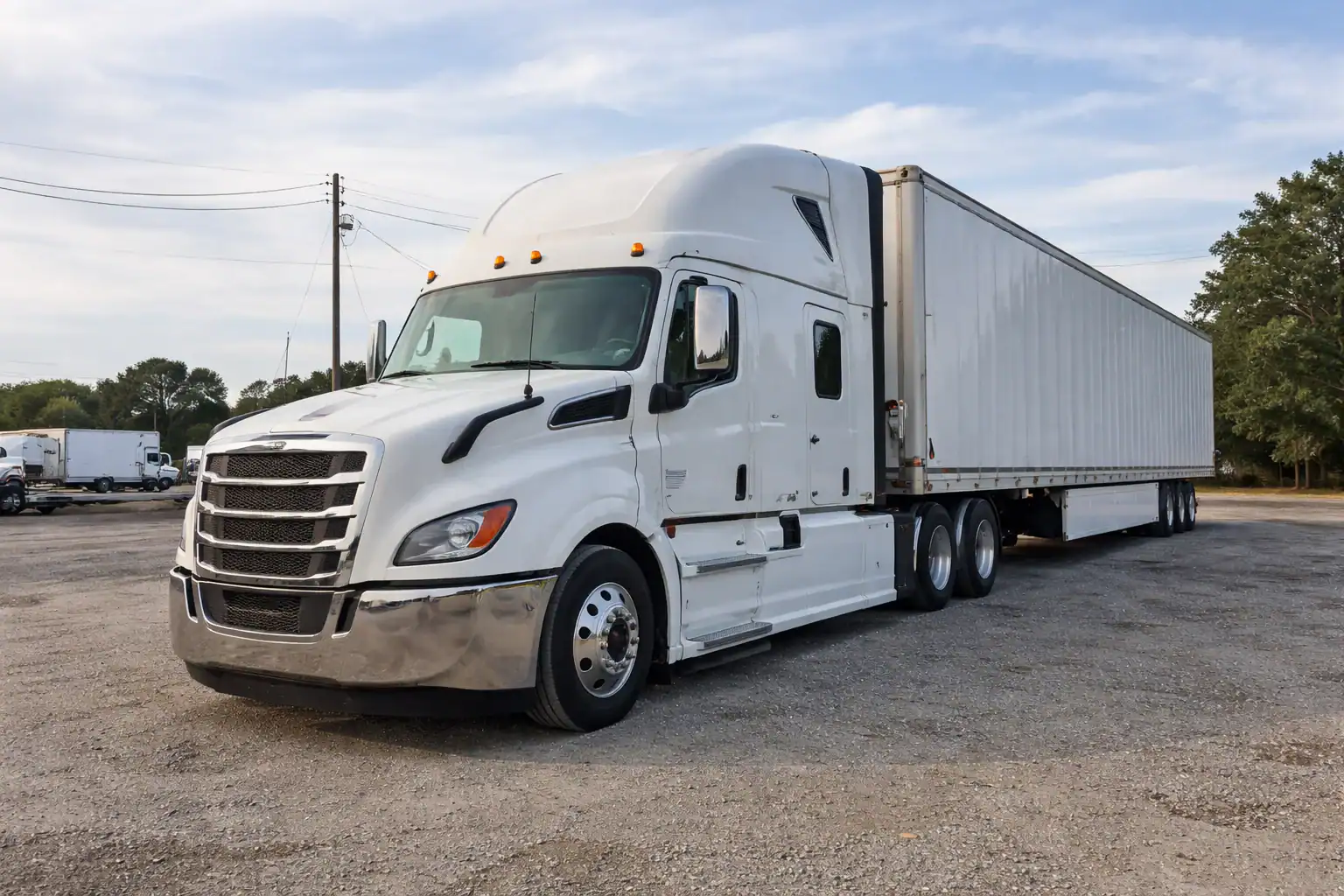
California’s CARB compliance regulations apply to all commercial trucks over 14,000 pounds operating in the state. This includes mandatory Clean Truck Check testing, registration in the CTC-VIS system, and annual compliance fees.
Non-compliance can result in DMV registration holds, daily fines up to $75,000, and trucks being pulled off the road. Understanding these requirements—and how digital ECU testing and mobile compliance services work—can save you thousands in penalties and keep your fleet running.
You’ve got trucks to move, deadlines to hit, and a business to run. But if you’re operating commercial vehicles in California—especially anything over 14,000 pounds—there’s one thing that can shut you down faster than a blown engine: CARB compliance.
The California Air Resources Board doesn’t mess around. Their regulations are strict, the penalties are steep, and the rules keep changing. But here’s the thing: CARB compliance doesn’t have to be a nightmare. Once you understand what it actually means, who needs it, and how the testing process works, staying compliant becomes just another part of running a tight operation.
CARB stands for the California Air Resources Board. It was established back in 1967 when California’s air quality—especially in major cities like Los Angeles—was dangerously poor. The Board’s job is simple: reduce air pollution from vehicles, fuels, and other sources to protect public health.
Heavy-duty trucks are a major focus. Even though they make up only about 3% of vehicles on California roads, they’re responsible for more than 50% of nitrogen oxide emissions and diesel particulate pollution from mobile sources. That’s why CARB has some of the strictest emissions standards in the country.
For commercial truck operators, CARB compliance means your vehicles must meet specific emissions requirements to legally operate in California. It doesn’t matter if your truck is registered in Nevada, Arizona, or anywhere else—if you’re driving in California, you’re subject to CARB rules.
CARB compliance applies to nearly all diesel-powered commercial trucks and buses with a gross vehicle weight rating over 14,000 pounds. This includes semi-trucks, box trucks, delivery vehicles, buses, and even diesel motorhomes. If it’s heavy-duty and runs on diesel or alternative fuel, it’s likely covered.
Here’s the critical part: location of registration doesn’t matter. Out-of-state trucks operating in California—even temporarily—must comply. That means if you’re an interstate carrier passing through, making deliveries to Los Angeles warehouses, or hauling freight to the Inland Empire, your trucks need to meet California’s standards.
The responsibility doesn’t just fall on truck owners and drivers, either. Motor carriers must ensure all their vehicles meet CARB standards before dispatching them into California. Brokers and freight forwarders can only assign California routes to CARB-compliant carriers. Even California-based shippers and receivers are required to verify that the trucks they hire are compliant.
If you’re hiring carriers, you’re expected to ask for proof of compliance. That verification can come through CARB certification documents or by recording key vehicle identification details so compliance can be checked later. The penalties for hiring non-compliant carriers are serious—shippers can face fines up to $10,000 for each year they used a non-compliant carrier. If you hired multiple non-compliant carriers, those fines stack up fast.
For drivers, the rules are just as clear. You can’t operate a non-compliant vehicle anywhere in California. If a law enforcement officer pulls you over, you’ll need to show your license, registration for both truck and trailer, a completed bill of lading, and proof of CARB compliance. No proof means citations, fines, and potentially having your truck taken out of service on the spot.
The consequences of non-compliance aren’t just annoying—they can shut down your operation. First and most immediate: the California Department of Motor Vehicles will deny registration for non-compliant trucks. If your vehicle doesn’t meet current CARB standards, you won’t be able to renew your registration. That means no legal operation, no hauling freight, and no revenue.
CARB can also place a registration hold on vehicles that don’t meet requirements. This isn’t a warning—it’s an enforcement action that takes your truck out of service until you fix the problem and prove compliance. For fleet operators, a registration hold on multiple vehicles can cripple your business overnight.
Then there are the fines. Penalties range from $1,000 per day on the low end to as much as $75,000 per day for serious violations. The amount depends on the severity of the violation and how long it’s been going on. Even a few days of non-compliance can result in fines that wipe out your profit margins for an entire month.
Enforcement happens in multiple ways. CARB uses roadside emissions monitoring devices to scan passing trucks and flag high-emitters. If your truck gets flagged, you’ll receive a Notice to Submit to Testing. You then have 30 days to get a passing compliance test and submit the results to CARB. Miss that deadline, and you’re looking at registration holds and escalating penalties.
California Highway Patrol and CARB enforcement officers also conduct random roadside inspections. They can pull over trucks to verify compliance status, check for valid CARB documentation, and inspect emissions control systems. Trucks entering California’s ports and rail yards are subject to inspections as well. Failing an inspection or operating without proper compliance documentation can result in your vehicle being barred from port access—a disaster if you’re in the drayage business.
The financial impact goes beyond fines. Every day a truck sits non-compliant is a day it’s not generating revenue. Repairs to emissions systems, retrofitting older engines, or even replacing non-compliant vehicles all cost money. And if you’re an owner-operator, a single registration hold can mean missing contracts, losing clients, and damaging your reputation in an industry where reliability is everything.

California’s truck emissions requirements have evolved over the years, but the current standard is clear: as of January 1, 2023, all diesel trucks over 14,000 pounds operating in California must have a 2010 model year engine or newer. This applies to trucks over 26,000 pounds GVWR without exception.
For lighter trucks between 14,000 and 26,000 pounds, the timeline has been slightly different, but the goal is the same—cleaner engines, lower emissions. The 2010 engine standard was chosen because that’s when diesel engines were required to meet stricter federal emissions standards, significantly reducing nitrogen oxides and particulate matter.
If your truck has an engine older than 2010, you have limited options. You can retrofit the engine with approved emissions control technology, repower the vehicle with a newer compliant engine, or replace the truck entirely. There’s also a low-use exemption for trucks that operate fewer than 1,000 miles per year in California, but you’ll need to report odometer readings annually to prove eligibility.
The Clean Truck Check program—officially known as the Heavy-Duty Inspection and Maintenance (HD I/M) Program—is California’s version of a smog check for commercial trucks. It was approved by CARB in December 2021 and went into full effect in 2024. The program ensures that emissions control equipment on heavy-duty vehicles is working properly throughout the vehicle’s life.
Clean Truck Check applies to almost all diesel and alternative fuel vehicles with a GVWR over 14,000 pounds operating on California public roads. This includes commercial trucks, buses, government vehicles, motorhomes, and even single-vehicle fleets. If your truck operates in California, it’s subject to Clean Truck Check—regardless of where it’s registered.
The program has three main requirements. First, you must report your vehicle in the Clean Truck Check Vehicle Inspection System, known as CTC-VIS. This is CARB’s online database where all affected vehicles must be registered. You’ll need to provide owner information, vehicle details including VIN and engine model year, and contact information.
Second, you must pay an annual compliance fee. As of 2026, the fee is $32.13 per vehicle. This fee funds the administration and enforcement of the program. Payment must be made through the CTC-VIS system by your vehicle’s compliance deadline, which is tied to your registration renewal date for California-registered trucks or based on your VIN’s last digit for out-of-state vehicles.
Third—and this is the big one—you must complete periodic emissions compliance testing. For most heavy-duty vehicles, testing is required twice a year. California-registered motorhomes and agricultural vehicles only need annual testing. But starting October 1, 2027, vehicles equipped with On-Board Diagnostics systems will be required to test four times per year.
The testing itself depends on your vehicle’s age. Trucks with 2013 or newer engines undergo OBD testing, where a CARB-certified device scans the engine’s emissions data and uploads it to CARB’s database. Trucks with 2012 or older engines require an opacity test and visual inspection of emissions control equipment. Both methods are designed to catch malfunctioning emissions systems before they become major polluters.
Passing test results can be submitted up to 90 days before your compliance deadline, giving you some flexibility to schedule testing around your operations. But you must submit results by the deadline, or you’ll face registration holds and enforcement action.
If your truck has a 2013 or newer engine, compliance testing is done through digital ECU (Engine Control Unit) testing, also called OBD testing. This method is faster, more accurate, and less invasive than older smoke opacity tests.
Here’s how it works: a CARB-credentialed tester connects a certified OBD scanning device to your truck’s diagnostic port. The device communicates with the engine’s computer system and pulls emissions-related data, including fault codes, sensor readings, and performance metrics from the emissions control systems. The scan captures a “snapshot” of your truck’s emissions status at that moment.
The data is then encrypted and uploaded directly to CARB’s CTC-VIS database for analysis. CARB’s system evaluates the data against compliance standards and issues a pass or fail result. If your truck passes, you receive a compliance certificate, and your vehicle record is updated in the system. If it fails, you’ll need to repair the emissions system issue and retest.
The beauty of OBD testing is speed and convenience. The entire process—connection, data capture, upload, and result—can be completed in 30 to 45 minutes. There’s no need for extended warm-up periods or multiple test runs like with older methods. And because the testing can be done with mobile equipment, a credentialed tester can come directly to your yard, warehouse, or wherever your trucks are parked.
For fleet operators managing dozens of vehicles, mobile OBD testing is a game-changer. Instead of taking trucks out of service and driving them to a testing station, you can schedule a mobile tester to come during off-hours, weekends, or between shifts. Your trucks get tested, certified, and back on the road without disrupting your dispatch schedule.
The key is making sure the tester you hire is CARB-credentialed and using approved equipment. Not all OBD scanners meet CARB’s requirements. Only certified devices that can properly communicate with heavy-duty diesel engines and upload data in the required format are acceptable. A legitimate mobile testing service will have the credentials, equipment, and experience to handle the process correctly.