
Hear from Our Customers

You avoid the $10,000 per day, per vehicle fines that CARB hands out without hesitation. Your registration doesn’t get blocked by the DMV. You don’t get turned away at ports or terminals because your truck failed a compliance check.
More importantly, you’re not scrambling last-minute to find a credentialed tester who can fit you in before your 30-day deadline runs out. You’re not dealing with the headache of a failed test and the downtime that comes with repairs and retesting.
When your truck passes the Clean Truck Check, you get a clean compliance record submitted directly to CARB’s database. You can operate anywhere in California without looking over your shoulder. Your business keeps moving, your drivers stay on schedule, and you’re not bleeding money on penalties or lost productivity.
This isn’t optional anymore. If your truck is model year 2013 or newer and weighs over 14,000 lbs GVWR, California law requires you to pass this test twice a year. Starting in 2027, it goes to quarterly. The sooner you build this into your operation, the less it disrupts everything else.
We’re CARB credentialed to perform Clean Truck Check testing for heavy-duty vehicles. That means we’re authorized by the state to plug into your OBD system, run the diagnostics, and submit results that actually count toward your compliance.
We’re located in West Carson, which puts us right in the middle of one of the busiest trucking corridors in Southern California. We know the operators running through here aren’t looking for a sales pitch—they need to get tested, pass, and get back on the road.
We focus exclusively on 2013 and newer trucks over 14,000 lbs GVWR because that’s what the regulation covers and that’s what we’re equipped to handle correctly. If your truck doesn’t meet those specs, this service doesn’t apply. We’re not going to waste your time or ours pretending otherwise.

You bring your truck in. We connect to your OBD system using CARB certified diagnostic equipment. The test pulls data directly from your engine’s onboard computer—emissions levels, fault codes, system readiness monitors.
If everything checks out, you pass. We submit your results electronically to CARB’s database, and you’re compliant for the next six months. You’ll get documentation showing your test date and pass status.
If something flags, we’ll tell you what failed and why. You’ll need to get the issue repaired, then come back for a retest. That’s why some operators choose to run a pre-check diagnostic before the official test—it catches problems early, so you’re not burning through your 30-day compliance window on repairs.
The whole process takes about 30 minutes if your truck is ready and your systems are functioning properly. You can submit a passing test up to 90 days before your deadline, which gives you a buffer if repairs are needed. Most operators who stay on top of their maintenance don’t have issues, but CARB’s monitoring devices are everywhere, and they will catch non-compliant trucks.

Ready to get started?
You’re paying for an official CARB HD I/M test performed by a state-credentialed facility. That includes the OBD scan, the compliance check, and direct submission of your results to the California Air Resources Board database.
West Carson sits near the ports, the 405, and the 110—some of the most heavily monitored trucking routes in the state. CARB uses automated license plate readers and remote emissions monitoring all through this area. If your truck is flagged, you’ll get a Notice to Submit to Testing, and the clock starts ticking.
This service applies only to diesel trucks that are 2013 or newer with a gross vehicle weight rating over 14,000 pounds. Older trucks and lighter vehicles fall under different programs. If you’re not sure whether your truck qualifies, check your model year and GVWR before scheduling.
Right now, testing is required twice a year. In October 2027, it increases to quarterly for OBD-equipped vehicles. That’s more frequent testing, tighter timelines, and less room for error. Getting into a routine now makes the transition easier later.
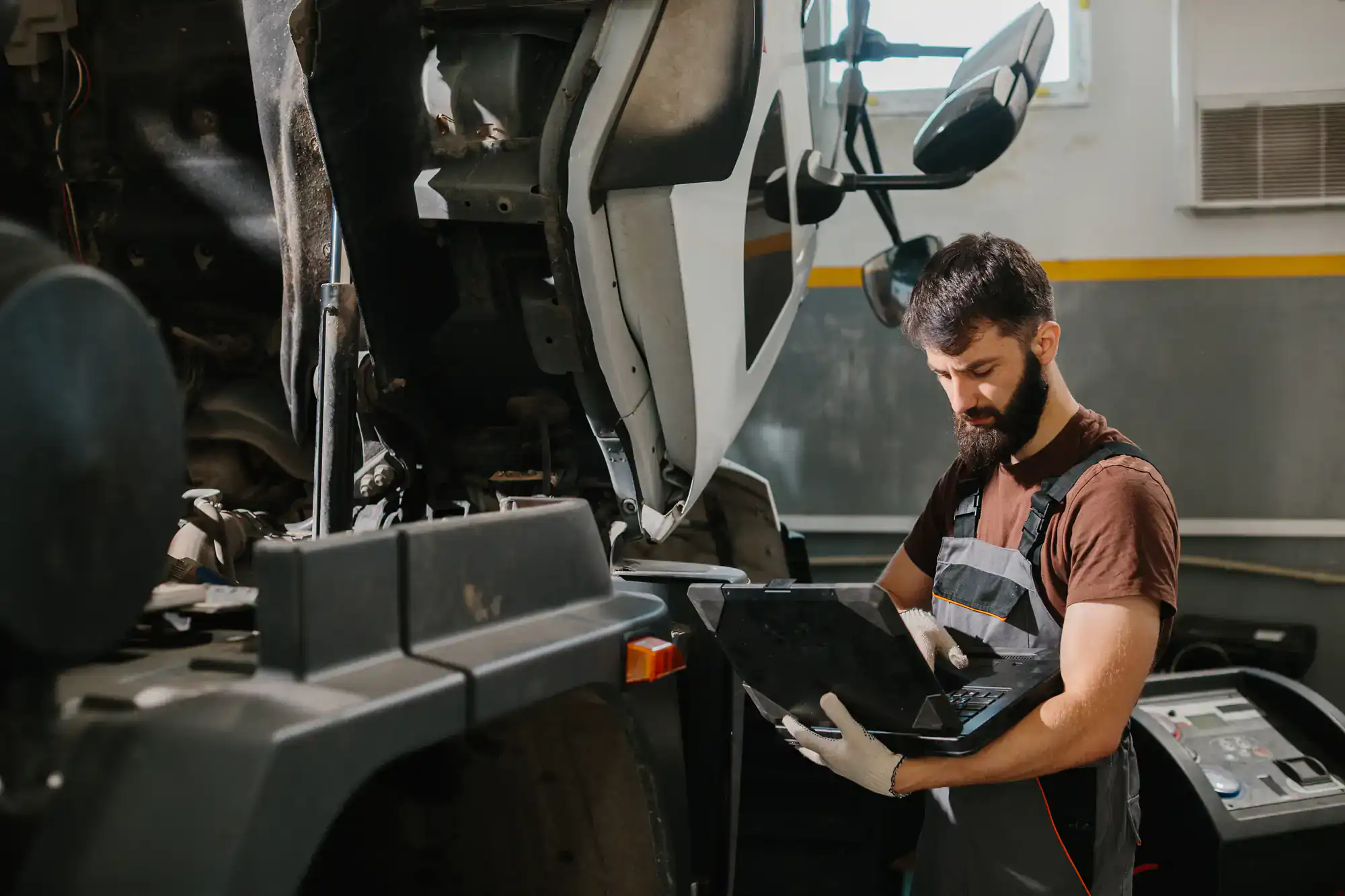
If your truck fails, you’ll receive a report showing which emissions systems or monitors didn’t pass. You’ll need to take your truck to a repair facility that can address the specific issue—whether that’s a sensor malfunction, an emissions system fault, or something else flagged during the OBD scan.
Once repairs are completed, you’ll need to return for a retest. You have 30 calendar days from the date you receive your Notice to Submit to Testing to get a passing result submitted to CARB. If you miss that deadline, you’re subject to fines and your registration can be blocked.
This is why some operators run a pre-check before their official test. It identifies potential failures ahead of time, so you’re not racing against the clock to fix something after you’ve already failed. If your truck is well-maintained and your emissions systems are functioning, you shouldn’t have issues. But if you’ve been putting off a check engine light or ignoring fault codes, those will show up during testing.
You can submit a passing test up to 90 days before your compliance deadline. That’s a three-month window, and it’s there specifically to give you time to handle repairs if something goes wrong.
If you test early and pass, you’re set. If you test early and fail, you still have time to get repairs done and retest before your deadline hits. Most operators who plan ahead use that 90-day window to avoid the last-minute scramble.
Your compliance deadline is based on your truck’s registration and the testing cycle CARB assigns. If you’re not sure when your deadline is, check your registration paperwork or contact CARB directly. Missing a deadline isn’t something you can talk your way out of—the penalties start immediately, and they’re not small.
Yes. If your truck is registered out of state but operates in California, it has to meet the same Clean Truck Check requirements as California-registered trucks. CARB doesn’t care where your plates are from—if you’re driving on California roads, you’re subject to California emissions regulations.
Out-of-state operators get caught by this all the time, especially when they’re running routes to the ports or through Southern California. CARB’s enforcement system uses automated license plate readers that scan every truck on major highways and at key checkpoints. If your truck is flagged and you can’t show proof of compliance, you’re looking at fines and potential impoundment.
The same rules apply: 2013 or newer, over 14,000 lbs GVWR, and you need to pass the OBD-based emissions test. If you’re running regular routes into California, it’s worth getting tested and staying compliant rather than risking a roadside inspection that shuts your operation down.
No. The Clean Truck Check program applies only to trucks that are model year 2013 or newer. That’s because 2013 was the first year heavy-duty diesel engines were required to have OBD systems that CARB can test electronically.
If your truck is 2012 or older, it falls under a different inspection program, and it’s not something we handle. The equipment and certification required for pre-2013 trucks is completely separate from the OBD-based testing we’re set up for.
This is a hard line—there’s no gray area. If your truck is 2012 or earlier, you don’t need a Clean Truck Check. If it’s 2013 or later and weighs over 14,000 lbs GVWR, you do. Check your door jamb or registration if you’re not sure what year your truck is. Model year matters, not the year you bought it.
The test itself costs a fraction of what you’ll pay if you get caught operating without compliance. CARB fines start at $10,000 per vehicle per day for non-compliance. If you’re running multiple trucks, those penalties stack fast.
On top of fines, the DMV can block your registration, which means you can’t renew your plates. Ports and terminals will deny access to non-compliant trucks, which kills your ability to pick up or deliver loads. If you’re an owner-operator, one violation can wipe out weeks of revenue.
The cost of staying compliant is predictable and manageable. The cost of ignoring it isn’t. Most operators who’ve been through an enforcement action will tell you the same thing—it’s cheaper and easier to just get tested and stay on top of it. The program isn’t going away, and enforcement is only getting tighter.
Starting in October 2027, trucks with OBD systems will need to be tested quarterly instead of twice a year. That means four tests per year instead of two. The testing process stays the same, but the frequency doubles.
This change is already written into the regulation, so it’s not something that might happen—it’s coming. If you’re operating a 2013 or newer truck, you need to factor quarterly testing into your compliance budget and schedule starting in late 2027.
The reason for the increase is that CARB wants more frequent data on emissions performance, especially as the truck fleet ages and more vehicles hit higher mileage. More frequent testing means tighter monitoring and less time between checks. Operators who already have a solid maintenance routine won’t see much disruption, but if you’re barely staying compliant now, quarterly testing is going to make that harder.
Useful Links
Other Services we provide in West Carson