
Check Out Our Reviews!

The roads around Walnut Park the I-710, Alameda Street, the routes feeding into Commerce and Vernon carry some of the heaviest diesel truck traffic in the country. CARB knows this. That’s exactly why they’ve deployed Roadside Emissions Monitoring Devices and Automated License Plate Readers in this corridor. If your truck gets flagged, you have 30 days to produce a passing test or risk a DMV registration hold that stops your operation cold.
A passing Clean Truck Check submission changes that. Once your results are in CARB’s CTC-VIS database, your compliance record is live and CARB transmits that status to DMV nightly. No hold. No scramble. No lost loads because your registration lapsed at the wrong moment.
CARB specifically named Walnut Park in its Southeast Los Angeles Community Air Protection Program this community has been under active monitoring longer than most. Operators running trucks through this area aren’t dealing with abstract regulatory risk. The enforcement infrastructure is already here. Getting tested by a CARB-credentialed tester with certified OBD equipment isn’t just about checking a box. It’s about keeping your truck earning in one of the most actively monitored freight corridors in California.
We don’t test passenger cars. We don’t test pre-2013 diesels or light-duty vehicles. Our entire operation is built around one thing: OBD-based Clean Truck Check testing for heavy-duty vehicles that are model year 2013 or newer with a GVWR over 14,000 pounds. That’s it. When a company does one thing exclusively, we get very good at it and the operators running container freight through the Alameda Corridor or staging trucks near Commerce warehouses don’t have time for a tester who’s learning the program on their dime.
We hold valid CARB credentials, publicly listed on CARB’s official registry at arb.ca.gov. Any fleet manager or owner-operator in Walnut Park can verify that before a single appointment is scheduled. Our equipment is CARB-certified, the submission goes directly to CTC-VIS, and the test counts every time. We serve Los Angeles County, which means Walnut Park, 90255, is squarely in our service area, not a footnote on a generic statewide coverage page.

You schedule the test. We come to your location your yard, your loading dock, wherever your truck is staged in or around Walnut Park. There’s no pulling the truck off a live route, no navigating the I-710 to reach a fixed testing facility, and no sitting in a waiting room while the clock runs on your day.
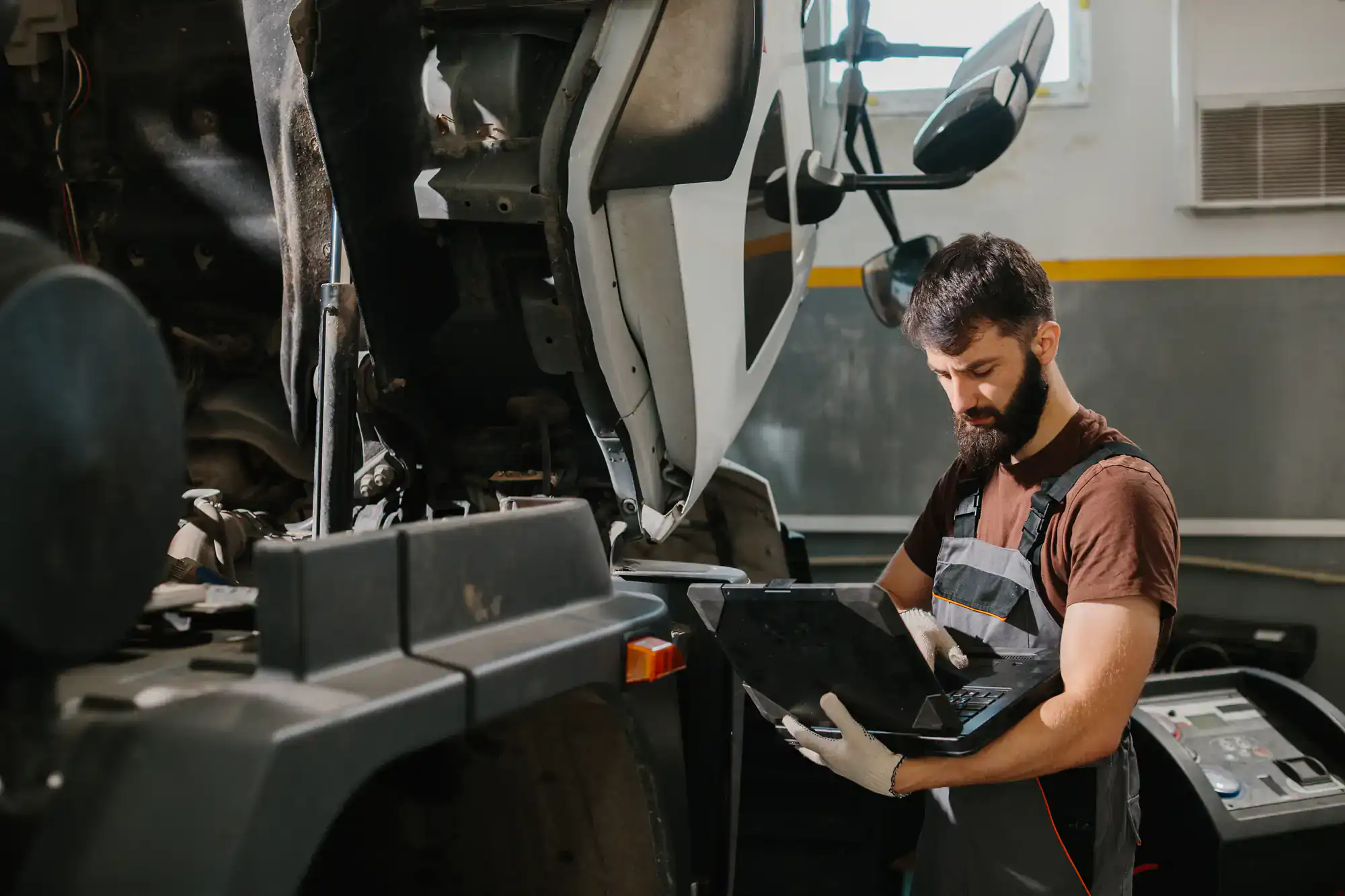
Once on-site, our technician connects a CARB-certified OBD device directly to your truck’s ECU. The device reads the required diagnostic data emissions system readiness, fault codes, and related parameters and that data is uploaded electronically to CARB’s CTC-VIS database. You don’t log into any portal. You don’t submit anything manually. The submission happens on the spot, and CARB begins the nightly sync to DMV from there.
If the truck fails meaning there’s an active fault code or emissions-related issue flagged you’ll know exactly what needs to be addressed before the deadline. Because testing can be done up to 90 days before your compliance due date, there’s a real repair window built in if you plan ahead. That 90-day advance option is something a lot of operators in the Southeast LA freight corridor don’t know about, and it’s the difference between a manageable situation and a 30-day emergency.

Ready to get started?
The Clean Truck Check formally California’s Heavy-Duty Inspection and Maintenance Program under SB 210 applies to diesel and alternative-fuel heavy-duty vehicles with a GVWR over 14,000 pounds operating on California public roads. That includes out-of-state registered trucks running freight through LA County. If your truck is model year 2013 or newer and meets that weight threshold, it falls under this program. Vehicles outside that range lighter trucks, pre-2013 models are not part of this testing requirement, and we do not test them.
Right now, most OBD-equipped vehicles test semi-annually twice per year. Starting October 1, 2027, that frequency increases to quarterly, meaning four tests per year. For owner-operators and fleet managers running trucks through the Commerce industrial zone, the Vernon distribution corridor, or the port-connected routes that pass through Southeast LA, that’s a significant increase in testing volume. Establishing a reliable testing relationship now before that transition means you’re not scrambling when the new schedule hits.
One thing worth clarifying: the $31.18 annual compliance fee you pay to CARB is not a substitute for the emissions test. Many operators in the 90255 area have paid that fee and assumed they were fully covered, only to find a DMV registration hold at renewal. The fee and the test are two separate requirements. We handle the test and the CTC-VIS submission the part that actually clears the hold and satisfies CARB’s compliance record.
Yes if your truck operates on California public roads, the Clean Truck Check requirement applies regardless of where it’s registered. CARB’s Heavy-Duty Inspection and Maintenance Program covers any diesel or alternative-fuel heavy-duty vehicle with a GVWR over 14,000 pounds that operates in California, including out-of-state registered vehicles. This is a common point of confusion for operators running interstate freight routes through the Southeast LA corridor.
If your truck is making deliveries into the Commerce or Vernon warehouse districts, running port drayage on the I-710, or passing through Walnut Park on a regular freight route, it falls under California’s jurisdiction for this program. The compliance fee and the emissions test both apply. Getting tested by a CARB-credentialed tester and having results submitted to CTC-VIS is the only way to document compliance and that record needs to exist before your truck gets flagged by one of CARB’s roadside monitoring devices operating in this region.
These are two completely separate requirements, and mixing them up is one of the most common reasons operators in the 90255 area end up with a DMV registration hold. The annual compliance fee $31.18 per vehicle in 2025 is paid directly to CARB and is required to keep your vehicle enrolled in the program. Paying it does not mean your truck has been tested. It does not generate a passing test record in CTC-VIS. It does not satisfy CARB’s emissions compliance requirement.
The emissions test is a separate event. A CARB-credentialed tester uses certified OBD equipment to connect to your truck’s ECU, download the required diagnostic data, and submit the results electronically to CARB’s database. Only a passing test submission from a credentialed tester using approved equipment creates the compliance record that clears a DMV hold and satisfies CARB’s program requirements. If you’ve paid the fee but haven’t had the OBD test performed, your truck is not fully compliant, even though the fee receipt might suggest otherwise.
CARB uses two primary tools to identify non-compliant trucks on California roads. The first is Roadside Emissions Monitoring Devices stationary equipment deployed along high-traffic freight corridors that measures real-time exhaust emissions from passing vehicles. The second is Automated License Plate Readers, which cross-reference plate data against CARB’s compliance database in real time. Both technologies are actively deployed in the Southeast Los Angeles region, which includes the roads around Walnut Park, the I-710, and the Alameda Corridor.
If your truck’s plate comes up as non-compliant or your vehicle is flagged as a potential high emitter, CARB issues a Notice to Submit to Testing. That notice gives you 30 calendar days to produce a passing test submission. Missing that window can result in fines that reach up to $10,000 per vehicle per day, plus a DMV registration hold that prevents renewal. The most straightforward way to avoid that scenario is to have your test on record before your truck ever passes one of those monitoring points which, in this corridor, is essentially every working day.
A failed test means the OBD system found an active fault code or emissions-related issue that needs to be addressed before your truck can pass. It doesn’t mean the truck is immediately taken off the road but it does mean you have work to do before the compliance deadline. The test result itself will identify the specific fault codes present, which gives your mechanic a clear starting point for diagnosis and repair.
This is exactly why the 90-day advance testing window matters. If you test your truck up to 90 days before your compliance due date and it comes back with a fault, you have time to get the repair done and retest before the deadline hits. Operators in the Southeast LA freight corridor who wait until the last week before their deadline or worse, until a DMV hold blocks their renewal lose that buffer entirely. We can retest after repairs are completed, and the new passing result goes directly to CTC-VIS to update your compliance record.
As of 2025, most OBD-equipped heavy-duty vehicles subject to California’s Clean Truck Check program are required to test semi-annually meaning twice per year. Your specific compliance deadline is tied to your vehicle’s registration and is tracked through CARB’s CTC-VIS system. The annual compliance fee is due separately and does not align with the testing schedule in a way that makes it easy to track both simultaneously, which is another reason operators sometimes fall behind.
What’s coming is worth planning for now: starting October 1, 2027, the testing frequency for OBD-equipped vehicles increases to quarterly four tests per year. For fleet managers running multiple trucks through the Commerce and Vernon industrial zones, or owner-operators doing port runs through the I-710 corridor, that’s a meaningful increase in scheduling and coordination. Locking in a mobile testing provider who comes to your yard and handles CTC-VIS submission directly before that quarterly schedule kicks in is a practical move that saves significant time and friction down the road.
We serve Walnut Park directly within our Los Angeles County service area. This matters more than it might seem, because search results for “Clean Truck Check near Walnut Park” frequently surface pages built for Walnut, CA a completely different city about 20 miles east in the San Gabriel Valley, with ZIP code 91789. Walnut Park is ZIP code 90255, an unincorporated community in Los Angeles County bordered by Huntington Park, South Gate, and Florence-Graham. The two places share nothing except a similar name.
We serve Walnut Park specifically not a generic “LA County” coverage area that happens to include it by default. Our mobile service model means we come to your location in or around the community, whether that’s a residential lot, a commercial staging area, or a nearby industrial yard in Commerce or Vernon. For owner-operators and small fleet managers based in this part of Southeast LA, that means no repositioning, no lost time, and no confusion about whether your address actually falls within our service zone.
Useful Links
Other Services we provide in Walnut Park