

Check Out Our Reviews!

A DMV registration hold doesn’t send a warning. It shows up at renewal and your truck is grounded right when you’ve got loads to run and a route that can’t wait. For owner-operators and small fleet managers working the City of Industry corridor just south of South San Jose Hills, that’s not a hypothetical. It’s a real risk that’s already hit people in this area.
The SR-60 is one of California’s designated primary truck routes. The confluence at SR-57 and SR-60 near Diamond Bar moves roughly 26,000 commercial trucks every single day. CARB knows this corridor well, and enforcement here is active. If your truck is a 2013 or newer model with a GVWR over 14,000 pounds, you’re in scope and a passing OBD test submitted to CARB’s CTC-VIS system is what keeps you compliant.
What changes after you get tested isn’t just a checkmark in a database. It’s the ability to renew your registration without a fight, run your route without looking over your shoulder, and stop wondering whether you missed something. That clarity is worth more than the test itself.
We’re a CARB-credentialed emissions testing company focused exclusively on model year 2013 and newer heavy-duty vehicles with a GVWR over 14,000 pounds. That’s not a broad service menu it’s a deliberate choice. The Clean Truck Check program is specific, the equipment requirements are specific, and the operators who need it deserve a tester who knows it inside and out.
The communities along the SR-60 corridor South San Jose Hills, La Puente, the City of Industry are home to a serious working trucking population. These aren’t hobbyist vehicles. They’re livelihoods. We built a mobile-first model specifically because trucks on this corridor don’t have the flexibility to sit in a shop line. You need someone who shows up where the truck is, runs the test with CARB-certified OBD equipment, and submits directly to CTC-VIS before we leave your lot.
You can verify our credentials yourself at arb.ca.gov. That’s not a pitch that’s just how it should work.
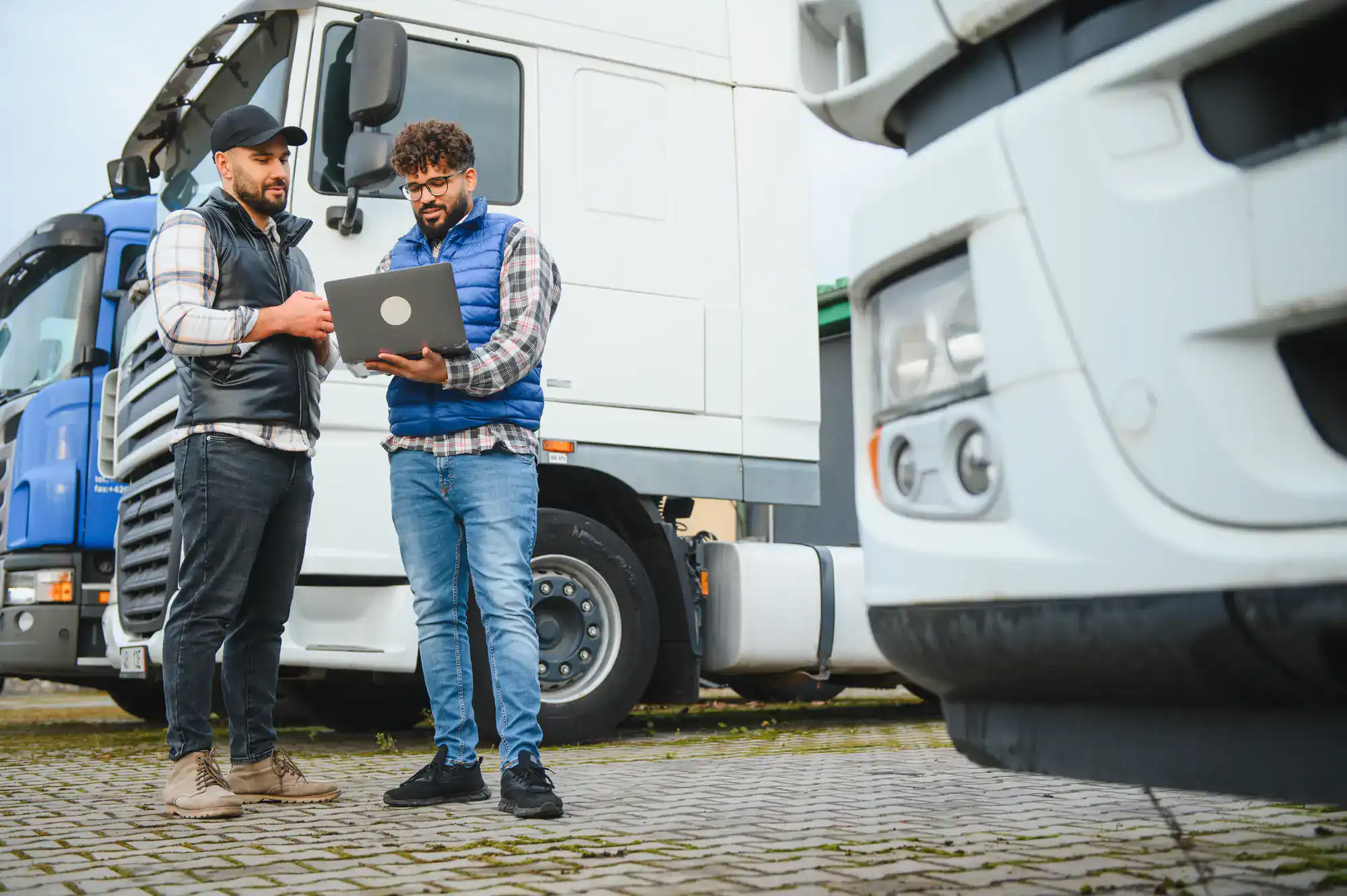
You schedule a time that works around your route not around a shop’s availability. We come to your location in South San Jose Hills, your yard in the City of Industry, or wherever the truck is staged. There’s no drop-off, no waiting room, no repositioning your vehicle to a facility.
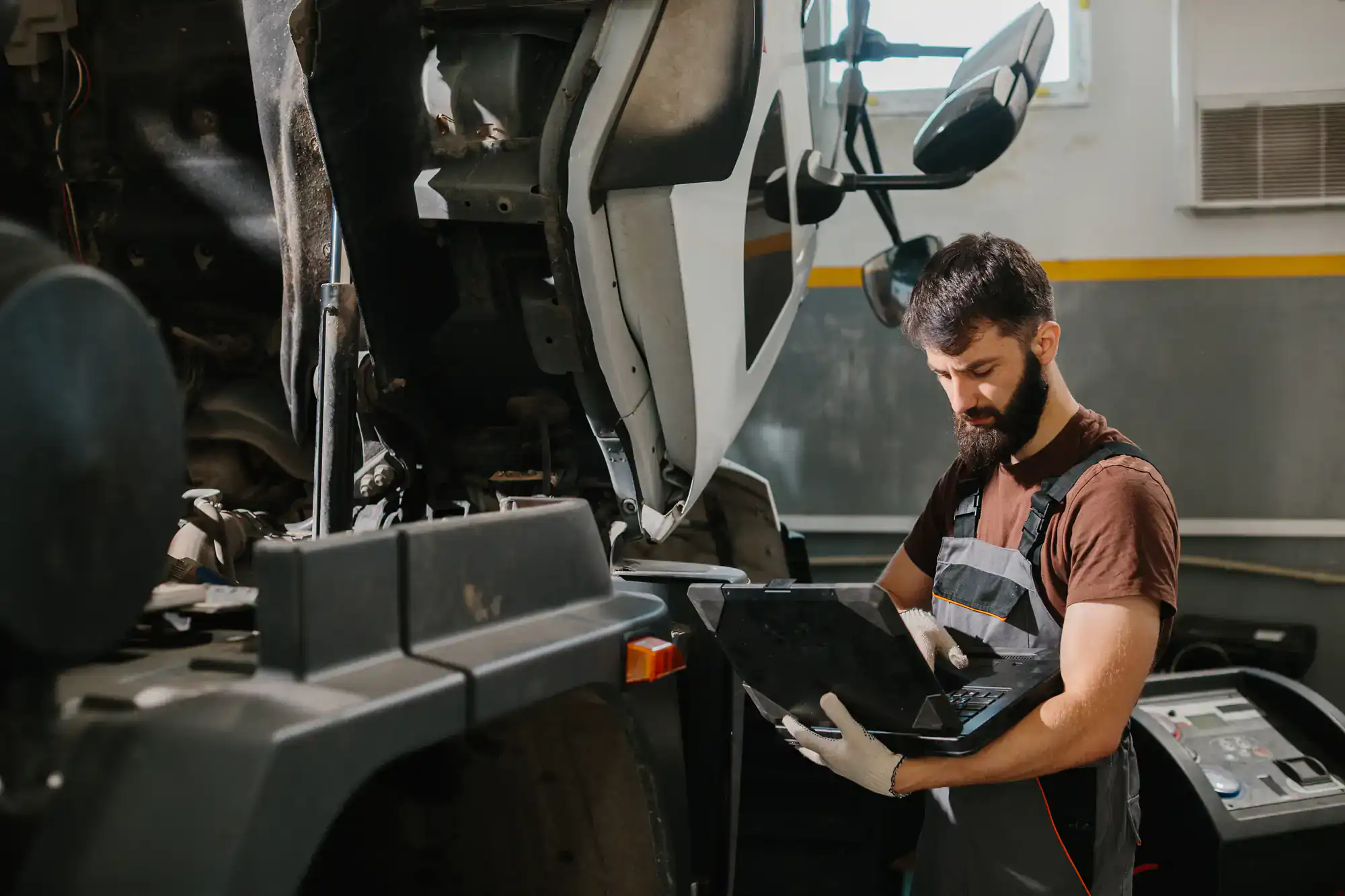
On-site, a CARB-certified OBD device connects directly to your truck’s ECU and pulls the emissions data CARB requires. This equipment carries CARB Executive Order approval meaning the results are valid and accepted by the CTC-VIS system. Not every OBD scanner qualifies, and a test run with uncertified equipment doesn’t count. That’s a detail worth knowing before you book anyone.
Once the test is complete, we submit results directly to CARB’s CTC-VIS database right there, before we leave. You don’t log into any portal. You don’t upload anything. CARB transmits compliant VIN data to DMV on a nightly basis, so your registration status typically clears within a few business days. One visit. Done.

Ready to get started?
The Clean Truck Check applies to diesel and alternative-fuel heavy-duty vehicles that are model year 2013 or newer with a GVWR over 14,000 pounds. If your truck doesn’t meet both of those criteria the model year and the weight rating it falls outside the scope of this program entirely. We only test vehicles that qualify under CARB’s OBD testing requirements, so there’s no confusion about whether your truck is in or out.
Every visit includes the full OBD emissions test using CARB-approved equipment, direct electronic submission to CTC-VIS, and confirmation that your results are in the system before we leave your location. For fleet operators running multiple trucks out of the City of Industry or staging vehicles in the South San Jose Hills area, scheduling can be coordinated to test several units in a single visit which keeps your fleet moving without stacking up multiple appointment days.
One thing worth understanding: the $31.18 annual compliance fee you pay to CARB is not the test. Many truck owners in Los Angeles County have paid that fee, assumed they were compliant, and then hit a DMV hold at renewal because the actual OBD test was never submitted. The fee and the test are two separate requirements. Both are required. We handle the test side completely.
It depends on two things: the model year and the weight rating. The Clean Truck Check program formally CARB’s Heavy-Duty Inspection and Maintenance program applies to vehicles that are model year 2013 or newer and have a Gross Vehicle Weight Rating over 14,000 pounds. Both conditions have to be true. If your truck is a 2012 or older, or if it’s under that GVWR threshold, it’s outside the scope of this program and doesn’t require OBD testing under Clean Truck Check.
For most owner-operators and small fleet managers running trucks out of the City of Industry corridor south of South San Jose Hills, the vehicles in question are typically late-model diesel semis, box trucks, and heavy freight vehicles that fall squarely in scope. If you’re not sure whether your specific truck qualifies, pull the GVWR from the door jamb placard and cross-reference the model year. We can also help you confirm eligibility before scheduling a test.
You’re not compliant yet. This is one of the most common misunderstandings in the Clean Truck Check program, and it catches a lot of truck owners off guard especially those who registered in CTC-VIS and paid the annual $31.18 fee thinking that completed the process. It doesn’t. The fee and the OBD emissions test are two entirely separate requirements, and both are mandatory.
Paying the fee registers your vehicle in the system. But compliance requires a passing OBD test submitted by a CARB-credentialed tester directly to CARB’s CTC-VIS database. Until that test is on file, your truck is still flagged as non-compliant and CARB transmits that status to DMV on a nightly basis. That means when your registration renewal comes up, you may be looking at a hold. For trucks operating on the SR-60 corridor where your livelihood depends on that vehicle being road-legal, finding out at the DMV window is not a good situation. If you’ve paid the fee but haven’t tested, schedule the test now.
Right now, OBD-equipped vehicles subject to the Clean Truck Check program are required to test twice per year on a semi-annual schedule. The first major compliance deadline under the program was January 1, 2025, so if your truck hasn’t been tested since then, you’re likely overdue for at least one cycle already.
Starting October 1, 2027, the testing frequency increases to four times per year for OBD-equipped vehicles. That’s a significant operational shift, especially for fleet managers running multiple trucks. For operators based in or near South San Jose Hills who are already managing tight schedules on the SR-60 corridor, getting a reliable mobile testing relationship in place now before that frequency doubles makes the transition a lot smoother. Quarterly testing with a tester who comes to your yard is a very different experience than scrambling to find a credentialed shop four times a year.
CARB’s enforcement authority under the Clean Truck Check program allows for fines of up to $10,000 per vehicle per day for non-compliance. That’s not a per-incident fine it can accrue daily. In practice, most enforcement starts with a Notice to Submit to Testing, which gives you 30 calendar days to get a passing test on file. Missing that window is where the financial exposure becomes serious.
Beyond the direct fine risk, non-compliant trucks face DMV registration holds. CARB transmits compliant and non-compliant VIN lists to DMV every night, so your registration status is essentially live. For a truck running loads out of the City of Industry where a registration hold means a truck that can’t legally operate the cost of non-compliance adds up fast. The test itself is a fraction of what a single day of downtime costs on a working commercial route.
Yes that’s exactly the kind of location we’re set up to serve. The mobile testing model exists specifically because most heavy-duty trucks operating in the City of Industry corridor can’t be easily repositioned to a testing facility without pulling them off a route or rearranging a dispatch schedule. We come to the truck’s location whether that’s a yard in the City of Industry, a dock in the warehouse district, a staging area off Valley Boulevard, or a residential address in South San Jose Hills where the truck is parked overnight.
The only practical requirement is that the truck is accessible and the engine can be started for the OBD connection. We bring CARB-certified equipment, run the test on-site, and submit results directly to CTC-VIS before leaving. There’s no facility, no waiting, and no need to move the truck anywhere. For fleet operators managing multiple vehicles at a single yard, multiple units can often be tested in one visit.
A Notice to Submit to Testing sometimes called an NST is a formal notification from CARB that your vehicle is overdue for a Clean Truck Check and must complete testing within 30 calendar days. It’s not a fine, but it’s a hard deadline. Missing it puts you in direct enforcement territory, including the registration hold and potential daily penalties.
If you’ve received one and you’re operating in or around South San Jose Hills, the most important thing is to move quickly. Thirty days sounds like enough time, but between scheduling, confirming your truck qualifies, and making sure the tester is actually CARB-credentialed with certified equipment, it goes fast. We’re set up for exactly this situation mobile, credentialed, and able to submit results directly to CTC-VIS the same day as the test. Once that submission is in the system, CARB updates DMV overnight. Don’t sit on an NST. The window is short and the consequences of missing it are real.
Useful Links
Other Services we provide in South San Jose Hills