
Hear from Our Customers

You’re looking at $10,000 per vehicle per day if you miss your compliance deadline. That’s not a scare tactic—that’s California law. And it gets worse: DMV can block your registration, CHP can flag you at roadside inspections, and ports can deny you entry.
Clean Truck Check testing keeps you clear of all that. If your truck is model year 2013 or newer with a GVWR over 14,000 pounds, you need this test to operate legally in California. The deadline isn’t negotiable, and the state isn’t issuing warnings.
We handle CARB diesel compliance testing through the official CTC-VIS system. You get your results submitted directly to CARB, your compliance certificate on record, and your trucks back on the road. No registration drama. No surprise fines. No wondering if you’re actually compliant.
This isn’t about checking a box. It’s about protecting your business from penalties that can shut you down. You’ve got 90 days before your deadline to submit a passing test, which gives you time to handle repairs if something comes up. Miss that window and you’re looking at enforcement action that hits your wallet and your schedule.
We serve the South San Jose Hills trucking community with CARB credentialed testers who understand heavy-duty vehicle compliance. We’re not a general smog shop trying to figure out diesel regulations on the fly. We focus on what matters: getting your 2013+ trucks tested correctly the first time.
South San Jose Hills sits right off the Pomona Freeway between City of Industry and West Covina. You’re running routes through some of the busiest freight corridors in California, which means you can’t afford compliance issues that ground your fleet. We get that. Our testing process is built around your operational reality, not a government manual.
You need someone who knows the difference between HD I/M requirements and standard smog checks. Someone who understands why OBD testing matters for newer trucks and what CARB actually looks for during compliance evaluation. That’s what you get here—no learning curve on your dime.

First, we verify your truck qualifies. Model year 2013 or newer, GVWR over 14,000 pounds. If you’re outside those specs, this isn’t the right test for your vehicle. No exceptions, no workarounds—that’s CARB’s rule, not ours.
Once we confirm eligibility, we connect to your truck’s OBD system using CARB-certified testing equipment. We’re pulling diagnostic data directly from your vehicle’s computer to evaluate emissions performance. This isn’t a visual inspection or a tailpipe test. It’s a data-driven compliance check that CARB designed specifically for newer heavy-duty trucks.
The test takes about 30 minutes if everything’s running clean. We submit your results directly to the CTC-VIS system—that’s CARB’s official database for Clean Truck Check compliance. You’ll get documentation showing your test results and your compliance status. If you pass, you’re done. Your record updates with DMV, and you’re clear for your compliance period.
If something flags during testing, we’ll tell you exactly what needs attention. You’ve still got time to make repairs and retest before your deadline, assuming you didn’t wait until the last minute. That 90-day window exists for a reason—use it.

Ready to get started?
California’s HD I/M program isn’t optional for heavy-duty trucks operating in the state. If you received a Notice to Submit to Testing, you have 30 days to complete your Clean Truck Check or face immediate penalties and registration holds. Even without a notice, your compliance deadline still applies based on your vehicle’s schedule.
Semi-annual testing means you’re doing this twice a year. Starting in October 2027, OBD-equipped vehicles move to quarterly testing—four times per year. That’s the trajectory CARB has set, and it’s not changing. Plan your maintenance schedule accordingly.
South San Jose Hills truck operators deal with constant pressure from tight delivery windows and rising fuel costs. Adding compliance headaches to that list doesn’t help anyone. But here’s the reality: CARB enforcement is active throughout Los Angeles County. CHP conducts roadside inspections. Ports and railyards check compliance status before granting access. You can’t skip this and hope nobody notices.
Your CARB compliance testing needs to happen at a facility with credentialed testers using approved equipment. We meet those requirements. You get official documentation that holds up under inspection, submitted through the proper channels, with results that actually count toward your compliance obligation.
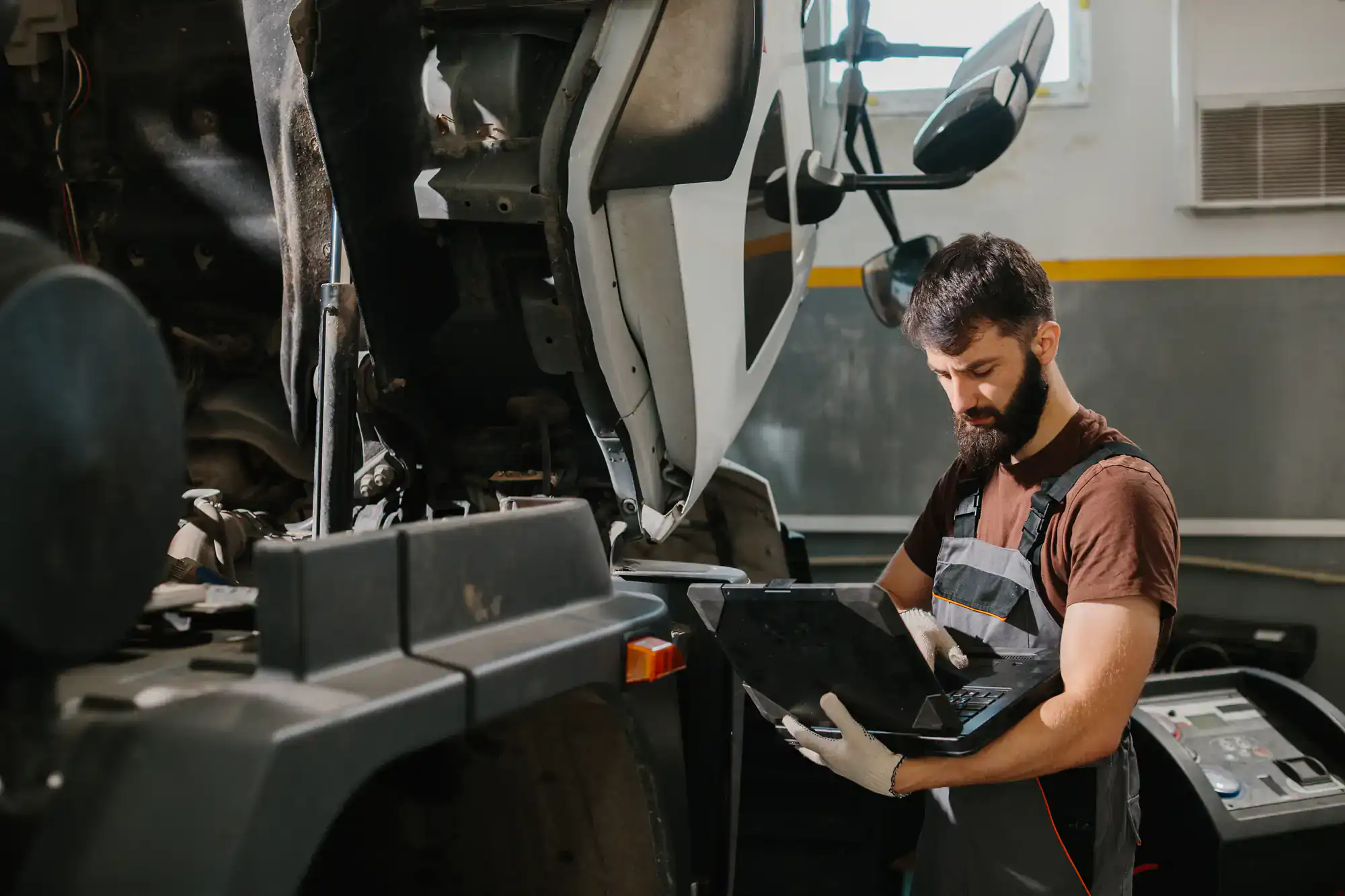
Only trucks that are model year 2013 or newer with a GVWR over 14,000 pounds qualify for Clean Truck Check testing. This is a hard requirement set by CARB—there’s no flexibility on the year or weight threshold.
If your truck is older than 2013, you’re subject to different CARB regulations that don’t involve Clean Truck Check. If your GVWR is under 14,000 pounds, you’re not in the heavy-duty category that requires this specific test. Don’t assume your truck qualifies just because it’s diesel or because it’s commercial. The 2013 cutoff and weight requirement are non-negotiable.
Out-of-state trucks operating in California fall under these same rules. Your registration state doesn’t matter—if you’re running loads in California with a qualifying vehicle, you need Clean Truck Check compliance. CARB doesn’t grant exemptions for out-of-state operators, and enforcement applies at ports, railyards, and during roadside inspections statewide.
CARB can fine you up to $10,000 per vehicle per day for non-compliance. That’s not a maximum penalty reserved for repeat offenders—that’s the stated penalty structure for missing your compliance deadline. One truck, one week late, could theoretically cost you $70,000.
Beyond fines, DMV will place a registration hold on non-compliant vehicles. You can’t renew your registration until you complete testing and submit passing results. That means your truck sits, you’re not generating revenue, and you’re still on the hook for insurance, payments, and all your other fixed costs.
CHP officers can evaluate your compliance status during roadside inspections. If you’re flagged as non-compliant, you’re looking at citations and potential vehicle impoundment. Ports and railyards in California also check compliance before allowing entry—show up without a current Clean Truck Check and you’re getting turned away. The financial hit isn’t just the fine; it’s the lost work, the missed deliveries, and the damage to your reputation with customers who need reliable service.
Most heavy-duty trucks under the current CARB HD I/M program require semi-annual testing—that’s twice per year. Your specific testing frequency depends on your vehicle’s compliance schedule, which CARB assigns based on your truck’s characteristics and registration status.
Starting in October 2027, the rules change. OBD-equipped vehicles will move to quarterly testing, meaning you’ll need a Clean Truck Check four times per year instead of two. CARB is tightening the compliance intervals to increase emissions monitoring frequency across the heavy-duty fleet.
You can submit a passing test up to 90 days before your compliance deadline. That’s your buffer for dealing with repairs if something fails. If you wait until the week before your deadline and your truck doesn’t pass, you’re in a tight spot. Smart operators test early, address any issues that come up, and retest with time to spare. Once you’re in the system, you’ll receive notices about upcoming deadlines—don’t ignore them.
CARB emissions testing for 2013 and newer heavy-duty trucks is OBD-based, meaning we connect directly to your vehicle’s onboard diagnostic system. We’re not doing a tailpipe test or a visual inspection—we’re pulling data from your truck’s computer to evaluate emissions system performance.
We use CARB-certified equipment to access your OBD port and retrieve diagnostic trouble codes, monitor readiness status, and check emissions-related system functionality. CARB’s testing protocol looks for specific parameters that indicate whether your truck’s emissions controls are working properly. If your check engine light is on or certain monitors aren’t ready, that’s going to flag during testing.
Results get submitted directly to CARB’s CTC-VIS system in real time. You’re not waiting days for paperwork to process—your compliance status updates as soon as testing is complete. If you pass, you get documentation proving compliance that’s tied to your VIN and registered with the state. If you fail, you get a detailed report showing what triggered the failure so you know exactly what needs repair before you retest.
Yes. If you’re running multiple trucks out of South San Jose Hills, we can handle Clean Truck Check testing for your entire fleet. Every vehicle still needs to meet the eligibility requirements—model year 2013 or newer, GVWR over 14,000 pounds—but we can schedule testing to minimize disruption to your operations.
Fleet testing makes sense when you’ve got compliance deadlines stacked up or when you’re trying to get ahead of the semi-annual schedule. Instead of bringing trucks in one at a time over several weeks, you can batch your testing and get your whole fleet current in a shorter window. That’s easier on your dispatch schedule and reduces the administrative headache of tracking individual compliance dates.
South San Jose Hills is centrally located for fleet operators serving the San Gabriel Valley and eastern Los Angeles County. You’re close to major distribution centers, freight routes, and industrial zones where heavy-duty trucks are constantly moving. Getting your compliance handled locally means less deadhead time and fewer logistical complications. We understand the operational side of running trucks—you need testing that works around your schedule, not the other way around.
Schedule your Clean Truck Check immediately. A Notice to Submit to Testing gives you 30 days to complete compliance testing and submit results to CARB. That’s not a lot of time, especially if your truck fails the first test and needs repairs before you can retest.
The notice isn’t a suggestion—it’s a legal requirement with enforcement consequences. If you ignore it or miss the 30-day deadline, CARB will initiate penalty proceedings and DMV will flag your registration. You’re looking at fines, registration holds, and potential restrictions on operating your vehicle in California until you achieve compliance.
Don’t assume you can push the deadline or negotiate an extension. CARB’s system is automated, and enforcement is consistent. If you’re dealing with mechanical issues that might affect your emissions systems, get those addressed before you test. Showing up with a check engine light or incomplete monitor readiness is going to result in a failed test, and you’ll be burning days off your 30-day window. Get tested early, handle any problems that surface, and get your passing results submitted with time to spare.
Useful Links
Other Services we provide in South San Jose Hills