
Check Out Our Reviews!

If your trucks are running drayage to the Port of Long Beach, staging near the Alameda Corridor, or hauling out of a yard on Firestone Boulevard in South Gate, you already know the stakes. South Gate is officially designated by CARB as part of the Southeast Los Angeles Community under AB 617 which means this isn’t a low-scrutiny environment. Enforcement here is active, visible, and targeted at exactly the kind of heavy-duty diesel trucks you’re operating.
A registration hold doesn’t send you a warning. It shows up at renewal, and by then your truck is already grounded. The Clean Truck Check isn’t just a box to check it’s the difference between a truck that’s generating revenue and one that’s sitting in your yard while you sort out a compliance problem with the DMV.
When your test is done right the first time submitted directly to CARB’s system by a credentialed tester using certified equipment you don’t have to wonder if the record cleared. You know it did. That’s what we deliver: documented compliance that holds up, handled from start to finish, at your location.
We don’t test passenger cars. We don’t touch pre-2013 trucks. We don’t offer a general smog check menu. Our entire operation is built around one thing: CARB-credentialed OBD emissions testing for heavy-duty trucks that are model year 2013 or newer with a GVWR over 14,000 pounds. That’s it. This focus isn’t a limitation it’s the reason the work gets done correctly.
South Gate’s truck operators aren’t dealing with a suburban compliance scenario. You’re running freight through one of the most congested and monitored industrial corridors in California I-710, the Alameda Corridor, warehouse yards that back up to railroad tracks in Hollydale. The regulatory pressure here is real, and the tester you call should understand that environment, not just show up with a scanner.
We hold verified CARB credentials publicly listed on arb.ca.gov and use only state-certified OBD equipment. When the test is done, results go directly into CARB’s CTC-VIS database. You don’t navigate the portal. You don’t follow up. You get confirmation and move on.
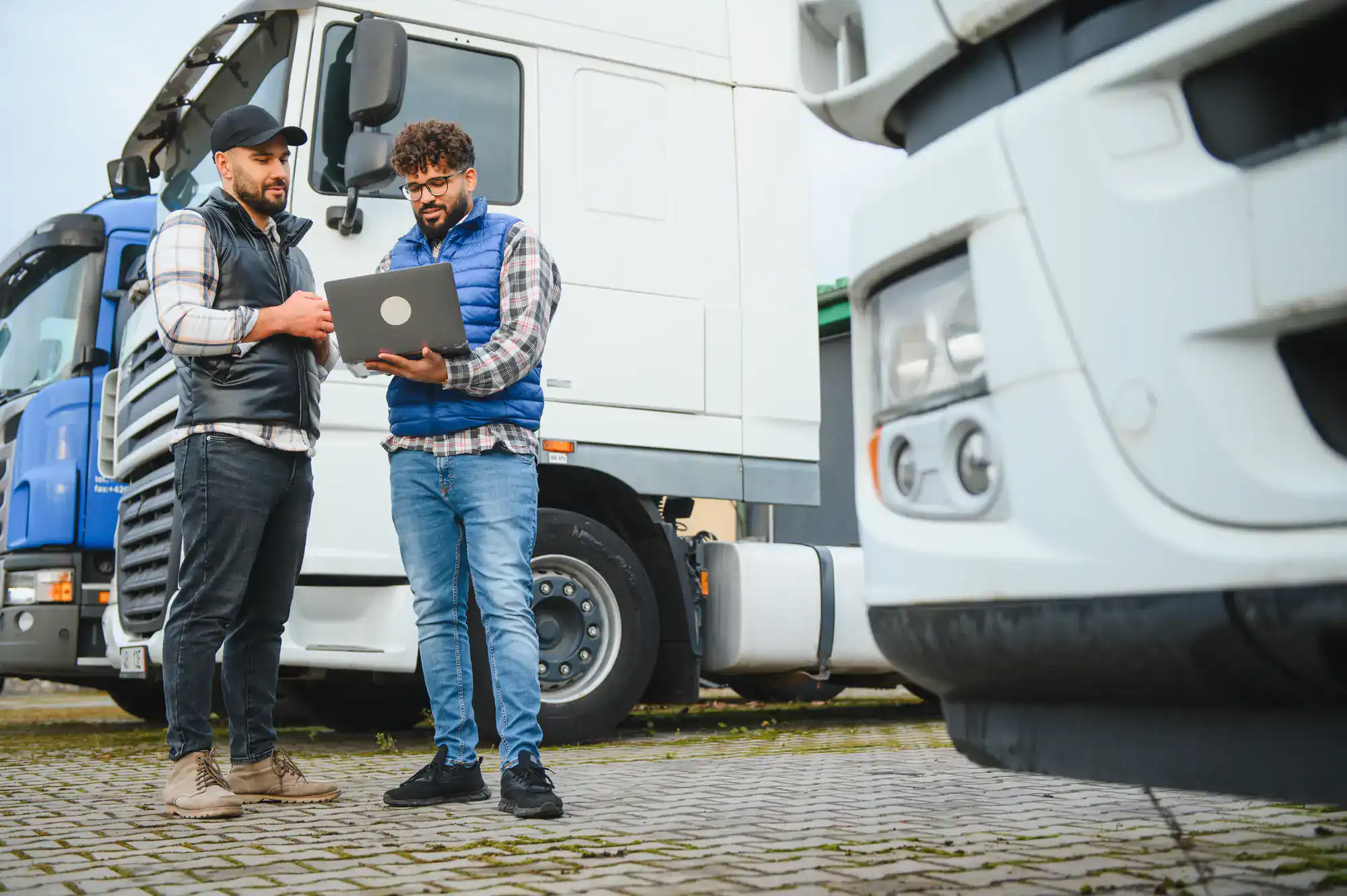
You schedule a time that works for your operation whether that’s a fleet yard off Firestone Boulevard, a staging lot near Long Beach Boulevard, or a dock anywhere in South Gate where your trucks are parked. A CARB-credentialed technician comes to you with certified OBD test equipment. Your trucks don’t move. Your drivers don’t reroute. The test happens where the trucks already are.
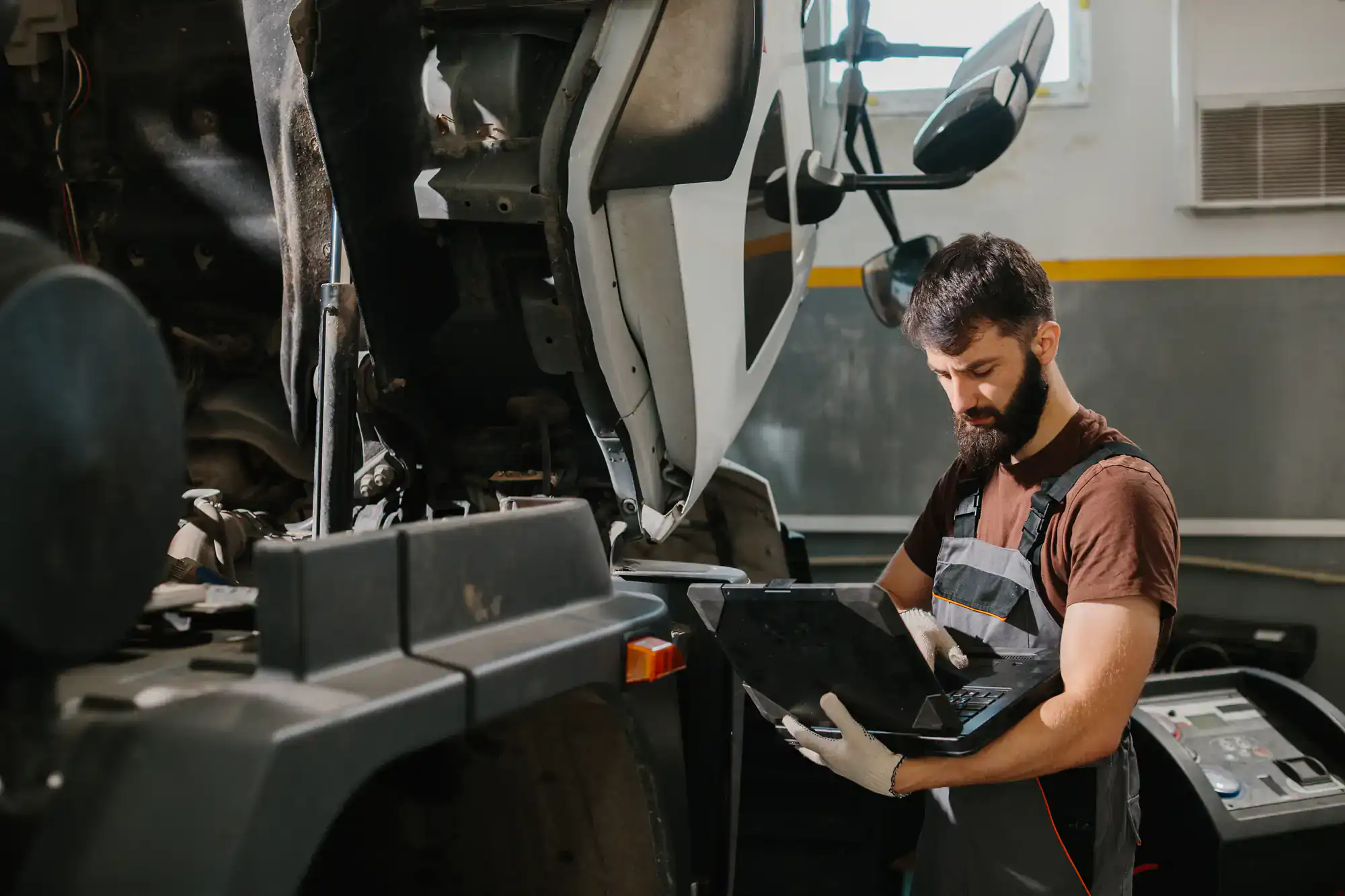
On-site, the technician connects CARB-certified OBD equipment directly to your truck’s ECU and downloads the diagnostic data. This isn’t a visual inspection or a basic code scan it’s a full emissions data pull using equipment that holds a CARB Executive Order authorizing its use for Clean Truck Check compliance. That distinction matters, because a test run on uncertified equipment produces a result CARB won’t accept, even if the truck is in perfect condition.
Once the data is collected, results are submitted directly and electronically to CARB’s CTC-VIS database. There’s no portal for you to log into, no manual entry steps, no wondering if the submission went through. South Gate’s AB 617 designation means your compliance record is subject to closer scrutiny than in most California cities so having that submission handled completely and correctly, every time, isn’t a nice-to-have. It’s the whole point.

Ready to get started?
The Clean Truck Check applies to diesel trucks that are model year 2013 or newer with a GVWR over 14,000 pounds semis, box trucks, heavy-duty work vehicles operating in California. If your truck falls into that category and it’s registered or operated in the state, this test is required. Right now, most OBD-equipped vehicles need to test twice per year. Starting October 1, 2027, that requirement increases to four times per year. For a South Gate fleet running ten trucks, that’s forty individual tests annually which is exactly why establishing a reliable testing relationship now makes sense.
What you get with us isn’t just a test result. It’s a complete compliance transaction: a CARB-credentialed technician, CARB-certified OBD equipment, and direct electronic submission to CTC-VIS all handled at your location in South Gate. There’s no fixed shop to drive to, no waiting room, no taking trucks off their routes. The $31.18 annual compliance fee paid to CARB is a separate step you handle directly but the test itself, the submission, and the confirmed compliance record are what we deliver.
If you’ve received a Notice to Submit to Testing from CARB, you have 30 days. Given South Gate’s position as an AB 617 community with active CARB enforcement along I-710 and the Alameda Corridor, that window moves fast. Same-day and next-day scheduling is available for operators who need to move quickly.
If your truck is model year 2013 or newer, has a GVWR over 14,000 pounds, and is registered or operated in California, yes the Clean Truck Check is required regardless of where in the state you’re based. South Gate’s location on the I-710 corridor and its AB 617 designation as part of the Southeast Los Angeles Community means CARB enforcement activity in this area is more concentrated than in most California cities. Trucks running drayage to the Port of Long Beach, hauling through the Alameda Corridor, or operating out of warehouse yards in South Gate are exactly the vehicles this program targets.
The test must be performed by a CARB-credentialed tester using CARB-certified OBD equipment, and results must be submitted directly to CARB’s CTC-VIS database. Paying the $31.18 annual compliance fee alone does not satisfy the requirement that’s one of the most common and costly misunderstandings in this market. You need both the fee and a passing submitted test to be considered compliant.
A failed test doesn’t automatically mean your truck is out of service, but it does mean you have a defined window to address the issue and retest before enforcement consequences kick in. The specific timeline depends on your compliance deadline and whether you’ve received a Notice to Submit to Testing. If you’re operating in South Gate and running freight on I-710 or through the Alameda Corridor, the practical risk of operating a non-compliant truck is higher than in lower-scrutiny areas CARB and South Coast AQMD both run active inspection programs in the Southeast LA corridor.
The best move is to test early up to 90 days before your compliance deadline so you have time to address any issues before the deadline arrives. If your truck needs repairs before it can pass, testing early gives you that repair window without putting you in violation. We can advise on what the test found and what the next steps look like, but repairs themselves are handled by your shop of choice.
A standard smog check is designed for passenger cars and lighter vehicles it tests tailpipe emissions using a different protocol and is administered through the BAR (Bureau of Automotive Repair) smog check network. The Clean Truck Check is a completely separate program, administered by CARB, specifically for heavy-duty OBD-equipped vehicles that are model year 2013 or newer with a GVWR over 14,000 pounds. The two programs are not interchangeable passing a smog check does not satisfy your Clean Truck Check requirement.
The Clean Truck Check uses CARB-certified OBD equipment to pull diagnostic data directly from the truck’s ECU and submits results to CARB’s CTC-VIS database. It requires a CARB-credentialed tester not just any smog check station. Shops in South Gate may list Clean Truck Check as a service alongside their standard smog work, but the equipment, credentials, and submission process for the Clean Truck Check are distinct and must meet CARB’s specific requirements for the test to be valid.
We’re fully mobile our technician comes to wherever your trucks are parked. That means your yard off Firestone Boulevard, your dock on Atlantic Boulevard, a staging area near the Alameda Corridor, or any other location in South Gate where your fleet sits. You don’t reposition trucks, you don’t pull drivers off routes, and you don’t lose a day of revenue moving equipment to a fixed shop.
For fleet operators running multiple trucks, this matters more than it might sound. A drayage operator making port runs out of South Gate can’t afford to ground three trucks for a testing day. Mobile service means the test wraps around your operation, not the other way around. Scheduling is straightforward reach out, confirm your location and the number of trucks, and a credentialed technician shows up at the agreed time with all the equipment needed to complete the test and submit results on the spot.
As of 2025, most OBD-equipped heavy-duty trucks are required to test twice per year semi-annually. That cadence is already in effect, which means if your truck hasn’t been tested yet, it’s currently out of compliance and subject to DMV registration holds and fines that can reach $10,000 per vehicle per day.
The frequency requirement increases significantly starting October 1, 2027, when OBD-equipped vehicles will be required to test four times per year quarterly. For a South Gate fleet operator running ten trucks, that’s forty tests per year. The time to establish a reliable testing relationship isn’t when the quarterly requirement kicks in it’s now, while the cadence is still manageable and you can work out a scheduling rhythm that fits your operation. Fleet operators in the Southeast LA corridor who get ahead of the 2027 change will be in a significantly better position than those who wait.
No and this is the most expensive misunderstanding in the Clean Truck Check program. The $31.18 annual compliance fee is paid directly to CARB and is one part of the requirement, but it does not constitute a passing test. To be fully compliant, your truck also needs a passing OBD emissions test submitted to CARB’s CTC-VIS database by a CARB-credentialed tester using certified equipment. If only the fee has been paid and no test has been submitted, your truck is still non-compliant in CARB’s system and that’s what triggers a DMV registration hold.
This scenario plays out regularly in South Gate and the broader Southeast LA corridor, where fleet operators and owner-operators are managing tight schedules and assume the fee payment closes the loop. It doesn’t. The test and the fee are two separate steps, and both are required. If you’ve paid the fee but haven’t submitted a test, the clock is still running and in an AB 617 community with active CARB enforcement along I-710, that’s not a situation you want to leave unresolved.
Useful Links
Other Services we provide in South Gate