

Check Out Our Reviews!

If you’re running a truck on a renovation project in San Marino or operating out of a yard in Pasadena, Arcadia, or San Gabriel a DMV registration hold doesn’t just create a paperwork headache. It pulls your vehicle off the road, mid-job, in front of clients who expect things to run smoothly. That’s a problem no contractor working on a high-value San Marino estate wants to explain.
The Clean Truck Check requirement applies to any OBD-equipped heavy-duty vehicle with a GVWR over 14,000 pounds that’s model year 2013 or newer. If your truck fits that description and it’s operating on California roads including Huntington Drive, California Boulevard, or any surface street through San Marino it needs to be tested and compliant. There’s no freeway running through San Marino, which means every commercial vehicle entering the city does so on local roads, in plain view of a community that takes compliance seriously.
Once you’re tested and results are submitted directly to CARB’s CTC-VIS database, your compliance record updates. No registration holds. No enforcement notices. No interruptions to the work you’ve already scheduled.
We are a CARB-credentialed, mobile OBD emissions testing company serving Los Angeles and Riverside Counties. This is the only service we offer Clean Truck Check testing for 2013-and-newer heavy-duty trucks with a GVWR over 14,000 pounds. That’s it. No passenger car smog checks, no general repairs, no side services.
That focus matters because the Clean Truck Check program is specific, technical, and unforgiving of shortcuts. Only CARB-certified OBD test equipment devices holding a CARB Executive Order produces a result that actually counts. We use exactly that equipment, connect directly to your truck’s ECU, and submit results electronically to CTC-VIS before leaving your location.
Our credentials are publicly listed on CARB’s official website at arb.ca.gov. If you’re operating trucks anywhere in Los Angeles County from a San Marino job site to a staging area off the I-210 corridor you can verify our credentials before you book. That’s not a sales pitch. It’s a checkable fact.
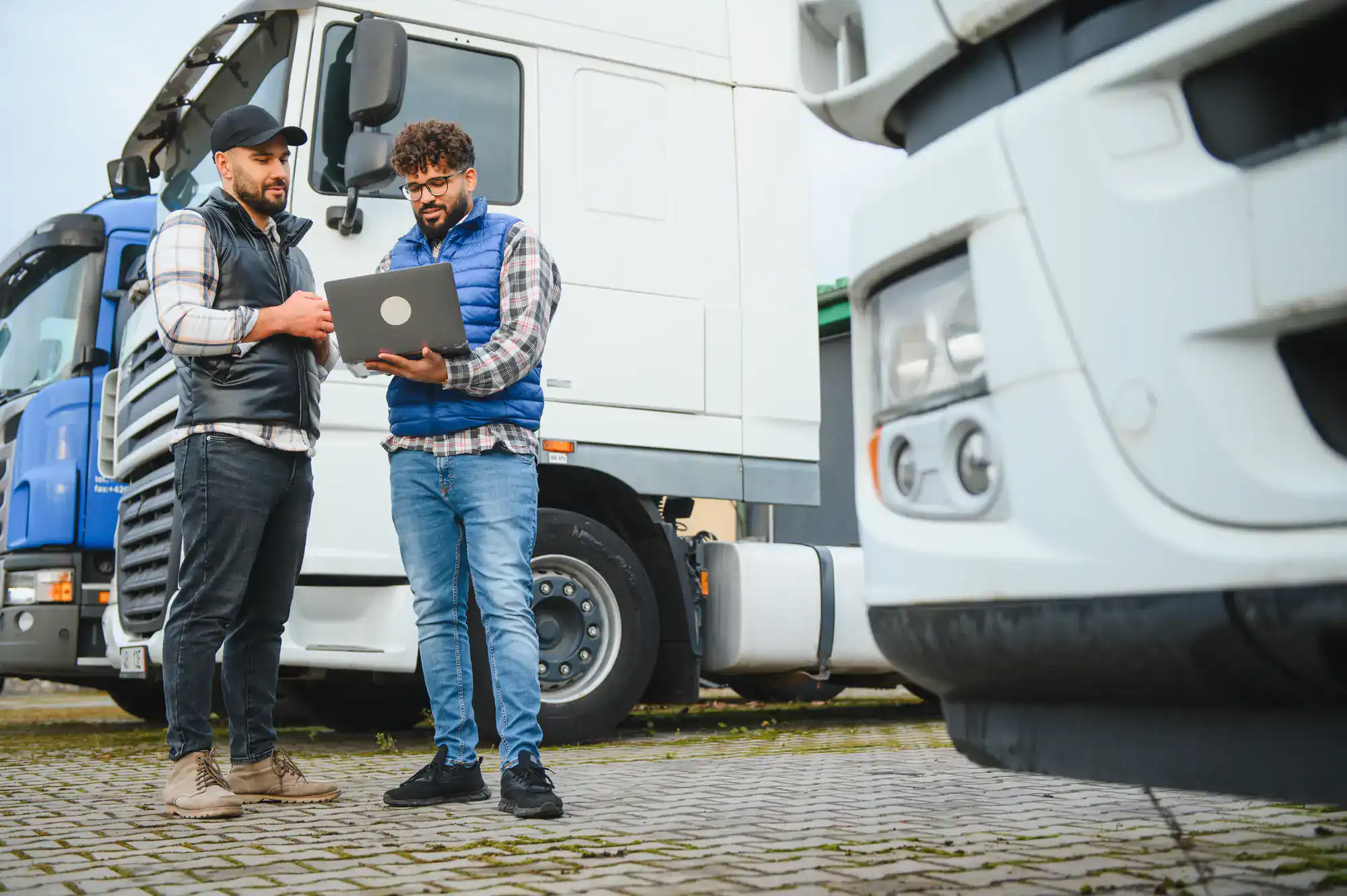
It starts with a call or a booking request. You share the truck’s information year, make, model, GVWR, and your location and we schedule a testing appointment at a time and place that works for your operation. That might be a driveway in San Marino, a contractor yard in Pasadena, a staging area in Arcadia, or anywhere else your truck is parked in Los Angeles County.
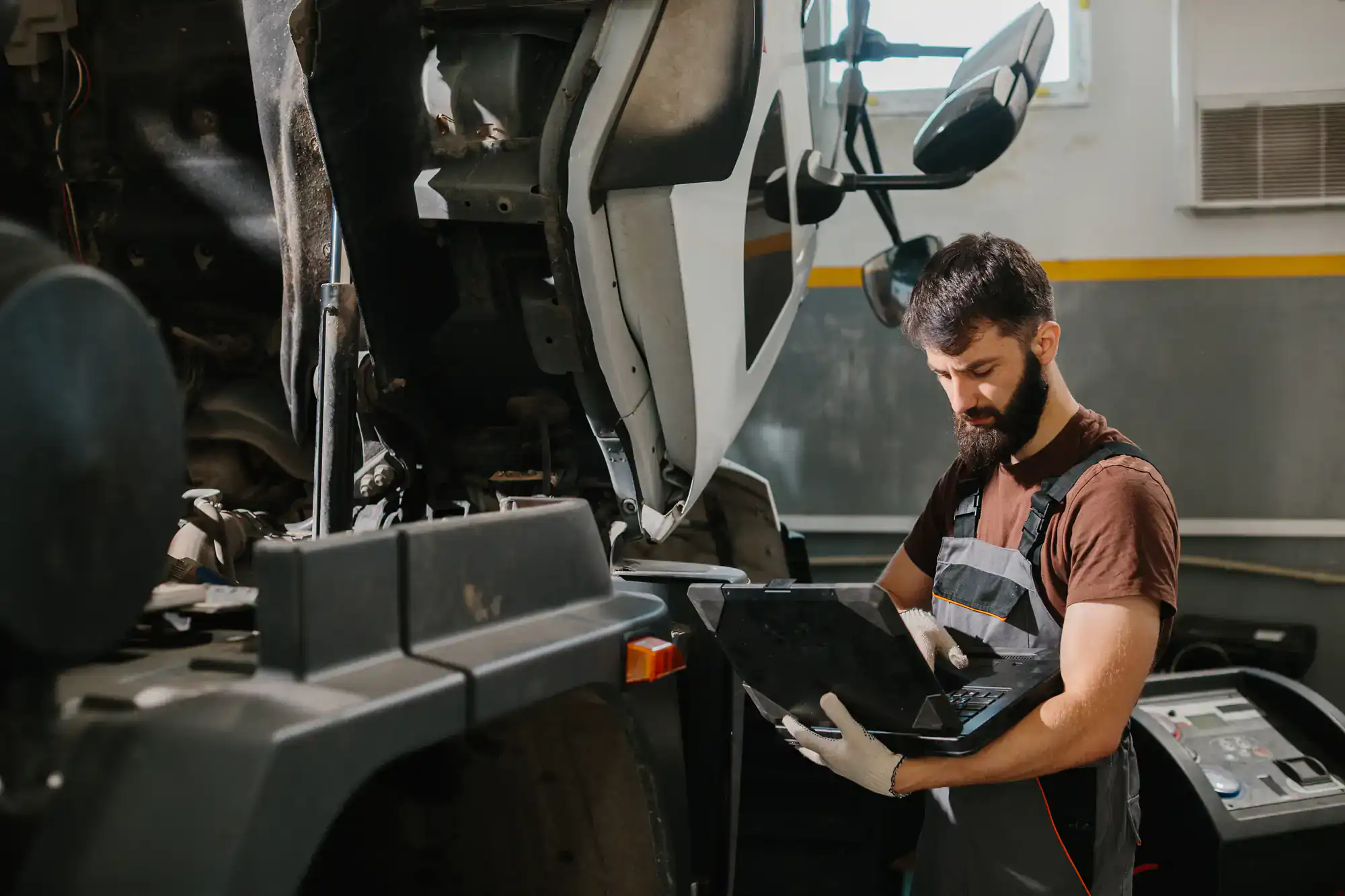
On the day of the test, the OBD device connects directly to your truck’s ECU. The system reads the emissions data that’s already being recorded by the truck’s onboard computer there’s nothing invasive about it. The test itself doesn’t take long. What matters is that the equipment used holds a CARB Executive Order, which is the only way the result is valid for Clean Truck Check compliance purposes.
Once the test is complete, we submit results electronically to CARB’s CTC-VIS database on the spot. You don’t log into a portal. You don’t mail anything. You don’t follow up with a government office. The submission is done, and your compliance record begins updating in the system. Because San Marino sits in the San Gabriel Valley a region CARB and the SCAQMD actively monitor for diesel emissions staying current with your testing schedule is the simplest way to keep enforcement off your radar entirely.
Ready to get started?
Clean Truck Check applies specifically to OBD-equipped heavy-duty vehicles that are model year 2013 or newer with a GVWR over 14,000 pounds. If your truck is older than 2013 or lighter than that threshold, this program does not apply and we won’t test it, because that’s not what this service is built for.
For trucks that do qualify, the current requirement is semi-annual testing twice per year. That changes on October 1, 2027, when OBD-equipped vehicles move to quarterly testing, four times per year. If you’re managing a fleet of trucks that work in and around San Marino, getting a testing relationship established now means you’re not scrambling when that frequency doubles. The annual compliance fee is $31.18 per vehicle, but that fee alone doesn’t satisfy the requirement. A passing OBD test submitted by a CARB-credentialed tester is what actually puts your truck in compliance.
One thing worth knowing: the requirement applies to any truck operating on California public roads, regardless of where it’s registered. If you’re an out-of-state operator bringing equipment to a San Marino construction project, your truck is subject to the same rules as any California-registered vehicle. We can test it at your California job site and submit results directly to CTC-VIS same process, same day.
If your truck is model year 2013 or newer and has a GVWR over 14,000 pounds, yes it needs to be tested under California’s Clean Truck Check program, regardless of what city it’s working in. San Marino is a residential city with no commercial zoning, but contractors bring heavy-duty trucks through it constantly for renovations, landscaping, pool work, and construction on the city’s large estate properties. The fact that San Marino has no testing facilities inside city limits doesn’t change the compliance requirement it just means you need a mobile tester who comes to you.
The CARB requirement applies to any qualifying truck operating on California public roads. Huntington Drive, California Boulevard, and Sierra Madre Boulevard are all public roads that connect to San Marino. If your truck is on them and it fits the criteria, it needs to be compliant. A failed test or an untested truck can result in a DMV registration hold, which means that truck cannot legally operate including on your active San Marino job site.
A DMV registration hold means your truck’s registration cannot be renewed until CARB confirms it’s compliant. CARB transmits a compliant vehicle list to the DMV nightly, so once a passing test is submitted and processed, it typically takes 3 to 5 business days for your DMV record to update. During that window, your truck is in a gray area and depending on how enforcement is being handled in Los Angeles County at the time, that’s a risk most operators don’t want to take.
The faster path is to get tested before the hold appears. Clean Truck Check allows you to submit a passing test up to 90 days before your compliance deadline, which means you can schedule testing during a slow week, between jobs, or before your busy season rather than reacting to a notice. For contractors whose schedules revolve around active San Marino projects, proactive testing is far less disruptive than scrambling after a hold has already been placed.
A Notice to Submit to Testing (NST) gives you 30 calendar days to submit a passing Clean Truck Check result. That clock starts from the date on the notice, not the date you open it so if it sat in a stack of mail for a week, you’ve already lost time. The NST is CARB’s way of flagging your vehicle as a potential high emitter, and ignoring it doesn’t make the obligation go away. Fines for non-compliance can reach up to $10,000 per vehicle per day, which is a number that gets attention fast.
We built our mobile model for exactly this kind of situation. There’s no fixed appointment book at a shop location, no waiting for an open bay. A testing appointment gets scheduled at your location whether that’s a yard in Pasadena, a job site in San Marino, or a staging area in Arcadia and results are submitted to CTC-VIS the same day. If you’ve received an NST, the right move is to get tested immediately, not to wait and see.
Yes. California’s Clean Truck Check requirement applies to any heavy-duty vehicle with a GVWR over 14,000 pounds that is model year 2013 or newer and operates on California public roads regardless of where the vehicle is registered. If you’re a contractor based in Nevada, Arizona, or any other state and you’ve brought a qualifying truck to a San Marino project, that truck is subject to the same compliance rules as any California-registered vehicle.
This is a common misconception, and it catches out-of-state operators off guard more often than you’d expect. The good news is the process is the same: we come to your California job site or staging area, connect to the truck’s ECU with CARB-certified OBD equipment, and submit the results directly to CTC-VIS. You don’t need a California address or a California registration to get tested. You just need to be operating in the state.
Right now, most OBD-equipped heavy-duty vehicles that qualify for Clean Truck Check are required to test twice per year semi-annually. That’s the current enforcement standard as of 2025. However, starting October 1, 2027, the frequency increases to four times per year for OBD vehicles. That’s a significant jump, especially for operators managing multiple trucks across active job sites in the San Gabriel Valley.
If you’re running a fleet of trucks that work in and around San Marino, Pasadena, Arcadia, or the broader Los Angeles County area, it’s worth thinking about that change now rather than later. Establishing a testing relationship before the quarterly requirement kicks in means you already have a mobile, credentialed tester who knows your fleet and your locations. The annual compliance fee is $31.18 per vehicle but remember, that fee is separate from the test itself. Both are required. Paying the fee without submitting a passing test still leaves your truck out of compliance.
No and this is worth understanding clearly. San Marino was incorporated in 1913 as a residential-only city and has maintained that zoning for over a century. There are no gas stations, no auto repair shops, and no smog check stations of any kind inside San Marino’s city limits. The smog check providers that show up in nearby search results stations in Pasadena, San Gabriel, Alhambra, and Arcadia are passenger car smog check stations. None of them performs the OBD-based Clean Truck Check required for heavy-duty vehicles under California’s HD I/M program.
Clean Truck Check is a completely separate test from a standard smog check. It requires CARB-credentialed testers using OBD equipment that holds a CARB Executive Order, with results submitted directly to the CTC-VIS database. A passenger car smog station cannot perform this test, and attempting to use one for a heavy-duty truck compliance requirement will leave your vehicle still out of compliance. We are a mobile, CARB-credentialed specialist the right tool for the actual job your truck requires.
Useful Links
Other Services we provide in San Marino