
Check Out Our Reviews!

A DMV registration hold doesn’t announce itself. Most operators in Redondo Beach find out about it at the worst possible time when a truck is supposed to be running freight, not sitting in a line at the DMV. The Clean Truck Check program has been in full enforcement since October 2024, and the consequences of missing a compliance window are real: registration holds, fines that can reach $10,000 per vehicle per day, and trucks that can’t legally operate until the issue is resolved.
For operators along the Artesia Corridor or running loads between the Port of LA/Long Beach and LAX via the I-405, downtime isn’t an inconvenience it’s lost revenue. That’s exactly why mobile testing matters here. We come to your yard, your loading dock, or wherever your trucks are staged in North Redondo. Your vehicles don’t leave your facility until they’re headed to their next job.
The South Bay logistics ecosystem from DHL Global Forwarding to the freight forwarders on Santa Fe Avenue to the aerospace supply chain vendors supporting the Northrop Grumman campus runs on tight schedules. CARB compliance should fit around your operation, not the other way around. That’s what this service is built to do.
We don’t do passenger car smog checks. There’s no general inspection menu, no light-vehicle lane, no upsell into services that don’t apply to you. Our entire operation is focused on one thing: OBD-based Clean Truck Check testing for model year 2013 and newer heavy-duty vehicles with a GVWR over 14,000 pounds. That’s the only category of truck subject to CARB’s HD I/M program, and it’s the only category we test.
That focus matters because it means our equipment is right, our credentials are current, and the submission goes directly into CARB’s CTC-VIS database not handed off to you to figure out. We’re on CARB’s publicly verifiable credentialed tester list at arb.ca.gov. If you’re running a fleet out of North Redondo, managing compliance for a logistics operation near the I-405, or just trying to clear a single truck before a registration deadline, you can verify our credentials before you book. That’s how it should work.

The process starts with a quick call or booking to confirm your truck qualifies model year 2013 or newer, GVWR over 14,000 pounds, OBD-equipped. If it checks out, you pick a time and location that works for your operation. We come to you, whether that’s a yard off Artesia Boulevard, a staging area near the Northrop Grumman campus, or anywhere else in the Redondo Beach service area.
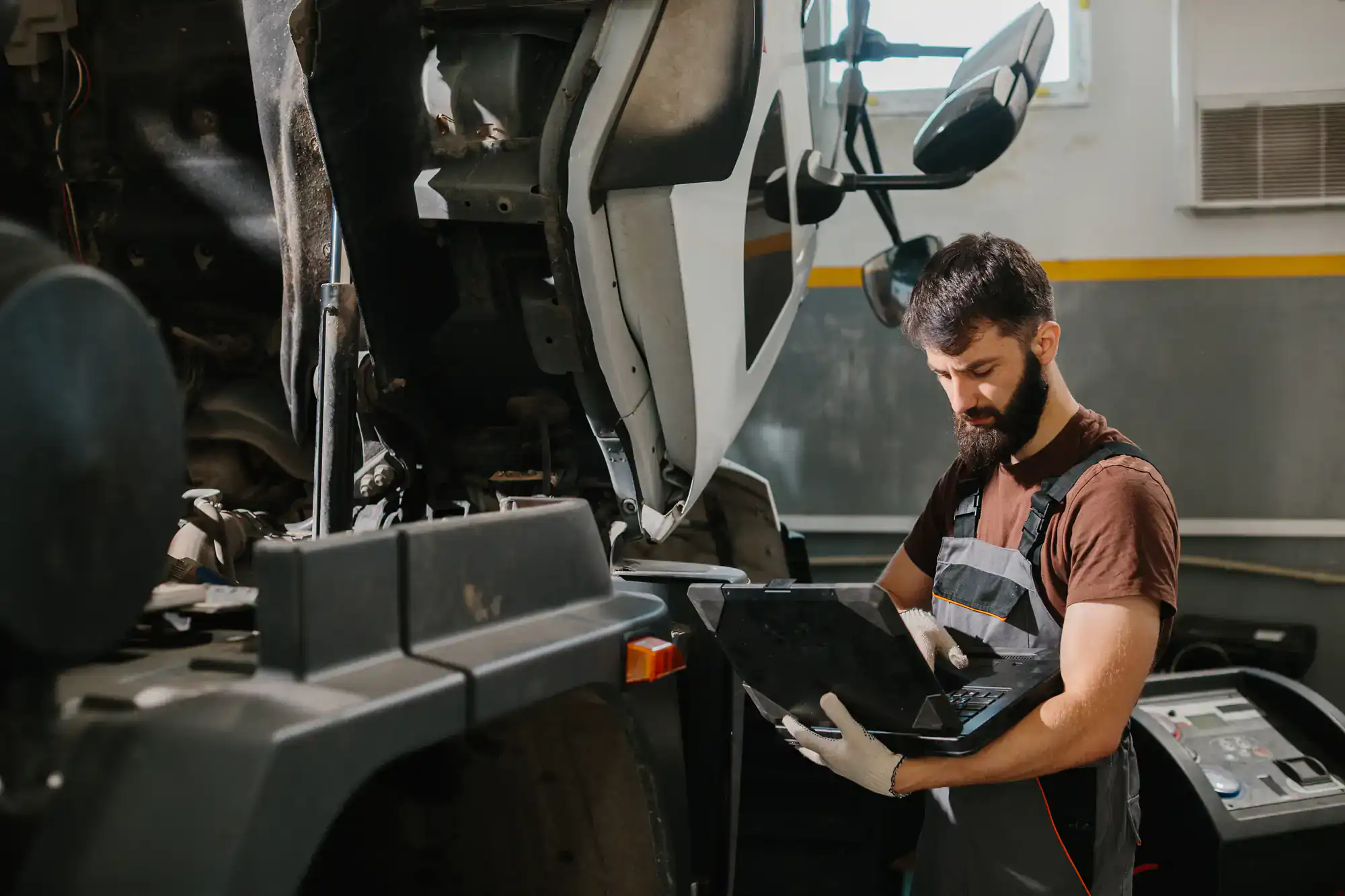
On-site, a CARB-certified OBD device connects directly to the truck’s ECU and pulls the required emissions data. The process is straightforward and doesn’t require the truck to be taken out of service for long. Once the data is collected, we submit the results electronically to CARB’s CTC-VIS database. You don’t log into any portal. You don’t fill out any paperwork. The submission happens immediately after the test.
After submission, CARB transmits your truck’s compliant VIN status to DMV on a nightly basis. DMV records typically update within 3 to 5 business days so there’s a short window between passing the test and seeing the hold clear in DMV’s system. We walk you through that timeline so you’re not left guessing. If you received a Notice to Submit to Testing, the 30-day clock is already running the sooner you schedule, the more flexibility you have if anything needs to be addressed before the deadline.

Ready to get started?
Every Clean Truck Check test we perform includes the full OBD data download using CARB-certified equipment, direct electronic submission to CTC-VIS, and a clear walkthrough of your compliance status after the test is complete. There’s no separate portal step you have to manage, no ambiguity about whether the test counted, and no administrative follow-up left on your plate.
For fleet operators in Redondo Beach particularly those managing multiple qualifying vehicles across staggered compliance deadlines we can coordinate scheduling to minimize operational disruption. Currently, most OBD-equipped heavy-duty vehicles are required to test semi-annually. Starting October 1, 2027, that frequency increases to quarterly four tests per year, per qualifying truck. If you’re running a fleet out of the Artesia Corridor or managing vehicles that support the South Bay aerospace and logistics sectors, establishing a reliable testing relationship now is the kind of planning that prevents scrambling when that frequency change takes effect.
It’s also worth knowing that the $31.18 annual CARB compliance fee is separate from the test itself. Paying that fee without submitting a passing Clean Truck Check test does not make your truck compliant. Both are required. That’s one of the most common misunderstandings among operators who are new to the program, and it’s one of the first things we clarify before any test is scheduled.
If your truck is model year 2013 or newer and has a Gross Vehicle Weight Rating over 14,000 pounds, yes it’s subject to CARB’s Clean Truck Check program regardless of where in California it operates. Redondo Beach is in Los Angeles County, which sits squarely within CARB’s South Coast Air Basin the most actively monitored and enforced air quality region in the state. That means enforcement activity here is not theoretical.
The program entered full enforcement on October 1, 2024, with the first compliance testing deadline on January 1, 2025. If your truck hasn’t been tested yet and meets the model year and GVWR thresholds, it’s either already non-compliant or approaching a deadline. The fastest way to find out where you stand is to check your VIN in CARB’s CTC-VIS system or call us directly we can walk you through what’s required based on your specific vehicle.
A failed test means the OBD system on your truck flagged an active emissions-related fault code during the data download. The test itself doesn’t damage anything or create a new problem it just surfaces what’s already there. At that point, the truck needs to be diagnosed and repaired by a qualified mechanic, and then retested once the fault is resolved.
The good news is that CARB allows qualifying vehicles to test up to 90 days before their compliance deadline. That window exists precisely to give operators time to address a failure without immediately falling out of compliance. If you’re managing a fleet in Redondo Beach and one truck fails, the other vehicles in your fleet aren’t affected each VIN is tracked independently in CTC-VIS. We can help you understand the specific fault codes after a failed test so you can get to the right repair shop without wasting time.
They’re completely different tests for completely different vehicles. A standard smog check the kind you’d get for a passenger car or light truck uses a tailpipe emissions test or a basic OBD scan and is administered through the BAR (Bureau of Automotive Repair) program. Clean Truck Check is a CARB-administered program that applies exclusively to heavy-duty vehicles: model year 2013 or newer, GVWR over 14,000 pounds.
The Clean Truck Check uses a CARB-certified OBD device to connect directly to the truck’s ECU and pull a full emissions data set. The results are submitted electronically to CARB’s CTC-VIS database not to a BAR station, not to DMV directly. The two systems don’t overlap. General smog check shops in the South Bay area typically handle passenger and light-vehicle testing. We handle only the heavy-duty OBD category which is why our equipment, credentials, and submission process are entirely separate from what you’d find at a standard smog station.
A Notice to Submit to Testing is a 30-calendar-day deadline, not a warning. From the date on that notice, you have 30 days to submit a passing Clean Truck Check test to CARB’s CTC-VIS system. If you miss that window, your truck is subject to a DMV registration hold and potential fines and those fines can reach up to $10,000 per vehicle per day for continued non-compliance.
The first thing to do is not panic 30 days is enough time to schedule a test, get it done, and have the results submitted if you move quickly. Our mobile service means the test comes to your location in Redondo Beach, so you’re not losing time repositioning the truck. Call as soon as the notice arrives. Don’t wait until day 25 to start scheduling, especially if there’s any chance the truck might need a repair before it can pass. The 30-day clock doesn’t pause for repair time.
Yes. Fleet testing is a core part of what we do, and it’s particularly relevant for Redondo Beach operators running multiple qualifying vehicles whether that’s a logistics company managing a delivery fleet, a freight forwarding operation near the Port of LA/Long Beach corridor, or an aerospace supply chain vendor supporting activity near the Northrop Grumman campus on Space Park Boulevard.
Each truck has its own VIN, its own compliance deadline, and its own CTC-VIS record which means fleet compliance isn’t one event, it’s an ongoing schedule. We can coordinate multi-vehicle testing appointments to minimize disruption to your operation, and handle the CTC-VIS submission for each vehicle individually. With the program shifting to quarterly testing in 2027, having a reliable fleet testing contact already in place before that frequency change is worth doing now rather than later. Reach out to discuss scheduling for your specific fleet size and stagger.
The OBD data download itself is relatively quick typically 20 to 45 minutes per vehicle once we’re on-site and connected to the ECU. The actual time can vary slightly depending on the truck’s system and how quickly the data transfers, but it’s not an all-day process. For fleet testing where multiple trucks are staged at the same location, we can move through vehicles efficiently without requiring each truck to be repositioned between tests.
Because we come to your location in Redondo Beach your yard, your lot, your facility the time your truck is out of rotation is limited to the test window itself. There’s no drive time to a shop, no waiting room, no drop-off window. For operators running freight along the I-405 corridor between the ports and LAX, that distinction is real. The truck is tested where it sits and back on the road as soon as the job is done. Results are submitted to CTC-VIS immediately after the test is complete.
Useful Links
Other Services we provide in Redondo Beach