
Hear from Our Customers

You avoid the $10,000 per vehicle per day fines that CARB can hit you with. Your DMV registration doesn’t get blocked when renewal time comes around. Your trucks can access ports, freight terminals, and work zones without restriction.
That’s what compliance actually gets you. Not just a piece of paper, but the ability to operate your business in California without looking over your shoulder.
The Clean Truck Check requirement went into effect for all compliance deadlines on or after January 1, 2025. If your truck is a 2013 or newer diesel or diesel hybrid with a GVWR over 14,000 pounds, you need this test. It’s an OBD emissions test that checks your engine’s onboard diagnostics to verify you’re meeting California’s air quality standards.
We handle the testing, submit the results directly to CARB’s database, and make sure you’re documented as compliant. You can submit tests up to 90 days before your deadline, which gives you time to address any issues before they become expensive problems.
We operate in Palmdale, where commercial trucking and logistics are part of the local economy. We’re CARB certified to perform Clean Truck Check testing, which means we’ve met the state’s credentialing requirements and we understand the regulations you’re dealing with.
Palmdale sits in a key position for freight movement through the Antelope Valley. That means a lot of heavy-duty trucks move through here, and a lot of operators need to stay compliant with California’s emissions rules.
We focus on getting your testing done correctly and submitted to the state system without delays. You’re not our first rodeo with CARB diesel compliance, and we’re not learning the rules on your time.

You bring your 2013 or newer heavy-duty truck to our facility in Palmdale. We’re talking about vehicles with a GVWR over 14,000 pounds, which includes most semi trucks, heavy-duty pickups used commercially, and large motorhomes.
We connect to your truck’s OBD system and run the emissions compliance test. This isn’t the old smoke test you might remember from older vehicles. For 2013 and newer trucks, it’s a diagnostic check that reads data from your engine’s computer system. The test looks at emissions performance and verifies your truck meets CARB standards.
Once the test is complete, we submit the results directly to CARB’s CTC-VIS database. That’s the state system that tracks compliance. If you pass, you’re documented as compliant in their system. If there’s an issue, we’ll tell you what needs attention so you can get it fixed before your deadline hits.
The whole process is faster than traditional smog checks because we’re reading data, not measuring exhaust. You’re in and out, and your compliance status is updated with the state.

Ready to get started?
This applies to diesel and diesel hybrid trucks with 2013 or newer engines and a GVWR of 14,000 pounds or more. That’s the state’s cutoff, not ours. If your truck doesn’t meet both of those criteria, this isn’t the test you need.
California requires this testing even if your truck isn’t registered in California. If you’re operating here, you need to comply. That includes out-of-state operators running routes through Palmdale or anywhere else in California.
The test itself is an OBD emissions check. We’re looking at your engine’s diagnostic data to verify emissions performance. CARB uses this data to monitor air quality compliance across the heavy-duty fleet operating in California.
In Palmdale specifically, you’re dealing with a high volume of commercial traffic moving through the region. CARB has been increasing enforcement, including roadside monitoring and automated license plate readers that flag vehicles for testing. Getting ahead of your compliance deadline means you’re not scrambling when enforcement catches up to you.
We submit passing results directly to the state database, which is how CARB tracks your compliance status. That documentation is what protects you from penalties and registration holds.
You need this test if your truck is model year 2013 or newer, has a diesel or diesel hybrid engine, and has a Gross Vehicle Weight Rating of 14,000 pounds or more. Both conditions have to be true.
This covers most semi trucks, heavy-duty commercial pickups, large motorhomes, and fleet vehicles operating in California. It doesn’t matter if your truck is registered in California or another state. If you’re operating on California roads, you need to comply.
Older trucks and lighter vehicles have different testing requirements. This specific Clean Truck Check program only applies to the 2013+ heavy-duty category. If you’re not sure whether your vehicle qualifies, check your GVWR on the door placard or registration, and confirm your model year and engine type.
CARB can fine you up to $10,000 per vehicle per day for non-compliance. That’s not a scare tactic, that’s the actual penalty structure they’re authorized to enforce.
On top of fines, the DMV will place a registration hold on non-compliant vehicles. That means you can’t renew your registration until you’re compliant, which effectively grounds your truck. You also risk being denied access to ports, freight terminals, and certain work zones that require CARB compliance.
The financial hit goes beyond just the fine. You’re looking at lost revenue from a truck that can’t operate, potential contract penalties if you can’t fulfill deliveries, and the cost of rushing to get compliant under pressure. Testing ahead of your deadline costs a fraction of what you’ll pay if you wait until you’re flagged.
You can submit your test results up to 90 days before your compliance deadline. That’s a smart window to use because it gives you time to address any issues if your truck doesn’t pass on the first try.
If the test shows an emissions problem, you’ll need to get repairs done and then retest before your deadline. Having that 90-day buffer means you’re not stuck with a grounded truck while you’re waiting for parts or shop availability.
CARB assigns compliance deadlines based on your truck’s last three digits of the VIN. Those deadlines are firm, and the state system tracks them. Getting tested early means you’re documented as compliant well before any enforcement action could happen, and you’re not dealing with last-minute stress.
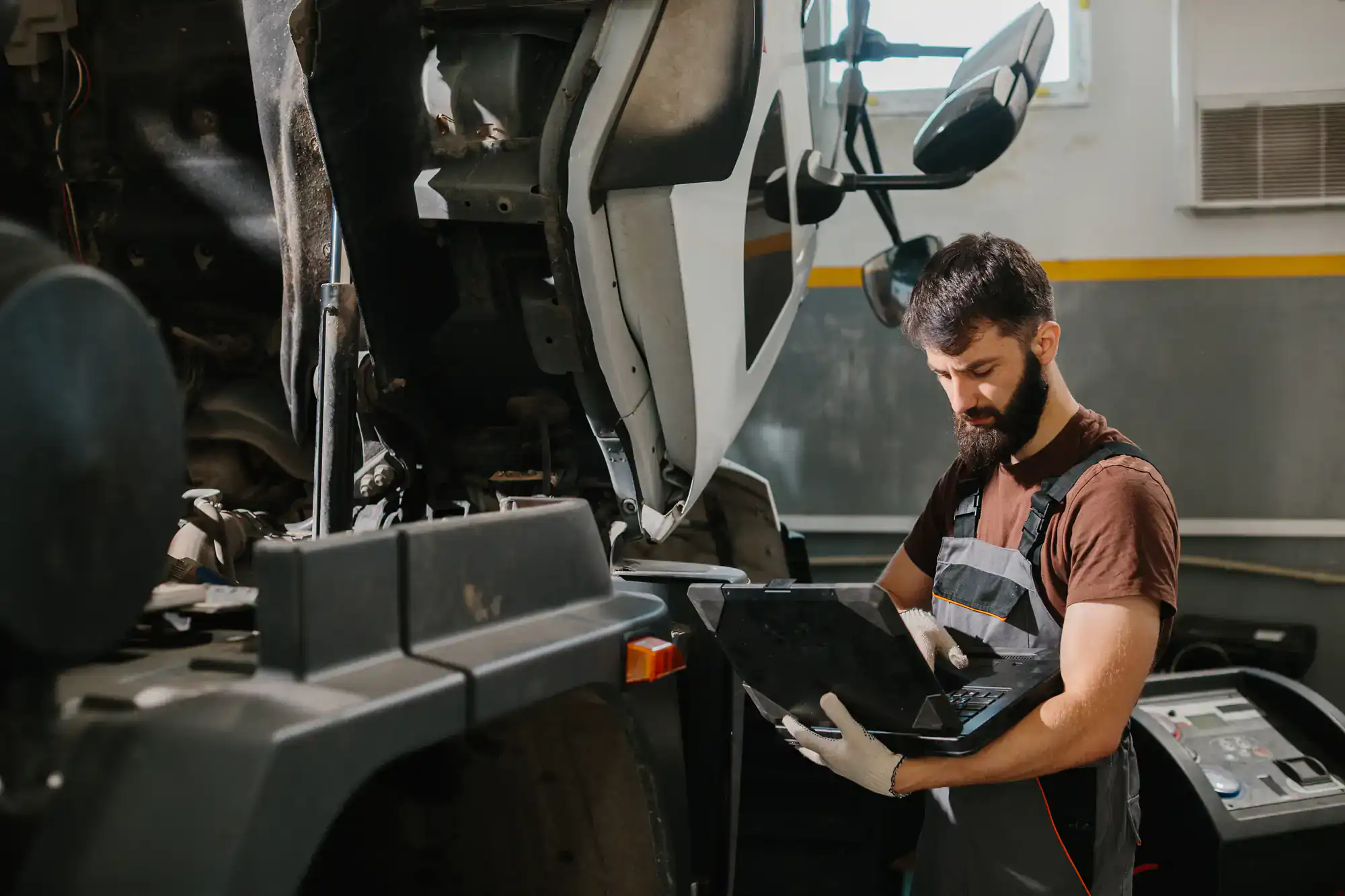
We connect a diagnostic tool to your truck’s OBD port and run an emissions compliance test. The system reads data from your engine’s onboard computer, checking emissions performance against CARB standards.
For 2013 and newer trucks, this is a data-based test, not a tailpipe emissions measurement like older smog checks. We’re looking at how your engine’s emissions controls are functioning based on what the computer reports. The test checks for fault codes, monitors readiness status, and verifies that emissions systems are working correctly.
The process is faster than traditional smog testing because we’re reading existing data rather than running the engine through a test cycle. Once complete, we submit the results directly to CARB’s CTC-VIS database. If you pass, you’re compliant. If there’s an issue, we’ll tell you exactly what the system flagged so you know what needs repair.
Yes. If you’re operating a 2013 or newer heavy-duty diesel truck in California, you need to comply with the Clean Truck Check requirement regardless of where your truck is registered.
CARB’s regulations apply to all heavy-duty vehicles operating on California roads, not just California-registered vehicles. That includes interstate carriers, out-of-state fleet operators, and anyone else running routes through the state.
CARB has enforcement tools including roadside monitoring devices and automated license plate readers. They’re actively identifying high-emitting vehicles and flagging non-compliant operators. If you’re caught operating in California without meeting the testing requirement, you’re subject to the same penalties as California-registered trucks, including fines and operational restrictions.
If your truck fails, the test results will show what emissions issue triggered the failure. You’ll need to get the problem repaired and then come back for a retest before your compliance deadline.
Common failure reasons include malfunctioning emissions control systems, fault codes in the engine computer, or monitors that aren’t ready because recent repairs reset the system. Whatever the issue, you’ll know specifically what needs to be fixed.
This is why testing early matters. If you wait until your deadline is close and then fail, you’re under pressure to find a shop, get parts, complete repairs, and retest before you’re hit with penalties or a registration hold. Testing 60 to 90 days out gives you breathing room to handle repairs without your truck sitting idle or your business operations getting disrupted.
Useful Links
Other Services we provide in Palmdale