
Hear from Our Customers

Your trucks stay on the road. That’s what matters.
When you’re compliant with California CARB requirements, you’re not dealing with registration holds from the DMV. You’re not getting pulled over by enforcement officers with roadside monitoring devices. You’re not facing fines that start at $1,000 and can climb to $10,000 per vehicle per day.
You’re running your business. Your drivers are making deliveries. Your trucks aren’t sitting idle while you scramble to fix a compliance issue that should’ve been handled months ago.
CARB diesel compliance isn’t optional for heavy-duty vehicles operating in California. If your truck has a 2013 or newer engine and weighs over 14,000 pounds GVWR, you need passing emissions tests submitted every six months. Miss a deadline, and the state puts a hold on your registration. That truck becomes a very expensive paperweight until you get it sorted.
Testing in Manhattan Beach means less travel time, less disruption, and faster turnaround. You’re not driving to another county to find a CARB credentialed tester. You’re getting it done locally, by someone who knows exactly what CARB requires and how to submit results properly through the CTC-VIS system.
We specialize in Clean Truck Check testing for commercial vehicles in Manhattan Beach and throughout the South Bay. We’re CARB credentialed, which means we’ve completed the state-required training and passed the exam to legally perform OBD emissions testing on heavy-duty diesel trucks.
Manhattan Beach has a strong logistics presence despite its reputation as a coastal residential community. Small fleet operators, single-truck owners, and businesses running commercial vehicles through LA County all need reliable local access to CARB HD I/M testing. We provide that without the hassle of driving to distant facilities or waiting days for an appointment.
You’re dealing with someone who understands that your truck sitting in a bay costs you money. We move efficiently, test accurately, and submit results correctly the first time.
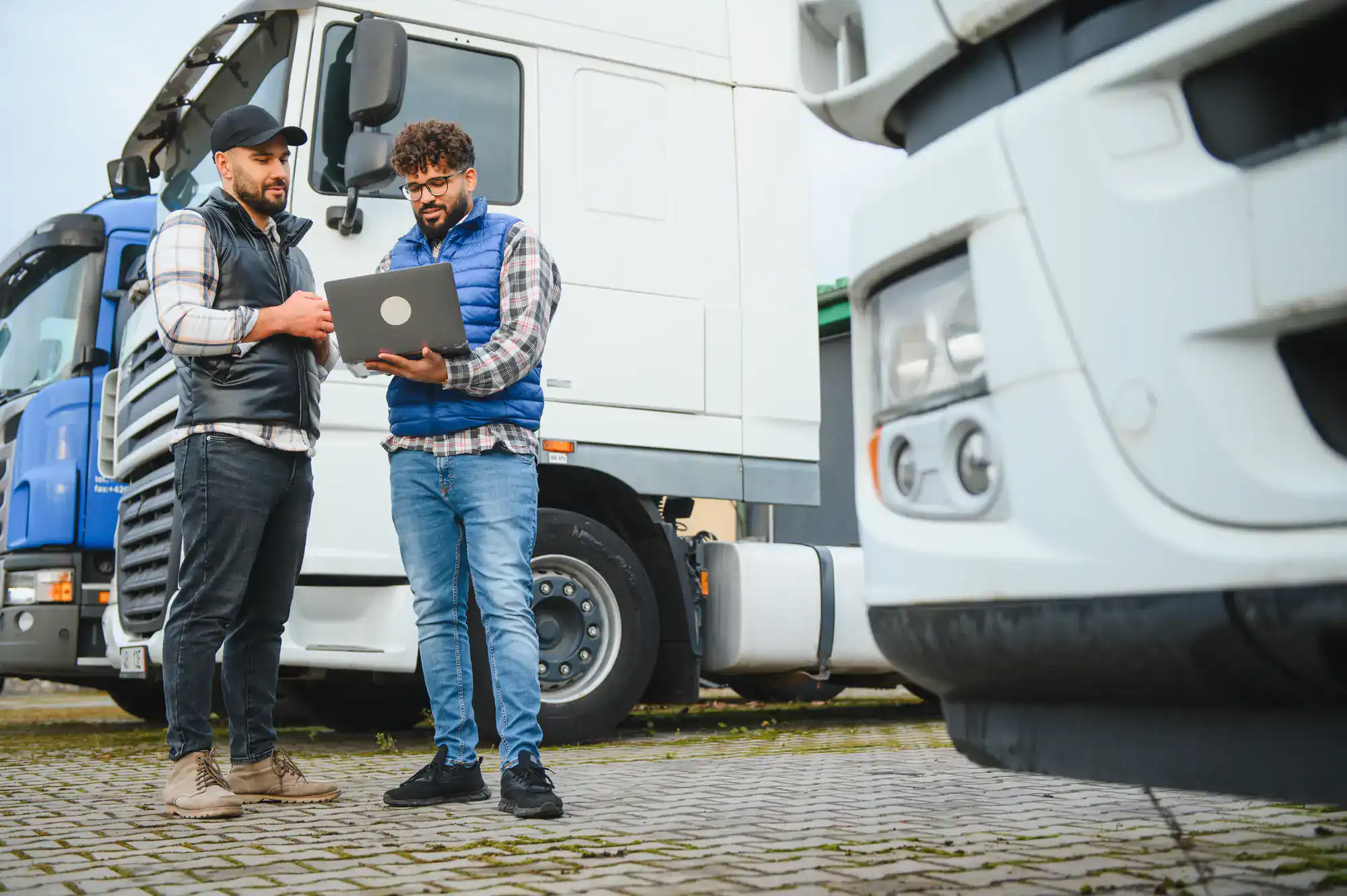
You bring your truck in. We verify it qualifies—2013 or newer model year engine, over 14,000 pounds GVWR. If it doesn’t meet those criteria, this test doesn’t apply to your vehicle.
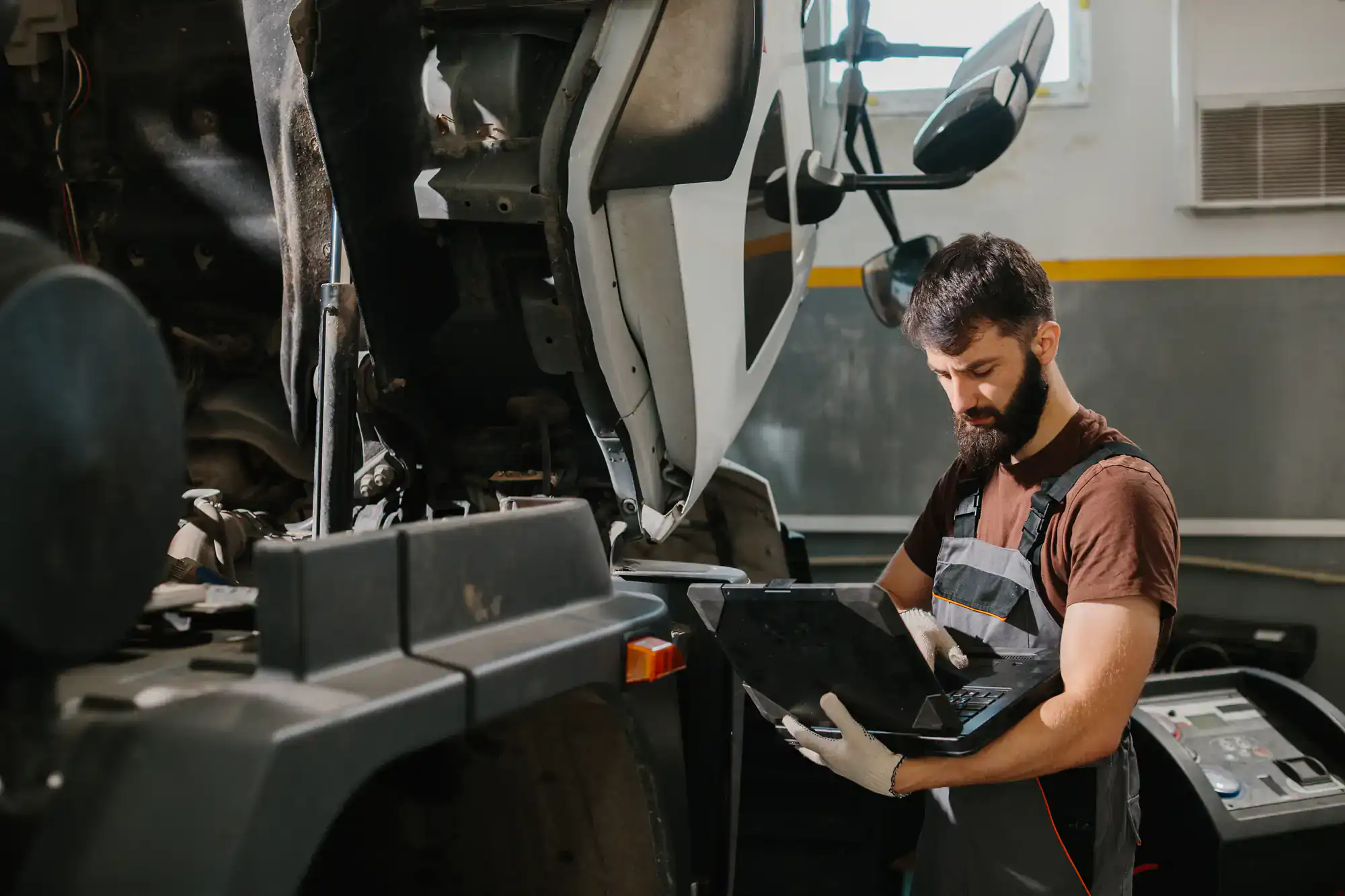
We connect CARB certified OBD testing equipment to your truck’s diagnostic system. The scan pulls emissions data directly from the engine’s onboard computer. This isn’t a visual inspection or a tailpipe test. It’s a digital readout of how your emissions control systems are performing.
If your truck passes, we submit the results directly to CARB through the CTC-VIS reporting system. You’ll receive documentation showing compliance, and that passing test satisfies your semi-annual requirement. You can submit results up to 90 days before your deadline, so you’re not cutting it close.
If there’s a failure, we’ll explain what triggered it. Sometimes it’s a sensor issue. Sometimes it’s an actual emissions problem that needs repair. Either way, you’ll know what needs fixing before you’re facing enforcement action or a registration hold.
The whole process typically takes far less time than traditional manual inspections, which can stretch one to three hours per vehicle. You’re in, tested, and back to work.
Ready to get started?
You’re getting CARB HD I/M testing performed by a credentialed tester using state-approved equipment. That’s the baseline. But what you’re really getting is protection from the consequences of non-compliance.
California collected $21.5 million in CARB penalties in 2022 alone. Enforcement is real, and it’s active. CARB uses automated license plate readers and roadside emissions monitoring to identify high-emitting or non-compliant vehicles. When they flag your truck, you’re looking at fines, potential impoundment, and definite operational disruption.
Manhattan Beach’s proximity to major ports and logistics corridors means heavy enforcement presence. Non-compliant trucks can be denied entry to ports and railyards. If you’re running freight through the South Bay or serving customers in LA County, compliance isn’t just about avoiding fines—it’s about maintaining access to the facilities your business depends on.
Starting October 1, 2027, testing requirements increase to four times per year for OBD-equipped vehicles. The compliance burden is growing, not shrinking. Getting ahead of it now, with a local testing provider you can rely on, makes the transition easier when those new requirements kick in.
You’re also getting accurate reporting through CTC-VIS, which handles both test submission and annual compliance fee payment. Mistakes in that system can trigger penalties even if your truck actually passed testing. We handle the submission correctly so you don’t end up non-compliant due to administrative errors.
No. This specific test only applies to heavy-duty diesel trucks with 2013 or newer model year engines that weigh over 14,000 pounds GVWR.
If your truck has an older engine, you’re subject to different CARB requirements—potentially the Truck and Bus regulation or other heavy-duty rules—but not the Clean Truck Check OBD testing program. The 2013 cutoff exists because that’s when OBD systems became standard on heavy-duty diesel engines, allowing for electronic emissions monitoring instead of manual inspections.
If you’re unsure whether your truck qualifies, check your engine’s model year, not the vehicle’s model year. Sometimes those don’t match. We can verify eligibility when you bring the truck in, but don’t assume you need this test just because you operate a commercial vehicle in California.
Right now, you need to submit a passing test every six months. That’s twice per year for most heavy-duty vehicles in the program.
You can submit results up to 90 days before your compliance deadline, which gives you some flexibility in scheduling. If you wait until the last minute and something fails, you’re stuck scrambling to get repairs done before the deadline passes and penalties start.
In 2027, the requirement increases to four times per year for OBD-equipped vehicles. That means quarterly testing instead of semi-annual. The state is tightening compliance timelines, so building a relationship with a local testing provider now makes sense. You’ll need more frequent service soon, and you don’t want to be hunting for availability when everyone else is trying to meet the same new deadlines.
You’ll need to get the issue repaired and then retest. The failure report will indicate what triggered it—usually a fault code from the OBD system or an emissions control component that’s not functioning properly.
Sometimes it’s a relatively simple fix, like replacing a sensor. Other times it’s a more significant emissions system problem that requires mechanical work. Either way, you can’t legally operate that truck on California roads until it passes testing and you’ve submitted the results to CARB.
If your compliance deadline passes while you’re dealing with repairs, the DMV will place a registration hold on the vehicle. You’ll also face potential fines if enforcement catches you operating a non-compliant truck. The financial hit from penalties and downtime usually far exceeds the cost of proactive maintenance and testing. Getting ahead of problems before they become compliance failures is always cheaper than dealing with the consequences after.
You need a CARB credentialed tester, and not every smog check station has that credential. The tester has to complete specific training on heavy-duty emissions testing and pass an exam with at least 80% to be authorized.
Testing in Manhattan Beach keeps your truck local instead of driving to facilities in other parts of LA County or beyond. Less travel means less downtime and less fuel cost just to stay compliant.
Some operators use mobile testing services that come to their yard. That’s an option if you’re running a larger fleet. For single-truck owners or smaller operations in the South Bay, coming to a local facility is usually faster and simpler. You’re not waiting around for a mobile unit’s schedule, and you can get results submitted immediately after testing instead of waiting for the service to process everything later.
CARB fines for heavy-duty vehicle non-compliance range from $1,000 to $10,000 per vehicle per day. That’s not a one-time penalty. It accumulates daily until you resolve the issue.
Beyond fines, you’re facing registration holds from the DMV, which legally ground your truck until compliance is restored. If that truck generates $500 to $1,500 per day in revenue, even a few days of downtime costs more than a year’s worth of testing.
You also risk denial of entry to ports, railyards, and certain facilities that verify CARB compliance before allowing trucks on-site. If your business depends on port access or serving customers with strict environmental requirements, non-compliance can cost you contracts, not just fines. The actual financial impact goes well beyond what CARB charges directly. You’re losing operational capability, customer trust, and potentially your ability to legally operate in California at all.
Not immediately. Once we submit your passing test results to CARB through the CTC-VIS system, that submission satisfies your compliance requirement for that period.
You’ll want to keep documentation showing the test date and results, just in case there’s ever a question during a roadside inspection or audit. Most of the time, enforcement can verify compliance electronically, but having your own records doesn’t hurt.
Your main responsibility is tracking your next deadline. If you’re on a six-month cycle, mark your calendar for when the next test is due. Missing a deadline triggers penalties and registration holds, even if your truck would pass testing. It’s the failure to test and report that creates the problem, not necessarily the emissions themselves. Stay ahead of deadlines, and you avoid the entire enforcement headache.
Useful Links
Other Services we provide in Manhattan Beach