

Hear from Our Customers

If your truck is model year 2013 or newer with a GVWR over 14,000 pounds, you’re required to complete Clean Truck Check testing under California’s CARB HD I/M program. Miss your deadline and you’re looking at DMV registration holds that prevent renewal, port access denial that stops you from entering Long Beach facilities, and fines that start at $1,000 per day per vehicle.
We handle the OBD emissions testing that CARB requires for these newer diesel engines. Results upload directly to the state system, so your compliance record updates immediately. No waiting. No wondering if it went through.
You’re not dealing with a smog check for passenger cars. This is heavy-duty vehicle compliance testing that requires CARB-certified equipment and credentialed testers who know the CTC-VIS system. We bring that testing to your location in Long Beach, so your trucks don’t sit idle waiting for an appointment somewhere across town.
We serve the Long Beach trucking community with CARB-certified emissions testing for heavy-duty vehicles. We’re credentialed by the California Air Resources Board to perform Clean Truck Check testing on 2013 and newer trucks that operate in and around the Port of Long Beach.
Long Beach handles some of the highest cargo volumes in the country. That means thousands of semi trucks moving through the port daily, and every one of those trucks needs to maintain CARB compliance to keep working. We understand the urgency because downtime here isn’t just inconvenient—it’s expensive.
Our testing equipment meets CARB certification standards for OBD data scanning on newer diesel engines. We’ve completed the state’s training requirements, passed the credentialing exam, and we stay current on regulation changes as CARB rolls out new testing frequencies and requirements through 2027.

First, you need to be registered in the CTC-VIS system. That’s California’s Clean Truck Check Vehicle Inspection System, and it’s mandatory before any testing happens. If you haven’t registered yet, we can walk you through that process—it’s not complicated, but it has to be done correctly or your test results won’t link to your vehicle record.
Once you’re registered, we schedule your OBD emissions test at your location in Long Beach. We connect CARB-certified diagnostic equipment to your truck’s onboard computer system and pull the emissions data that the state requires. For 2013 and newer diesel engines, this is an OBD scan—not a tailpipe test. The system reads fault codes, monitors emission control performance, and verifies that your truck’s systems are functioning within CARB limits.
The test takes about 30 minutes per vehicle. Results transmit electronically to CARB’s database as soon as testing is complete. If your truck passes, your compliance record updates immediately and any DMV registration hold clears in real time. If something flags during the test, we’ll tell you exactly what needs attention before a retest.
Ready to get started?
This service applies specifically to trucks that are model year 2013 or newer and have a gross vehicle weight rating over 14,000 pounds. That includes diesel, alternative fuel, and hybrid heavy-duty vehicles operating in California. If your truck doesn’t meet both of those criteria—2013+ and 14,000+ lbs GVWR—this isn’t the right test for your vehicle.
Starting January 2025, CARB requires semi-annual testing for most qualifying trucks. By 2027, that increases to quarterly testing for OBD-equipped vehicles. Right now, you’re looking at testing every six months to maintain compliance. Miss a test window and the consequences start immediately—DMV holds go into effect, port access gets restricted, and penalties begin accruing.
In Long Beach specifically, port operations drive a huge portion of the local trucking industry. The Port of Long Beach requires proof of CARB compliance for all commercial vehicles entering the facility. That means your Clean Truck Check certification isn’t just about avoiding state penalties—it’s about maintaining access to the work that keeps your business running. One blocked entry because of a compliance flag can cost you a day’s revenue, a client relationship, or a contract.
We bring the testing to your yard, your warehouse, or wherever your trucks are parked in Long Beach. You don’t lose drive time. You don’t pull trucks off jobs. We work around your schedule because we know your trucks make money when they’re moving, not when they’re sitting at a testing facility.
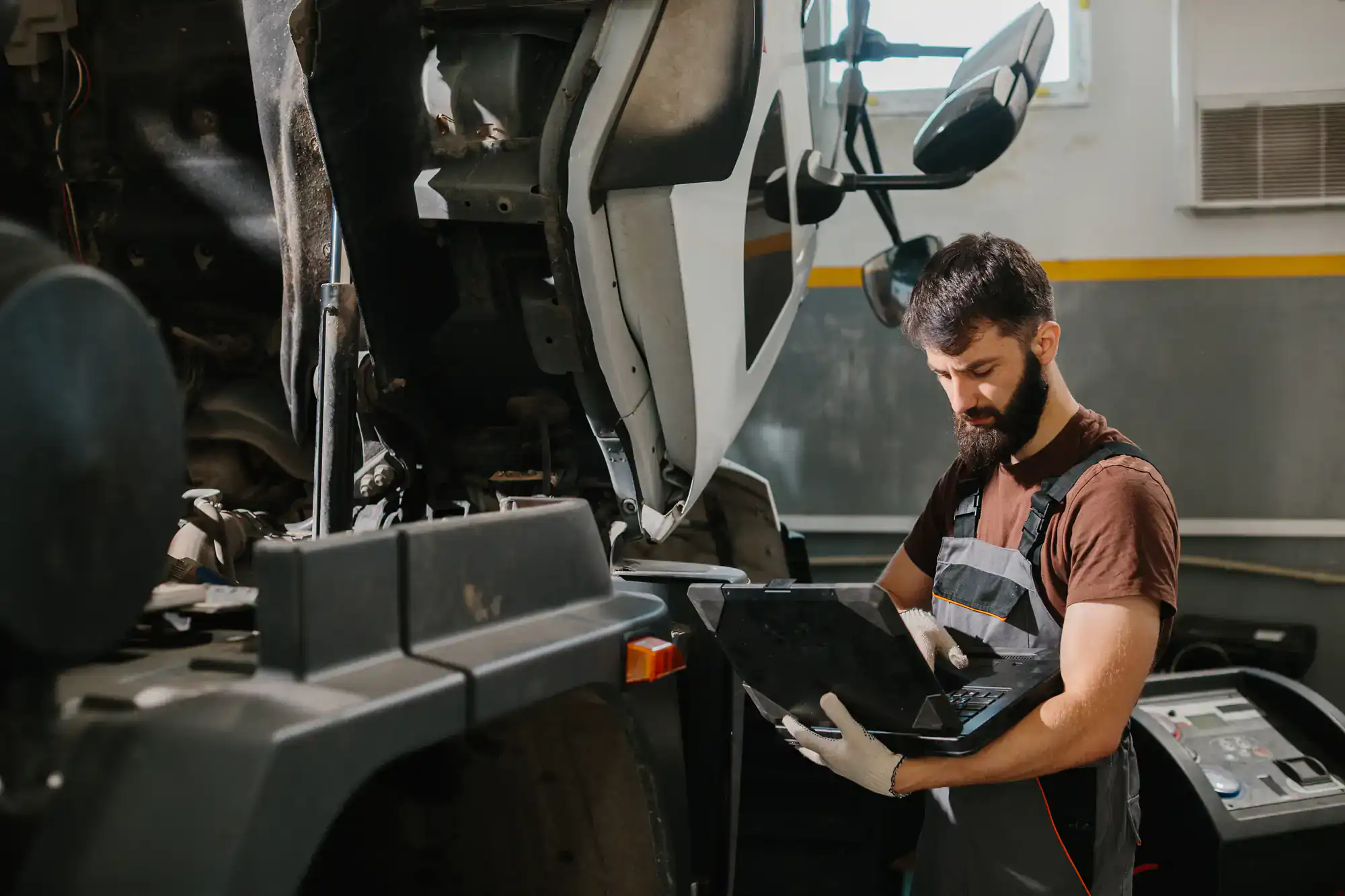
If your truck fails, you’ll get a detailed report showing exactly what triggered the failure—usually it’s a fault code related to emission control systems like the diesel particulate filter, EGR valve, or NOx sensors. CARB’s OBD testing is looking for malfunctions in these systems, and if something’s not performing within limits, the test won’t pass.
You’ll need to get the issue repaired by a qualified diesel mechanic before retesting. We can point you toward what needs fixing, but we don’t perform repairs—we only handle the compliance testing. Once repairs are complete, you’ll schedule a retest. Most shops in Long Beach that work on heavy-duty trucks are familiar with CARB-related repairs, so finding someone who can handle the work isn’t usually the problem. The problem is the time and cost of being out of service.
That’s why staying on top of your testing schedule matters. Catching a small issue during a routine test is a lot cheaper than waiting until you’re flagged at a port inspection or hit with a registration hold right when you need to renew.
You’ll need to create an account on California’s CTC-VIS portal and register each vehicle that requires Clean Truck Check testing. You’ll enter your truck’s VIN, license plate, and some basic vehicle information. The system will verify that your truck qualifies for the program based on model year and GVWR.
Once your vehicle is registered in CTC-VIS, it gets assigned a unique identifier that links all future test results to that specific truck. This is how CARB tracks compliance and how the DMV knows whether to place a registration hold. If you’re managing a fleet, you’ll register each truck individually under your account.
The registration process is free, but it has to be done before any testing happens. If you show up for a test without being in the system, your results won’t upload and you won’t get credit for the test. We can help you through the registration steps if you’re not sure how to set it up—it’s straightforward once you know where to go, but the state’s portal isn’t always intuitive if it’s your first time.
Testing starts at $79 per truck for vehicles that pass. If your truck fails, you’re not charged for the initial test—you only pay when you pass. Retests are typically offered at a reduced rate, often 50% off the original testing fee.
Mobile testing may include a service call fee depending on your location in Long Beach and how many trucks you’re testing at once. If you’re running a fleet and need multiple trucks tested at the same time, that service call gets spread across all the vehicles, which makes the per-truck cost more reasonable.
The real cost you need to think about isn’t the testing fee—it’s what happens if you don’t test. A single day of non-compliance can cost you $1,000 or more in penalties. A DMV registration hold means you can’t legally operate that truck until compliance is restored. And if you’re locked out of the Port of Long Beach because your truck isn’t certified, you’re losing whatever that day’s job was worth. Most owner-operators and fleet managers in Long Beach will tell you the testing fee is cheap compared to the cost of being out of compliance.
Starting January 2025, most qualifying trucks need testing every six months. That’s semi-annual testing for vehicles with a GVWR over 14,000 pounds and model year 2013 or newer. CARB is phasing in more frequent testing over the next few years, and by 2027, OBD-equipped trucks will need quarterly testing—that’s every three months.
You’ll receive notifications through the CTC-VIS system when your next test is due. CARB also uses roadside emissions monitoring and automated license plate readers to flag high emitters. If your truck gets flagged, you’ll have 30 days to complete a Clean Truck Check or face penalties and registration holds.
The testing schedule isn’t optional, and it’s not something you can push off until it’s convenient. Long Beach has a high concentration of commercial trucks because of the port, which means CARB enforcement is active in this area. You’re better off scheduling your tests in advance and staying ahead of the deadlines rather than waiting until you’re already flagged or blocked from registration renewal.
If your check engine light is on, your truck will almost certainly fail the Clean Truck Check. The OBD system that CARB testing reads is the same system that triggers your check engine light, and any active fault codes will show up during the emissions scan.
You’ll need to diagnose and repair whatever’s causing the light before you can pass testing. In most cases, that means taking your truck to a diesel mechanic who can pull the codes, identify the issue, and make the necessary repairs. Once the repairs are done and the light is off, you can schedule your Clean Truck Check.
Some operators try to clear the codes right before testing, hoping the light won’t come back on during the scan. That doesn’t work. CARB’s OBD testing checks for “readiness monitors”—basically, it verifies that your truck’s emission systems have run through their full diagnostic cycles since the last code clear. If the system detects that codes were recently cleared without enough drive time to complete those cycles, the test won’t pass. You can’t game the system. Fix the problem, drive the truck long enough for the monitors to reset, and then test.
A regular smog check is for passenger vehicles and light-duty trucks under 14,000 pounds. Clean Truck Check is specifically for heavy-duty trucks over 14,000 pounds GVWR with model year 2013 or newer engines. The testing process is completely different.
Smog checks for lighter vehicles often involve tailpipe emissions testing where equipment measures the actual exhaust coming out of the vehicle. Clean Truck Check for newer heavy-duty trucks uses OBD testing—there’s no tailpipe probe. Instead, we connect directly to your truck’s onboard diagnostic system and pull emissions data from the engine computer. CARB requires this method for 2013 and newer diesel engines because these trucks have advanced emission control systems that can be monitored electronically.
The other major difference is the compliance system. Clean Truck Check results feed directly into CARB’s CTC-VIS database, which links to DMV registration and port access systems. If you’re not compliant, the consequences are immediate and they’re tied to your ability to operate commercially in California. A regular smog check might prevent you from renewing your personal vehicle registration, but Clean Truck Check non-compliance can shut down your business operations in Long Beach.
Useful Links
Other Services we provide in Long Beach