
Check Out Our Reviews!

When a DMV registration hold hits, most Lawndale operators find out at the worst possible time renewal window, a load waiting, a job site expecting them. The fix isn’t complicated, but it does require a CARB-credentialed tester with certified equipment who can submit results directly to the CTC-VIS database. That’s the only path to clearing the hold.
What makes this different in the South Bay is the pace. Trucks running the I-405 between LAX freight operations, construction sites along Hawthorne Boulevard, and delivery routes through Torrance and Gardena don’t have hours to burn at a fixed testing location. Mobile service isn’t a convenience here it’s the only realistic option for operators who can’t pull a truck off a route without it costing them money.
Once your test is submitted to CTC-VIS, CARB sends your compliant VIN to the DMV nightly. Most registration holds clear within three to five business days. You don’t have to log into a portal, upload anything, or follow up with a government office. We handle the process the same day we test and you get back to work.
We do one thing: Clean Truck Check testing for model year 2013 and newer heavy-duty vehicles with a GVWR over 14,000 pounds. No passenger cars, no older diesels, no general smog checks. Just the OBD-based compliance testing that CARB requires performed with certified equipment, by a credentialed tester, with results submitted directly to the CTC-VIS system.
That focus matters in a market like Los Angeles County, where a lot of providers have entered the space since full enforcement began in October 2024. You can verify any tester’s credentials on CARB’s public list at arb.ca.gov before you book anyone. We’re on that list.
Lawndale sits in the middle of one of the most active commercial vehicle corridors in Southern California I-405 to the east, SR-107 running straight through the city, and LAX cargo operations less than six miles away. The operators working those routes deserve a testing provider who actually knows the program, not one who added it to a menu of services. That’s why we’ve built our entire operation around this single compliance requirement.
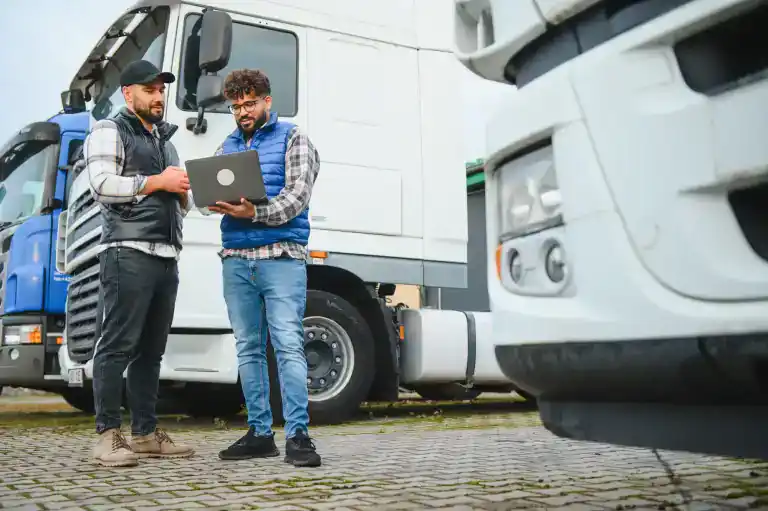
You tell us where your truck is your yard off Redondo Beach Boulevard, a job site near the South Bay Galleria, a lot along Artesia Boulevard and we come to you. There’s no need to reposition the vehicle or coordinate a drop-off. The test happens wherever the truck is parked.
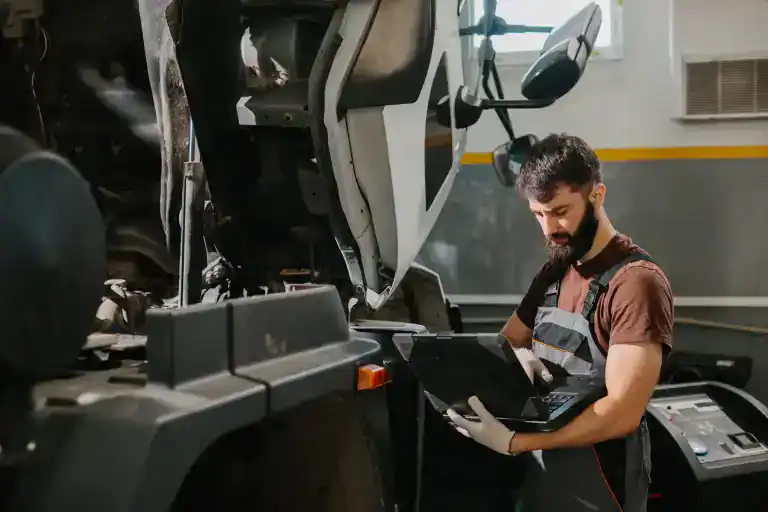
When we arrive, we connect a CARB-certified OBD device directly to your truck’s diagnostic port and pull data from the ECU. This is the same protocol CARB requires for all 2013 and newer heavy-duty diesel vehicles with a GVWR over 14,000 pounds. The scan captures emissions-related fault codes and system readiness data, and the entire process typically takes under an hour per vehicle depending on fleet size.
Once the test is complete, we submit your results electronically to CARB’s CTC-VIS portal on the spot. You don’t handle any of that. CARB processes the submission, your compliant VIN gets sent to the DMV overnight, and registration holds typically clear within three to five business days. If you’re working against a 30-day Notice to Submit to Testing deadline which CARB issues when a truck gets flagged by roadside emissions monitoring equipment on corridors like the I-405 that timeline matters. We move quickly so you don’t lose days you don’t have.

Ready to get started?
Every Clean Truck Check we perform includes the full OBD data download using CARB-certified equipment, direct electronic submission to the CTC-VIS database, and same-day results. There’s no paperwork for you to file, no portal to navigate, and no follow-up required on your end. The $31.18 annual CARB compliance fee is separate and paid directly to CARB that’s not something we collect on your behalf.
This service applies specifically to diesel and alternative fuel heavy-duty vehicles that are model year 2013 or newer with a GVWR over 14,000 pounds. If your truck falls outside those parameters older model year, lighter weight class this program doesn’t apply to it, and we’ll tell you that upfront rather than waste your time.
For fleet operators in Lawndale and the surrounding South Bay cities, we can schedule multi-vehicle testing at a single location on the same visit. That’s relevant if you’re running a small fleet out of a yard in Hawthorne or Gardena, or managing vehicles that service the LAX cargo zone and the broader Los Angeles County distribution network. Beginning October 1, 2027, most OBD-equipped trucks will move from semi-annual testing to quarterly four times per year. If you’re managing multiple vehicles, building a testing schedule before that change takes effect is a lot easier than scrambling when it does.
If your truck is a 2013 or newer model year diesel or alternative fuel vehicle with a GVWR over 14,000 pounds and it operates on California public roads yes, it’s subject to the Clean Truck Check program. That applies whether your truck is California-registered or out-of-state. The program has been in full enforcement since October 2024, and CARB uses roadside emissions monitoring devices deployed on Southern California freeways, including the I-405 corridor that runs directly through the Lawndale area, to flag potential high emitters.
If your truck gets flagged, CARB issues a Notice to Submit to Testing, which gives you 30 calendar days to submit a passing test. If you’re not sure whether your specific vehicle qualifies, the easiest check is your model year and GVWR both are on your registration. Anything 2013 or newer and over 14,000 pounds falls under this program. Lighter vehicles or older model years do not.
The two most immediate consequences are a DMV registration hold and CARB enforcement action. A registration hold means your truck’s registration can’t be renewed until a passing test is submitted and processed which, depending on your timing, can leave you operating with expired registration. That’s a separate compliance problem on top of the original one.
On the enforcement side, CARB has authority to issue fines up to $10,000 per vehicle per day for non-compliance. For an owner-operator running one truck out of Lawndale, or a small fleet manager with vehicles on the I-405 freight corridor daily, the cost of non-compliance far exceeds the cost of the test itself. The $31.18 annual compliance fee and the cost of a credentialed OBD test are a fraction of what a single enforcement action can run.
For a single truck, the on-site OBD test typically takes under an hour from the time we connect the device to the time results are submitted to CTC-VIS. The actual data download from the ECU is fast the time variable is mostly travel and setup, which is why mobile service in a dense, traffic-heavy area like the South Bay is worth thinking about carefully. Fixed-location testing means repositioning your truck, waiting in line, and then getting it back that’s a half-day for something that doesn’t need to be.
For fleet testing, we work through multiple vehicles at a single location in sequence. If you’re running a yard in or around Lawndale, we schedule the visit around your operation not the other way around. Results go into CTC-VIS the same day, and CARB sends your compliant VIN data to the DMV overnight. Most registration holds reflect the update within three to five business days.
Yes that’s the entire point of our mobile model. You tell us where the truck is, and we come to it. That could be a yard off Hawthorne Boulevard, a staging area near the Artesia Boulevard corridor, a job site anywhere in Lawndale or the surrounding South Bay cities, or a loading dock near the LAX cargo zone. The truck doesn’t move. Your driver doesn’t lose time. The test happens on-site with CARB-certified equipment, and results are submitted to CTC-VIS before we leave.
This matters more in Lawndale and the South Bay than it might in a less congested area. Repositioning a heavy-duty truck through I-405 traffic to reach a fixed testing location and back is not a small ask it burns fuel, burns time, and takes a driver off a route. Mobile testing eliminates all of that. It also makes fleet scheduling significantly easier when you’re coordinating multiple vehicles across a single location.
A Notice to Submit to Testing means CARB’s roadside monitoring equipment flagged your truck as a potential high emitter likely on a Southern California freeway corridor, which for Lawndale-area operators almost certainly means the I-405 or one of the surface routes feeding into it. The notice gives you exactly 30 calendar days to submit a passing Clean Truck Check test. That clock starts from the date on the notice, not the date you open it.
The first step is confirming your truck meets the program parameters: 2013 or newer, GVWR over 14,000 pounds. If it does, you need a CARB-credentialed tester with certified OBD equipment who can submit results directly to CTC-VIS before the deadline. Don’t wait until day 25. Schedule the test as early as possible so that if there’s any emissions issue that needs attention, you have time to address it and retest within the window. We can typically schedule quickly for NST situations call us and tell us your deadline upfront.
As of 2025, most OBD-equipped heavy-duty trucks 2013 and newer, GVWR over 14,000 pounds require testing twice per year. That’s the current semi-annual schedule. Starting October 1, 2027, that frequency increases to quarterly, meaning four tests per year per vehicle. For a single owner-operator in Lawndale, that’s a manageable change. For a fleet manager running five, ten, or twenty trucks through the South Bay’s construction, delivery, and logistics corridors, it’s a meaningful increase in scheduling complexity.
The practical advice is to get your testing relationship established now, before the 2027 change creates a surge in demand across Los Angeles County. Knowing your compliance windows, having a credentialed mobile tester you can call, and building testing into your fleet calendar ahead of time is a lot less stressful than reacting to it. The annual CARB compliance fee is $31.18 per vehicle that part doesn’t change with frequency. What changes is how often you need to schedule the OBD test itself, and for high-volume South Bay operators, planning that out early is the smarter move.
Useful Links
Other Services we provide in Lawndale