

Check Out Our Reviews!

El Segundo is one of the most commercially active small cities in California. Three-quarters of its land is industrial or commercial, and the trucks running through it down the 405, across the 105, in and out of the LAX cargo zone are exactly the vehicles CARB is watching. If you’re operating 2013 or newer heavy-duty diesel trucks with a GVWR over 14,000 pounds, Clean Truck Check compliance isn’t optional. It’s the difference between a truck that can work and one that can’t renew its registration.
The real cost of ignoring this isn’t just a fine though those can reach $10,000 per vehicle per day. It’s the truck that gets grounded right when you need it most. For fleet operators supporting aerospace logistics on Douglas Street, fuel transport near the Chevron refinery, or cargo operations tied to LAX, that kind of downtime has immediate consequences. Clean Truck Check testing through us eliminates the compliance gap before it becomes an operational crisis.
What you get on the other side of this is simple: a compliant VIN in CARB’s database, a clear path to DMV registration renewal, and one less thing on your plate. We submit results directly to the CTC-VIS system after every test no portal work required from your team, no manual steps, no risk of a submission error leaving your truck flagged.
We are a CARB-credentialed, mobile-only emissions testing company serving Los Angeles and Riverside Counties, including El Segundo and the surrounding South Bay industrial corridor. We test one type of vehicle: heavy-duty trucks that are model year 2013 or newer with a GVWR over 14,000 pounds. That’s the full scope of what we do, and it’s intentional. When you specialize in one thing, you get very good at it.
Our credentials are publicly listed on CARB’s official website you can verify us before you book. We use only CARB-certified OBD test equipment with Executive Order approval, which means every test we perform produces a result that actually counts in the CTC-VIS database. For fleet managers working in El Segundo’s aerospace and defense corridor where regulatory compliance is part of the professional culture that verifiability matters.
We serve the South Bay, and we understand the operational reality of fleets running the 405 and 105 corridors daily. We come to your location, we run the test, and we handle the submission. That’s the whole process.

You book the test, and we come to wherever your truck is parked your yard off Aviation Boulevard, a staging area near the LAX cargo terminals, a contractor lot in Smoky Hollow, wherever it makes sense for your operation. There’s no need to route the truck to a fixed testing facility or pull it off a run. The test happens on your schedule, at your location.
When we arrive, we connect our CARB-certified OBD diagnostic equipment directly to the truck’s onboard system and download the emissions data. For 2013 and newer heavy-duty diesel trucks, this is the required testing method under CARB’s HD I/M regulation it reads the truck’s own diagnostic system rather than relying on a tailpipe measurement. The whole process is efficient, and the truck doesn’t need to go anywhere.
After the test, we submit the results directly to CARB’s CTC-VIS database electronically. You don’t log into a portal. You don’t fill out a form. You don’t follow up to confirm the submission went through. Once it’s in the system, CARB’s records reflect your truck’s compliance status, and DMV registration updates typically follow within 3 to 5 business days. If you’re working against a 30-day Notice to Submit to Testing window, we move quickly. If you’re planning ahead which you can do up to 90 days before your deadline we work around your fleet schedule.

Ready to get started?
Clean Truck Check formally CARB’s Heavy-Duty Vehicle Inspection and Maintenance regulation applies to any diesel truck that is model year 2013 or newer and has a GVWR over 14,000 pounds. If your truck doesn’t meet both of those criteria, this test doesn’t apply to it. If it does, you’re currently required to test twice per year. Starting October 1, 2027, OBD-equipped trucks will need to test quarterly four times a year. For a fleet of 10 or 20 trucks operating in El Segundo’s industrial corridor, that’s a significant increase in testing volume, and the time to build a reliable compliance process is before that change takes effect.
The annual CARB compliance fee is $31.18 per vehicle for 2025. The testing itself is a separate cost, and we’re transparent about pricing before you book. What you’re really paying for isn’t just the test it’s the assurance that the result is valid, the submission is complete, and your VIN reflects compliance in the system. An invalid test from an uncredentialed tester or non-certified equipment doesn’t protect you from enforcement. It just means you paid for something that didn’t count.
El Segundo’s commercial fleet profile aerospace contractor vehicles, LAX ground support trucks, fuel transport, Smoky Hollow service fleets skews heavily toward exactly the 2013-and-newer, heavy-duty diesel trucks this regulation covers. If you operate in Los Angeles County and your trucks run California public roads, CARB’s monitoring infrastructure is already watching. Roadside remote sensing devices on corridors like the 405 are how non-compliant trucks get flagged and issued a Notice to Submit to Testing in the first place. Staying ahead of that notice is always the better position.
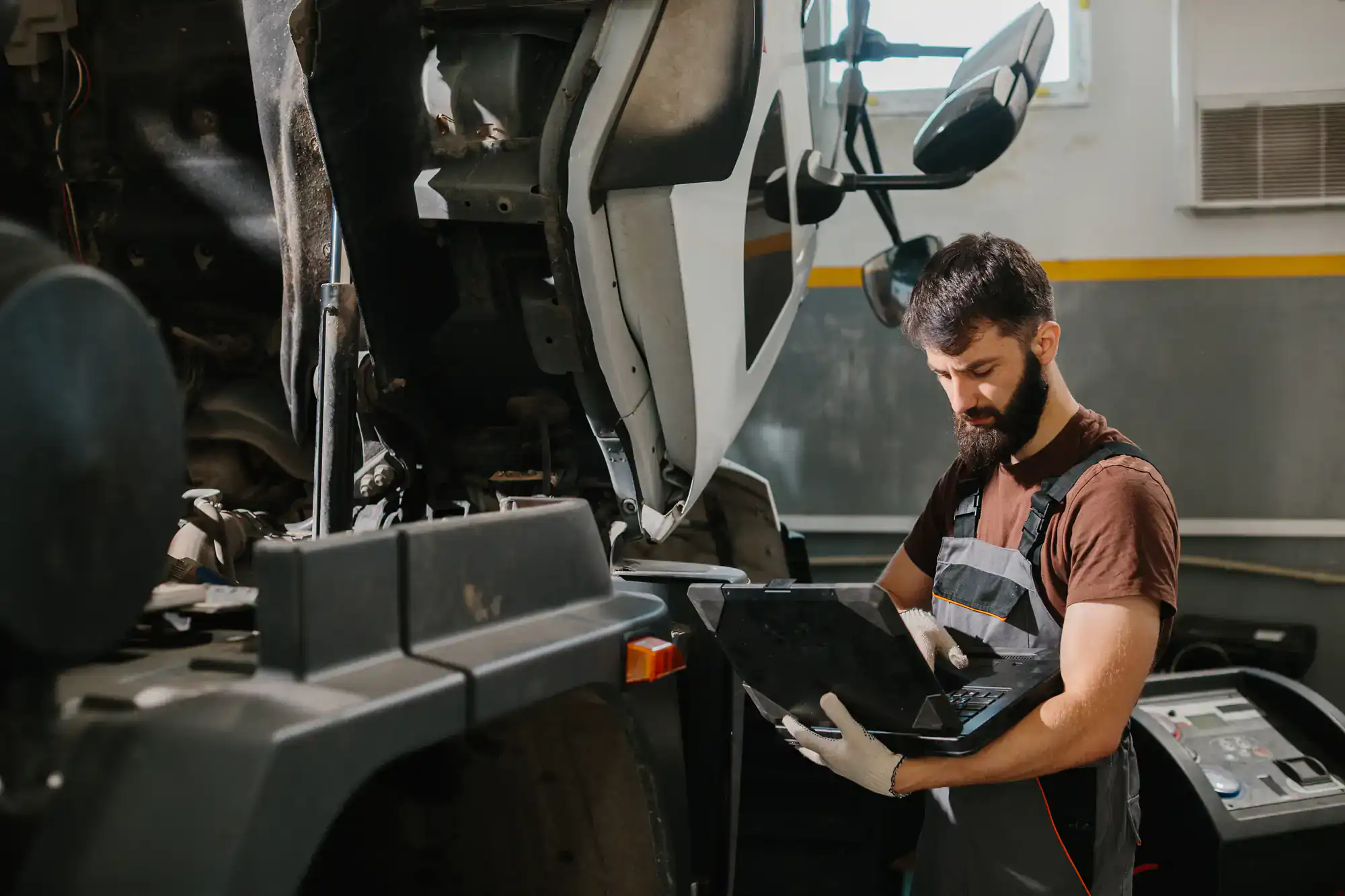
It depends on the specific vehicle, but for many of them yes. Clean Truck Check applies to any diesel truck that is model year 2013 or newer and has a GVWR over 14,000 pounds and operates on California public roads. That covers a wide range of vehicles in the LAX ecosystem: fuel tankers, cargo transport trucks, maintenance vehicles, and heavy support equipment that moves between the airport and El Segundo’s surrounding areas.
The key phrase is “operates on California public roads.” Vehicles that operate exclusively on private airport property and never travel public roads may fall outside the scope, but most fleet vehicles supporting LAX operations do use public roads including the 405, the 105, and Sepulveda Boulevard as part of their regular routes. If you’re unsure whether a specific vehicle in your fleet qualifies, the safest approach is to check the VIN against CARB’s CTC-VIS database, which will tell you whether that vehicle has been enrolled and whether a test is required.
A Notice to Submit to Testing means CARB has flagged your vehicle typically through roadside remote sensing data as a potential high emitter. Once you receive that notice, you have 30 calendar days to submit a passing Clean Truck Check test. That window is firm. If you miss it, your truck becomes non-compliant, and CARB’s system sends a registration hold to DMV automatically through a nightly data transfer.
The practical move when you receive an NST is to book testing immediately don’t wait to see if it resolves itself, because it won’t. We can respond quickly to urgent compliance situations, come to your location in El Segundo or anywhere in Los Angeles County, perform the OBD test, and submit results directly to CTC-VIS. If the truck passes, compliance is recorded in the system and the DMV hold is cleared within 3 to 5 business days. If there’s an emissions issue that causes a failure, you’ll know exactly what you’re dealing with and can address it before the deadline closes.
CARB allows OBD test results to be submitted up to 90 days before a compliance deadline. That’s a meaningful window, and it’s worth using. For fleet managers in El Segundo running multiple vehicles on tight operational schedules especially those supporting aerospace logistics, refinery operations, or LAX cargo scheduling testing proactively means you’re not scrambling when a deadline hits or a notice arrives.
Testing ahead of the deadline also gives you a repair window if a truck fails. If you test 60 days out and a vehicle doesn’t pass, you have time to diagnose the issue, make the repair, and retest before the compliance date. If you wait until the last week and a truck fails, you’re looking at a potential registration hold and an urgent repair timeline simultaneously. Building Clean Truck Check into your regular fleet maintenance calendar rather than treating it as an emergency task is the approach that creates the least disruption to your operation.
Right now, covered vehicles are required to test twice per year semi-annually. Starting October 1, 2027, OBD-equipped heavy-duty trucks will be required to test quarterly, meaning four times per year. That’s a significant increase in testing frequency, and for fleet operators in El Segundo managing 10, 20, or more vehicles, it means the volume of compliance testing your operation needs to handle is going to double.
The time to think about this is now, not in 2027. Building a relationship with a mobile, CARB-credentialed testing provider before the frequency change takes effect means you have a process in place when the new requirement kicks in not a last-minute search for a tester who can handle fleet volume. We serve Los Angeles County with mobile testing and work with fleet operators to schedule testing around operational needs. Getting ahead of the 2027 requirement is straightforward if you start the conversation early.
If the vehicle is a diesel truck that is model year 2013 or newer with a GVWR over 14,000 pounds and it operates on California public roads, then yes Clean Truck Check applies regardless of whether the vehicle is used for government contract work, private commercial work, or anything else. The regulation is based on the vehicle’s characteristics and its use of public roads, not on the nature of the work it supports.
For contractor fleets operating in El Segundo’s defense and aerospace corridor near Los Angeles Air Force Base, Space Systems Command, or the major aerospace campuses on Douglas Street and Aviation Boulevard CARB compliance is particularly worth staying current on. Many government contracting environments expect or require demonstrable regulatory compliance as a baseline condition of doing business. A fleet with active DMV registration holds or unresolved CARB notices is a liability in that context. Staying current with Clean Truck Check is straightforward when you have a reliable mobile testing provider handling the process.
The OBD test for Clean Truck Check is a diagnostic data download not a tailpipe emissions measurement. For model year 2013 and newer heavy-duty diesel trucks, CARB’s HD I/M regulation requires testing through the truck’s onboard diagnostic system. Our CARB-certified OBD test device connects to the truck’s diagnostic port, reads the emissions-related data stored by the truck’s own computer, and produces a result based on that data. The truck doesn’t need to be running on a dynamometer, and it doesn’t need to go anywhere.
In terms of time, the test itself is efficient typically 15 to 30 minutes per vehicle once we’re on-site. For fleet testing, where multiple trucks are being tested at the same location, the process moves quickly. After the test is complete, we submit results electronically to CARB’s CTC-VIS database. For El Segundo fleet operators whose trucks are running tight schedules whether that’s airport-related logistics, refinery support, or aerospace supply chain work the minimal time requirement and our on-site mobile model means testing doesn’t create any meaningful disruption to your day.
Useful Links
Other Services we provide in El Segundo