
Hear from Our Customers

You’re running a tight operation. Every day a truck sits idle costs you money. Every compliance deadline you miss puts you at risk for fines that can hit $10,000 per vehicle per day.
California’s Clean Truck Check program isn’t optional anymore. If you’re operating heavy-duty diesel trucks with 2013 or newer engines and a gross vehicle weight rating over 14,000 pounds, you need to pass CARB emissions testing twice a year. Miss that window and you’re looking at registration holds, roadside violations, and operational shutdowns.
Here’s what matters: you get tested locally in Desert Hot Springs, you get your results fast, and you stay ahead of deadlines. The test itself takes under five minutes using OBD diagnostics. You can submit passing results up to 90 days before your deadline, which means you have time to address any issues before they become expensive problems.
No long drives to distant testing centers. No guessing about compliance status. Just straightforward CARB diesel compliance that keeps your fleet legal and your business moving.
We serve the Desert Hot Springs area with CARB credentialed testing. That means our technicians completed the official CARB training program and passed the certification exam that the state requires for heavy-duty vehicle compliance.
We’re not new to emissions testing. We’ve been handling smog checks and compliance work in this community, and we added Clean Truck Check services because the need is real. Desert Hot Springs sits right in the path of major freight corridors moving through Southern California. Trucks roll through here heading to and from LA ports, the Inland Empire distribution centers, and throughout the Coachella Valley.
You need someone local who understands both the technical side and the regulatory side. That’s what you get here. We use CARB-approved diagnostic equipment, we stay current on regulation changes, and we know what it takes to keep commercial vehicles compliant in California.

You’ll receive a Notice to Submit to Testing from CARB. That notice gives you 30 calendar days to complete and submit a passing test. Don’t wait until day 29.
Bring your truck to our Desert Hot Springs location. We connect CARB-certified diagnostic equipment to your vehicle’s onboard diagnostics port. The system reads emission data directly from your truck’s computer. This is the same OBD technology your 2013 or newer diesel engine already has built in.
The test runs in under five minutes for most vehicles. If your truck passes, we generate your compliance certificate right there and submit it to the CARB database. You’re done. If there’s an issue, you’ll know immediately what needs attention, and you still have time within your 30-day window to get repairs done and retest.
Your compliance certificate stays valid for six months. You’ll need testing twice per year under current regulations. Starting in 2027, that increases to quarterly testing for OBD-equipped vehicles, so staying on top of this now sets you up for the future.

Ready to get started?
This service applies specifically to heavy-duty diesel vehicles and diesel hybrids with 2013 or newer model year engines and a gross vehicle weight rating of 14,000 pounds or more. If your truck doesn’t meet those criteria, this isn’t the test you need.
You’re getting CARB HD I/M testing performed by a state-credentialed technician using approved diagnostic equipment. The test checks your vehicle’s emission control systems through the OBD port. We verify that your truck meets California’s emission standards, generate your official compliance certificate, and submit passing results directly to the CARB Clean Truck Check database.
Desert Hot Springs and the surrounding Coachella Valley see heavy commercial truck traffic year-round. Construction equipment, agricultural haulers, long-haul semis, delivery fleets—they all need this testing. The annual compliance fee alone runs over $31 per vehicle, and that’s before testing costs. Factor in the alternative—potential fines, registration problems, and downtime—and the math is straightforward.
You also get clarity on your compliance timeline. Testing windows, deadline tracking, and understanding when your next test is due. That’s part of what you’re paying for. Not just the five-minute diagnostic, but the knowledge that you’re handling this correctly.
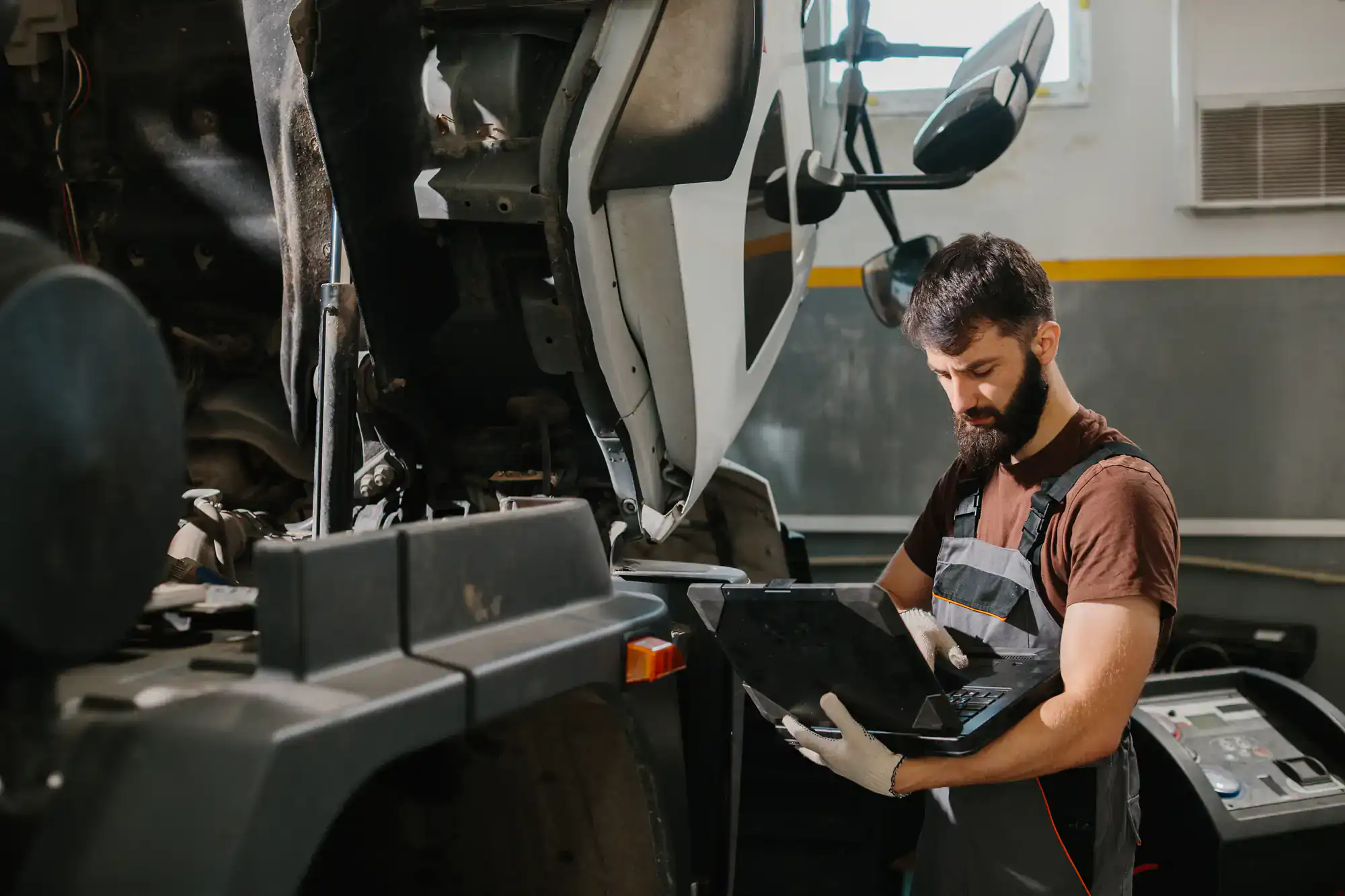
Your truck needs this testing if it meets three specific criteria: it’s a diesel or diesel hybrid, it has a 2013 or newer model year engine, and it has a gross vehicle weight rating of 14,000 pounds or more. All three must apply.
CARB will send you a Notice to Submit to Testing if your vehicle is in their system and due for compliance. You’ll also need a passing test to renew your DMV registration. If you’re operating a commercial truck in California that fits those specifications, assume you’re in the program.
Out-of-state trucks operating in California fall under these rules too. If you’re running freight through the state with a qualifying vehicle, you need to comply. The regulations went into full effect in 2024, and all compliance deadlines after January 1, 2025 require passing tests.
You find out immediately what’s wrong. The OBD diagnostic system identifies specific emission control issues. You’ll get a report showing which systems aren’t meeting standards.
Here’s why the 90-day advance testing window matters. If you test early and fail, you have time to get repairs done and retest before your actual deadline. If you wait until the last minute and fail, you’re scrambling to find a repair shop, get parts, and get retested—all while your deadline approaches.
Failed tests don’t get submitted to CARB. Only passing results go into the compliance database. So a failure doesn’t count against you, but it does mean you need to address the problem and test again. Most emission control issues on newer trucks involve sensor malfunctions or system faults that a qualified diesel mechanic can diagnose and repair.
Right now, you need testing twice per year. That’s the current requirement for heavy-duty diesel vehicles in the Clean Truck Check program. CARB sends notices to submit to testing on a semi-annual schedule.
Starting in October 2027, the frequency increases to quarterly testing for OBD-equipped vehicles. That means four times per year instead of two. The change is already approved and scheduled, so plan for increased testing frequency in your compliance budget.
Each passing test keeps you compliant for six months under current rules. You can test up to 90 days before your deadline, which gives you flexibility in scheduling. If you run a fleet, staggering your testing dates helps spread out the time and cost rather than hitting everything at once.
You can use any CARB credentialed testing location in California. The tester must have completed the official CARB training program and hold current certification. Not every smog check station offers Clean Truck Check services—this is a specialized program that requires specific credentials and equipment.
Testing locally in Desert Hot Springs saves you drive time and keeps your trucks in operation. If you’re based in the Coachella Valley or running routes through this area, coming here makes more sense than driving to LA County or other distant testing centers.
Your compliance certificate is valid statewide once it’s in the CARB system. Where you test doesn’t matter to CARB—what matters is that the tester is credentialed and the equipment is approved. We meet both requirements, and we’re local.
Bring your Notice to Submit to Testing from CARB if you received one. That notice includes your vehicle identification number and compliance deadline. You’ll also need your vehicle registration or other proof of ownership.
The technician needs to verify the truck’s VIN, model year, engine type, and GVWR to confirm it qualifies for the program. Most of that information is visible on the vehicle itself or in your registration documents.
If you’re managing a fleet, keep your compliance notices organized by deadline date. CARB tracks each vehicle individually in their database. Missing a deadline on one truck doesn’t affect your other vehicles, but it does create a compliance problem for that specific unit. Staying organized prevents missed deadlines and the penalties that come with them.
CARB can assess penalties up to $10,000 per vehicle per day for non-compliance. That’s not a typo. The fines are structured to be severe enough that compliance is always the cheaper option.
You’ll also face registration holds at the DMV. That means you can’t renew your truck’s registration until you submit a passing test. Operating with expired registration brings its own set of fines and legal issues, plus the risk of your vehicle being impounded during a roadside inspection.
The cost of testing—typically $135 to $190 depending on the provider—is minimal compared to penalty exposure. Add in the annual compliance fee of around $31 per vehicle, and you’re still looking at under $500 per year for twice-annual testing. Compare that to a single day of non-compliance fines and the math is obvious. Stay compliant, avoid the penalties, and keep your trucks operating legally.
Useful Links
Other Services we provide in Desert Hot Springs