
Check Out Our Reviews!

If you’re managing trucks in Culver City whether they’re running grip equipment to a Sony Pictures lot, hauling gear through the Hayden Tract, or making daily deliveries across Jefferson Boulevard a DMV registration hold doesn’t just create a paperwork problem. It pulls a working vehicle off the road, and in this city, that can mean a disrupted shoot day, a missed delivery window, or a contract you can’t fulfill. Clean Truck Check compliance is what keeps that from happening.
The Clean Truck Check program requires OBD emissions testing for diesel trucks that are model year 2013 or newer with a GVWR over 14,000 pounds. That spec covers a large share of the commercial vehicles operating in and around Culver City’s studio corridors and tech campuses. If your truck meets those parameters and you’re operating on California public roads, you’re required to test currently twice a year, and quarterly starting October 1, 2027.
A passing test submitted by a CARB-credentialed tester clears your VIN in the CTC-VIS system. CARB sends that data to the DMV nightly, which means a registration hold can be lifted within 3 to 5 business days of a passing result. That’s the outcome that matters your truck back in rotation, your operation moving forward.
All we do is one thing: Clean Truck Check testing for 2013 and newer heavy-duty trucks with a GVWR over 14,000 pounds. That’s the full scope of what we offer. No passenger cars, no older opacity-test vehicles, no generalist shop that fits your truck in between other jobs. Just the specific OBD-based testing that the CARB HD I/M program requires done with CARB-certified equipment and submitted directly to the CTC-VIS database.
Our credentials are publicly listed on CARB’s official “Available for Hire Credentialed Testers” page at arb.ca.gov. You can verify us before you book. That matters in a city like Culver City, where production companies, tech campuses, and studio-adjacent vendors are used to vetting their service providers before handing over access to a fleet.
We serve Los Angeles County, which puts Culver City squarely in our service area. Whether your trucks are staged near Washington Boulevard, parked in the Higuera Street corridor, or operating out of a facility near the I-405 and Jefferson interchange, we come to you.
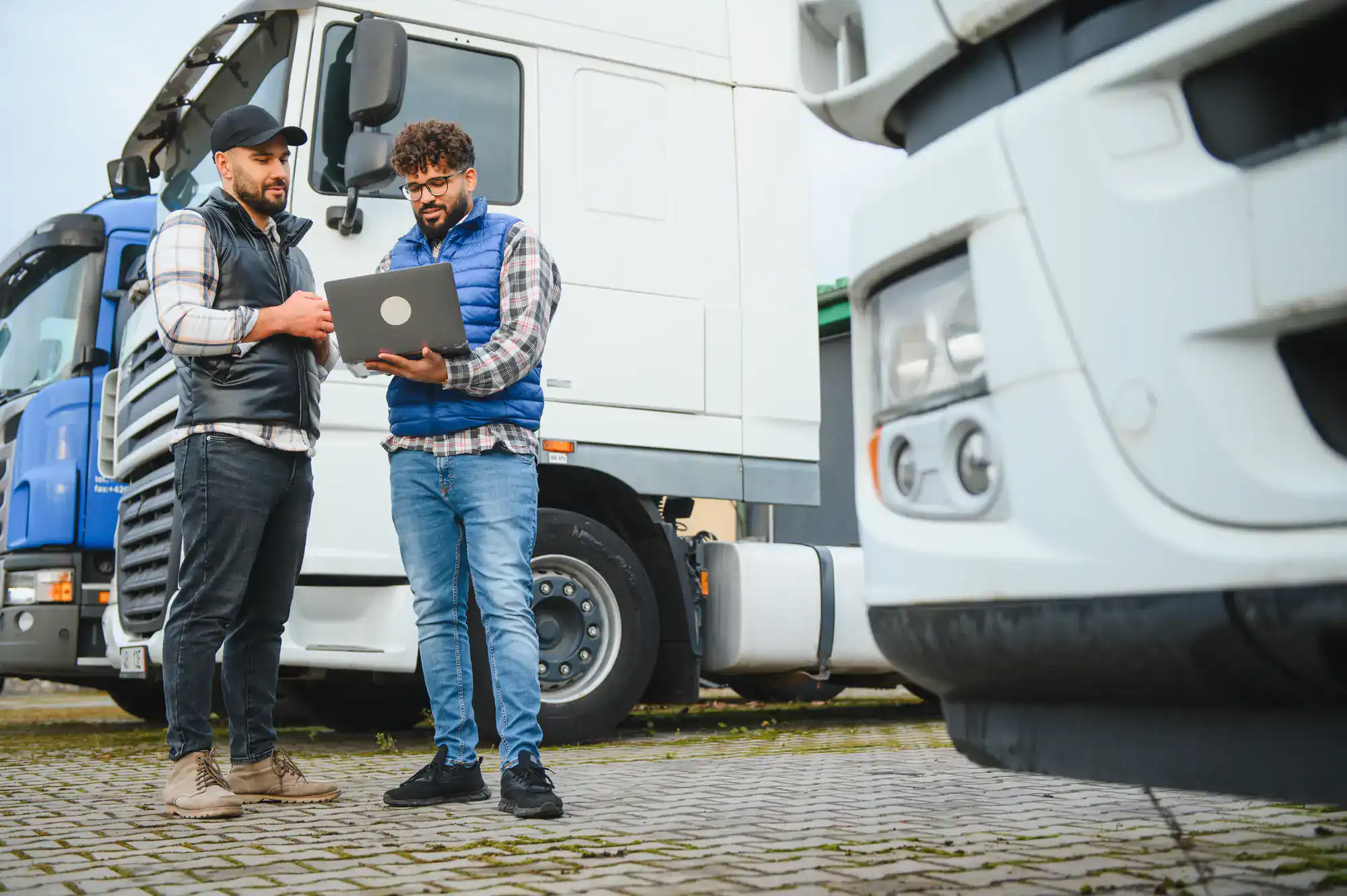
You schedule the test, and we come to your location. That might be a studio lot on Washington Boulevard, a fleet yard off Slauson Avenue, or a staging area near the Hayden Tract. Culver City’s designated truck route network which includes Jefferson Boulevard, Sepulveda Boulevard, La Cienega Boulevard, and several other corridors means we can reach most commercial vehicle locations in the city without routing complications. You don’t need to reposition your truck or navigate off-route restrictions to get to us.
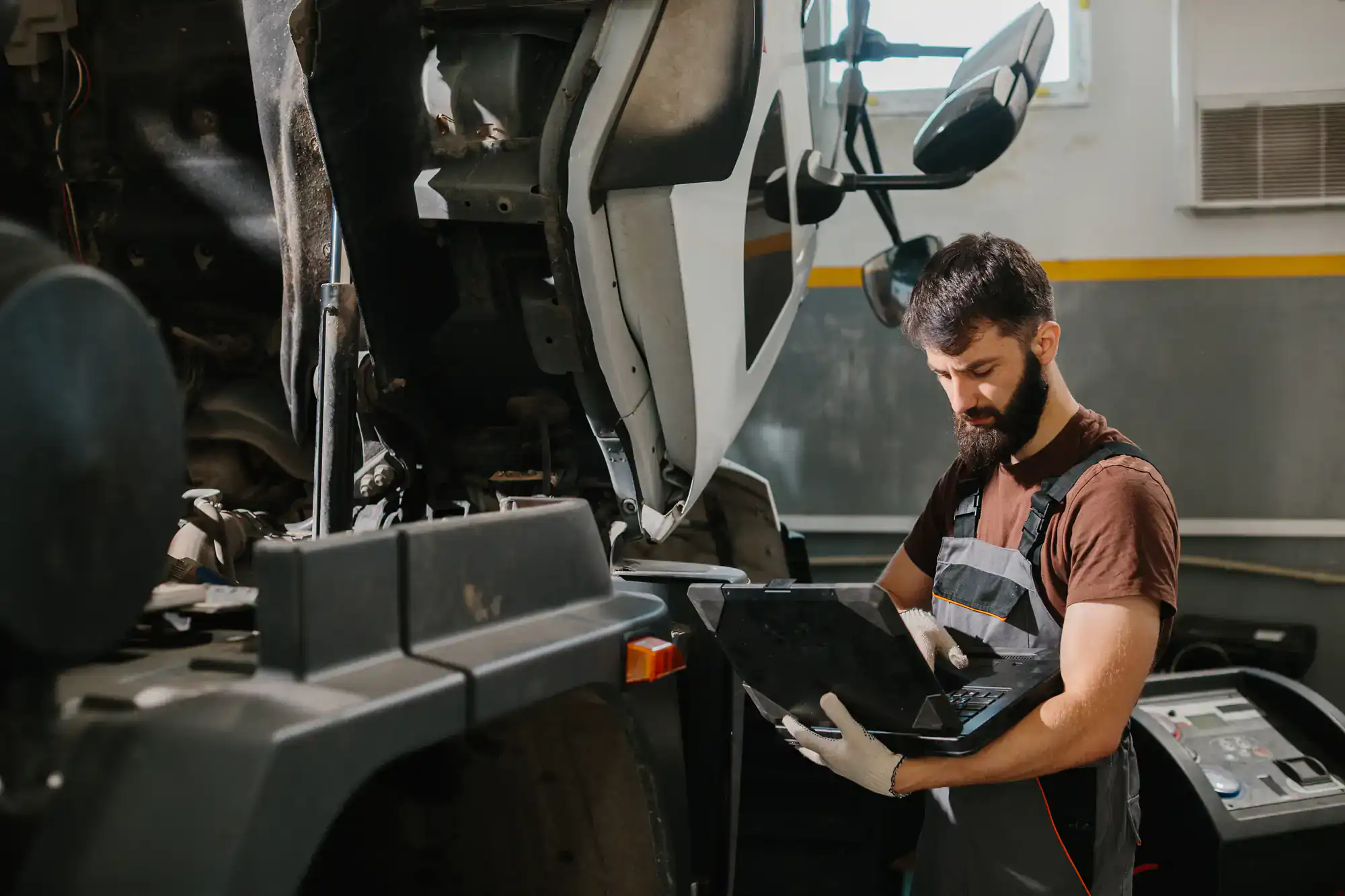
When we arrive, we connect a CARB-certified OBD test device directly to your truck’s ECU. The device reads emissions-related data from the onboard diagnostic system this is the same process CARB requires for all 2013 and newer heavy-duty vehicles subject to the Clean Truck Check program. The test itself is straightforward and doesn’t require the vehicle to be running or moving. Once the data is captured, we submit the results electronically and directly to CARB’s CTC-VIS database. There’s no portal for you to log into, no form to fill out, and no manual submission step that could create a gap in your compliance record.
If the truck passes, CARB transmits the compliant VIN to the DMV nightly. Registration holds typically clear within 3 to 5 business days. If a fault code comes back that needs attention before the truck can pass, you’ll know exactly what the issue is and you can address it before the next test window.

Ready to get started?
Every Clean Truck Check test we perform includes OBD data collection from the vehicle’s ECU using a CARB-certified device with an Executive Order approval, direct electronic submission to CARB’s CTC-VIS system, and confirmation of the test result. The service applies only to diesel trucks that are model year 2013 or newer with a GVWR over 14,000 pounds. If your truck doesn’t meet both of those parameters, it falls under a different testing requirement and we’ll tell you that upfront rather than take your money for a test that doesn’t apply.
For Culver City fleet operators managing multiple vehicles production companies running grip and equipment trucks, contractors serving tech campuses in the Hayden Tract, logistics vendors working the LAX-to-LA corridor along the I-405 we can handle fleet testing in a single visit. Multiple trucks, one location, one scheduling conversation. That’s a practical advantage when you’re managing compliance across 5, 10, or 20 vehicles with staggered deadlines.
One thing worth knowing: the $31.18 annual CARB compliance fee is not a substitute for the emissions test. It’s a separate requirement. Paying the fee without completing a passing OBD test means your truck is still non-compliant, and the DMV hold stays in place. If you’ve received a Notice to Submit to Testing from CARB, you have 30 calendar days to submit a passing result. We can move quickly when the timeline is tight.
If your truck is model year 2013 or newer and has a GVWR over 14,000 pounds, and it operates on California public roads, then yes it’s subject to the CARB Clean Truck Check program regardless of where it’s registered. That includes trucks operating in and around Culver City’s studio lots, production yards, tech campuses, and commercial corridors.
A common misconception is that out-of-state registered trucks are exempt. They’re not. If the vehicle is being operated in California, the compliance requirement applies. Another common one: some operators assume that paying the $31.18 annual CARB fee covers everything. It doesn’t. That fee is separate from the OBD emissions test itself, and both are required. If you’re not sure whether your specific truck falls under the program, the simplest check is model year and GVWR 2013 or newer, over 14,000 pounds. If it meets both, it needs to be tested.
A failed test doesn’t mean your truck is immediately grounded, but it does mean the clock starts moving. If the OBD system returns active fault codes related to emissions, the truck hasn’t met the compliance threshold and the result won’t clear your registration hold. You’ll need to address the underlying issue whether that’s a faulty sensor, a DPF problem, or an emissions system fault and retest.
The practical implication for Culver City operators is that failing close to a compliance deadline leaves very little margin. If your truck is already on a Notice to Submit to Testing with a 30-day window, a failed test followed by a repair cycle can eat through that window fast. Testing early CARB allows passing tests to be submitted up to 90 days before a compliance deadline gives you a buffer to handle repairs without the pressure of an imminent registration hold. It’s worth building that lead time into your fleet maintenance calendar, especially if you’re managing vehicles that are actively supporting production or delivery schedules.
Currently, most OBD-equipped heavy-duty trucks subject to the Clean Truck Check program are required to test twice per year semi-annually. That schedule is set to change. Beginning October 1, 2027, the testing frequency increases to four times per year, meaning quarterly testing will be required.
For fleet operators in Culver City managing multiple trucks across active production or delivery schedules, that shift is worth planning for now rather than later. Quarterly testing for a fleet of 10 or 20 vehicles is a meaningful operational commitment. Establishing a testing relationship with a mobile, CARB-credentialed provider before 2027 means you’ll have a process in place scheduling, location logistics, fleet documentation before the frequency doubles. The cost per test is generally in the $95 to $150 range per vehicle, which for most commercial fleet budgets is a manageable line item. The cost of a registration hold or an enforcement action is significantly higher.
Yes. Fleet testing at a single location is one of the more practical advantages of our mobile testing model. If your trucks are staged at a production facility, a fleet yard, or a commercial property in Culver City, we can test multiple vehicles in a single visit which eliminates the need to pull trucks off-site one at a time and dramatically reduces the scheduling burden for fleet managers handling compliance across a large inventory.
The logistics work well in Culver City specifically because the city’s designated truck route network Jefferson Boulevard, Washington Boulevard, Sepulveda Boulevard, and others provides clear access to most commercial locations without off-route complications. Whether your fleet is parked near the Higuera Street corridor, staged off Slauson Avenue, or positioned at a facility near the I-405 and Jefferson interchange, we can get there and work through the vehicles efficiently. If you have a specific location or a fleet count in mind, reach out and we’ll confirm availability and scheduling.
A Notice to Submit to Testing means CARB has identified your vehicle as overdue for a Clean Truck Check and is formally requiring you to submit a passing test. You have 30 calendar days from the date of the notice to submit a passing result. That window is firm, and the consequences of missing it escalate quickly DMV registration holds, fines up to $10,000 per vehicle per day, and the risk of enforcement action that could take the truck off the road entirely.
The first step is straightforward: schedule a test with a CARB-credentialed tester as soon as possible. If the truck passes, the result goes directly into CTC-VIS, CARB transmits the compliant VIN to the DMV nightly, and the registration hold clears within 3 to 5 business days. If there’s a concern that the truck might not pass a known fault code, a recent emissions-related repair that hasn’t been verified it’s worth addressing that before the test rather than burning days in the 30-day window on a failed attempt followed by a repair cycle. We can move quickly when the timeline is tight, and we serve Culver City and the broader Los Angeles County area.
It does. The Clean Truck Check program applies based on the vehicle’s specifications model year 2013 or newer, GVWR over 14,000 pounds not the industry the truck operates in. Production trucks, grip trucks, lighting rigs, equipment haulers, generator trucks, and catering vehicles that meet those parameters are subject to the same CARB HD I/M testing requirements as any other commercial heavy-duty vehicle operating on California public roads.
Culver City’s concentration of active studio operations Sony Pictures, Amazon MGM Studios, HBO, and the many independent production companies working in the area means a significant share of the commercial vehicles operating in this city on any given day are entertainment industry trucks. Many of those vehicles are 2013 or newer and well above the 14,000-pound GVWR threshold. Production companies that don’t maintain compliance risk having vehicles flagged, registration holds imposed, and trucks pulled from active use which, on a working production with a daily budget in the tens or hundreds of thousands of dollars, is an expensive problem. The compliance requirement is the same regardless of what the truck is hauling or who it’s working for.
Useful Links
Other Services we provide in Culver City