
Hear from Our Customers

Your trucks need to pass Clean Truck Check testing every six months or CARB reports your VIN to the DMV. That means registration holds, which means your trucks sit idle while you scramble to get compliant.
You’re already dealing with tight margins, fuel costs, and everything else that comes with running trucks in California. The last thing you need is a compliance issue shutting down your operation because the regulations are confusing and the deadlines sneak up on you.
We handle CARB diesel compliance testing for trucks that fall under the Heavy-Duty Inspection and Maintenance program. That’s 2013 and newer diesel trucks over 14,000 pounds GVWR that need OBD-based emissions testing. You get tested, we submit the results to CARB’s system, and you stay ahead of your deadline. No registration blocks. No downtime.
We serve the Compton trucking community with CARB credentialed testing that meets state requirements. Compton has a strong commercial trucking presence, from large fleets to owner-operators running routes through the ports and across Southern California.
We understand how these regulations work because we deal with them every day. CARB’s Heavy-Duty Inspection and Maintenance program isn’t optional, and the rules keep changing. Starting in 2027, testing frequency increases to four times per year for OBD-equipped vehicles.
You need someone who knows what they’re doing and gets it done right the first time. That’s what we do.

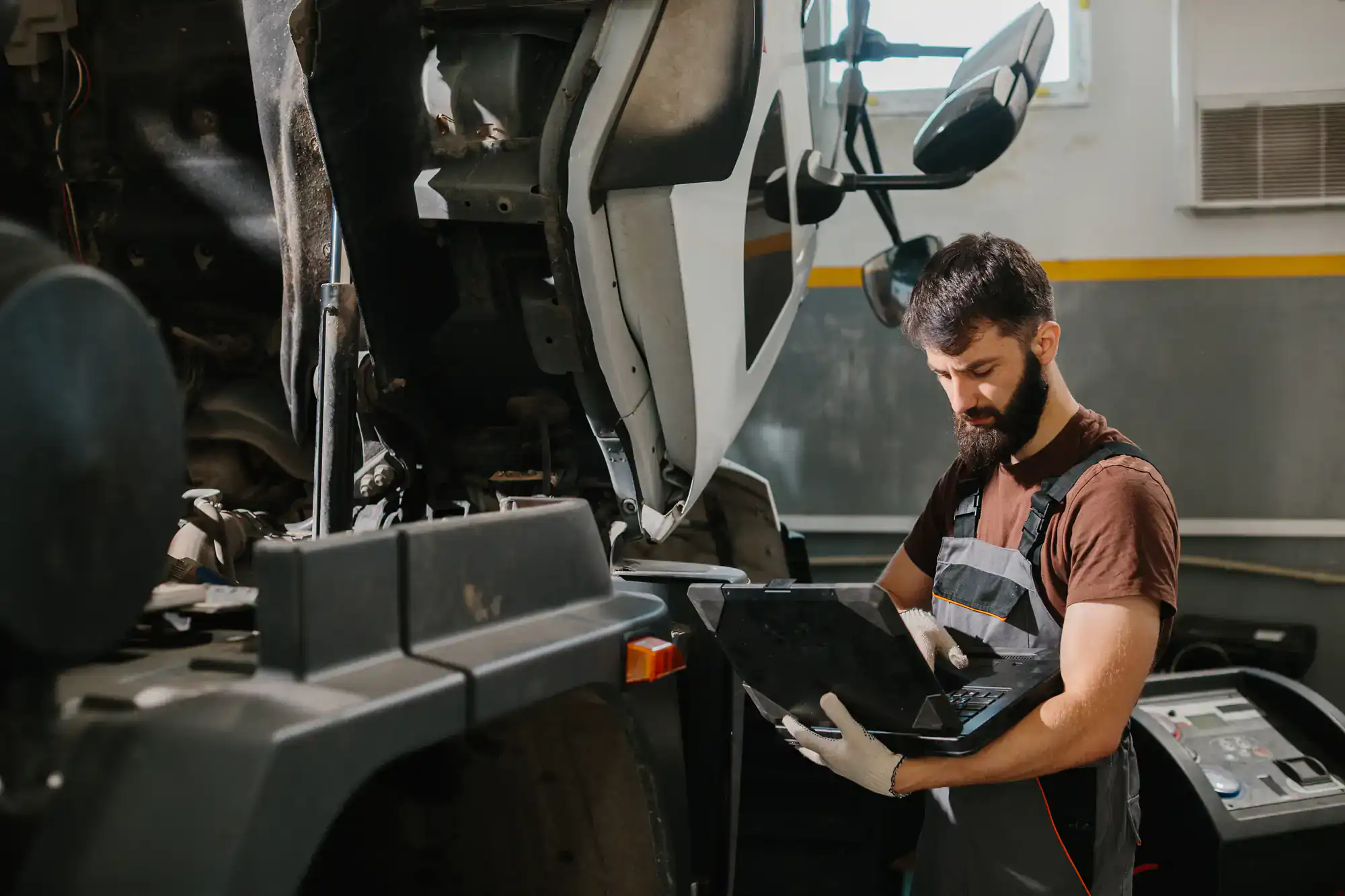
You bring your truck in, and we connect to the OBD system using CARB-certified testing equipment. The test pulls diagnostic data from your truck’s onboard computer to check emissions performance. This isn’t a visual inspection or a tailpipe test for newer diesel trucks—it’s an OBD data scan that CARB requires for 2013 and newer models.
The test takes about 30 minutes depending on the truck. If your truck passes, we submit the results directly to CARB’s CTC-VIS reporting system. CARB updates their compliance database, which feeds into DMV’s registration system.
You can test up to 90 days before your compliance deadline, which gives you a buffer if something needs attention. If your truck doesn’t pass, we’ll tell you what the issue is so you can get it fixed and come back for a retest. The compliance fee is $31.18 per vehicle for 2025, and that goes to CARB, not us.

Ready to get started?
Clean Truck Check applies to heavy-duty trucks over 14,000 pounds GVWR. If your truck is model year 2013 or newer with a diesel engine, it needs OBD testing every six months. This includes commercial trucks, privately-owned trucks, government vehicles, and out-of-state trucks operating in California.
CARB started enforcing this program on October 1, 2024. Any compliance deadline on or after January 1, 2025 requires a passing emissions test. If you get a Notice to Submit to Testing from CARB, you have 30 days to get tested and submit a passing result.
Compton’s location near the ports means a lot of trucks moving freight are subject to these rules. Ports and railyards have their own access requirements tied to Clean Truck Check compliance. If your truck isn’t compliant, you risk getting flagged at a weigh station or during a roadside inspection. CARB uses license plate readers and roadside emissions monitors to identify high-emitting vehicles, and they’ve been doing it since 2023.
If your truck is model year 2013 or newer, has a diesel engine, and has a gross vehicle weight rating over 14,000 pounds, then yes. CARB’s Heavy-Duty Inspection and Maintenance program requires these trucks to undergo emissions compliance testing every six months.
This applies whether you own one truck or run a fleet. It applies to commercial vehicles, private trucks, government trucks, and vehicles registered outside California that operate here. Hybrid trucks and buses with diesel engines also fall under the program.
Older trucks and lighter vehicles aren’t part of Clean Truck Check. If your truck is pre-2013 or under 14,000 pounds GVWR, different rules apply. But if you’re running newer heavy-duty diesel equipment in California, this testing is mandatory.
CARB reports non-compliant vehicles to the DMV every night. If you miss your deadline, DMV places a registration hold on your truck. That means you can’t renew your registration until you get tested and pass.
You might also receive a Notice to Submit to Testing from CARB. Once you get that notice, you have 30 calendar days to submit a passing test. If you don’t, you’re looking at potential fines and enforcement action.
Your truck is also at risk during roadside inspections. CARB Enforcement and California Highway Patrol check compliance at weigh stations and during roadside stops. If your truck is flagged as non-compliant, it creates problems on the spot. The easiest move is to stay ahead of your deadline and test early.
Right now, you need Clean Truck Check testing every six months. That’s twice a year, and your compliance deadline is based on your vehicle’s registration or the last time you tested.
Starting in October 2027, CARB increases the frequency to four times per year for OBD-equipped trucks. That means every three months instead of every six. The program is getting stricter, not looser.
You can test up to 90 days before your deadline, which gives you flexibility. If you’re running multiple trucks, stagger your testing schedule so you’re not trying to get everything done at once. Missing a deadline creates bigger headaches than just getting it done early.
No. Clean Truck Check testing has to be performed by a CARB credentialed tester using CARB-certified OBD testing equipment. Not every smog shop is set up for heavy-duty vehicle compliance.
The testing process for trucks over 14,000 pounds is different from passenger vehicle smog checks. The equipment is different, the reporting system is different, and the regulations are different. You need a shop that’s credentialed specifically for this program.
We’re credentialed to perform Clean Truck Check testing and submit results directly to CARB’s CTC-VIS system. We’re set up to handle the OBD scans that 2013 and newer diesel trucks require. Don’t assume every shop can do this—ask before you show up.
For 2013 and newer diesel trucks, the test pulls data from your truck’s onboard diagnostics system. We’re checking for emissions-related fault codes, verifying that your emissions control systems are working, and making sure your truck meets CARB’s performance standards.
This isn’t a tailpipe test. It’s an OBD scan that reads what your truck’s computer is reporting about emissions components like the diesel particulate filter, NOx sensors, and exhaust gas recirculation system. If any of those systems are malfunctioning or throwing codes, your truck won’t pass.
The test also verifies your VIN, engine information, and odometer reading. All of that gets reported to CARB. If everything checks out, you pass and we submit the results. If something’s wrong, you’ll need to get it repaired and come back for a retest.
CARB charges a compliance fee of $31.18 per vehicle for 2025. That fee goes up to $32.13 in 2026. This is a state-mandated fee that goes to CARB, not the testing facility.
On top of that, you’ll pay the shop’s testing fee. Our pricing is straightforward, and we’ll tell you the total cost upfront. There are no hidden fees or surprise charges.
If your truck doesn’t pass and needs repairs, those costs are separate. Emissions-related repairs can range from minor fixes to more involved work depending on what’s wrong. The best way to avoid expensive repairs is to stay on top of your maintenance and test early so you have time to address issues before your deadline hits.
Useful Links
Other Services we provide in Compton