

Check Out Our Reviews!

Carson isn’t a city where trucks sit idle. Between the drayage runs to the Port of Long Beach, the distribution yards along South Carson near the I-710, and the warehousing operations packed into the Watson Industrial Center, your trucks are working. A DMV registration hold doesn’t just mean paperwork it means a truck that can’t legally move freight, and in this city, that has a real dollar cost attached to it every single day.
The I-405 weigh station between Avalon Boulevard and Main Street is an active enforcement point for commercial vehicles running the San Diego Freeway corridor. CARB compliance isn’t something you can put off until the next renewal cycle when you’re running loads through one of the most scrutinized freight corridors in the state. A passing Clean Truck Check test submitted directly to CARB’s CTC-VIS database is what clears a registration hold and gets your VIN back in good standing with DMV typically within 3 to 5 business days after submission.
The operators who stay ahead of this aren’t doing anything complicated. They’re just testing on their schedule instead of CARB’s. You can submit a passing test up to 90 days before your compliance deadline, which means you can plan around your dispatch cycle, not around an enforcement notice.
We are a CARB-credentialed emissions testing company focused exclusively on one thing: OBD-based Clean Truck Check testing for model year 2013 and newer heavy-duty vehicles with a GVWR over 14,000 pounds. That’s the entire business. No passenger cars, no light trucks, no generalist smog shop experience just the vehicles that are actually subject to CARB’s HD I/M testing requirement.
We use only OBD test devices that carry CARB Executive Orders, which means every test we perform produces a result CARB will accept. Results are submitted electronically and directly into CARB’s CTC-VIS system at the time of testing. You can verify All SMOG Motors on CARB’s publicly accessible credentialed tester registry at arb.ca.gov before you ever pick up the phone and that kind of transparency matters in a market where plenty of providers claim credentials they can’t back up.
We serve Los Angeles County, including Carson and the surrounding South Bay freight corridor. We understand the operational pressures that come with running trucks in one of the most compliance-intensive freight environments in the country.
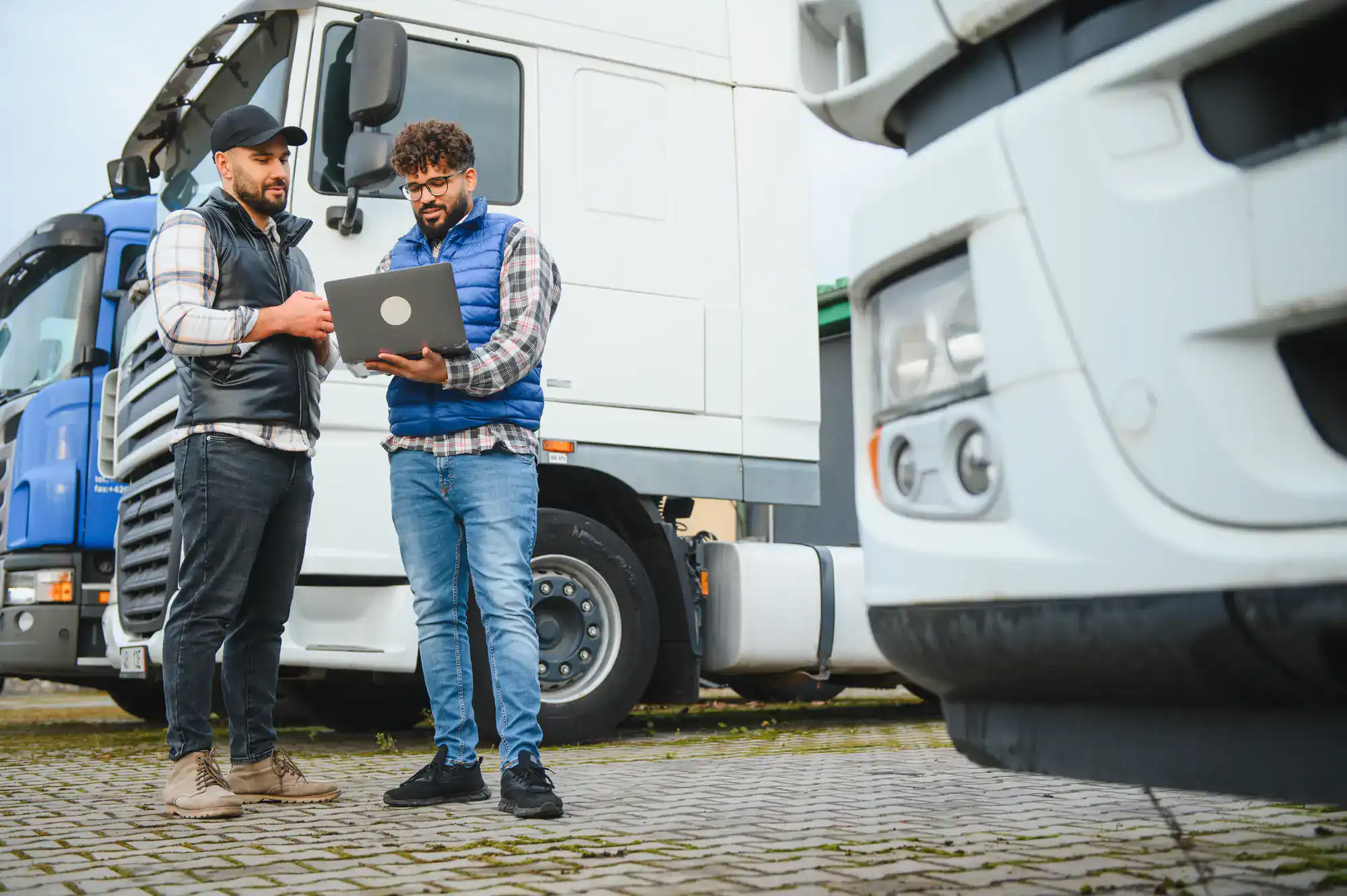
You schedule the test and tell us where your truck is. Whether that’s a distribution yard near the I-710 in South Carson, a logistics dock in the Watson Industrial Center, or a staging area between port runs we come to you. There’s no repositioning a semi across the city, no waiting room, and no half-day lost to a facility visit. The test happens where your truck already is.
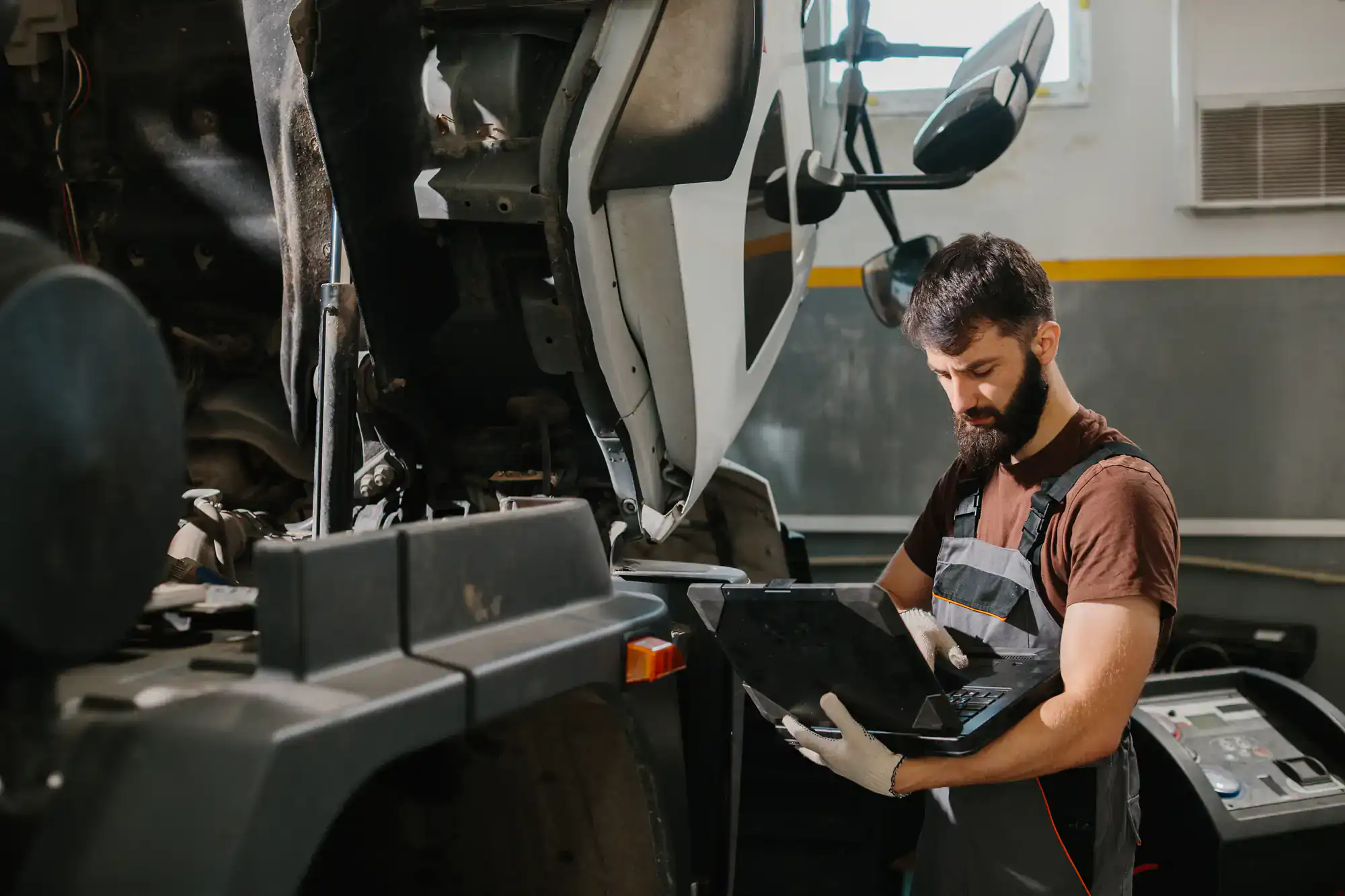
When we arrive, we connect a CARB-certified OBD test device to your truck’s diagnostic port and pull the emissions data directly from the engine control unit. For 2013 and newer diesel trucks, this is a J1939 or J1979 connection depending on the vehicle not a generic scanner, but state-approved equipment that produces a result CARB will actually accept. The test itself is fast. What matters is that the equipment is right and the submission is done correctly the first time.
Once your truck passes, we submit the results electronically to CARB’s CTC-VIS database on the spot. CARB transmits compliant VIN data to DMV nightly, and DMV records typically update within 3 to 5 business days. You can confirm your compliance status directly in your CTC-VIS account. For fleet operators managing multiple trucks with staggered deadlines across a Carson yard, we can test multiple vehicles in a single visit no separate appointments, no separate trips.
Ready to get started?
The Clean Truck Check program formally CARB’s Heavy-Duty Inspection and Maintenance program under Senate Bill 210 applies to diesel and alternative fuel heavy-duty vehicles with a GVWR over 14,000 pounds that operate on California public roads. If your truck is model year 2013 or newer and meets that weight threshold, it needs to test. That includes out-of-state registered vehicles operating in California, which is relevant for carriers running freight through Carson’s port-adjacent corridors from outside the state.
Right now, OBD-equipped vehicles are required to test twice per year. Starting October 1, 2027, that frequency increases to four times per year. For a fleet operator in Carson running 15 or 20 trucks, that shift from 30 annual tests to 60 is a significant operational change and the operators who build a reliable testing relationship before that deadline hits are the ones who manage the transition without scrambling. The annual CARB compliance fee is $31.18 per vehicle in 2025, but that fee is separate from the emissions test itself. Paying the fee does not mean your truck has been tested a mistake that catches more operators off guard than you’d expect.
Carson’s position within the South Coast Air Basin where a 2025 air quality report found diesel particulate risk higher than 88 percent of the regional population, driven largely by truck traffic on the I-405 means CARB enforcement in this area is active and unlikely to ease. The regulatory direction here is toward more testing, stricter standards, and more enforcement, not less.
Yes. CARB’s Clean Truck Check program applies to any heavy-duty vehicle operating on California public roads regardless of where it’s registered. If your truck is model year 2013 or newer, has a GVWR over 14,000 pounds, and it’s running loads through Carson, the Ports of Los Angeles or Long Beach, or anywhere else in California, it falls under the HD I/M testing requirement.
This catches a lot of out-of-state owner-operators off guard, especially carriers running drayage or distribution freight into the South Bay from Arizona, Nevada, or other western states. The compliance obligation follows the vehicle’s operation in California, not its registration address. If you’ve received a Notice to Submit to Testing or you’re unsure whether your out-of-state truck needs a test, the answer is almost certainly yes and the 30-day window on an NST moves fast.
They’re two completely separate things, and confusing them is one of the most common compliance mistakes Carson truck operators make. The annual CARB compliance fee $31.18 per vehicle in 2025 is a program participation fee that you pay to CARB. It does not substitute for an emissions test, and paying it does not update your compliance status in CARB’s CTC-VIS system or clear a DMV registration hold.
The Clean Truck Check test is a separate requirement. It involves a CARB-credentialed tester connecting a state-approved OBD device to your truck’s diagnostic port, pulling emissions data from the ECU, and submitting a passing result directly to CTC-VIS. Only after that submission does your VIN get flagged as compliant and only then does CARB transmit that information to DMV. If you’ve paid the fee but haven’t had the OBD test performed by a credentialed tester, your truck is still non-compliant in the eyes of CARB and DMV.
CARB maintains a publicly accessible list of credentialed Clean Truck Check testers at arb.ca.gov. Before you schedule with anyone including All SMOG Motors look us up on that list. A tester who isn’t on it cannot legally perform a valid HD I/M test, and a test performed by an uncredentialed provider or using non-certified equipment doesn’t count. Your truck remains non-compliant, you’re still exposed to penalties, and you’ve wasted the time and cost of the appointment.
This matters more in Carson than you might expect. The city’s freight density has attracted a number of providers who market Clean Truck Check services with local landing pages and local phone numbers, but whose actual credentials are harder to verify. The equipment matters too only OBD devices with CARB Executive Orders produce a test result the system will accept. Verifying credentials before you book takes about two minutes and protects you from a compliance outcome that could cost far more than the test itself.
A failed test means your truck’s OBD system flagged an active fault code, a failed emissions monitor, or another condition that indicates the engine isn’t operating within CARB’s required parameters. The result gets submitted to CTC-VIS as a failure, and your truck remains in non-compliant status until a passing test is submitted.
From there, the path forward depends on what caused the failure. In many cases, it’s a diagnostic issue that a qualified diesel mechanic can address a faulty sensor, an incomplete readiness cycle, or an active DTC that needs to be resolved and cleared before retesting. Once the underlying issue is fixed, you schedule a retest. For Carson operators under an active Notice to Submit to Testing with a 30-day deadline, moving quickly on diagnosis and repair matters the clock doesn’t pause while the truck is in the shop. If you’re in that situation, let us know when you book and we’ll work with your timeline as tightly as we can.
CARB allows you to submit a passing OBD test up to 90 days before your compliance deadline. That 90-day window exists specifically so fleet operators can plan ahead rather than scramble when a deadline arrives. For a Carson fleet manager running 10, 20, or more trucks with staggered compliance dates, that window is genuinely useful it lets you batch testing visits around your dispatch schedule, your yard availability, and your driver rotations rather than reacting to registration holds one truck at a time.
The operators who use that window effectively are the ones who won’t feel the 2027 quarterly testing shift as a crisis. When the testing frequency doubles from twice per year to four times per year starting October 1, 2027, the fleets that already have a testing rhythm in place will absorb that change without significant disruption. The ones who are still scheduling reactively will be managing twice as many compliance deadlines with the same amount of chaos. Getting ahead of it now is the straightforward move.
Yes. We provide mobile Clean Truck Check testing throughout Los Angeles County, including Carson and the surrounding South Bay freight corridor. If your trucks stage in Carson between port runs which is common for drayage operators working the I-710 corridor between the Port of Long Beach and inland distribution points we can test at your staging yard, your fleet lot, or wherever your equipment is parked.
Drayage operators in this area are already navigating layered compliance requirements: CARB’s statewide HD I/M program, the port-level Clean Air Action Plan requirements for trucks entering terminal gates, and in some cases the California Drayage Truck Regulation. Working with a tester who understands the CARB framework completely not a generalist who handles the occasional heavy truck between passenger car smog checks reduces the risk of a test result that doesn’t hold up under scrutiny. Mobile testing at your location also means your drivers aren’t spending time repositioning equipment to a fixed facility when they could be running loads.
Useful Links
Other Services we provide in Carson