
Hear from Our Customers

Your truck’s sitting because the DMV flagged your registration. Every day it’s parked, you’re losing money—easily $500 or more depending on your routes. That’s the reality of California’s Clean Truck Check requirements for diesel and alternative fuel trucks.
If you’re running a 2013 or newer diesel engine, or a 2018 or newer alternative fuel engine over 14,000 pounds GVWR, your truck needs OBD testing using CARB-certified equipment. Miss your deadline and the state puts a hard stop on your registration. No registration means no legal operation, no port access, and no income.
We bring the testing to your location in Calabasas. Once your truck passes, results upload directly to CARB’s system in real time. Your DMV hold clears immediately—not in a few days, not next week. You’re back to legal operation the same day, which means you’re back to earning.
We operate with full CARB credentials and state licensing for heavy-duty emissions testing. That’s not marketing language—it’s the baseline requirement to legally perform Clean Truck Check testing in California, and we meet it.
Calabasas sits in a unique position. You’ve got owner-operators running local routes, small fleets servicing the San Fernando Valley, and trucks heading to the Ports of Los Angeles and Long Beach. All of those operations face the same compliance pressure, and most can’t afford to lose days waiting for testing appointments or driving to a fixed facility.
We’ve been handling CARB diesel compliance and heavy-duty vehicle inspections across Los Angeles County long enough to know what slows trucks down. Registration confusion, unclear timelines, failed tests that could’ve been caught early—we help you avoid all of it.
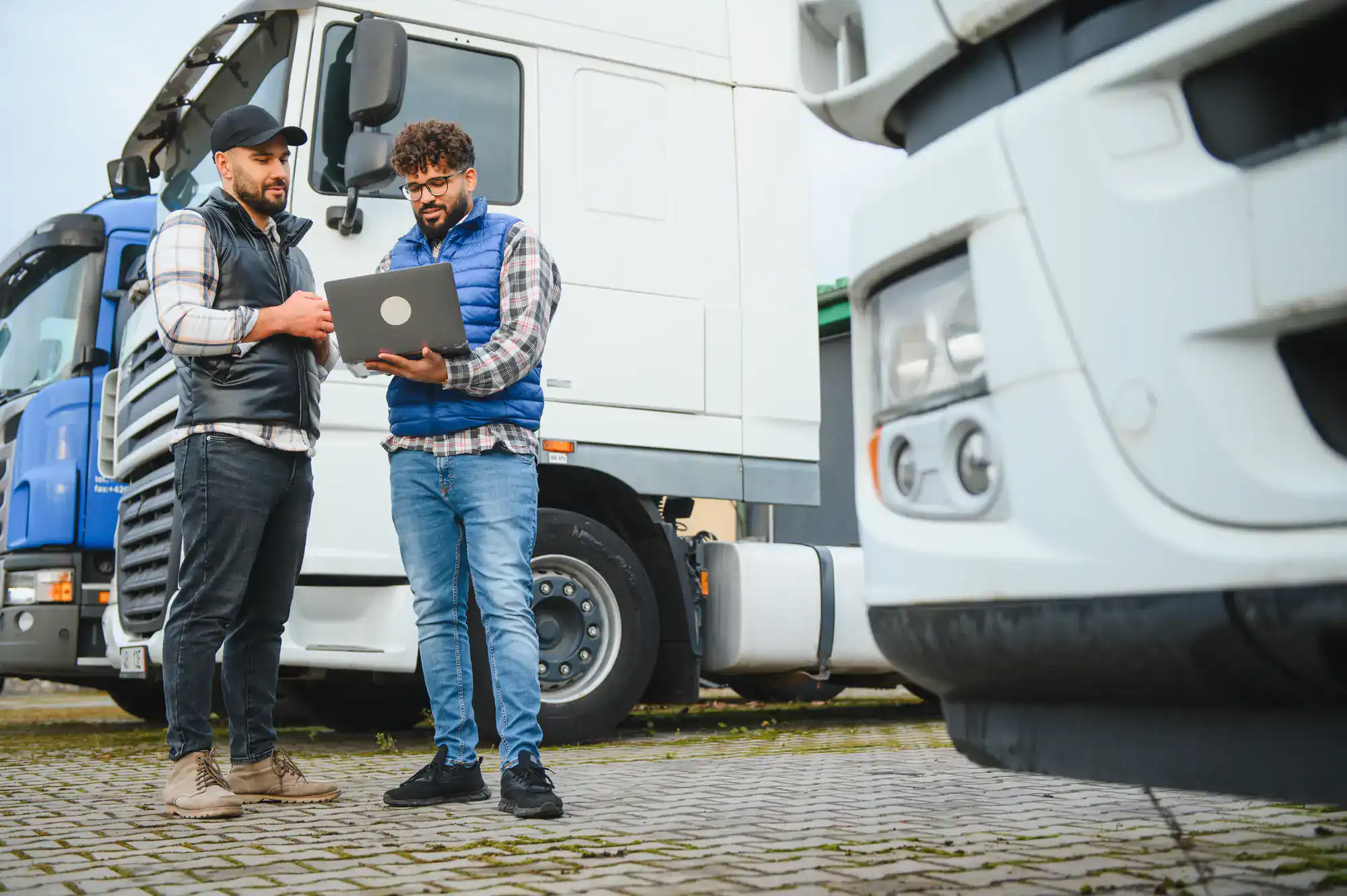
You schedule an appointment at your yard, job site, or wherever your truck is parked in Calabasas. We bring CARB-certified OBD testing equipment directly to you. No need to pull your truck out of service or drive somewhere and wait.
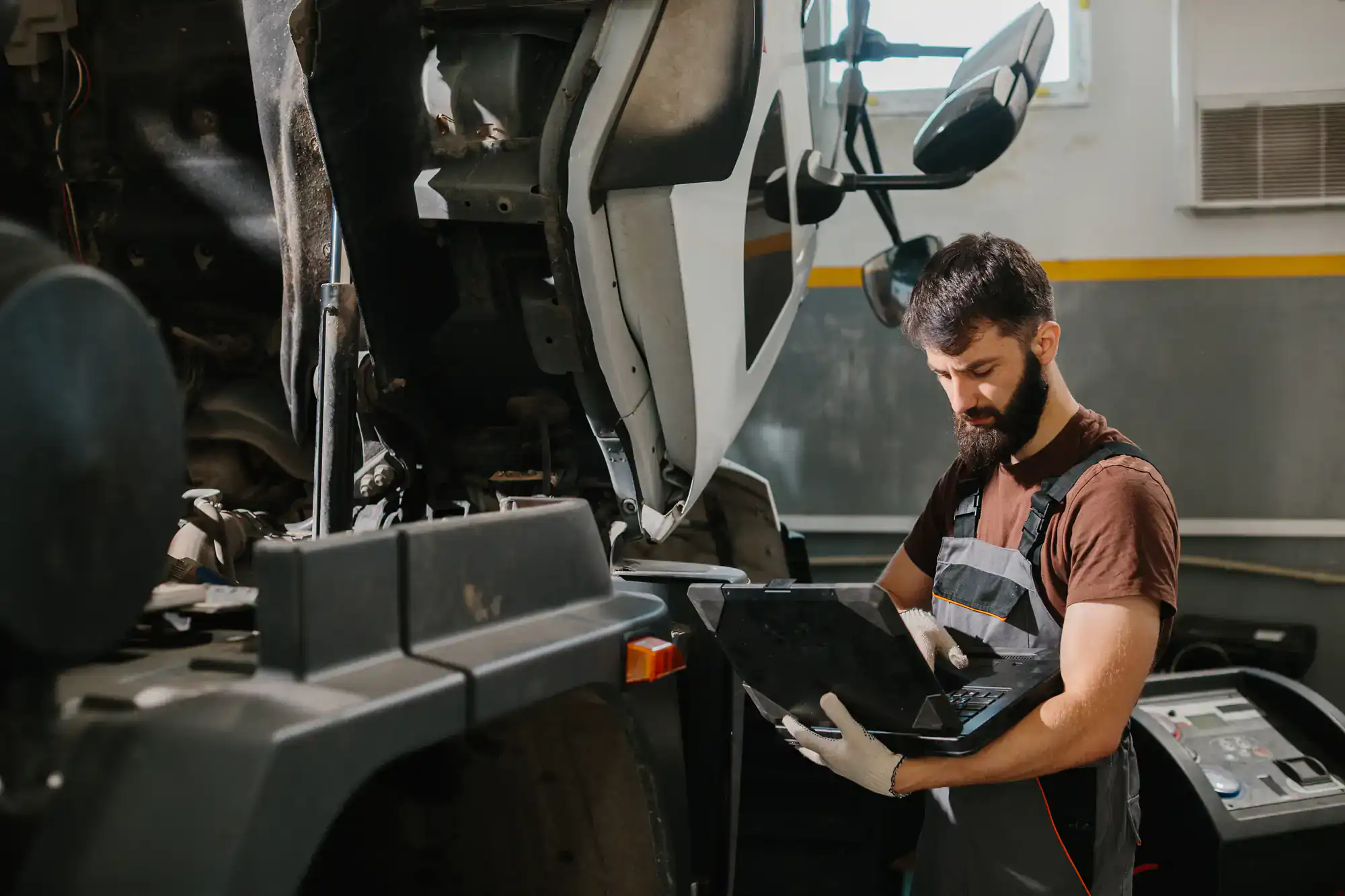
Our tester connects to your truck’s onboard diagnostics system and runs the required scan. This applies specifically to 2013 and newer diesel engines or 2018 and newer alternative fuel engines with a GVWR over 14,000 pounds. The test checks emissions data stored in your engine’s computer to confirm it meets California’s standards.
If your truck passes, we upload the results to CARB’s database immediately. That triggers the release of any DMV registration hold tied to Clean Truck Check compliance. You’ll see the hold clear in the state’s system the same day—usually within minutes. If something fails, we’ll tell you exactly what needs attention before you can retest.
Most appointments take under an hour. You’re not losing a full day of work or dealing with a line at a testing station. The process is straightforward because the regulation is complicated enough already.
Ready to get started?
Clean Truck Check isn’t optional if you operate a qualifying vehicle in California. The state mandates semi-annual testing right now, and starting in October 2027, OBD-equipped trucks will need testing four times per year. Miss a deadline and you’re facing registration holds, denied port access, and potential fines up to $10,000 per vehicle per day.
This service covers the OBD scan itself, results upload to CARB, and same-day DMV hold clearance. It’s built for trucks that meet the criteria: model year 2013 or newer for diesel, 2018 or newer for alternative fuel, and a gross vehicle weight rating above 14,000 pounds. If your truck doesn’t meet those specs, this isn’t the test you need.
Calabasas-based operators face specific pressure if they’re running routes to the ports. The Ports of Los Angeles and Long Beach require full CARB compliance for access, and they check. One missed test can lock you out of work entirely until you’re current. That’s not scare tactics—it’s enforcement reality as of 2024.
We also offer fleet pricing if you’re running multiple qualifying trucks. The more vehicles you test at once, the less you pay per unit. That matters when you’re trying to keep a small fleet compliant without blowing your operating budget on regulatory overhead.
Yes. If your truck operates in California—even if it’s registered in another state—it’s subject to Clean Truck Check requirements. The regulation applies to any heavy-duty vehicle over 14,000 pounds GVWR that drives on California roads, regardless of where the registration originates.
Out-of-state operators get caught off guard by this constantly. You might be based in Nevada or Arizona, but if you’re hauling into California regularly, the state expects compliance. CARB uses remote emission monitoring devices and automated license plate readers to flag potentially high-emitting vehicles, and those systems don’t care about your registration state.
The enforcement is real. If you’re running routes into the ports or through Los Angeles County, expect compliance checks. Getting tested before you cross state lines saves you from roadside violations and denied access to freight terminals or work zones that require proof of CARB compliance.
Once your truck passes and we upload results to CARB’s system, the DMV hold clears in real time—usually within minutes, sometimes up to a few hours. You don’t have to wait days or follow up with the DMV separately. The release happens automatically once CARB confirms your compliance.
This is one of the biggest pain points we hear about. Truck owners assume they’ll pass a test and still be stuck waiting for bureaucracy to catch up. That’s not how the system works anymore. CARB’s database communicates directly with DMV records, so the hold lifts as soon as your passing results post.
You can verify the hold is gone by checking your vehicle’s registration status online through the DMV’s website. If you’re planning to renew registration or need proof of compliance for port access, you’ll see the updated status immediately. That’s the whole point of mobile testing—you’re not just getting tested faster, you’re getting cleared faster.
If your truck fails, you’ll get a detailed report showing exactly what triggered the failure. Most failures come from emissions system malfunctions that your truck’s OBD system detected—things like faulty sensors, exhaust issues, or engine performance problems that push emissions outside California’s limits.
You’ll need to get those issues repaired before you can retest. We don’t do the repairs ourselves, but we’ll tell you what needs fixing so you can take it to a qualified diesel mechanic. Once repairs are done, you schedule another test. There’s no limit on retests, but you’re paying for each one, and your truck stays off the road until it passes.
The key is catching problems early. If you’re approaching a testing deadline and your check engine light is on, don’t wait. Get it diagnosed before you’re up against a registration hold. A failed test when you’re already non-compliant just extends your downtime and costs you more in lost revenue than the repair would’ve cost in the first place.
No. This specific OBD-based Clean Truck Check testing only applies to 2013 and newer diesel engines or 2018 and newer alternative fuel engines. If your truck is older than that, it’s not eligible for this type of test—even if it’s over 14,000 pounds GVWR.
Older trucks may still be subject to other CARB regulations depending on their weight class and how they’re used, but they don’t go through the OBD scan process we’re describing here. The 2013 cutoff exists because that’s when OBD systems became standard in heavy-duty diesel engines, giving CARB a way to monitor emissions data electronically.
If you’re running a pre-2013 diesel and you’re getting notices about compliance, you need to figure out which specific CARB rule applies to your truck. It might be the Truck and Bus Regulation, periodic smoke inspections, or something else entirely. Don’t assume this test covers you just because you’re driving a heavy-duty vehicle in California.
We come to you. That’s the entire point of mobile testing. You tell us where your truck is parked in Calabasas—your yard, a job site, even your driveway if that’s where you store it—and we bring the CARB-certified testing equipment to that location.
You don’t lose time driving to a facility, sitting in a waiting room, or pulling your truck out of a job to meet someone else’s schedule. We work around your operation. Most testing appointments happen same-day or next-day depending on how busy we are, and the actual test takes less than an hour in most cases.
The mobile fee depends on your exact location and how many trucks you’re testing at once, but it’s almost always cheaper than the revenue you’d lose taking a truck off a job for half a day. If you’re running a small fleet and want multiple trucks tested at the same time, we can handle that in one trip. Just schedule it in advance so we can block the time.
Right now, most qualifying trucks need testing every six months. That’s the semi-annual requirement that went into effect in 2024. But starting in October 2027, OBD-equipped vehicles—which includes almost all 2013+ diesel and 2018+ alternative fuel trucks—will need testing four times per year. That’s every three months.
The frequency increase is coming whether you like it or not. CARB’s goal is tighter emissions monitoring, and more frequent testing is how they’re doing it. If you’re used to annual smog checks for lighter vehicles, this is a completely different compliance schedule. Missing even one deadline triggers a registration hold, and catching up means you’re still on the hook for the next test in a few months.
The best approach is to set reminders now and build testing into your regular maintenance schedule. Treat it like an oil change or DOT inspection—something that happens on a predictable timeline so you’re never scrambling at the last minute. If you’re running routes that depend on port access or freight terminal entry, staying ahead of testing deadlines isn’t optional. It’s how you keep your truck earning.
Useful Links
Other Services we provide in Calabasas