
Hear from Our Customers

You’re not looking for a lecture on California air quality. You need your trucks tested, certified, and back on the road before you lose another day of revenue.
That’s what this is. If you’re running heavy-duty diesel trucks—model year 2013 or newer, over 14,000 pounds GVWR—you’re required to get a Clean Truck Check. Miss it, and the DMV puts a hold on your registration. Fail it without fixing the issue, and you’re looking at fines that start at $1,000 per day, per vehicle. Some violations go as high as $10,000.
We handle CARB diesel compliance testing right here in Burbank, CA. You schedule an appointment, bring your truck in, and we run the required diagnostics or smoke opacity test depending on your vehicle. If it passes, you get your certificate and you’re done. If something’s flagged, we’ll tell you exactly what needs attention before you retest.
No runaround. No surprises. Just the test, the results, and what happens next.
We’re a CARB-certified testing facility in Burbank, CA. That means our testers completed the official CARB credentialing course, passed the exam, and are authorized to perform Clean Truck Check inspections under California’s Heavy-Duty Inspection and Maintenance program.
We’ve been serving commercial fleets, owner-operators, and diesel truck drivers throughout the San Fernando Valley. Burbank sits right in the heart of LA County’s logistics corridor—home to nearly 1,000 trucking companies—and we know what you’re up against. Tight delivery windows, fluctuating fuel costs, and now mandatory emissions testing every six months starting in 2025.
You don’t need another vendor making things harder. You need someone who gets the test done right the first time and keeps your operation moving.
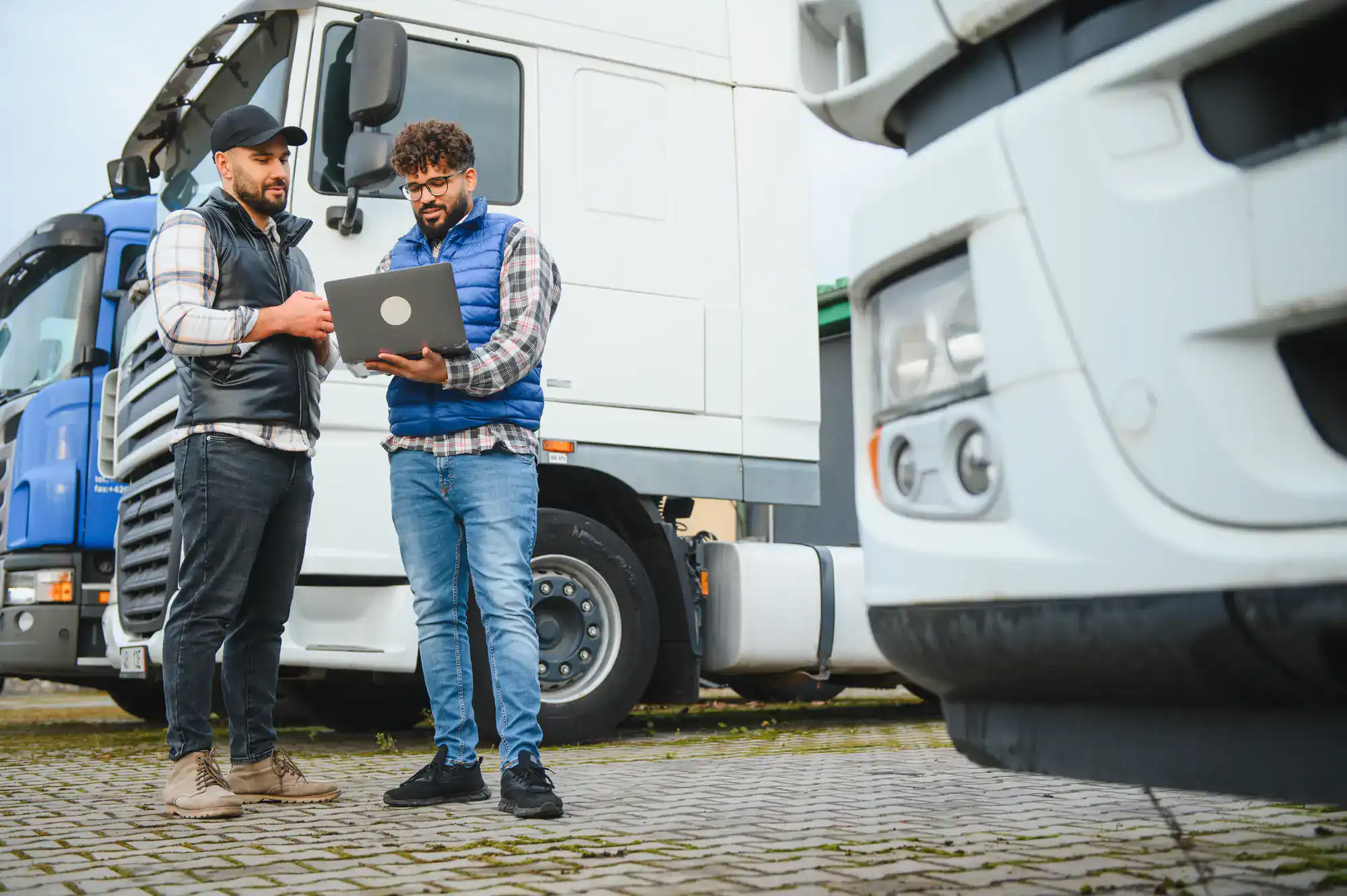
First, we confirm your truck qualifies. This service applies only to heavy-duty vehicles with a gross vehicle weight rating over 14,000 pounds and a model year of 2013 or newer. If your truck is older or lighter, this isn’t the test you need.
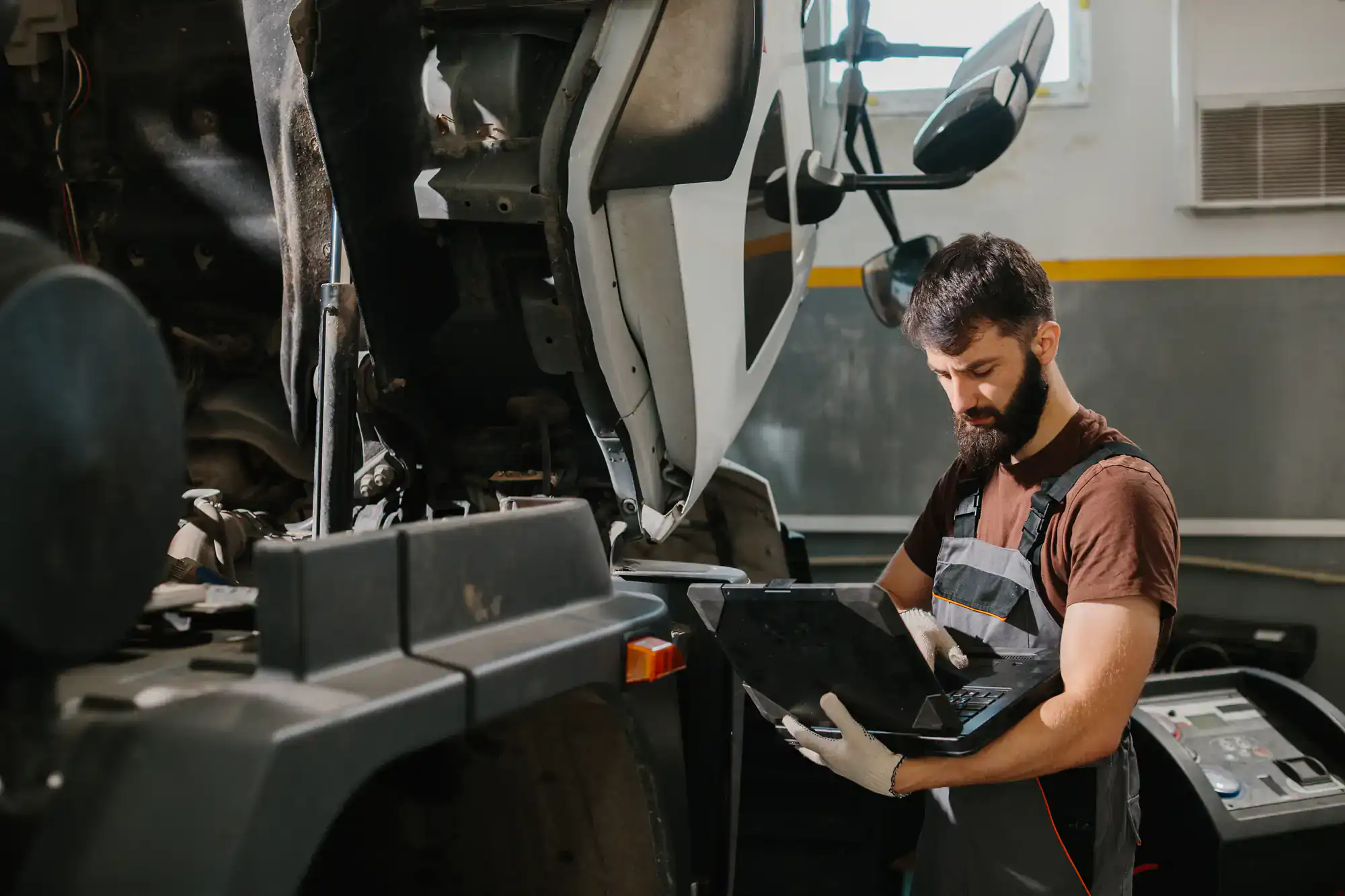
Once confirmed, we’ll check whether your vehicle is OBD-equipped. Most newer diesel trucks are. If yours is, we plug into the onboard diagnostics system and pull data directly from your engine’s computer. We’re looking for emission system faults, malfunction indicator lights, and readiness monitors. If your truck isn’t OBD-equipped, we perform a smoke opacity test—basically measuring the density of exhaust during acceleration—and complete a visual inspection of emission control components.
The test itself takes about 30 to 45 minutes depending on the vehicle. If you pass, we submit your results to CARB within the required 90-day window and provide your compliance certificate on the spot. If you don’t pass, we’ll walk you through what failed, what it likely means, and what your options are for getting it fixed and retested.
You’ll know where you stand before you leave.
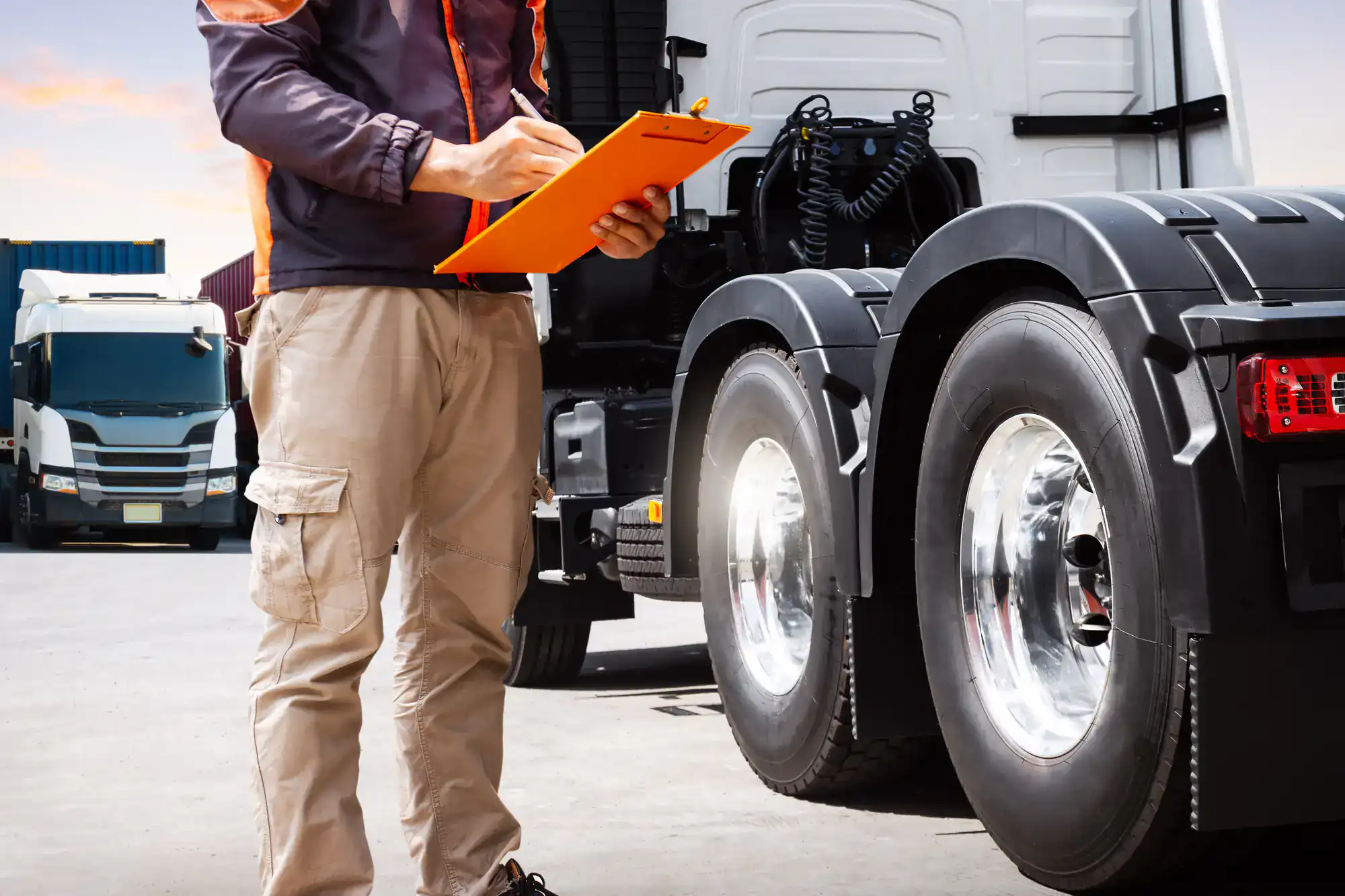
Ready to get started?
This isn’t a standard smog check. It’s a CARB Heavy-Duty Inspection and Maintenance test, and it’s required under California law for semi trucks, diesel buses, large motorhomes, and other heavy-duty vehicles operating in the state.
Here’s what’s included: a full OBD diagnostic scan or smoke opacity test depending on your vehicle type, a visual inspection of emission control systems, results submitted directly to CARB, and your official compliance certificate if you pass. We also explain your results in plain language—no mechanic-speak, no assumptions that you already know what a DPF or SCR system does.
Burbank is one of the busiest commercial trucking hubs in Southern California. With over 900 local trucking companies and thousands of heavy-duty vehicles moving through LA County every day, compliance isn’t optional. The state started enforcing semi-annual testing in 2025. By October 2027, some vehicles will need testing four times a year.
Right now, the testing fee is $31 per vehicle as set by CARB, plus service fees that vary by provider. If your truck fails and needs repairs, those costs are separate—but catching an issue early during a scheduled test is a lot cheaper than getting pulled over or facing a registration hold when you’re trying to renew.
Yes. A standard smog test and a Clean Truck Check are not the same thing.
Regular smog checks are for light-duty vehicles under 14,000 pounds. The Clean Truck Check is part of California’s Heavy-Duty Inspection and Maintenance program, which has different testing procedures, different equipment, and different reporting requirements. Even if your truck recently passed another type of inspection, you still need a Clean Truck Check if your vehicle is model year 2013 or newer and weighs over 14,000 pounds GVWR.
CARB tracks compliance separately. If you don’t complete your Clean Truck Check by your deadline, the DMV will place a hold on your registration regardless of other tests you’ve done. There’s no workaround.
It depends on your compliance deadline, but the frequency is increasing.
As of 2025, most heavy-duty vehicles subject to the Clean Truck Check are required to test every six months. That’s twice a year. By October 2027, some vehicles will move to quarterly testing—four times per year.
Your specific testing schedule depends on your truck’s weight class, model year, and compliance group. CARB assigns deadlines based on the last digit of your VIN and your vehicle’s registration renewal month. You’ll receive a notice from the DMV, but it’s your responsibility to track your deadline and get tested within the 90-day window before it hits.
Missing a deadline means a registration hold. You can’t renew, you can’t legally operate in California, and you’re stuck until you test and pass.
You’ll get a detailed report of what failed, and you’ll need to fix the issue before retesting.
Common failures include malfunctioning diesel particulate filters, issues with selective catalytic reduction systems, faulty sensors, or exhaust leaks. If your truck is OBD-equipped and throws a check engine light or shows an emissions-related fault code, it won’t pass. If it’s a non-OBD vehicle and the smoke opacity exceeds legal limits, same result.
Once you know what’s wrong, you can take your truck to a repair shop that specializes in diesel emissions systems. After repairs are completed, you’ll need to return for a retest. The retest follows the same process as the original test. If you pass, you’re compliant. If you still fail, you’ll need to dig deeper into the repair—but at that point, you’re likely dealing with a more complex mechanical issue that needs a diesel technician’s attention.
You’re not penalized for failing the test itself. You’re penalized for not retesting and achieving compliance before your deadline expires.
No. You need to go to a CARB-certified testing facility with credentialed testers.
Not every smog shop is authorized to perform Clean Truck Checks. CARB requires testers to complete specific training and pass an exam before they’re credentialed. The testing equipment is different, the procedures are different, and the reporting system connects directly to CARB’s database.
We’re a certified facility in Burbank, CA. Our testers are CARB-credentialed, our equipment meets state requirements, and we submit results electronically so your compliance is recorded immediately. If you go to a shop that isn’t certified, the test won’t count—even if they tell you the truck passed.
Before you schedule anywhere, confirm the facility is CARB-approved for Heavy-Duty I/M testing. It’ll save you time, money, and a whole lot of frustration.
CARB sets a base testing fee of $31 per vehicle. Service fees vary by location and provider.
Some facilities charge just the $31 state fee. Others add service fees for labor, equipment use, and reporting. You’re looking at somewhere between $50 and $150 depending on where you go and whether your truck requires OBD diagnostics or a smoke opacity test.
That’s just for the test. If your vehicle fails and needs repairs, those costs are separate and depend entirely on what’s wrong. A sensor replacement might run a few hundred dollars. A DPF cleaning or replacement can cost a couple thousand. Multiply that by the number of trucks in your fleet, and you see why staying on top of testing matters.
The real cost isn’t the test fee—it’s what happens if you skip it. Registration holds mean your trucks can’t operate legally. Fines start at $1,000 per day per vehicle and can climb to $10,000 for serious violations. One missed deadline can cost more than a year’s worth of testing for your entire fleet.
Bring your vehicle registration, your VIN, and any prior emissions or compliance documentation if you have it.
We’ll need to verify your truck’s year, make, model, and GVWR to confirm it qualifies for Clean Truck Check testing. If you’ve had previous emissions repairs or testing done, bring those records—they can help us understand your vehicle’s history and spot recurring issues.
Make sure your truck is in normal operating condition. If your check engine light is on, we’ll likely find a fault during the OBD scan. If you’ve recently cleared codes or disconnected the battery, your readiness monitors might not be set, which can result in an incomplete test.
You don’t need an appointment at every facility, but calling ahead ensures we have availability and can get you in and out quickly. For fleets or owner-operators managing multiple trucks, we can work with you on scheduling to minimize downtime across your operation.
Useful Links
Other Services we provide in Burbank