
Hear from Our Customers

You avoid penalties that start at $1,000 per day per vehicle and can hit $10,000 for serious violations. Your registration doesn’t get blocked by the DMV. You don’t get pulled off the road during a CARB inspection or lose access to ports and railyards that require proof of compliance.
More than that, you stop worrying about whether you’re legal. CARB isn’t messing around with enforcement—they’re using roadside monitoring, automated plate readers, and sending Notice to Submit letters to operators who aren’t testing. If your truck qualifies and you’re not compliant, it’s only a matter of time before it catches up to you.
Clean Truck Check testing became mandatory in October 2024. The first deadline hit January 1, 2025. If you’re operating a 2013 or newer diesel truck over 14,000 pounds GVWR in California, this applies to you. Getting tested means you’re covered, your trucks stay on the road, and your business keeps running without interruption.
We serve Beaumont and the surrounding Riverside County area with CARB credentialed Clean Truck Check testing. That means we’ve completed the state-required training, passed the certification exam, and we’re authorized to perform heavy-duty emissions testing on diesel trucks that meet the program requirements.
Beaumont sits right in the middle of a major transportation corridor. With hundreds of trucking companies operating in the area and thousands of residents working in transportation and logistics, you need local access to compliance testing that doesn’t waste your time or your drivers’ time.
We’re not trying to upsell you on services you don’t need. If your truck qualifies for Clean Truck Check—2013 or newer model year engine and over 14,000 pounds GVWR—we’ll test it, certify it, and get you back on the road. If it doesn’t qualify, we’ll tell you that too.

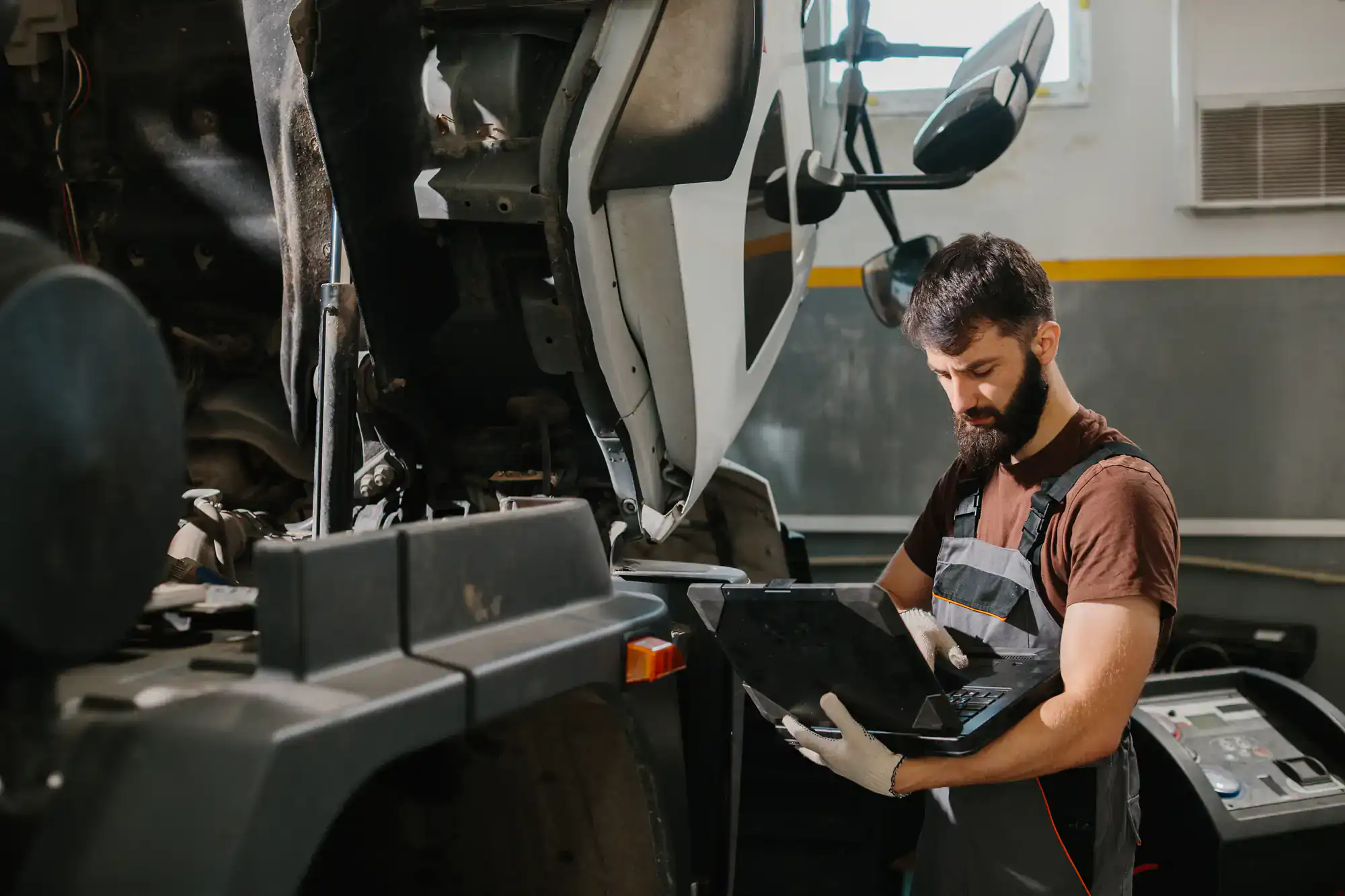
Clean Truck Check uses OBD testing—that’s onboard diagnostics. We connect to your truck’s computer system through the OBD port and pull emissions data directly from the engine. This isn’t a tailpipe test. It’s a scan of the truck’s emissions control systems to make sure everything is functioning properly and meeting CARB standards.
You bring your truck in. We verify it qualifies—2013 or newer diesel engine, over 14,000 pounds GVWR. We connect the CARB-approved testing equipment to your OBD port and run the diagnostic. The system checks for trouble codes, monitors readiness status, and confirms your emissions controls are working.
If your truck passes, you get a compliance certificate on the spot. That certificate proves you’ve met California’s HD I/M requirements. If there’s an issue, we’ll tell you what flagged and what needs attention before you can pass. No surprises, no runaround. You know where you stand before you leave.
Ready to get started?
You’re getting a state-mandated compliance test performed by a CARB credentialed tester using certified OBD equipment. That’s not optional or negotiable—CARB requires specific training, specific equipment, and specific procedures. If someone isn’t credentialed, they can’t legally perform this test.
The test itself covers your truck’s emissions control systems. CARB is looking for tampering, malfunctions, and whether your diesel particulate filter, NOx sensors, and other emissions components are doing their job. This program exists because California is targeting the roughly one million heavy-duty trucks and buses operating in the state. The goal is reducing diesel emissions that contribute to poor air quality, especially in high-traffic areas like Riverside County.
Right now, testing frequency is once per compliance period. By 2027, it increases to four times per year. That means if you’re running a fleet, compliance testing is going to be a regular part of your operation. Getting it done locally in Beaumont saves you time and keeps your trucks closer to your routes instead of driving them across the county for testing.
This service only applies to trucks with 2013 or newer model year engines and a GVWR over 14,000 pounds. If your truck is older or lighter, this isn’t the test you need. Don’t waste time bringing in vehicles that don’t qualify.
If your truck has a 2013 or newer model year diesel engine and a gross vehicle weight rating over 14,000 pounds, yes. This is a CARB requirement under California’s Heavy-Duty Inspection and Maintenance program, and it’s mandatory for any qualifying truck operating on California public roads.
The program started October 1, 2024, with the first compliance deadline on January 1, 2025. CARB enforces this through roadside monitoring, automated license plate readers, and coordination with the California Highway Patrol. If you’re not compliant, you risk fines starting at $1,000 per day per vehicle, DMV registration holds, and being prohibited from operating legally in California.
This applies to in-state and out-of-state trucks. If you’re passing through California with a qualifying vehicle, you’re subject to the same rules. It doesn’t matter if you’re an independent owner-operator or running a fleet—if the truck qualifies, it needs testing.
Testing typically takes 30 to 45 minutes depending on the truck and whether any issues come up during the diagnostic scan. You’re not leaving your truck for hours or days—this is an OBD scan, not a full mechanical teardown.
Cost varies by provider, but expect to pay for the testing service and certification. What matters more than the cost is making sure you’re getting tested by a CARB credentialed tester using approved equipment. If the test isn’t done correctly or by someone who isn’t certified, it doesn’t count, and you’re still non-compliant.
The bigger cost is what happens if you don’t test. Fines start at $1,000 per day per vehicle and can go up to $10,000 depending on the violation. If CARB finds tampering or emissions control system modifications, penalties can hit $37,500. Compared to that, the cost of compliance testing is nothing.
If your truck fails, the test results will show what triggered the failure—usually a trouble code, a malfunctioning emissions component, or a readiness monitor that isn’t set. You’ll need to get the issue repaired before you can pass and receive your compliance certificate.
Common failure points include diesel particulate filter problems, NOx sensor malfunctions, or tampering with emissions controls. CARB takes tampering seriously. If they find deleted or modified emissions systems, you’re looking at penalties up to $37,500 per violation on top of being non-compliant.
Once repairs are done, you’ll need to retest. The goal is to get your truck compliant so you can operate legally without risking fines, registration holds, or being pulled off the road during enforcement checks. The sooner you address the issue, the sooner you’re back in compliance.
No. Testing must be performed by a CARB credentialed tester using CARB-approved OBD testing equipment. Not every smog shop or mechanic is certified to do this. CARB requires testers to complete a training course and pass an exam with at least 80% to earn credentials, and those credentials have to be renewed every two years.
That means your options are limited to facilities with credentialed testers. If you’re operating in or around Beaumont, finding local testing saves you time and keeps your trucks closer to your routes instead of driving across Riverside County or into LA.
CARB maintains a list of credentialed testers, but the easiest way to confirm is to ask directly. If a shop says they do Clean Truck Check testing, ask if they’re CARB credentialed and using approved equipment. If they’re not, the test won’t count.
Regular smog checks apply to light-duty vehicles—cars, SUVs, and smaller trucks under 14,000 pounds GVWR. Clean Truck Check is specifically for heavy-duty diesel vehicles with 2013 or newer engines and a GVWR over 14,000 pounds. The testing method, equipment, and certification requirements are completely different.
Clean Truck Check uses OBD diagnostics to scan the truck’s emissions control systems. It’s not a tailpipe test. The system pulls data directly from the engine computer to verify that emissions components like the diesel particulate filter and NOx sensors are functioning properly and haven’t been tampered with.
If you bring in a truck that doesn’t meet the qualifications—older than 2013 or under 14,000 pounds GVWR—it doesn’t need Clean Truck Check testing. Make sure you know which test applies to your vehicle before you schedule. If you’re not sure, bring your registration and we’ll confirm whether your truck qualifies.
Right now, testing is required once per compliance period. But that’s changing. By 2027, CARB is increasing the frequency to four times per year. If you’re running a fleet, that means compliance testing is going to be a regular part of your operations, not a once-and-done thing.
CARB uses a phased rollout, so the exact schedule depends on when your truck enters the program and what compliance group it falls into. The important thing is staying ahead of deadlines. Missing a test means you’re non-compliant, and that opens you up to fines, registration issues, and enforcement action.
Set reminders based on your compliance period and plan testing into your maintenance schedule. The more trucks you’re running, the more important it is to have a local testing option that doesn’t pull your vehicles off the road for long stretches. Testing in Beaumont keeps your trucks close and minimizes downtime.
Useful Links
Other Services we provide in Beaumont