
Check Out Our Reviews!

When your truck is Clean Truck Check compliant, CARB transmits your VIN to the DMV nightly. Within three to five business days, your registration clears. No holds, no surprises at renewal, no truck sitting in your yard when it should be on the road. That’s the outcome and it’s the only one that matters when your livelihood depends on that truck moving.
Baldwin Park sits at one of the most active freight intersections in the San Gabriel Valley, where I-10 and I-605 meet. Trucks based in the Sierra Vista industrial corridor along I-10 are operating in one of CARB’s most closely watched enforcement zones in Southern California. The San Gabriel Valley’s mountain-bowl geography traps air pollution, which is exactly why CARB enforcement here is taken seriously. Non-compliance in this corridor isn’t a technicality it’s a real operational risk.
For the owner-operator running loads between the Inland Empire and the LA Basin, or the small fleet manager dispatching out of a yard off Ramona Boulevard in Baldwin Park, the cost of a registration hold isn’t just the fine. It’s the lost revenue, the missed contracts, and the scramble to get back into compliance under pressure. Getting tested before your deadline not after a notice arrives is what keeps the trucks moving and the business running.
We hold official CARB credentials publicly verifiable on CARB’s website at arb.ca.gov. That’s not a marketing claim. You can look it up before you ever call. In a market where competitors are running location pages without always making their credentials easy to confirm, that verification matters. An invalid test from an uncredentialed tester leaves you just as non-compliant as no test at all.
This is our entire business: Clean Truck Check OBD testing for model year 2013 and newer heavy-duty vehicles with a GVWR over 14,000 pounds. Not passenger smog checks. Not older opacity-test trucks. Just this. That focus means the tester who shows up to your Baldwin Park yard whether you’re in the Sierra Vista industrial zone near I-10 or operating out of the City of Industry corridor just south of Baldwin Park knows exactly what your truck needs and exactly how to get your results into CTC-VIS correctly.
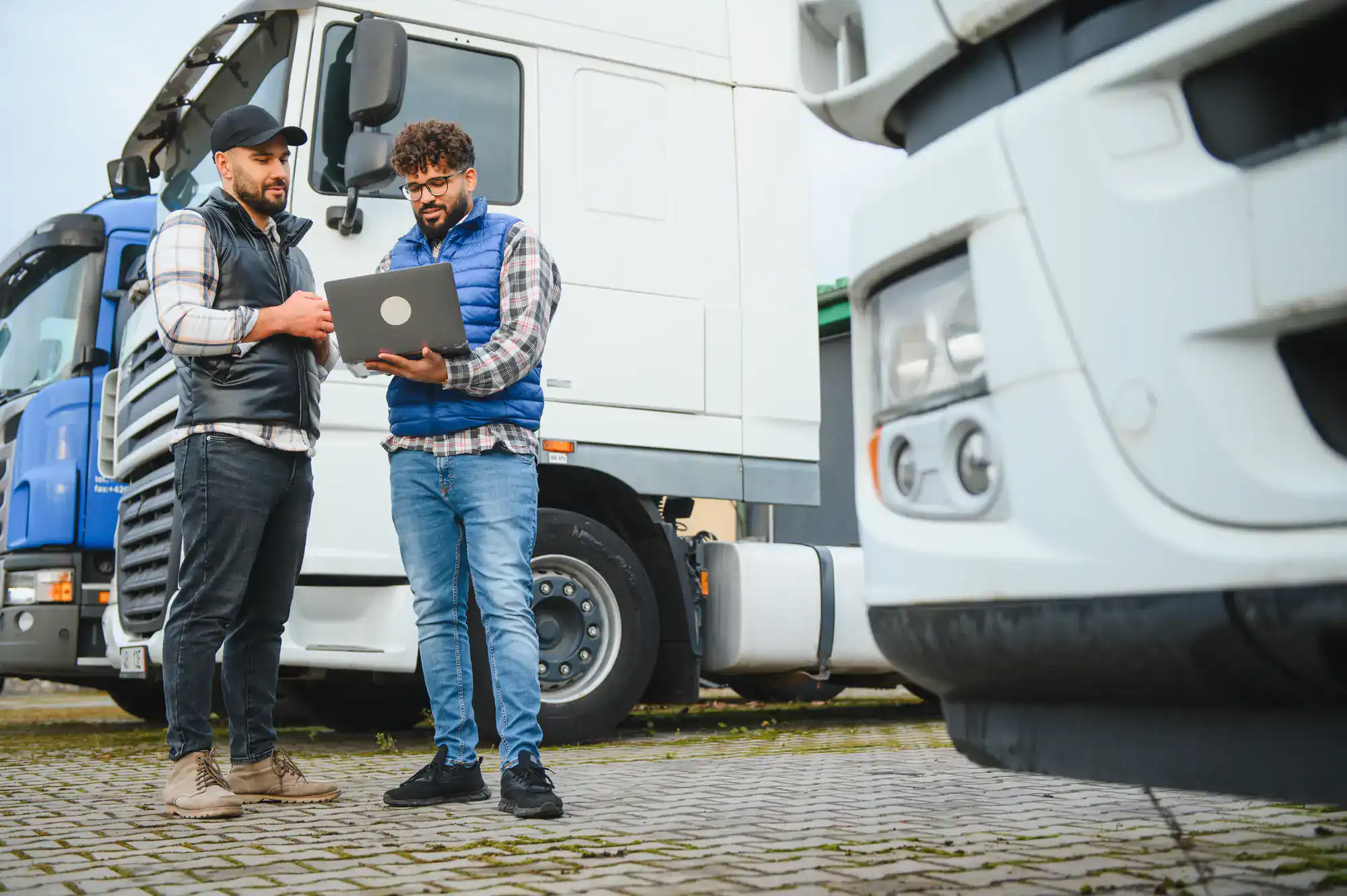
You schedule a time that works for your operation. We come to your location in Baldwin Park your fleet yard, your loading dock, your lot off Ramona Boulevard or anywhere else in the area. You don’t pull the truck off route. You don’t drive it to a facility. The testing comes to you.
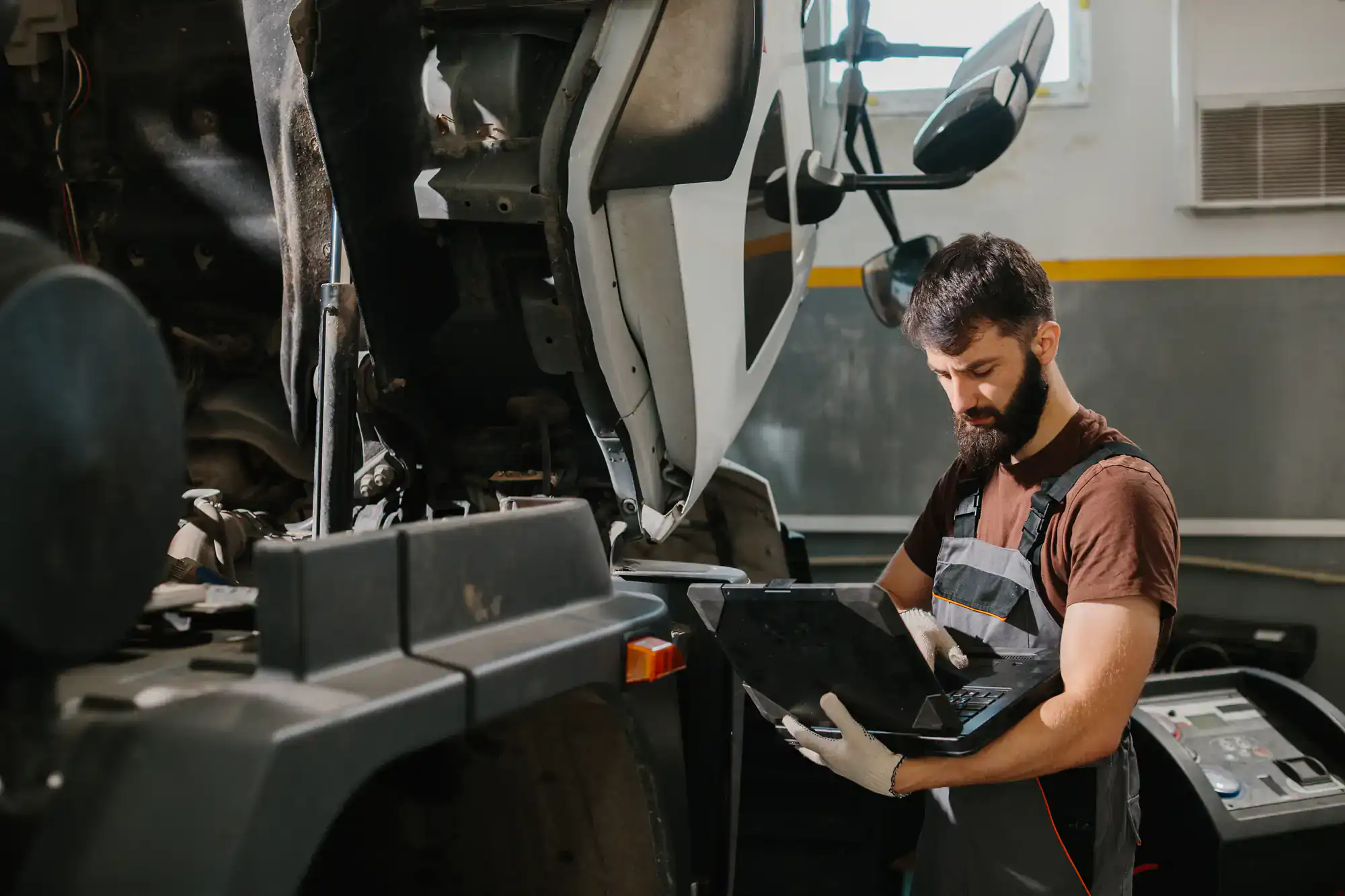
On-site, a CARB-certified OBD device with Executive Order approval connects directly to your truck’s ECU. This is the only type of equipment CARB accepts for a valid Clean Truck Check result not every OBD scanner qualifies, and using non-approved equipment means your test doesn’t count. The device pulls the diagnostic data CARB requires, and that’s the test. It’s straightforward, and for most trucks it doesn’t take long.
Once the test is complete, results go directly into CARB’s CTC-VIS system electronically, immediately, with no manual steps on your end. You don’t need to log into the portal or wonder if your submission went through. You can check your own CTC-VIS account to confirm your status. From there, CARB passes your compliant VIN to the DMV, and your registration record updates within three to five business days. The whole process is designed to remove the confusion and just get you compliant.

Ready to get started?
The Clean Truck Check program established under California’s SB 210 and enforced by CARB applies specifically to vehicles that are model year 2013 or newer with a GVWR over 14,000 pounds. If your truck is older than 2013 or under that weight threshold, this program doesn’t apply. But if you’re running a newer diesel semi, a heavy-duty delivery truck, or a large commercial vehicle on California roads including trucks registered out of state you’re in scope, and compliance is required.
Right now, OBD-equipped heavy-duty trucks must be tested twice a year. That changes in October 2027, when the testing frequency increases to quarterly four times per year. For fleet operators in Baldwin Park’s industrial zones who are already managing multiple trucks and multiple deadlines, that’s a significant shift. Building a reliable testing relationship now, before that frequency increase creates scheduling pressure, is the smarter move.
The annual compliance fee is $31.18 per vehicle in 2025, adjusted annually for inflation. That’s separate from the cost of the test itself. If CARB sends a Notice to Submit to Testing, you have exactly 30 calendar days to submit a passing result. One thing worth knowing: you can test up to 90 days before your compliance deadline, which means you have a window to catch and address any issues before a hold ever hits your registration. We serve Los Angeles County, including Baldwin Park and the surrounding San Gabriel Valley corridor and our mobile model means we work around your schedule, not the other way around.
If your truck is model year 2013 or newer and has a GVWR over 14,000 pounds, yes the Clean Truck Check requirement applies regardless of where in California your truck is based. Baldwin Park is in Los Angeles County, which falls squarely within CARB’s enforcement jurisdiction. Trucks operating on I-10 through the San Gabriel Valley are running through one of the most active CARB enforcement corridors in the state, so compliance here isn’t something to leave to chance.
It’s also worth knowing that the requirement applies to trucks registered in other states if they operate on California public roads. So if you’re hauling loads into California from out of state and your truck meets the model year and GVWR criteria, you’re subject to the same Clean Truck Check rules as a California-registered vehicle. The best way to confirm your specific truck’s status is to check your VIN and registration details against CARB’s CTC-VIS system, or reach out to us directly for a quick answer.
Missing your Clean Truck Check compliance deadline triggers a chain of consequences that can move fast. CARB transmits non-compliant VINs to the DMV, which places a registration hold on your vehicle. That hold means you can’t renew your registration until compliance is demonstrated and for a truck that needs to be on the road to generate revenue, that’s a serious problem. Fines for non-compliance can reach up to $10,000 per vehicle per day, which is not a figure that leaves much room for delay.
If CARB issues a Notice to Submit to Testing, the clock starts immediately. You have 30 calendar days from that notice to submit a passing test result. The good news is that testing up to 90 days before your deadline is allowed, which means proactive scheduling gives you a repair window if something comes up during the test. For Baldwin Park operators running tight margins whether you’re an owner-operator on I-10 or managing a small fleet out of the Sierra Vista corridor getting ahead of the deadline is almost always less expensive than reacting to a hold.
They’re completely different programs. The standard smog check that most California drivers know applies to passenger vehicles and lighter-duty trucks. The Clean Truck Check is a separate CARB program established under SB 210 that applies exclusively to heavy-duty vehicles that are model year 2013 or newer with a GVWR over 14,000 pounds. It uses OBD diagnostic data pulled directly from the truck’s ECU, not the tailpipe emissions measurements used in standard smog inspections.
The equipment matters too. Only OBD testing devices that hold a CARB Executive Order are approved for Clean Truck Check testing. A standard smog check station isn’t set up for this, and a tester using non-approved equipment will produce a result that CARB won’t accept leaving you non-compliant even though you paid for a test. We use only CARB-certified OBD equipment and submit results directly to the CTC-VIS system, which is what actually registers your truck as compliant in CARB’s database.
Yes that’s exactly how we operate. Our entire service model is mobile. A CARB-credentialed tester comes to your location in Baldwin Park, whether that’s a fleet yard in the Sierra Vista industrial zone along I-10, a warehouse dock near the 605 corridor, or anywhere else in the area. Your trucks don’t leave the yard, your drivers don’t lose time on the road, and your operation doesn’t get disrupted.
For fleet operators managing multiple trucks, mobile testing makes the compliance process significantly more manageable. Instead of coordinating a parade of heavy-duty vehicles to a fixed facility which creates scheduling headaches and takes trucks off route you set a time, we show up, and each truck gets tested on-site. Results go directly into CTC-VIS after each test. If you’re running a fleet in or around Baldwin Park and approaching a compliance deadline, mobile service isn’t just a convenience for most operations, it’s the only model that actually works.
A failed OBD test typically means the truck’s ECU is reporting active fault codes or readiness monitors that haven’t completed. The first step is understanding what the specific codes mean, because not every fault code is a major repair some can be resolved with a drive cycle or a straightforward fix. What you don’t want to do is ignore the result or assume it will clear on its own, especially if you’re already inside a compliance window or dealing with a Notice to Submit to Testing.
After the issue is identified and addressed by a qualified diesel mechanic, the truck needs to be retested to confirm the fault codes are cleared and the OBD system is reading correctly. We can retest once repairs are completed. The 90-day pre-deadline testing window exists specifically to give operators time to handle situations like this if you test early and something comes up, you have room to fix it and retest before a registration hold ever enters the picture. For Baldwin Park operators running on tight schedules, that buffer is worth using.
Out-of-state trucks are subject to California’s Clean Truck Check requirements if they operate on California public roads and meet the criteria model year 2013 or newer, GVWR over 14,000 pounds. Registration in another state doesn’t exempt a vehicle from California’s CARB compliance rules. Given that Baldwin Park sits at the I-10/I-605 interchange a major entry and transit point for freight moving between the Inland Empire, the LA Basin, and points beyond out-of-state trucks passing through or operating in this corridor are regularly in scope.
The compliance process for out-of-state vehicles works the same way as for California-registered trucks. The truck’s VIN gets registered in CARB’s CTC-VIS system, the OBD test is conducted using CARB-certified equipment, and results are submitted directly to CTC-VIS. We serve Los Angeles County and can test out-of-state heavy-duty vehicles operating in the Baldwin Park area. If you’re unsure whether your truck’s operating pattern in California triggers the requirement, checking with CARB directly or contacting us for a quick assessment is the fastest way to get a clear answer.
Useful Links
Other Services we provide in Baldwin Park