
Hear from Our Customers

California’s CARB diesel compliance rules went into effect October 1, 2024. If your truck has a 2013 or newer engine and weighs over 14,000 pounds, you need to pass emissions testing twice a year. No exceptions.
Fail to comply and you’re facing up to $10,000 per vehicle per day in fines. The DMV can block your registration. Ports can deny you access. Your trucks sit idle while you’re bleeding money.
The testing window matters too. You can submit results up to 90 days before your deadline, but if you get a Notice to Submit Testing, you have exactly 30 days to get it done. That’s not much time when your livelihood depends on keeping those trucks moving.
This isn’t about checking a box. It’s about protecting your business from penalties that can put you under. You need a testing facility that knows California CARB compliant requirements inside and out, and can get you through the process without the runaround.
We focus exclusively on clean truck check testing for 2013 and newer model year trucks over 14,000 pounds GVWR. That’s it. We’re not trying to be everything to everyone.
Altadena and the surrounding LA County area has one of the highest concentrations of commercial trucking operations in California. With 88 carriers operating within 50 miles, you need a local facility that understands the pressure you’re under to stay compliant while keeping your fleet operational.
Our testers are CARB credentialed, which means they’ve completed the required training and passed the certification exam. We know the regulations because we have to. Your business depends on accurate testing, and we take that seriously.

When you bring your truck in, we start with the basics: verifying your vehicle information, checking that your truck meets the 2013+ model year and 14,000+ pound GVWR requirements. This service doesn’t apply to older trucks or lighter vehicles, so we confirm eligibility first.
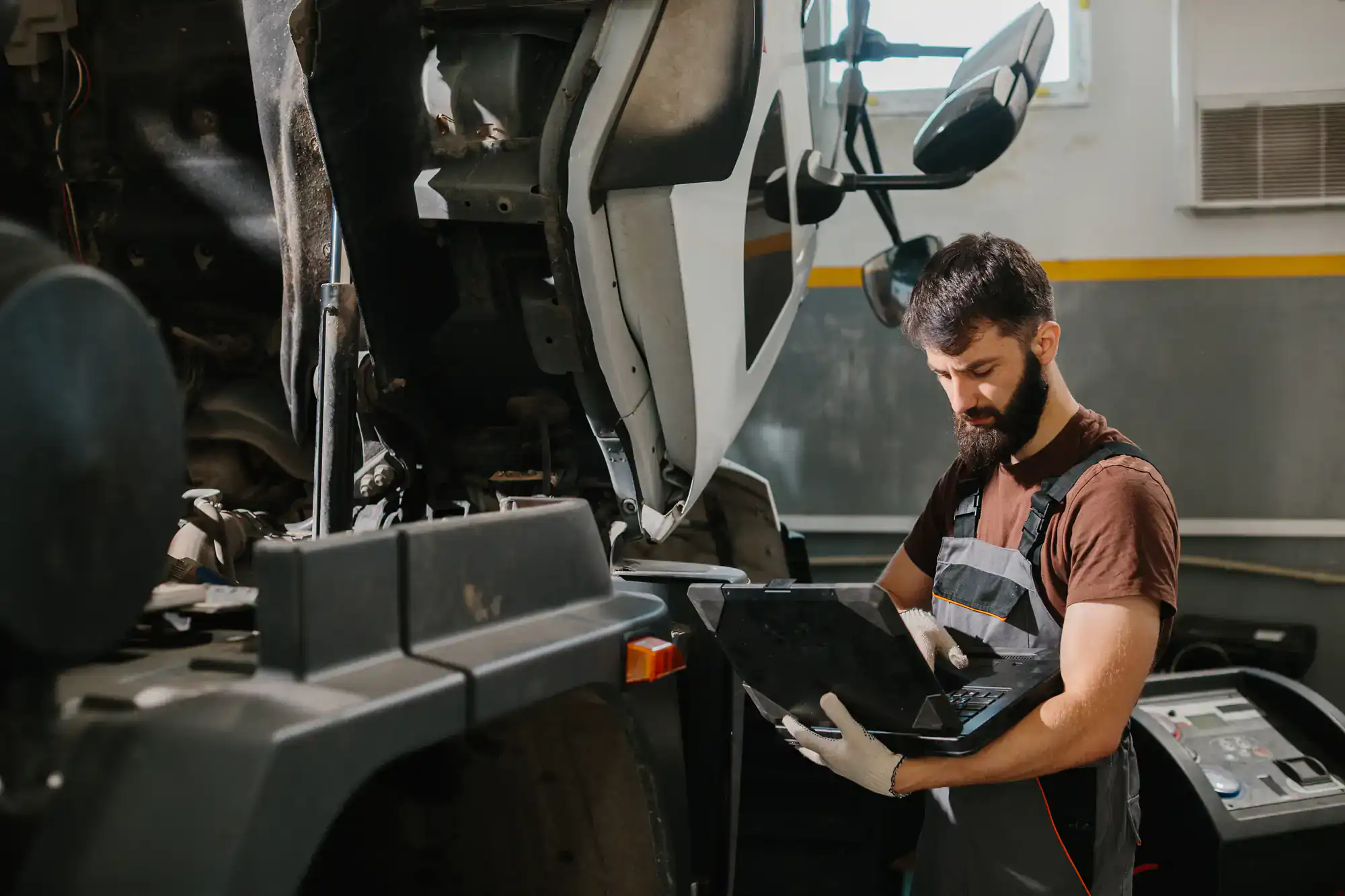
For 2013 and newer trucks, we perform OBD testing. That means we connect directly to your truck’s onboard diagnostics system to check emissions data. We’re looking at what your engine control module is reporting, checking for fault codes, and verifying that your emissions systems are functioning properly.
The test itself doesn’t take long, but accuracy matters more than speed. If your truck passes, we submit the results directly to CARB. You get documentation showing you’re compliant, and you can keep operating without worry.
If something comes up during testing, we’ll tell you exactly what the issue is. No vague explanations. You’ll know what failed, why it matters, and what needs to happen next. From there, you can make informed decisions about repairs and retesting.

Ready to get started?
California’s heavy-duty vehicle compliance rules exist because diesel emissions have real health impacts. CARB estimates this program will prevent 7,500 air quality-related deaths and 6,000 hospitalizations. The regulations aren’t going away, and enforcement is serious. In 2022 alone, CARB pursued over 8,000 cases and collected more than $21.5 million in citations.
For Altadena-based operations and fleets working throughout LA County, staying compliant means understanding your deadlines. All compliance deadlines of January 1, 2025 or later require passing clean truck check tests. You need to test every six months, and those results must be submitted within 90 days prior to your deadline.
If you receive a Notice to Submit Testing, the clock starts immediately. You have 30 calendar days to submit a passing test. Miss that window and you’re facing penalties that escalate quickly. Registration blocks mean your trucks can’t legally operate. Port access gets denied. Your ability to haul freight in California gets shut down.
The testing itself is straightforward when you work with a facility that specializes in CARB truck regulations. You’re not dealing with a general smog shop trying to figure out heavy-duty requirements. You’re working with testers who do this specific type of testing regularly and understand what compliance actually requires.
If your truck operates in California, you need to comply with CARB emissions testing requirements regardless of where it’s registered. The rules apply to any heavy-duty vehicle operating in the state, not just California-registered trucks.
Out-of-state carriers hauling freight through California are subject to the same testing requirements as local operators. CARB has enforcement authority over any commercial vehicle operating within state borders. That includes trucks passing through, making deliveries, or picking up loads.
The consequences for non-compliance don’t change based on your registration state. You’re still facing the same fines, the same port access restrictions, and the same operational shutdowns. If you’re running routes through California with a 2013 or newer truck over 14,000 pounds, you need to factor compliance testing into your operating costs and schedule.
You need to complete CARB emissions testing every six months for trucks with 2013 or newer engines over 14,000 pounds GVWR. This is a mandatory semi-annual requirement, not an annual one like standard smog checks.
Your specific deadlines depend on your compliance schedule with CARB. You can submit passing test results up to 90 days before your deadline, which gives you some flexibility in scheduling. But you can’t submit too early or the results won’t count toward your current compliance period.
If you receive a Notice to Submit Testing from CARB, your timeline gets much tighter. You have exactly 30 calendar days from the date of that notice to submit a passing test. There’s no extension and no grace period. Missing that deadline triggers penalties immediately, so you need to treat any NST as urgent.
If your truck fails, you’ll receive specific information about what caused the failure. For 2013 and newer trucks, failures typically relate to OBD system issues, fault codes, or emissions system malfunctions that your engine control module is detecting.
You’ll need to address whatever caused the failure before you can retest and pass. That might mean repairs to emissions components, clearing fault codes after fixing underlying issues, or addressing problems with your diesel particulate filter or other emissions control systems.
The clock doesn’t stop while you’re making repairs. If you’re working against a compliance deadline or responding to a Notice to Submit Testing, you still need to get a passing result submitted within your required timeframe. That’s why catching and addressing issues early matters. Waiting until the last minute leaves you no buffer if something comes up during testing.
You can use any CARB-authorized testing facility in California, but location matters more than you might think. Using a facility near your base of operations in Altadena or elsewhere in LA County saves you time and reduces the logistical headache of routing trucks to distant testing sites.
Testing must be performed by CARB credentialed testers who have completed specific training for heavy-duty vehicle emissions testing. Not every smog check station is equipped or certified to test commercial trucks over 14,000 pounds. You need a facility that specializes in clean truck check testing, not a general automotive smog shop.
When you’re managing a fleet or running multiple trucks, having a local facility you can rely on makes compliance easier. You’re not coordinating long drives to testing sites, you’re not dealing with unfamiliar facilities every time, and you’re working with testers who understand your specific situation and timeline pressures.
You need your vehicle registration and any compliance documentation from CARB showing your testing schedule or deadlines. If you received a Notice to Submit Testing, bring that as well so we can verify the deadline you’re working against.
We’ll need to confirm your truck’s model year, GVWR, and engine information. Most of this comes from your registration and the vehicle itself, but having documentation ready speeds up the process. For newer trucks, we’re verifying that your vehicle falls into the 2013 or newer category that requires OBD-based emissions testing.
If you’ve had recent repairs or maintenance related to emissions systems, documentation of that work can be helpful but isn’t required for testing. What matters most is that your truck’s emissions systems are functioning properly at the time of the test. Previous repair records don’t substitute for current compliance, but they can provide context if issues come up during testing.
Testing costs vary by facility and specific vehicle requirements, but you’re looking at a necessary business expense that’s far less than the penalties for non-compliance. When you’re facing potential fines of $10,000 per vehicle per day, testing costs are a small price for staying legal and operational.
The actual testing process for 2013 and newer trucks typically takes less than an hour once we have your vehicle in the bay. OBD testing is faster than older methods because we’re pulling data directly from your truck’s computer systems rather than running physical emissions measurements.
What takes longer is usually the scheduling and logistics around getting your truck to the facility during your compliance window. That’s why planning ahead matters. If you wait until you get a Notice to Submit Testing, you’re scrambling to fit testing into a 30-day window while still running your normal operations. Testing 60 to 90 days before your deadline gives you breathing room and eliminates the stress of last-minute compliance.
Useful Links
Other Services we provide in Altadena