Check Out Our Reviews!

Looking for a diesel smog check near Whittier? We test your heavy-duty diesel trucks on site and file the results straight with CARB.
Whittier sits inside one of the most freight-active corridors in California. I-605 runs straight through the city. Whittier Boulevard SR-72 carries daily heavy-duty truck traffic past warehouses, logistics yards, and commercial properties. CARB has explicitly named this corridor as a diesel particulate matter burden zone. That means roadside emissions monitoring is active here, and trucks flagged by those devices get a Notice to Submit to Testing with a 30-day clock attached.
When your truck is CARB compliant, that clock never starts. You don’t lose loads because a freight broker pulled your compliance status. You don’t get hit with a DMV registration hold that grounds your truck on a Tuesday morning when you have three runs scheduled. You keep moving and in the Gateway Cities region, that’s the only outcome that matters.
The operators running fleets out of yards near Workman Mill Road or dispatching daily from the City of Industry corridor understand this better than most. A truck that can’t prove compliance can’t work. Getting tested by a credentialed provider who submits results directly to CARB’s CTC-VIS system means your compliance is confirmed and documented the moment the test is done no portal, no guesswork, no follow-up.
All SMOG Motors is a CARB-credentialed Clean Truck Check testing provider serving Los Angeles County which means Whittier is squarely in our service area. Our testers completed CARB’s official HD I/M Tester Training Course, passed the required state exam, and hold a Certificate of Completion that’s publicly listed on CARB’s own database. You can look it up before you book. That’s not something every provider in the Whittier area can say.
The service applies specifically to model year 2013 or newer vehicles with a GVWR over 14,000 pounds the exact trucks sold at Enterprise Motors on Pellissier Place and Rush Truck Centers in Whittier, and the same trucks operated by logistics companies that have been running freight through this city for decades. We’re not a generalist shop that added a heavy truck option. We’re a provider built specifically for the compliance requirement you’re dealing with.

The Clean Truck Check process starts with confirming your truck qualifies model year 2013 or newer, GVWR over 14,000 pounds. If that’s your vehicle, you’re in scope. We use CARB-certified OBD testing equipment to run the scan, which reads your truck’s onboard diagnostic system for emissions-related fault codes and readiness monitors. This isn’t a generic shop scanner it’s the specific equipment CARB requires for the test to count.
Once your truck passes, the result is submitted electronically and directly to CARB’s Clean Truck Check Vehicle Inspection System CTC-VIS right there on the spot. You don’t need to log into a government portal or upload anything yourself. The submission is done, the compliance is recorded, and you’re back to work. For operators running daily routes on I-605 toward the ports or heading east on SR-60 through the City of Industry corridor, that turnaround matters.
If your truck doesn’t pass on the first attempt, you’ll know exactly what the diagnostic flagged. That gives you something concrete to take to a repair shop not a vague “check engine” situation, but a specific emissions-related fault that needs to be addressed before the retest. The 30-day window on a Notice to Submit to Testing is tight, so knowing what you’re dealing with immediately is the difference between making the deadline and missing it.

Ready to get started?
The CARB Clean Truck Check OBD test is required for diesel and alternative-fuel vehicles that are model year 2013 or newer with a GVWR over 14,000 pounds. If your truck doesn’t meet both of those criteria, this test doesn’t apply to you. If it does, the compliance schedule is now twice per year in 2025 and by October 2027, most trucks in scope will be required to test four times per year. That’s not a rumor. That’s the published CARB timeline.
The annual compliance fee paid through the CTC-VIS portal is $31.18 per vehicle for 2025. That fee is separate from the testing service fee we charge. What you’re paying for with us is the credentialed OBD scan, the certified equipment, and the direct electronic submission to CARB so your compliance record is updated immediately. For Whittier-area fleet operators managing multiple trucks with staggered registration dates, that direct submission removes one more thing from the administrative pile.
Skipping the test isn’t a gray area. Non-compliance triggers an automatic DMV registration hold. CARB enforcement fines can reach $10,000 per vehicle per day. Out-of-state trucks running loads through Whittier’s freight corridors down I-605, along SR-72, or connecting to SR-60 are subject to the same requirements as California-registered vehicles. There is no out-of-state exemption. If your truck operates on California public roads, it needs to be in the system.
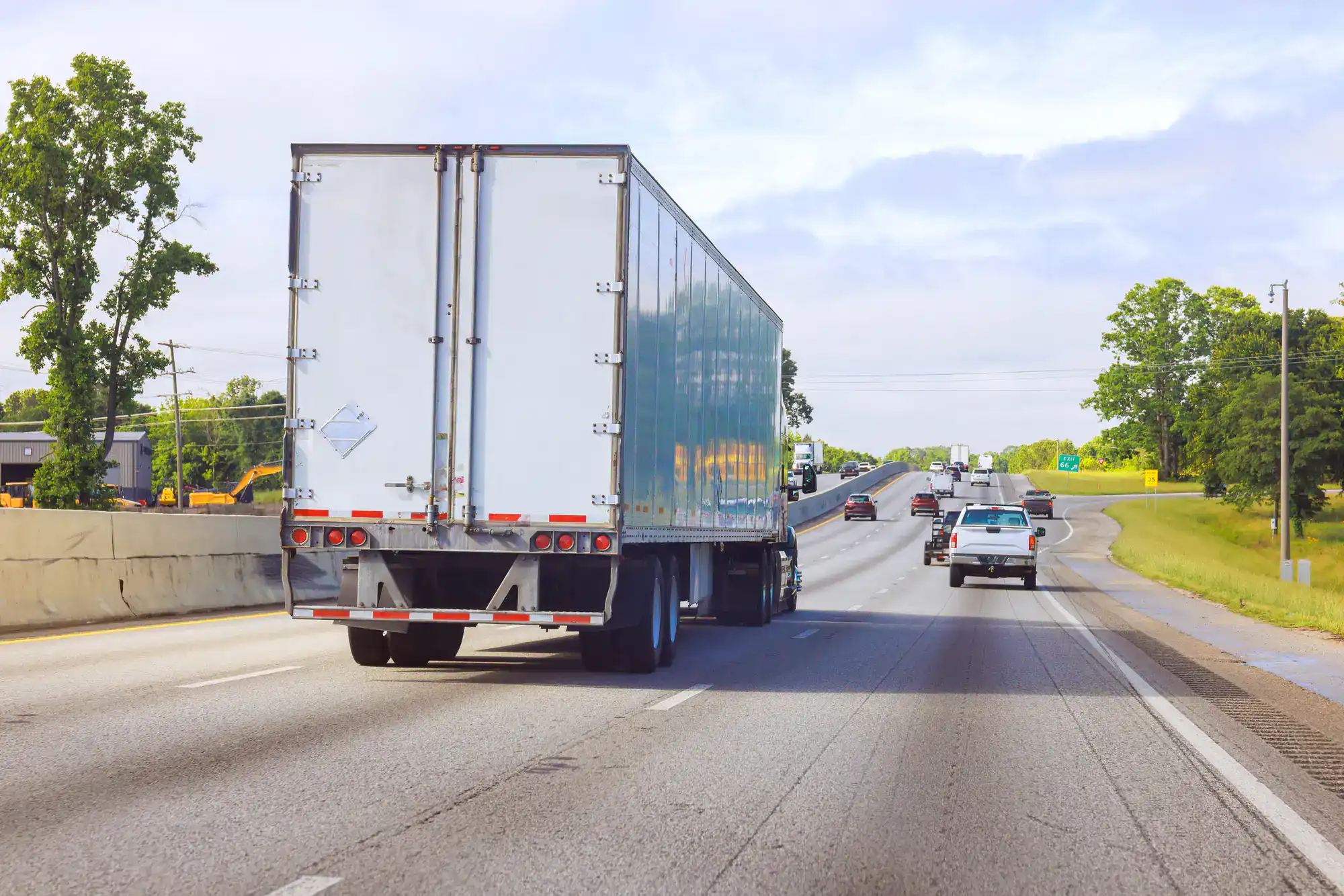
If your truck is model year 2013 or newer and has a GVWR over 14,000 pounds, it is subject to CARB’s Clean Truck Check requirements regardless of where you’re registered or where your home base is. Operating on California public roads, including I-605 through Whittier, is what triggers the obligation. There is no exemption for trucks that are just passing through.
CARB deploys roadside emissions monitoring devices throughout California’s freight corridors, including the Gateway Cities region that Whittier is part of. These devices can flag your truck as a potential high emitter without a traffic stop. If that happens, you’ll receive a Notice to Submit to Testing and have 30 calendar days to submit a passing test from a CARB-credentialed tester. Getting ahead of that notice rather than responding to it keeps your operation running without interruption.
A failed test means your truck’s OBD system flagged one or more emissions-related fault codes that CARB’s program doesn’t allow. The test result will tell you specifically what was flagged it’s not vague. You take that information to a repair shop, get the issue addressed, and then schedule a retest with a credentialed tester before your compliance deadline.
The important thing to understand is that a failed test is not the same as a fine or a registration hold as long as you’re within your compliance window and actively working toward a passing result. Where operators get into trouble is when they ignore the failure, miss the deadline, or try to work around the system. CARB’s enforcement posture in the South Coast Air Basin which covers Whittier is active, and the consequences for unresolved non-compliance are significant. A failed test is a problem with a solution. Ignoring it turns it into a much bigger one.
Starting in 2025, most trucks subject to the Clean Truck Check program are required to test twice per year two separate OBD scans submitted to CARB’s CTC-VIS system within the same compliance year. That frequency is already in effect. By October 2027, the schedule escalates to quarterly testing for most vehicles in scope, meaning four tests per year.
For Whittier-area operators running active fleets, this matters for scheduling. If you have multiple trucks with different registration dates, your compliance deadlines are spread throughout the year and each one requires a separate test from a credentialed tester. Building a relationship with a provider now, before the quarterly schedule kicks in, means you’re not scrambling to find someone available when four deadlines hit in a twelve-month window. The testing requirement is only going to increase. Getting organized around it early is the practical move.
The smog shops along Whittier Boulevard the ones you’ve driven past on SR-72 test passenger cars and light vehicles. They are not equipped or credentialed for CARB’s Clean Truck Check program, which requires a separate CARB-issued credential, CARB-certified OBD testing equipment, and direct electronic submission access to the CTC-VIS system. Those are different requirements than a standard smog check, and most local shops don’t have them.
All SMOG Motors holds the CARB credential for heavy-duty OBD testing and serves Los Angeles County, including Whittier. Our credential is publicly listed on CARB’s database you can verify it yourself before booking. For operators in Whittier who have been searching for a local or nearby credentialed tester and coming up empty, we fill that gap directly. You don’t need to call around or wonder whether the tester you found is actually approved by CARB. That answer is already on the state’s website.
Yes. CARB’s Clean Truck Check requirements apply to any qualifying vehicle operating on California public roads the registration state doesn’t matter. If your truck is model year 2013 or newer, has a GVWR over 14,000 pounds, and you’re running loads through California including through Whittier’s freight corridors on I-605 or connecting to SR-60 toward the Inland Empire you are subject to the same compliance requirements as a California-registered truck.
Out-of-state operators are required to register in the CTC-VIS system and meet the same testing schedule as in-state fleets. Freight brokers serving the Ports of Los Angeles and Long Beach which are directly connected to Whittier’s freight network via I-605 are increasingly requiring proof of compliance before awarding loads. Getting tested and documented before you need to show that certificate is far easier than trying to get it done under deadline pressure at a port gate.
A standard smog check the kind you get for a passenger car or light truck at a local smog station tests tailpipe emissions using a dynamometer or a visual inspection depending on the vehicle type. It’s administered through the BAR (Bureau of Automotive Repair) program and applies to most registered vehicles in California under a certain weight threshold.
CARB’s Clean Truck Check is an entirely separate program administered by the California Air Resources Board, not BAR. It uses an OBD scan a direct read of the truck’s onboard diagnostic system to check for emissions-related fault codes and confirm that all required monitors are in a ready state. It applies only to vehicles that are model year 2013 or newer with a GVWR over 14,000 pounds. The tester must hold a CARB-issued HD I/M credential, use CARB-certified testing equipment, and submit results electronically to CARB’s CTC-VIS database. A smog shop that passes your car every two years cannot perform this test. The programs are separate, the equipment is different, and the credentials required are different. If someone tells you their standard smog license covers your heavy-duty diesel truck, that’s not accurate.
Useful Links
Other Services we provide in Whittier