
Check Out Our Reviews!

Torrance sits right between two of the busiest freight arteries in the country the I-405 running through the South Bay and the I-110 feeding directly into the Port of Los Angeles. If your truck gets flagged by one of CARB’s roadside monitoring devices on either corridor, you’ve got 30 days to produce a passing test result. That clock doesn’t care about your load schedule.
What most operators in Torrance don’t realize is that the compliance process doesn’t have to eat into your day. We use CARB-certified OBD testing equipment and submit results directly to the state’s CTC-VIS database the moment the test is done. Your certificate is active immediately no portal logins, no manual uploads, no waiting on confirmation emails.
For drayage operators running loads between Torrance-area warehouses and the port, or fleet managers overseeing trucks that service Toyota, Honda, or Honeywell’s South Bay operations, a lapsed compliance certificate isn’t just a fine risk. It’s a freight stoppage. Getting tested and submitted quickly isn’t a convenience it’s how you keep the business moving.
We are a CARB-credentialed Clean Truck Check testing provider serving Los Angeles County which means Torrance, the South Bay industrial corridor, and every freight route connecting this city to the port. This isn’t a general smog shop that added a new service line. Our entire operation is built around one thing: OBD-based compliance testing for model year 2013 or newer diesel and heavy-duty vehicles with a GVWR over 14,000 pounds.
Every tester on our team has completed CARB’s official HD I/M Tester Training Course, passed the state exam, and holds a credential that’s publicly listed on CARB’s own database. You can look it up before you book. That’s not a marketing claim it’s a verifiable fact, and in a market where unqualified providers have issued tests CARB wouldn’t accept, that distinction matters.
If your trucks are running the Normandie Avenue corridor in Torrance, staging near the 405/110 interchange, or servicing any of the manufacturing and aerospace operations growing in eastern Torrance, this service was built for exactly that operation.

The first step is confirming your truck qualifies. The Clean Truck Check program applies to diesel and heavy-duty vehicles that are model year 2013 or newer and have a GVWR over 14,000 pounds. If your truck fits that profile and operates on California public roads regardless of where it’s registered it’s subject to the requirement. That includes out-of-state carriers running loads through Southern California and staging in Torrance-area yards.
Once you’re booked, the test itself is an OBD scan using equipment that’s been specifically certified by the California Air Resources Board. It reads your truck’s onboard diagnostic data and checks it against CARB’s emissions thresholds. The scan is straightforward and doesn’t require the truck to be taken apart or put on a lift. What it does require is CARB-certified equipment and a credentialed tester two things not every provider in the South Bay can actually confirm.
After the test, results go directly into CARB’s CTC-VIS system. That submission happens at the time of testing, not after a manual review or an upload queue. If your truck passes, your compliance record is updated immediately. If a retest is needed after repairs, the process is the same book, scan, submit. No extra steps, no guesswork.

Ready to get started?
The Clean Truck Check service we offer covers one specific vehicle population: diesel and heavy-duty trucks that are model year 2013 or newer with a GVWR over 14,000 pounds. That’s the exact group CARB’s HD I/M program targets, and it’s the only group this service is designed for. If your truck is older or lighter, this isn’t the right test and any provider telling you otherwise isn’t being straight with you.
For Torrance-area operators, the compliance picture has real teeth. CARB’s annual compliance fee runs $31.18 per vehicle in 2025, separate from the testing fee. Non-compliance can trigger DMV registration holds, fines of up to $10,000 per vehicle per day, and denial of port facility access consequences that hit drayage operators and fleet managers in the South Bay harder than almost anywhere else in the state. The I-110 to the Port of LA is not a route you want to run with a lapsed certificate.
Testing frequency is currently semi-annual two tests per year and that’s scheduled to increase to four times per year by October 2027. If you’re managing a fleet of trucks servicing Torrance’s industrial corridor, the Toyota and Honda supply chains, or the growing aerospace operations along South Vermont Avenue, now is the time to establish a testing relationship that scales with that schedule. We serve Los Angeles County and are equipped to handle single trucks and multi-vehicle fleets alike.
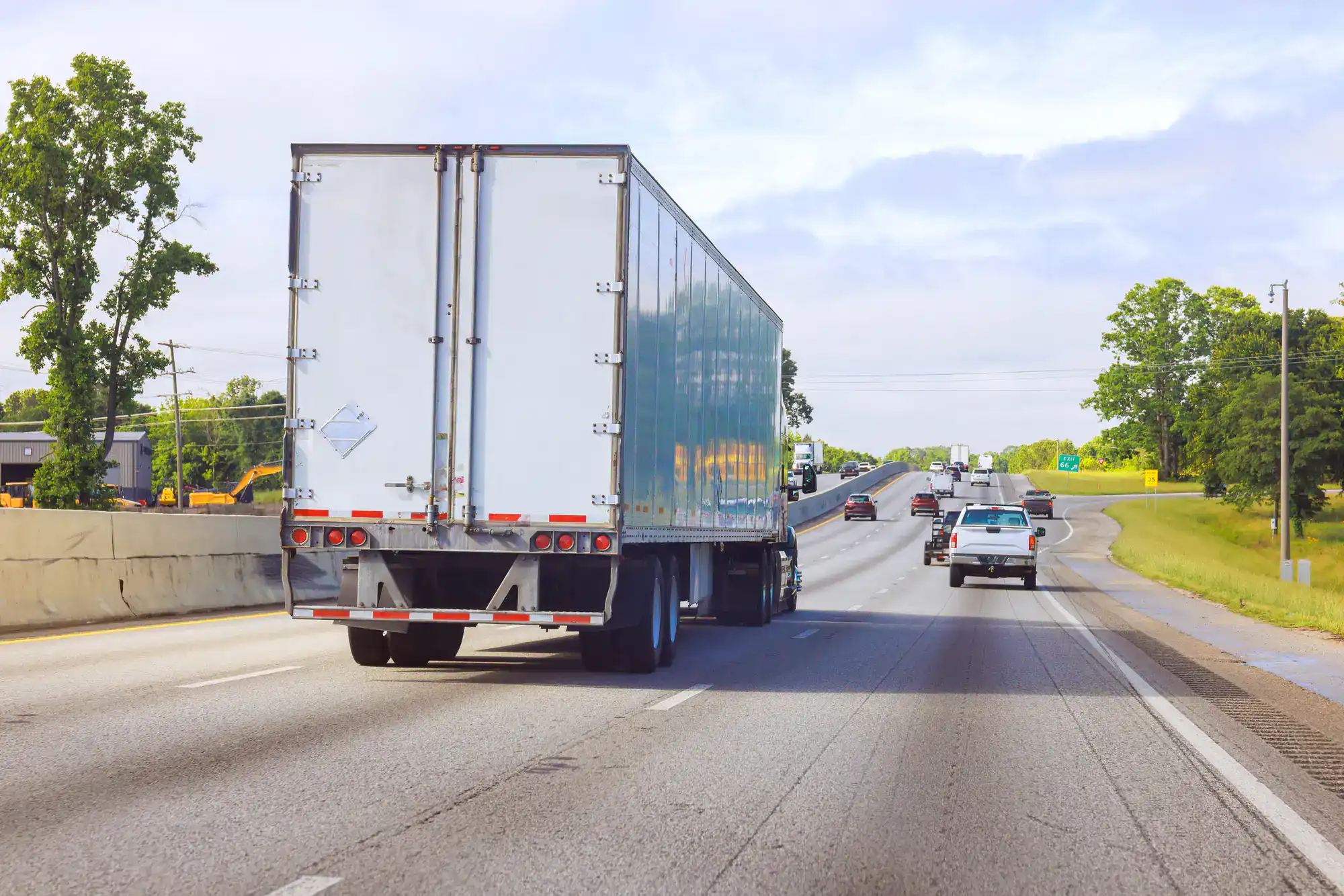
If your truck is model year 2013 or newer, has a GVWR over 14,000 pounds, and operates on California public roads, yes it’s subject to CARB’s Clean Truck Check program regardless of where it’s based or registered. For Torrance operators, this is especially relevant given the volume of commercial vehicle activity on the I-405 and I-110 corridors. We deploy roadside emissions monitoring devices throughout the South Bay, and a flagged truck gets a Notice to Submit to Testing in the mail not a warning, not a grace period. You have 30 calendar days to produce a passing test result from the date on that notice.
The compliance requirement also applies to trucks registered outside California. If you’re an out-of-state carrier running loads through the Port of LA and staging in a Torrance yard, your truck is subject to the same rules as a California-registered vehicle. Registration state doesn’t determine compliance obligation operating on California roads does.
The test is an OBD scan your truck’s onboard diagnostic system gets read by CARB-certified testing equipment, and the data is checked against California’s emissions thresholds. There’s no disassembly, no lift required, and no lengthy inspection process. The scan reads fault codes, emissions-related data, and system readiness monitors directly from your truck’s computer. The key distinction is that the equipment used has to be specifically certified by the California Air Resources Board a generic diagnostic scanner from an auto parts store doesn’t qualify, and neither does a test performed by someone without a CARB HD I/M Tester credential.
Once the scan is complete, results are submitted directly to CARB’s CTC-VIS system. If your truck passes, your compliance record is updated immediately in the state database. If something flags during the scan, you’ll know exactly what it is and after repairs are made, the retest follows the same straightforward process.
As of 2025, the testing requirement is semi-annual meaning two compliance windows per year. Each window is tied to your vehicle’s registration and compliance schedule in CARB’s CTC-VIS system. You can submit a test up to 90 days before your compliance deadline, which gives you some flexibility in scheduling, but the deadline itself is firm. Missing it means your vehicle falls out of compliance, and that’s when DMV registration holds and enforcement actions become a real possibility.
What’s worth knowing now is that the frequency is going up. By October 2027, most OBD-equipped trucks will be required to test four times per year. For fleet managers in Torrance overseeing multiple vehicles across staggered compliance windows, that’s a significant administrative increase. Getting a reliable testing relationship in place before quarterly requirements kick in is a practical move, not just a precaution.
The consequences are real and they escalate quickly. A missed compliance deadline can result in a DMV registration hold, which means your truck can’t be legally registered or operated in California until compliance is restored. On top of that, CARB has the authority to issue fines of up to $10,000 per vehicle per day for non-compliance. For a single-truck owner-operator, that kind of exposure can end a business. For a fleet, it compounds across every non-compliant vehicle.
For Torrance-area drayage operators, there’s an additional layer: port facility access. The Port of Los Angeles and Port of Long Beach require proof of compliance for trucks accessing their terminals. A lapsed certificate doesn’t just mean paperwork problems it means you can’t pick up or drop off a load until you’re back in compliance. That’s immediate lost revenue, not a fine you can deal with later. Getting tested before your deadline is always the lower-cost option.
Yes. We serve both individual owner-operators and multi-vehicle fleets throughout Los Angeles County, including Torrance and the surrounding South Bay area. Fleet testing follows the same process CARB-certified OBD scan, credentialed tester, direct submission to CTC-VIS but the logistics are coordinated to minimize downtime across multiple vehicles. If you’re managing trucks on staggered compliance schedules, that coordination matters more than most fleet managers expect until they’re trying to track it manually.
Given that Torrance is home to significant logistics and manufacturing operations including supply chain activity tied to Toyota and Honda’s North American campuses, Honeywell’s local operations, and the growing aerospace sector along South Vermont Avenue fleet compliance in this city involves real operational stakes. Trucks that miss their windows don’t just generate fines; they create freight gaps that affect the entire operation. We’re set up to handle that volume without making it your administrative problem.
It does. California’s Clean Truck Check program applies to any qualifying vehicle that operates on California public roads the state where the truck is registered is not a factor. If you’re a carrier based in Texas, Nevada, Arizona, or anywhere else and you run loads through Southern California, stage in Torrance-area yards, or access the Port of Los Angeles via the I-110 corridor, your truck is subject to the same compliance requirements as a California-registered vehicle.
This is one of the most common blind spots for out-of-state operators who run the Southern California freight lanes. CARB enforces the requirement regardless of registration state, and the same consequences apply DMV holds on California operations, potential fines, and port access denial. If your truck is model year 2013 or newer with a GVWR over 14,000 pounds and it’s touching California roads, the compliance clock is running. We can test and submit for any qualifying truck operating in the LA County area, regardless of where it’s registered.
Useful Links
Other Services we provide in Torrance