Check Out Our Reviews!
A DMV registration hold doesn’t just slow down your paperwork it stops your truck from running California roads entirely. For operators in Thousand Palms who depend on I-10 freight routes for their income, that’s not a minor inconvenience. It’s a business shutdown. Getting compliant through a credentialed tester offering mobile CARB Clean Truck Check services means your registration clears, your routes stay open, and you’re not scrambling to explain a compliance gap to a freight broker or port dispatcher.
There’s also something specific to this area worth knowing. The Coachella Valley’s extreme desert heat regularly exceeding 110°F in summer puts real stress on diesel emissions control systems. DPF filters, DEF systems, and EGR components all work harder in this climate, and a truck that feels fine on the road can still have active fault codes that would cause a Clean Truck Check OBD scan to fail. Testing proactively, before a deadline or a Notice to Submit to Testing arrives, gives you time to address any issues without the pressure of a 30-day countdown.
The Coachella Valley already deals with serious air quality challenges windblown dust, Salton Sea particulates, and agricultural emissions put the region under ongoing SCAQMD scrutiny. That context means CARB enforcement in Thousand Palms and surrounding areas isn’t a formality. It’s active, it’s real, and it applies to every qualifying truck operating on California roads including I-10 through Thousand Palms.
We are not a general smog shop that added a new service line. Every test we perform is an OBD-based Clean Truck Check for a model year 2013 or newer heavy-duty vehicle with a GVWR over 14,000 pounds the exact vehicle population California’s HD I/M program targets. That focus matters because the Clean Truck Check is a separate program from standard smog, with different equipment requirements, different credentialing standards, and its own state database. Knowing the difference isn’t optional when your livelihood depends on getting it right.
We serve Riverside County the same county Thousand Palms calls home. We make the diesel smog check easy in Thousand Palms: on-site testing for heavy-duty diesel trucks, with results sent straight to CARB. Our testers have completed CARB’s official HD I/M Tester Training Course, passed the state exam, and hold credentials that are publicly verifiable on CARB’s website at arb.ca.gov. Whether you’re running freight along I-10, managing a small fleet out of a local warehouse near Cook Street, or hauling event logistics to the Acrisure Arena on Varner Road, the credential, the equipment, and the direct CTC-VIS submission are all in place before your test begins.

The process starts with scheduling. You provide your truck’s VIN, model year, and GVWR to confirm it qualifies model year 2013 or newer, GVWR over 14,000 pounds. If it meets both criteria and it operates on California roads, including I-10 through the Coachella Valley, it’s subject to the Clean Truck Check requirement. That applies whether your truck is registered in California, Arizona, Nevada, or anywhere else.
At the time of the test, a CARB-credentialed tester connects CARB-certified OBD equipment directly to your vehicle’s diagnostic port. The scan reads the emissions-related monitors and fault codes that CARB’s system evaluates. This is not a generic code reader it’s equipment that meets California’s specific certification standard for the HD I/M program. In the Coachella Valley’s heat, it’s worth knowing that some emissions monitors can reset or read “not ready” after a recent battery disconnect or repair, which can affect results. If that’s a concern, it’s worth mentioning when you schedule so the timing works in your favor.
Once the test is complete, results are submitted electronically and directly to CARB’s CTC-VIS database. You don’t log into a portal. You don’t upload anything. The record is updated, and you have documentation showing the test was completed and submitted by a credentialed tester. If the truck passes, you’re compliant. If it doesn’t, you’ll know exactly what the scan found and what steps come next no vague answers, no disappearing act.

Ready to get started?
The California Clean Truck Check is a state-mandated emissions inspection program under Senate Bill 210, administered by CARB. It applies to diesel and alternative-fuel heavy-duty vehicles that are model year 2013 or newer with a GVWR over 14,000 pounds. If your truck meets both of those criteria and operates on California public roads including I-10 through Thousand Palms compliance is not optional.
As of 2025, qualifying vehicles must pass a Clean Truck Check test twice per year. By October 2027, most trucks will be required to test four times per year. The annual CARB compliance fee is $31.18 per vehicle, paid separately from the tester’s service fee. Non-compliance triggers an automatic DMV registration hold, and fines can reach $10,000 per vehicle per day. CARB also uses roadside emissions monitoring devices throughout California trucks flagged by these devices receive a Notice to Submit to Testing, which carries a hard 30-day deadline to submit a passing test from a credentialed tester.
Every Clean Truck Check we perform includes the OBD scan using CARB-certified equipment, a review of the results with the vehicle operator, and direct electronic submission to the CTC-VIS database. There’s no separate portal step on your end, and no question about whether the submission was received. For Thousand Palms operators managing multiple trucks whether they’re staging near Bob Hope Drive, running Coachella Valley distribution routes, or hauling freight across the desert Southwest that submission step handled on your behalf is one less thing to track across a semi-annual compliance schedule.
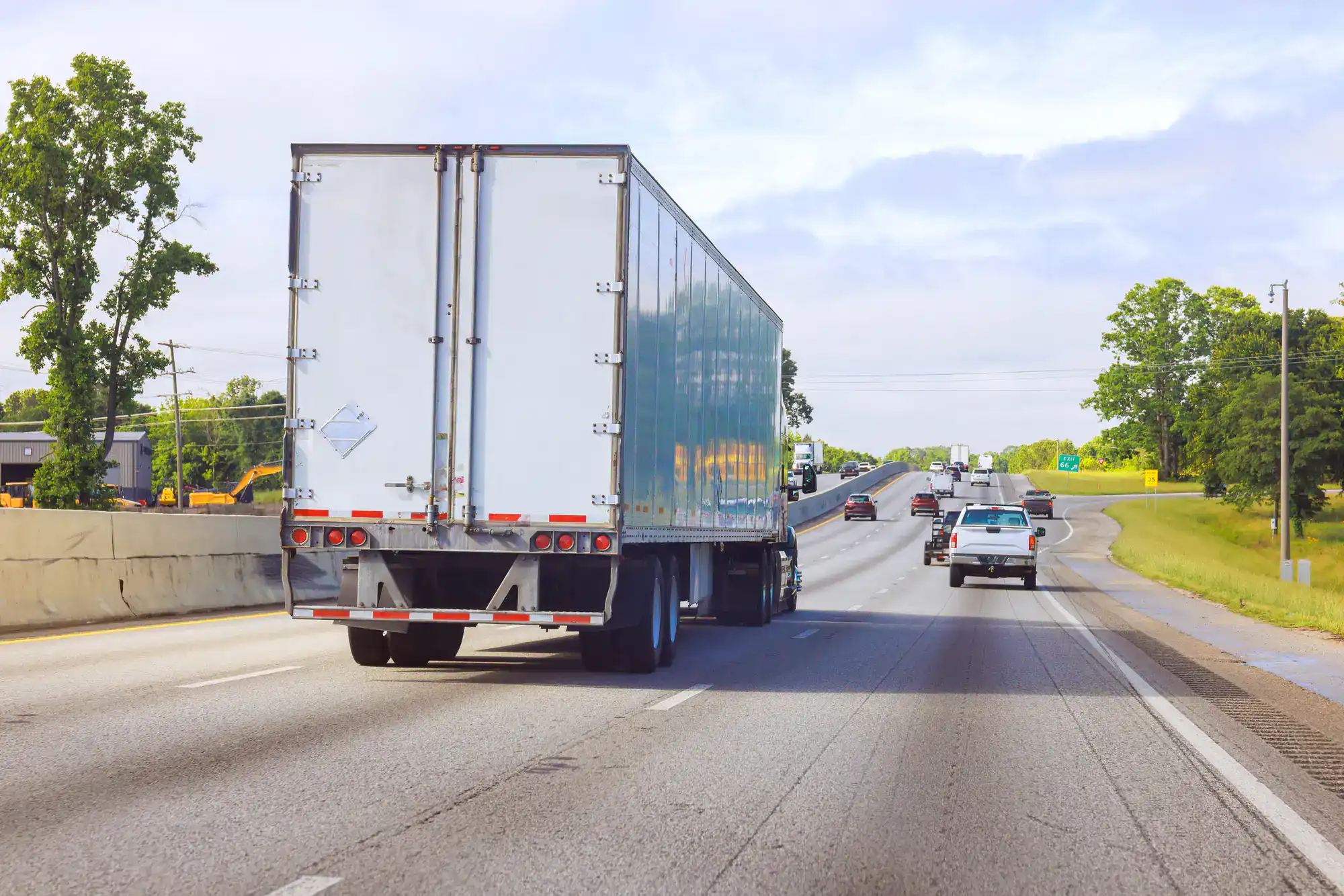
Yes and this is one of the most common misconceptions among carriers running I-10 through the Coachella Valley. California’s Clean Truck Check requirement applies to any qualifying vehicle operating on California public roads, regardless of where the truck is registered. If your truck is model year 2013 or newer, has a GVWR over 14,000 pounds, and it runs California routes including I-10 through Thousand Palms you are subject to the program.
CARB uses roadside emissions monitoring devices along major freight corridors, including I-10. If your truck is flagged, you’ll receive a Notice to Submit to Testing with a 30-day deadline. At that point, you need a passing test from a CARB-credentialed tester, submitted directly to the CTC-VIS database. Being registered out of state does not exempt you, and waiting until you receive a notice to figure out the process puts you in a tight window. Getting compliant before that happens is the cleaner path.
A failed test does not trigger immediate fines. What matters for enforcement purposes is your compliance deadline not the test result itself. If your truck fails, you have time to address the issue and retest before your deadline passes, as long as you’re not already in a 30-day NST window.
In the Coachella Valley’s extreme heat, emissions control systems particularly DPF filters and DEF components are under more thermal stress than trucks operating in cooler climates. A failing result here often points to a heat-related fault code or a system that’s been running harder than it should. When a truck fails its scan, the results will show which monitors triggered the issue, giving a diesel mechanic a clear starting point for diagnosis. The sooner you act on a failed result, the more time you have before your compliance window closes.
As of 2025, qualifying vehicles must complete a passing Clean Truck Check twice per year a semi-annual schedule. That’s already a doubling of the testing frequency compared to 2024. By October 2027, the requirement escalates further, with most trucks required to test four times per year on a quarterly schedule.
For Thousand Palms operators running 2013 or newer heavy-duty trucks, this means CARB compliance is now a recurring operational item, not a once-a-year task. The annual compliance fee paid to CARB is $31.18 per vehicle, separate from the tester’s service fee. Planning your testing schedule around your busiest operational periods like the Coachella Valley’s high season from October through May, when commercial truck traffic increases significantly can help you avoid scheduling conflicts during peak revenue windows.
No and confusing the two is a mistake that can leave your truck out of compliance even after you’ve paid for a test. A standard smog check is a separate program designed for passenger cars and light-duty vehicles. The Clean Truck Check is a distinct California program under Senate Bill 210, administered by CARB specifically for diesel and alternative-fuel heavy-duty vehicles that are model year 2013 or newer with a GVWR over 14,000 pounds.
The equipment is different, the credentialing is different, and the database is different. A standard smog station cannot perform a Clean Truck Check, and a standard smog certificate will not satisfy CARB’s heavy-duty compliance requirement. Results must be submitted to CARB’s CTC-VIS database by a tester who holds a current CARB HD I/M credential not just a BAR license. If you’ve been told a regular smog check covers your semi truck, it doesn’t. We perform only Clean Truck Check testing for qualifying heavy-duty vehicles, using CARB-certified OBD equipment and direct CTC-VIS submission.
If your truck was flagged by one of CARB’s roadside emissions monitoring devices which are deployed along major corridors including I-10 through the Coachella Valley you’ll receive a Notice to Submit to Testing, commonly called an NST. From the date on that notice, you have exactly 30 calendar days to submit a passing Clean Truck Check from a CARB-credentialed tester.
The first thing to do is confirm your truck qualifies under the program model year 2013 or newer, GVWR over 14,000 pounds. Then schedule your test as quickly as possible. Thirty days sounds like enough time, but if your truck needs repairs before it can pass, you’ll want every day available to get the work done and retest before the deadline. We serve Riverside County with CARB-credentialed testing and direct CTC-VIS submission, so the test result goes straight into CARB’s system no delay, no portal confusion, no question about whether your submission was received before the window closed.
The requirement applies to diesel and alternative-fuel heavy-duty vehicles that are model year 2013 or newer and have a GVWR over 14,000 pounds and it applies to any truck operating on California public roads, including I-10 through Thousand Palms. Both criteria must be met. A 2015 truck under 14,001 pounds doesn’t qualify. A 2008 heavy-duty truck doesn’t qualify either. But a 2013 or newer semi, box truck, flatbed, or other heavy-duty vehicle that meets the weight threshold and runs California routes is subject to the program.
In Thousand Palms specifically, this covers a wide range of operators I-10 freight haulers, local warehouse and distribution fleets, event logistics trucks running to the Acrisure Arena, construction and delivery vehicles serving the commercial development expanding near Cook Street and Varner Road, and out-of-state carriers passing through the Coachella Valley on desert Southwest routes. If you’re unsure whether your specific vehicle qualifies, the VIN and GVWR on your registration are the two pieces of information that answer the question definitively.
Useful Links
Other Services we provide in Thousand Palms