Check Out Our Reviews!
Every truck running freight through the Santa Clarita Valley on I-5 or SR-14 is operating on one of the most monitored freight corridors in California. CARB deploys roadside emissions monitoring devices on high-volume truck routes and the Newhall Pass stretch is exactly the kind of location they target. You don’t have to be pulled over to get flagged. If your 2013-or-newer diesel with a GVWR over 14,000 pounds doesn’t have a current Clean Truck Check certificate, you’re exposed every time you make a run.
A passing OBD test changes that. It clears the path to registration renewal, satisfies a Notice to Submit to Testing, and keeps your truck legally operating on California roads. For owner-operators staging out of Canyon Country or Castaic, and fleet managers running distribution out of the Valencia Commerce Center or Needham Ranch, that means no DMV holds, no fines stacking up at $10,000 per vehicle per day, and no freight loads getting denied because your compliance record is blank.
The testing schedule isn’t getting easier either. Semi-annual testing is already required in 2025, and by October 2027 most trucks will need quarterly testing four times a year. Getting ahead of that now, with a credentialed tester who handles the CARB submission for you, is the move that keeps your operation running without interruption.
We are a CARB-credentialed Clean Truck Check testing provider serving Santa Clarita and the surrounding Los Angeles County area Valencia, Newhall, Saugus, Canyon Country, Stevenson Ranch, and Castaic. Every tester on our staff has completed CARB’s official HD I/M Tester Training Course, passed the required exam, and holds a state-issued credential that is publicly listed on CARB’s database. You can look it up before you book. That’s not a marketing claim it’s a verifiable fact.
The service we’ve built is focused on one vehicle population: model year 2013 or newer heavy-duty trucks with a GVWR over 14,000 pounds. That’s it. No passenger cars, no light-duty vehicles, no generalist smog shop adding a new service line. Every test we perform uses CARB-certified OBD equipment and every result is submitted electronically and directly to CARB’s CTC-VIS system no portal burden on you, no delays, no guesswork about whether the submission went through.

The process starts with confirming your truck qualifies model year 2013 or newer, GVWR over 14,000 pounds. If you’re not sure, a quick call will sort it out. Once that’s confirmed, you schedule the test at a time that works around your route or your yard’s schedule. For fleet operators at facilities like the Valencia Commerce Center or Needham Ranch in the Santa Clarita area, that means minimal disruption to your daily operation.
On the day of the test, a CARB-credentialed tester connects CARB-certified OBD equipment directly to your truck’s diagnostic port. The system reads your truck’s onboard emissions data fault codes, readiness monitors, system status and generates a result. This is not a visual inspection or a tailpipe probe. It’s a direct read of your truck’s own emissions control systems, which is exactly what CARB requires under the Clean Truck Check program.
If your truck passes, the result is submitted electronically to CARB’s CTC-VIS database on the spot. Your compliance record is updated in real time no upload delays, no manual entry errors, no waiting to find out if it counted. If your truck has active fault codes that would cause a failure, you’ll know immediately and can address the repair before resubmitting. Either way, you leave with a clear picture of where your truck stands and a direct line back to us when you’re ready for the next test.

Ready to get started?
Every Clean Truck Check test we perform in Santa Clarita covers the full OBD scan using CARB-certified equipment, direct electronic submission of results to CARB’s CTC-VIS system, and a clear explanation of what the result means for your compliance status. The annual CARB compliance fee $31.18 per vehicle in 2025, adjusted by CPI annually is a separate charge paid directly to CARB and is not part of the testing fee. That distinction matters, and we’ll walk you through it so there are no surprises.
This service applies only to trucks that are model year 2013 or newer with a GVWR over 14,000 pounds. If your truck falls outside those parameters, this program does not apply to it and we’ll tell you that upfront rather than waste your time. For trucks that do qualify, the OBD test is the method CARB requires, and the equipment used has to be specifically certified for the HD I/M program. Generic diagnostic tools won’t produce a result that CARB accepts.
One detail that catches a lot of Santa Clarita operators off guard: if your truck is registered in another state Nevada, Arizona, Texas, anywhere but you’re running loads on California roads, including the I-5 through Newhall Pass or the SR-14 through the Antelope Valley corridor, you are subject to the same Clean Truck Check requirements as any California-registered truck. Out-of-state plates are not an exemption. If you’ve received a Notice to Submit to Testing and you’re not sure what to do next, that’s exactly the kind of situation we handle.
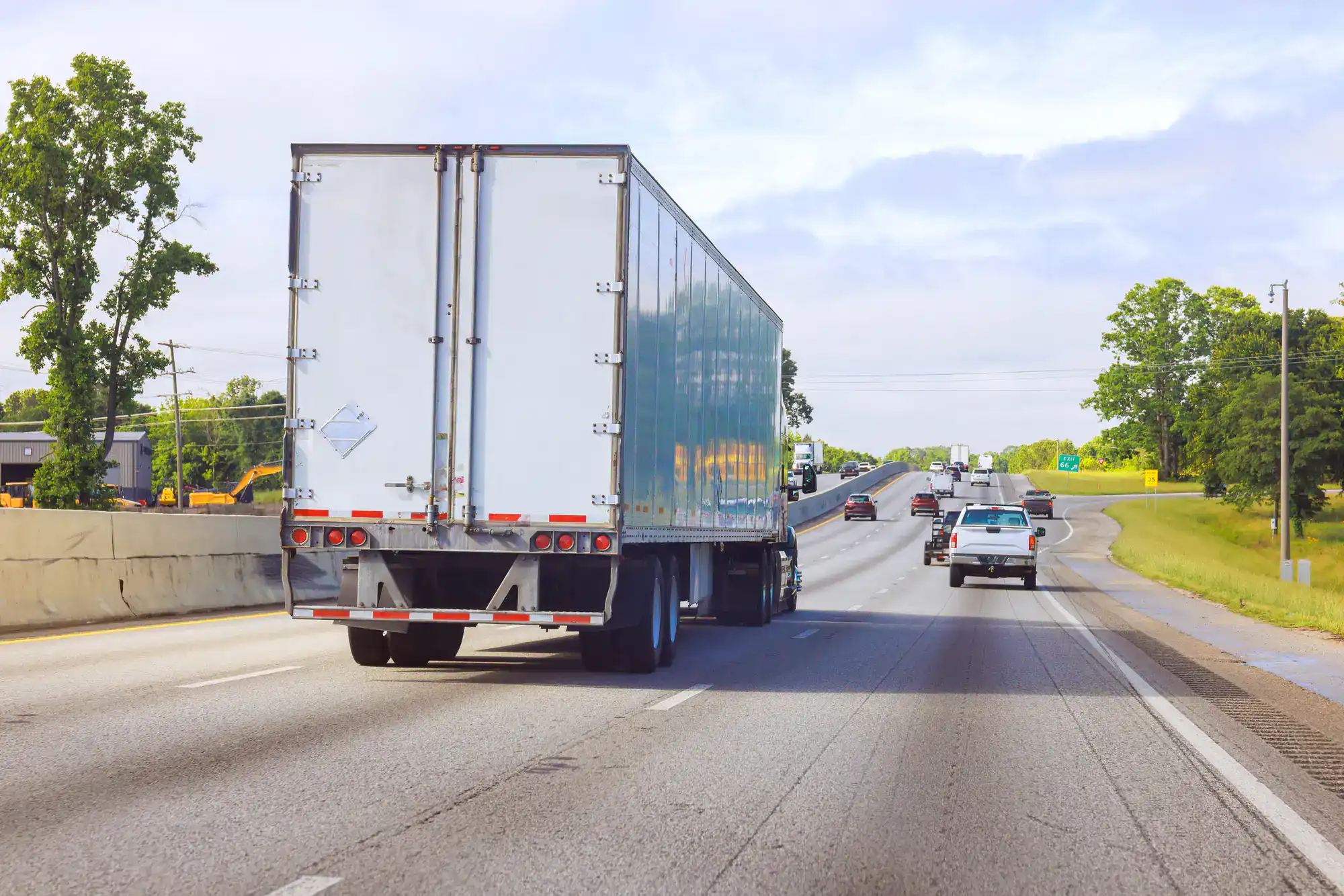
Yes and this catches a lot of operators off guard. CARB’s Clean Truck Check program applies to any qualifying heavy-duty vehicle operating on California public roads, regardless of where it’s registered. If your truck is a 2013 or newer model year with a GVWR over 14,000 pounds and you’re running loads through California including the I-5 through the Santa Clarita Valley you are subject to the same compliance requirements as a California-registered truck.
This is especially relevant for carriers who regularly transit through the Newhall Pass corridor on their way between the Los Angeles Basin and the Central Valley or points north. CARB uses roadside emissions monitoring devices on high-volume freight routes, and a flagged truck receives a Notice to Submit to Testing regardless of its home state registration. From that point, you have 30 calendar days to submit a passing test performed by a CARB-credentialed tester. We can handle that test and submit the result directly to CARB’s CTC-VIS system, so your compliance record is updated and your next California run is covered.
A failed test doesn’t mean the end of the road it means your truck has active fault codes or unready emissions monitors that CARB’s system flagged during the OBD scan. The most common causes are issues with diesel particulate filter (DPF) systems or selective catalytic reduction (SCR) systems, both of which can be affected by hard use on demanding routes like the I-5 grade through Newhall Pass, especially during Santa Clarita’s summer heat when temperatures regularly push past 100°F and emissions systems work harder.
When a truck fails, you’ll know exactly what the scan found no vague result, no mystery. You take that information to a diesel repair shop, address the underlying issue, and then schedule a retest. The retest follows the same process: CARB-certified OBD equipment, credentialed tester, direct CTC-VIS submission. There’s no penalty for failing the first test as long as you address it and submit a passing result before your compliance deadline. If you received a Notice to Submit to Testing, that 30-day clock is still running, so moving quickly on the repair matters.
In 2025, the requirement is semi-annual meaning two tests per year. That schedule is already in effect, so if you haven’t tested yet this cycle, you’re likely already behind. The program escalates from there: by October 2027, most trucks subject to Clean Truck Check will be required to test quarterly, which means four times per year.
For fleet managers operating out of Santa Clarita’s industrial parks the Valencia Commerce Center, Needham Ranch, or the IAC Commerce Center this shift to quarterly testing is an operational planning issue, not just a compliance checkbox. Staggering test dates across a fleet of 10, 20, or 30 trucks every three months requires a testing provider who can handle volume efficiently and submit every result directly to CARB without putting the administrative burden back on your team. That’s the kind of recurring relationship we’re built for, not a one-time transaction.
They’re completely different programs targeting completely different vehicles. A standard smog check the kind you get for a passenger car or light-duty vehicle is administered through the Bureau of Automotive Repair and uses tailpipe emissions testing or a basic OBD scan for newer consumer vehicles. It does not apply to heavy-duty commercial trucks and is performed at licensed smog stations, many of which you’ll find along Valencia Boulevard and throughout Santa Clarita.
Clean Truck Check is a CARB-specific program for heavy-duty vehicles model year 2013 or newer with a GVWR over 14,000 pounds. It uses a different OBD testing protocol, requires CARB-certified equipment that is specific to the HD I/M program, and results must be submitted to CARB’s CTC-VIS database by a credentialed tester. A general smog shop cannot perform this test even if they wanted to the equipment and credential requirements are separate. If you take a qualifying semi truck to a standard smog station, they won’t be able to help you, and the clock on your compliance deadline keeps running.
If the vehicle is a 2013 or newer model year with a GVWR over 14,000 pounds, yes it doesn’t matter what it’s used for. Santa Clarita is home to more than 20 soundstages and 10 movie ranches, and the heavy-duty vehicles that support film production generator rigs, equipment haulers, camera trucks, grip vehicles are commercial vehicles in CARB’s eyes. The Clean Truck Check program applies based on the vehicle’s specifications, not its industry or use case.
This is a detail that production companies and rental houses in Santa Clarita often miss until a compliance deadline surfaces. The good news is that the testing process is straightforward: OBD scan with CARB-certified equipment, direct submission to CTC-VIS, and your vehicle’s compliance record is updated. For production schedules that don’t have room for unexpected compliance delays, getting ahead of this before an NST arrives is the practical move. We work with fleet operators across Santa Clarita, including production-adjacent fleets, to keep vehicles compliant on a schedule that doesn’t disrupt operations.
CARB maintains a publicly searchable database of credentialed HD I/M testers you can look up any provider before you book. A legitimate credential requires completing CARB’s official Tester Training Course, passing a proctored exam with a minimum score of 80%, and renewing the credential every two years. It is state-issued, not self-declared. If a provider can’t point you to their listing on CARB’s database, that’s a problem worth taking seriously.
This matters in Santa Clarita’s market because there are multiple providers showing up in local search results claiming to offer CARB compliance testing some mobile, some storefront, some based locally in Valencia, others listing the city without operating here. The credential is the one objective differentiator that doesn’t rely on marketing language. Our testers are listed on CARB’s database, and we encourage you to verify that before calling. Beyond the credential, the equipment used for the OBD scan also has to be specifically certified by CARB for the HD I/M program a generic diagnostic tool won’t produce a result that CARB accepts, even if the tester is credentialed. Both pieces need to be in place for your test to count.
Useful Links
Other Services we provide in Santa Clarita