Check Out Our Reviews!

If your truck runs the I-210 Foothill Freeway through Monrovia, you’re already operating in one of the most actively monitored freight corridors in Los Angeles County. CARB deploys roadside emissions monitoring devices across the state’s highway network, and the 210 connecting the San Gabriel Valley to the Inland Empire is exactly the kind of high-traffic corridor where non-compliant trucks get flagged. A current Clean Truck Check certificate isn’t just paperwork. It’s what keeps your truck on the road instead of parked in your yard with a DMV registration hold and a deadline you’re already behind on.
Monrovia sits at the foot of the San Gabriel Mountains, and that geography matters more than most people realize. The mountains act as a natural wall that traps air pollutants in the valley below including diesel particulate matter from the commercial corridors on Huntington Drive and Foothill Boulevard. Monrovia is fully within the South Coast Air Quality Management District, one of the strictest air quality jurisdictions in the country. That’s not background noise. It’s why CARB enforcement in this part of Los Angeles County is real, consistent, and not going away.
When your compliance is current, you don’t have to think about any of this. Your truck runs. Your loads get picked up. Your registration clears. That’s the outcome not a certificate on file, but a business that keeps moving without regulatory interruption.
We are a CARB-credentialed Clean Truck Check testing provider serving Los Angeles County, including Monrovia and the surrounding San Gabriel Valley communities. Every tester has completed CARB’s official HD I/M training course, passed the state exam, and holds a credential that’s publicly listed on CARB’s own database so you don’t have to take anyone’s word for it. You can verify it before you book.
This isn’t a general smog shop that added a new service line. We test exclusively model year 2013 or newer heavy-duty trucks with a GVWR over 14,000 pounds the exact vehicles subject to California’s Clean Truck Check program. That’s our whole practice. Owner-operators running regional routes through Monrovia, Arcadia, and Duarte, and fleet managers working out of warehouse facilities in the 91016 ZIP code, get a specialist who knows this program inside and out not a technician who learned it last quarter.

The process starts when you call or book online. You tell us where your truck is located whether that’s a warehouse yard off Mountain Avenue, a staging area near Huntington Drive, or a job site anywhere in the Monrovia area and we schedule a time to come to you. You don’t pull the truck off a route. You don’t drive to a facility. We come to your location.
When we arrive, we connect CARB-certified OBD diagnostic equipment directly to your qualifying truck model year 2013 or newer, GVWR over 14,000 pounds. This isn’t a generic code reader. CARB requires specific approved devices for Clean Truck Check testing, and that’s exactly what we use. The scan reads your truck’s onboard diagnostic system for emissions-related fault codes and readiness monitors. If the truck passes, we submit your results electronically to CARB’s CTC-VIS database on the spot. Your compliance record updates in real time. You don’t log into a portal. You don’t upload anything. It’s done.
If you’ve received a Notice to Submit to Testing which CARB issues when roadside monitoring flags your vehicle on corridors like the I-210 you have 30 calendar days to submit a passing result from a credentialed tester. That clock doesn’t pause. Scheduling quickly gives you time to address any repairs if the truck needs them before the deadline hits.

Ready to get started?
Every Clean Truck Check test we perform in Monrovia covers the full OBD compliance scan required by CARB for qualifying heavy-duty vehicles model year 2013 or newer with a GVWR over 14,000 pounds. If your truck doesn’t meet both of those criteria, this program doesn’t apply to it, and we’ll tell you that upfront rather than waste your time.
For trucks that do qualify, here’s what our service includes: mobile testing at your Monrovia location, a CARB-certified OBD scan using approved equipment, direct electronic submission of your results to CARB’s CTC-VIS database, and real-time update of your compliance record. There’s no portal navigation required on your end, no manual uploads, and no waiting to find out if the submission went through. When we leave your location, it’s done.
For fleet managers in Monrovia handling multiple vehicles particularly those operating out of warehouse and logistics facilities in the 91016 and 91017 ZIP codes we can test multiple trucks in a single visit and keep each vehicle’s compliance record current. With semi-annual testing required now and quarterly testing on the horizon by October 2027, having a tester who can batch your fleet efficiently isn’t a convenience. It’s a compliance strategy. Every result goes straight to CARB, and every truck in your yard stays on the right side of a DMV registration hold.
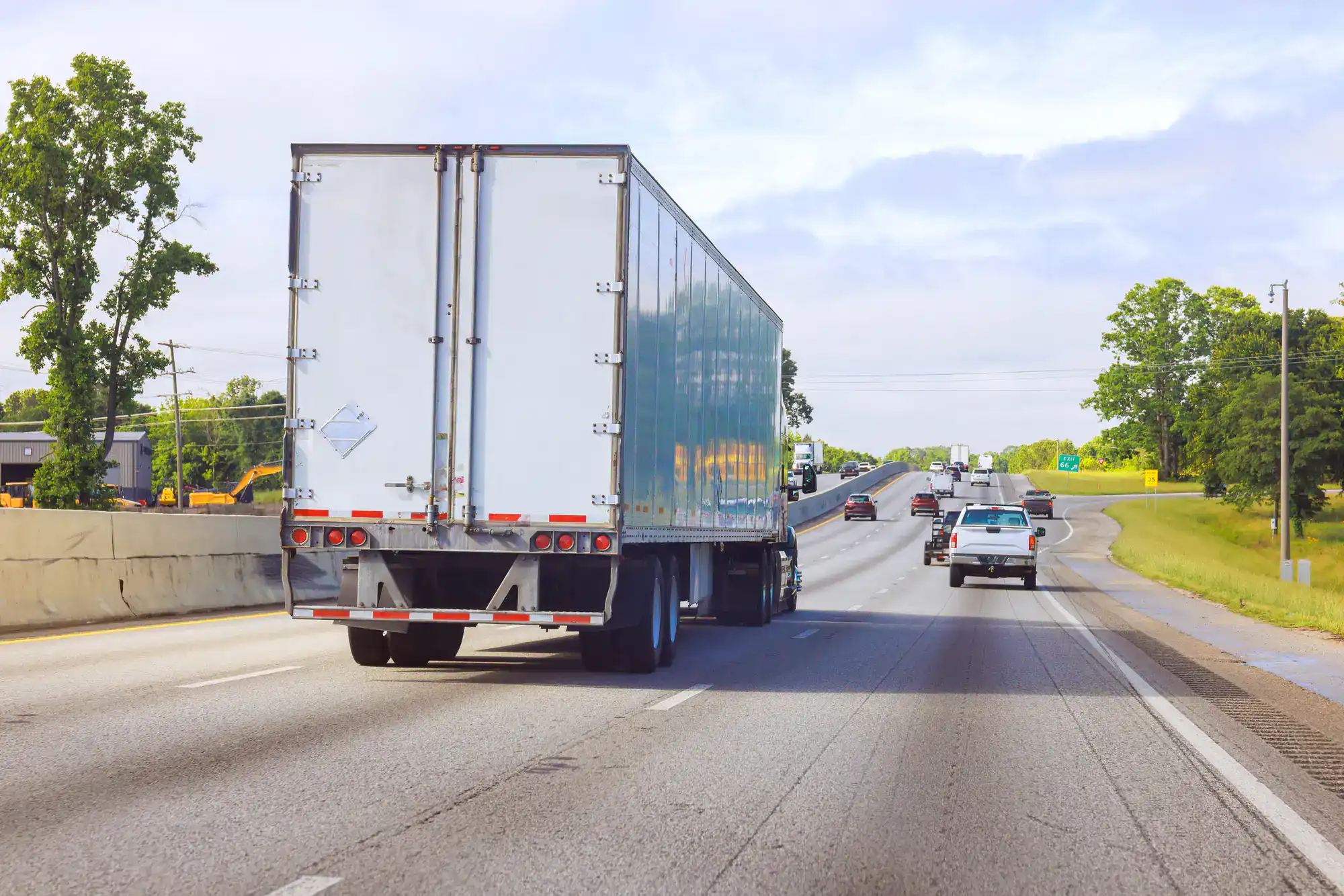
It depends on two things: the model year and the weight. If your truck is model year 2013 or newer and has a GVWR over 14,000 pounds, it falls under California’s Clean Truck Check program and yes, it needs compliance testing regardless of where in California it operates, including Monrovia. This applies whether your truck is registered in California or another state. If you’re hauling freight through the San Gabriel Valley, making deliveries in the Monrovia area, or staging out of a local warehouse, and your truck meets both criteria, you’re subject to the program.
If your truck is older than 2013 or lighter than 14,001 pounds GVWR, Clean Truck Check doesn’t apply to it. We only test vehicles that actually fall under this program so if you’re unsure whether your truck qualifies, call us and we’ll give you a straight answer before you book anything.
Right now, in 2025, qualifying trucks are required to test twice per year semi-annually. That schedule is already in effect and being enforced. By October 2027, CARB is escalating that requirement to quarterly testing for most vehicles, meaning four tests per year. That’s not a rumor or a proposal it’s written into the program’s enforcement timeline.
For owner-operators running a single truck on regional routes through Monrovia and the surrounding San Gabriel Valley, that means building compliance into your calendar the same way you’d schedule a service interval. For fleet managers handling multiple vehicles, it means the relationship you build with a credentialed tester now is the one you’ll be relying on four times a year in a couple of years. Getting ahead of that schedule rather than chasing deadlines is the smarter play.
A failed test means your truck has active emissions-related fault codes or incomplete readiness monitors that CARB’s OBD scan picked up. The result gets submitted to CARB’s CTC-VIS database regardless a failure is still a submission, and it starts a repair clock. You’ll need to address whatever the scan flagged, get the repairs done, and then submit a passing retest from a credentialed tester.
The most important thing to understand is that a failed test is not the end of the road but it does mean time matters. If you’re already close to a compliance deadline, or if you received a Notice to Submit to Testing triggered by roadside monitoring on the I-210 or another corridor, the 30-day window keeps running while your truck is in the shop. Get the test done as early as possible so you have real time to work with if repairs are needed. Don’t wait until the last week of your compliance window to find out the truck has a problem.
A Notice to Submit to Testing (NST) means CARB’s roadside emissions monitoring system flagged your vehicle likely on a corridor like the I-210 Foothill Freeway, which runs directly through Monrovia and is one of the primary freight routes across the San Gabriel Valley. When that happens, CARB sends the registered owner a letter requiring them to submit a passing Clean Truck Check test from a credentialed tester within 30 calendar days of the notice date.
That 30-day window includes any time needed for repairs if your truck doesn’t pass the initial OBD scan. The clock doesn’t stop while the truck is in the shop. Call to schedule your test as soon as you receive the letter not the week before the deadline. If the truck passes on the first scan, your result goes straight to CARB’s CTC-VIS database and your compliance record updates immediately. If it needs repairs first, you’ll know that early enough to actually do something about it.
Yes. We provide mobile CARB compliance testing our tester comes to your truck’s location in Monrovia, whether that’s a warehouse yard, a job site, a commercial lot, or your own property. You don’t need to haul the truck to a testing facility or pull it off a scheduled run to get compliant.
This matters especially for fleet operators in Monrovia’s industrial and warehouse zones particularly in the 91016 and 91017 ZIP codes where logistics activity is concentrated. If you have multiple trucks staged at the same location, we can test them in a single visit and submit each result directly to CARB before we leave. For owner-operators running tight schedules on Huntington Drive or the I-210 corridor, mobile testing means compliance doesn’t cost you a day of work. It costs you the time it takes to do the scan and that’s it.
Yes. California’s Clean Truck Check program applies to any qualifying heavy-duty vehicle operating on California public roads regardless of where the truck is registered. If your truck is model year 2013 or newer with a GVWR over 14,000 pounds, and it’s running routes through Monrovia, making deliveries to warehouses in the San Gabriel Valley, or hauling freight on the I-210 corridor, it’s subject to CARB’s compliance requirements.
Out-of-state carriers are sometimes caught off guard by this because they assume California’s rules only apply to California-registered vehicles. They don’t. CARB’s roadside emissions monitoring devices don’t check registration state they flag emissions signatures. If your truck gets flagged and you receive a Notice to Submit to Testing, the 30-day clock applies to you the same as it does to any California operator. Getting compliant before that happens rather than after a roadside flag is the straightforward way to keep your California routes running without interruption.
Useful Links
Other Services we provide in Monrovia