Hear from Our Customers
Your trucks stay on the road. That’s the bottom line.
When your fleet meets California CARB compliant standards, you’re not dealing with registration holds from the DMV. You’re not scrambling after a roadside flag gives you 30 days to produce passing results. You’re not explaining to dispatch why three trucks are sitting idle because you missed a testing window.
CARB compliance testing isn’t optional anymore. Starting in 2025, every heavy-duty diesel truck operating in California—even if it’s registered out of state—needs testing every six months. Miss it, and you’re looking at fines up to $10,000 per vehicle per day. That’s not a scare tactic. That’s what non-compliance actually costs.
The testing itself takes 15 to 30 minutes when you’re working with a CARB certified facility. You plug into the OBD system, run the diagnostics, and you’re done. What takes longer is the fallout from skipping it. Downtime for a single truck can cost you $300 to $900 in lost revenue, and that’s before you factor in the penalties.
All SMOG Motors is a CARB certified testing facility in East San Gabriel, CA. We’re authorized to perform emissions testing on model year 2013 and newer diesel engines with a GVWR over 14,000 pounds. If your truck doesn’t meet both of those criteria, we’ll tell you upfront.
We’re not a general smog shop trying to figure out heavy-duty compliance on the fly. Our testers have completed CARB’s certification training and passed the exam. We use state-compliant OBD testing equipment that meets SAE J1667 specifications. That’s not marketing language—that’s what the California Air Resources Board requires, and it’s what we use.
East San Gabriel sits right in the middle of major freight corridors. You’re running loads through here, and you need testing that doesn’t eat up half your day. We get trucks in and out because we know what we’re looking for and how to run the test correctly the first time.

You bring your truck in. We verify it’s a 2013 or newer model with a GVWR over 14,000 pounds—because that’s what California’s Clean Truck Check program covers.
Our certified tester connects to your truck’s OBD system using CARB-approved diagnostic equipment. The system pulls data directly from your engine’s onboard computer. We’re checking emissions output, looking for fault codes, and making sure your diesel emissions system is functioning the way CARB expects it to.
The test runs for about 15 to 30 minutes. If your truck passes, you get documentation proving compliance. That goes into the state system, and your registration stays clear. If something flags, we’ll tell you exactly what the issue is—not in vague terms, but the specific fault code and what it means for your next step.
This isn’t a visual inspection or a smoke test. It’s a data-driven process that measures whether your truck meets California CARB compliant standards. You’re either in compliance or you’re not, and the OBD system tells us which one it is.
You’ll need this done twice a year right now. Starting in October 2027, it moves to quarterly for most trucks. That’s not our rule—that’s CARB’s timeline. We’re just making sure you know what’s coming so you’re not caught off guard when the requirement changes.

Ready to get started?
If you operate a heavy-duty diesel truck in California with a 2013 or newer engine and a GVWR over 14,000 pounds, you need this test. That includes semi trucks, commercial buses, delivery trucks, and any other heavy-duty vehicle that touches California roads.
It doesn’t matter if your truck is registered in Nevada, Arizona, or Texas. If it operates here, it falls under California’s Clean Truck Check program. Out-of-state operators get caught by this all the time because they assume their home state registration is enough. It’s not.
The test costs $31 per vehicle for the annual compliance fee, plus the testing service itself. Compare that to the $10,000-per-day penalty for operating a non-compliant truck, and the math is pretty straightforward.
East San Gabriel, CA is a hub for freight movement. You’ve got trucks coming through here from the ports, heading to distribution centers, running routes up and down the state. That makes this area a hotspot for CARB enforcement. Roadside monitoring is active, and when your truck gets flagged, you have 30 days to submit passing results. Not 30 business days—30 calendar days.
We’re set up to handle fleet testing. If you’re running multiple trucks, we can schedule them in sequence to minimize your operational disruption. You’re not bringing trucks in one at a time over six weeks. You’re getting your fleet tested and back to work.
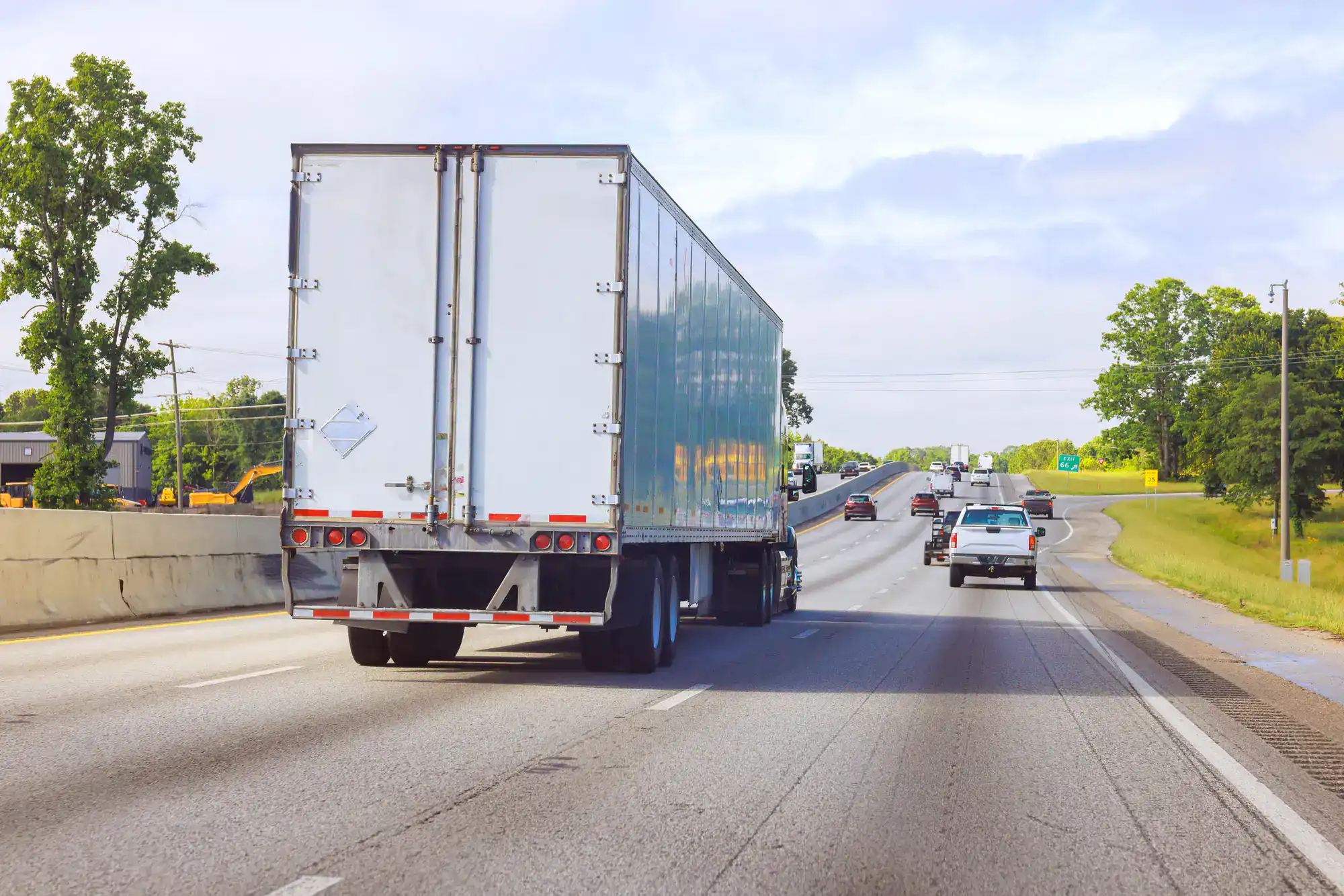
Right now, you need testing every six months. That’s twice a year, and it applies to nearly all heavy-duty diesel and alternative fuel trucks with a GVWR over 14,000 pounds operating in California.
Starting in October 2027, the requirement shifts to quarterly testing for most vehicles. That means four times a year instead of two. CARB is phasing this in, so the sooner you build testing into your regular maintenance schedule, the less disruptive it’ll be when the frequency increases.
If you miss a testing window, the California DMV can place a registration hold on your vehicle. That means you can’t renew your registration until you’re compliant. And if you’re caught operating a non-compliant truck, you’re looking at citations and fines that start at $10,000 per vehicle per day. The testing itself takes 15 to 30 minutes. The penalties for skipping it can shut down your operation.
If your truck fails, you get a detailed report showing exactly what triggered the failure. It’s usually a fault code from the OBD system—something like a malfunctioning diesel particulate filter, an issue with the selective catalytic reduction system, or another emissions-related component.
You’ll need to get the problem fixed and then bring the truck back for a retest. You can’t operate the vehicle legally in California until it passes. The state doesn’t care if the repair is expensive or inconvenient. If the truck doesn’t meet emissions standards, it doesn’t get a passing certificate.
The good news is that the OBD system tells you exactly what’s wrong. You’re not guessing. You take that fault code to a qualified mechanic, they address the specific issue, and you retest. Most failures are fixable within a few days if you act on them immediately. Where operators get into trouble is when they ignore the failure and keep running the truck anyway. That’s when the fines and registration holds start piling up.
Yes. If your truck operates on California roads, it falls under the Clean Truck Check program regardless of where it’s registered.
This catches a lot of out-of-state operators off guard. You might be based in Arizona, Nevada, Oregon, or anywhere else, but the moment your truck crosses into California, it’s subject to the same CARB diesel compliance requirements as California-registered vehicles. That includes the semiannual testing, the annual compliance fee, and all the penalties for non-compliance.
CARB uses roadside monitoring to flag trucks that haven’t been tested. When your truck gets flagged, you receive a Notice to Submit to Testing. You have 30 calendar days to get the truck tested and submit passing results. If you don’t, the California DMV can block your registration, and you’ll face fines. The fact that your truck is registered out of state doesn’t exempt you. If you’re running freight through California, you need to be compliant.
No. The Clean Truck Check program only applies to model year 2013 and newer diesel engines. If your truck is older than that, it’s not eligible for this type of testing.
The reason is simple: trucks built before 2013 don’t have the OBD systems that CARB compliance testing relies on. The test pulls data directly from the onboard computer to measure emissions output. Older trucks don’t have that technology, so there’s nothing to test.
If you’re operating a pre-2013 truck in California, you may still be subject to other emissions regulations, but they’re different programs with different requirements. We’re certified specifically for 2013 and newer heavy-duty diesel engines with a GVWR over 14,000 pounds. If your truck doesn’t meet both of those criteria, we’ll let you know upfront so you’re not wasting time or money on a test you don’t need.
The actual test takes about 15 to 30 minutes. That’s the time it takes to connect to your truck’s OBD system, run the diagnostics, and generate results.
What takes longer is the downtime if you’re not prepared. If you show up without the right documentation, or if your truck has an existing fault code that hasn’t been addressed, you’re adding time to the process. The test itself is quick, but the prep work matters.
For fleet operators, scheduling matters too. If you’re bringing in five trucks and trying to squeeze them all into one afternoon without an appointment, you’re going to wait. We can schedule fleet testing in sequence so you’re not sitting around for hours. You drop off, we test, you pick up. The goal is to keep your trucks moving, not to tie them up at a testing facility all day. Plan ahead, and the whole process is fast.
The financial penalty for operating a non-compliant heavy-duty truck in California is up to $10,000 per vehicle per day. That’s not a one-time fine. That’s a daily penalty that accumulates as long as the truck stays on the road without passing the required emissions test.
On top of the fines, the California DMV can place a registration hold on your vehicle. That means you can’t renew your registration until you’re compliant. If you’re caught operating with a registration hold, you’re looking at additional citations and potential impoundment.
Then there’s the operational cost. If your truck gets flagged during a roadside inspection and you have 30 days to submit passing results, that’s 30 days of uncertainty. If you’re running tight schedules and that truck is suddenly out of commission, you’re losing revenue, scrambling for replacement vehicles, and explaining delays to customers. The $31 annual compliance fee and the cost of a 20-minute test twice a year is a lot cheaper than the alternative.
Useful Links
Other Services we provide in East San Gabriel