Check Out Our Reviews!

Commerce is one of the most freight-intensive cities in California. The I-5 and I-710 interchange sits right inside city limits, and the trucks running those corridors every day are exactly the vehicles CARB is watching. If your truck is model year 2013 or newer and over 14,000 pounds GVWR, a lapsed compliance certificate on those roads isn’t a paperwork problem it’s a revenue problem.
A DMV registration hold doesn’t just block your renewal. It can pull a truck off the road mid-season, cost you a freight contract, or get you denied access at the port terminals that Commerce’s drayage economy depends on. The Hobart Intermodal Facility and the Commerce Rail Yard Complex process millions of containers a year, and every drayage operator moving those loads needs a current, valid CARB compliance certificate to access those facilities no exceptions.
West Commerce is also specifically named in CARB and SCAQMD’s Community Emissions Reduction Plan, which means diesel emissions enforcement in this area is already elevated. Staying current on your Clean Truck Check compliance isn’t just about avoiding a fine it’s about staying operational in a city where trucks are the business.
We are a CARB-credentialed Clean Truck Check testing provider serving Los Angeles County, including Commerce and the broader southeast LA County freight corridor. Every tester on our staff has completed CARB’s official HD I/M Tester Training Course, passed the required exam, and holds a state-issued credential that’s publicly searchable on CARB’s own database. You can verify it before you ever pick up the phone.
Our service is focused entirely on the vehicle population that CARB’s Clean Truck Check program targets model year 2013 or newer heavy-duty diesel and alternative-fuel vehicles with a GVWR over 14,000 pounds. That’s not a side offering. It’s our whole operation. Every test uses CARB-certified OBD equipment, and results go directly to the CTC-VIS database upon completion. No manual uploads. No submission delays. No gray area on whether your truck is actually cleared.
Fleet managers running trucks out of warehouses along Eastern Avenue in Commerce, drayage operators staging near the Hobart Yard, and logistics companies working through Parsec and similar Commerce-based employers all operate in the same environment one where downtime is expensive and compliance can’t wait.

The process starts when you reach out to schedule your test. Because Commerce operates in a 24/7 freight environment with intermodal terminals running around the clock and trucks on tight dispatch windows scheduling flexibility matters. We work around your operation, not the other way around.
When our tester arrives, they connect a CARB-certified OBD device directly to your vehicle’s onboard diagnostic port. The scan reads your truck’s emissions data in real time and checks it against CARB’s compliance thresholds for your vehicle’s model year and engine type. The entire test is non-invasive no disassembly, no extended downtime. Most tests are completed efficiently so your truck can get back on the road.
Once the test is complete, results are submitted electronically and directly to CARB’s CTC-VIS database. Your compliance record is updated in real time. You don’t need to log into the portal, manage an upload, or follow up to confirm the submission went through. We handle that step. If your vehicle is flagged for a Notice to Submit to Testing (NST) or you’re dealing with a DMV registration hold, that compliance record update is what clears the path forward and it happens the same day the test is done.

Ready to get started?
Every Clean Truck Check we perform covers the full scope of what CARB requires for OBD-based HD I/M compliance. That means a CARB-certified OBD scan, a real-time emissions data review against CARB’s standards for your specific vehicle, and direct electronic submission to the CTC-VIS system. The $31.18 annual CARB compliance fee is separate from the testing service itself that’s paid directly to CARB as part of vehicle registration.
This service applies only to vehicles that meet both criteria: model year 2013 or newer, and a GVWR over 14,000 pounds. If your truck doesn’t meet both of those thresholds, it falls outside the Clean Truck Check program entirely. For Commerce operators running modern diesel drayage rigs, delivery trucks, or heavy-duty commercial vehicles the kind of fleet that moves freight through the I-710 corridor and into the port complex this is the exact compliance requirement that applies to your vehicles.
Testing is currently required twice per year under the semi-annual schedule in effect for 2025. That cadence escalates to quarterly four times per year by October 2027. For fleet operators in Commerce managing multiple trucks across multiple deadlines, having a credentialed testing partner who handles direct CTC-VIS submission on every visit isn’t a convenience. It’s how compliance stays manageable at scale.
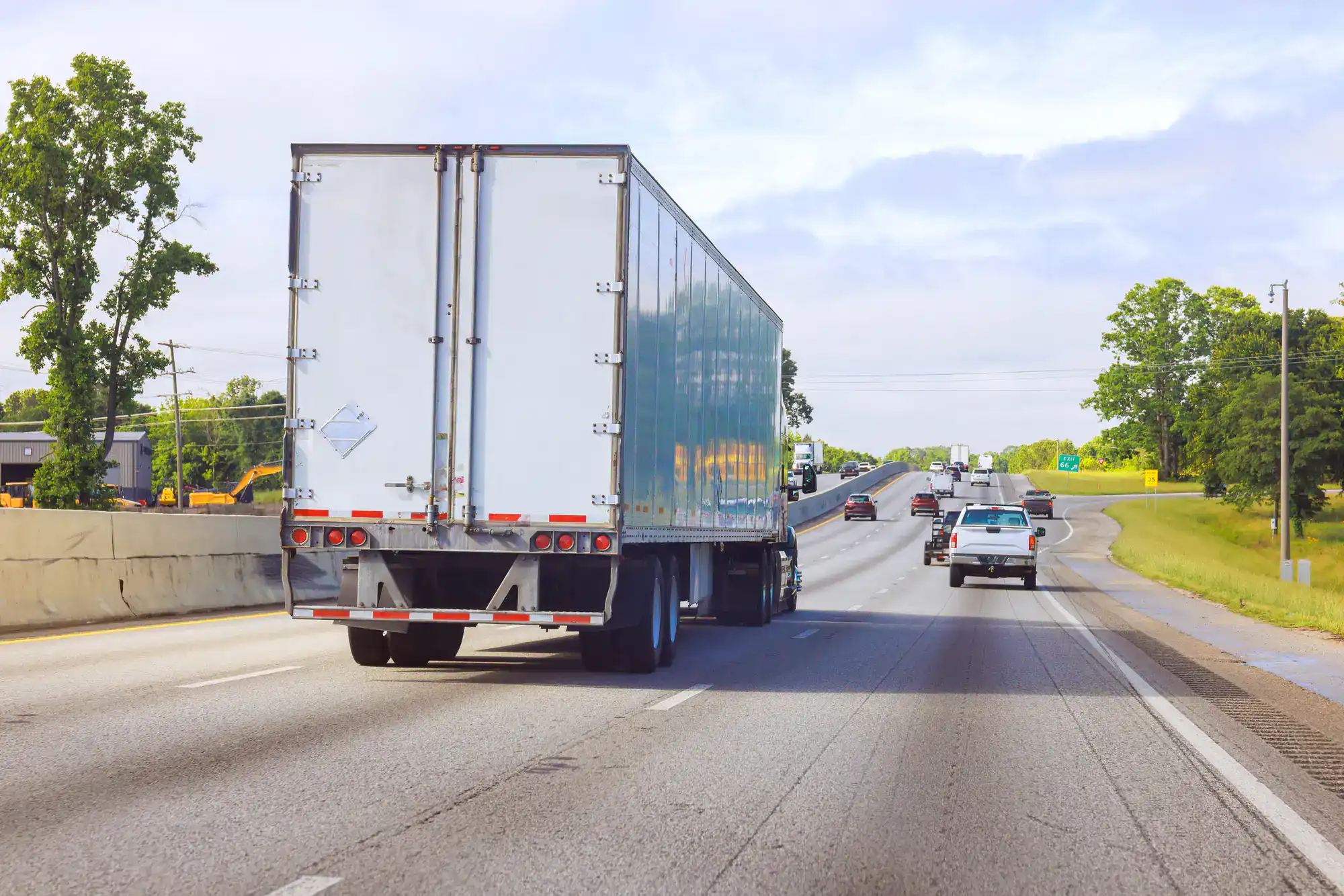
If your truck is model year 2013 or newer and has a GVWR over 14,000 pounds, yes it’s subject to CARB’s Clean Truck Check program regardless of where it’s registered. That includes trucks registered in other states that regularly operate on California roads. Commerce sits at the intersection of I-5 and I-710, two of the most heavily traveled freight corridors in the country, and trucks running those routes are operating in California’s jurisdiction every time they do.
The Clean Truck Check requirement applies to heavy-duty diesel and alternative-fuel vehicles in that model year and weight range. It doesn’t matter if your base of operations is a warehouse on Eastern Avenue, a yard near the Hobart Intermodal Facility, or a distribution center elsewhere in Los Angeles County if the truck runs California roads, it needs to comply. Out-of-state plates don’t create an exemption. CARB’s enforcement applies to any vehicle operating within California, and Commerce’s position on major freight corridors means these trucks are in active compliance territory every single day.
A failed OBD scan means your vehicle’s onboard diagnostic system reported active fault codes or emissions readings that exceed CARB’s thresholds for your engine and model year. When that happens, the failed result is still submitted to CTC-VIS CARB receives the data regardless of the outcome. The vehicle then enters a non-compliant status, which can trigger a DMV registration hold if the issue isn’t resolved within the required timeframe.
From there, the path forward is to identify and repair the underlying issue causing the fault codes, then retest. In Commerce’s freight environment, where a truck sitting in a yard is a truck not earning revenue, the urgency to resolve a failed test quickly is real. The good news is that the retest process follows the same steps as the initial test CARB-certified OBD scan, direct CTC-VIS submission, and a compliance record update once the vehicle passes. Getting the repair done correctly the first time matters, because every day in non-compliant status is a day the DMV hold stays active and the risk of denied port access or freight contract issues remains on the table.
As of 2025, the Clean Truck Check program requires testing twice per year a semi-annual schedule. That cadence is already in effect and applies to the full vehicle population subject to the program: model year 2013 or newer heavy-duty vehicles with a GVWR over 14,000 pounds. By October 2027, that requirement escalates to quarterly testing, meaning four tests per year for most commercial trucks in California.
For Commerce fleet operators managing multiple vehicles, that escalation is worth planning for now. A fleet of ten trucks under the 2027 quarterly schedule means up to forty testing events per year across your roster. Establishing a consistent testing relationship with a credentialed provider who handles direct CTC-VIS submission on every visit rather than scrambling to find a qualified tester before each deadline is the practical way to stay ahead of that schedule. The $31.18 annual CARB compliance fee per vehicle is paid separately to CARB and is not part of the testing service cost.
Yes. We serve Los Angeles County, which includes Commerce and its surrounding industrial corridor Vernon, Bell Gardens, Pico Rivera, and the broader southeast LA County freight zone. The OBD-based Clean Truck Check test doesn’t require a fixed facility. Our tester brings CARB-certified equipment to your location, connects directly to your vehicle’s OBD port, runs the scan, and submits results to CTC-VIS on-site.
For Commerce operators, this matters because pulling a truck off a dispatch route to drive it to a testing location adds time and cost that on-site testing eliminates. Whether your trucks are staged near the Hobart Intermodal Facility, parked at a warehouse yard on Washington Boulevard, or lined up at a distribution center anywhere in the city, we can come to you. Scheduling around your operation rather than around a fixed shop’s hours is especially relevant in Commerce’s 24/7 freight environment, where trucks run on tight windows and downtime has a direct dollar cost.
A Notice to Submit to Testing, or NST, is CARB’s formal notification that your vehicle is overdue for a Clean Truck Check and must complete testing within a specific timeframe. It’s not a fine it’s a deadline. But ignoring it turns it into one. If the vehicle isn’t tested within the window CARB specifies, the consequences escalate: DMV registration holds, potential fines of up to $10,000 per vehicle per day, and denial of access to port facilities and freight contracts.
The immediate step is to schedule a test with a CARB-credentialed tester as quickly as possible. We serve Commerce and Los Angeles County, use CARB-certified OBD equipment, and submit results directly to CTC-VIS the same day the test is performed. That direct submission is what updates your compliance record and begins resolving the NST. In Commerce’s freight economy where port access and freight broker contracts depend on a current compliance certificate clearing an NST fast isn’t just about avoiding a fine. It’s about keeping your truck in the supply chain that runs through the I-710 corridor and into the port complex every single day.
Yes. CARB’s Clean Truck Check requirement applies to any heavy-duty vehicle that operates on California public roads not just vehicles registered in California. If your truck is model year 2013 or newer, has a GVWR over 14,000 pounds, and regularly runs routes through Commerce or anywhere else in California, it’s subject to the program regardless of what state the plates are from.
This is particularly relevant in Commerce because of its position on the I-5 and I-710 corridors. Interstate carriers running freight between California and other western states Oregon, Washington, Nevada, Arizona frequently stage or operate through Commerce’s industrial zone and intermodal facilities. Those operators are in California’s jurisdiction every time their trucks cross the state line, and a Texas or Arizona registration doesn’t create a carve-out from CARB’s HD I/M rules. We can test and submit compliance results for out-of-state vehicles the same way we handle California-registered trucks same CARB-certified OBD equipment, same direct CTC-VIS submission, same same-day compliance record update.
Useful Links
Other Services we provide in Commerce