Check Out Our Reviews!

Bellflower sits in the middle of three of the most freight-monitored corridors in California. SR-91 cuts east-west through the southern edge of the city. I-605 runs north-south just to the east. I-105 sits just north of the city limits. CARB deploys roadside emissions monitoring devices along exactly these kinds of high-volume freight routes. If you’re running loads from Bellflower to the Port of Long Beach about 10 to 12 miles southwest or heading east on SR-91 toward the Inland Empire, you are not operating in a low-scrutiny environment.
Getting your CARB Clean Truck Check done means your compliance record is live in CARB’s CTC-VIS database before your next run. No DMV registration hold blocking your renewal. No freight broker turning you away because your certificate is expired. No port terminal denying entry. For the owner-operators running out of Somerset Boulevard, Artesia Boulevard, or Woodruff Avenue in Bellflower, that continuity is the difference between a full week of loads and a week of phone calls trying to sort out a compliance problem.
Bellflower is also part of California’s AB 617 Southeast Los Angeles Community Air Protection Program a designation that means CARB enforcement in this corridor is active and community-driven, not theoretical. Staying compliant here isn’t just about avoiding fines. It’s about keeping your operation running in a region where regulators are paying close attention.
We hold a state-issued CARB credential for heavy-duty inspection and maintenance testing and you can verify that before you ever call. CARB maintains a public database of credentialed HD I/M testers at arb.ca.gov. Look us up. That credential requires completing CARB’s official tester training course, passing the exam, and renewing every two years. It’s not a marketing claim it’s a state-issued authorization that most general smog shops in the Bellflower area simply don’t have.
We serve Los Angeles County and Riverside County, which puts Bellflower and the entire Southeast LA freight corridor squarely in our service area. We know the SR-91 runs through the southern end of your city. We know Bellflower operators are running drayage to Long Beach, making deliveries through Downey and Norwalk, and hauling intermodal containers through the Gateway Cities region. That’s exactly the operating environment we built this service around owner-operators and small fleets who need compliance handled fast, correctly, and without having to manage the CTC-VIS portal themselves.

The Clean Truck Check program uses OBD-based testing that’s an onboard diagnostics scan specific to model year 2013 and newer diesel trucks with a GVWR over 14,000 pounds. It’s not a visual inspection or a tailpipe smoke test. The scanner reads your truck’s emissions control systems directly, and the results are evaluated against CARB’s compliance thresholds for your vehicle’s model year and engine configuration.
When you schedule with us, we confirm your vehicle qualifies model year 2013 or newer, GVWR over 14,000 pounds and set a time that works around your route schedule. We use CARB-certified OBD testing equipment, not generic diagnostic tools. That distinction matters because CARB will not accept results from non-approved equipment, and using the wrong scanner wastes your time and potentially your compliance window. For Bellflower operators running tight schedules between port runs and Inland Empire deliveries, that’s not a risk worth taking.
Once the test is complete, we submit your results electronically to CARB’s CTC-VIS database. You don’t log in, you don’t upload anything, and you don’t risk a submission error causing a missed deadline. Your compliance record is updated the same day. If your truck doesn’t pass, we walk you through exactly what the result means and what repair path gets you to a passing retest no confusion, no runaround.

Ready to get started?
Every test we perform is a CARB-credentialed OBD compliance scan on qualifying heavy-duty diesel vehicles model year 2013 or newer with a GVWR over 14,000 pounds. This is the exact vehicle population California’s mobile Clean Truck Check program targets under Senate Bill 210. If your truck doesn’t meet both of those criteria, this test doesn’t apply to you. If it does, here’s what you’re getting.
The test itself covers a full OBD scan of your truck’s emissions control systems using CARB-certified equipment. Results are evaluated against CARB’s compliance standards, and your pass or fail status is submitted directly to the CTC-VIS database immediately after the test no manual portal work required on your end. For Bellflower-area operators running under the AB 617 Southeast Los Angeles enforcement umbrella, having that submission handled correctly and on time is not a minor detail. A late or incorrectly submitted result can trigger the same DMV hold as a failed test.
Testing frequency is currently semi-annual two tests per year and is scheduled to increase to quarterly by October 2027. That means four compliance windows per year for most qualifying trucks. If you’re running one to five trucks out of Bellflower and managing your own compliance, getting ahead of that schedule now is the move. The annual CARB compliance testing fee is $31.18 per vehicle, separate from the testing service fee a distinction worth understanding before your first compliance window hits.
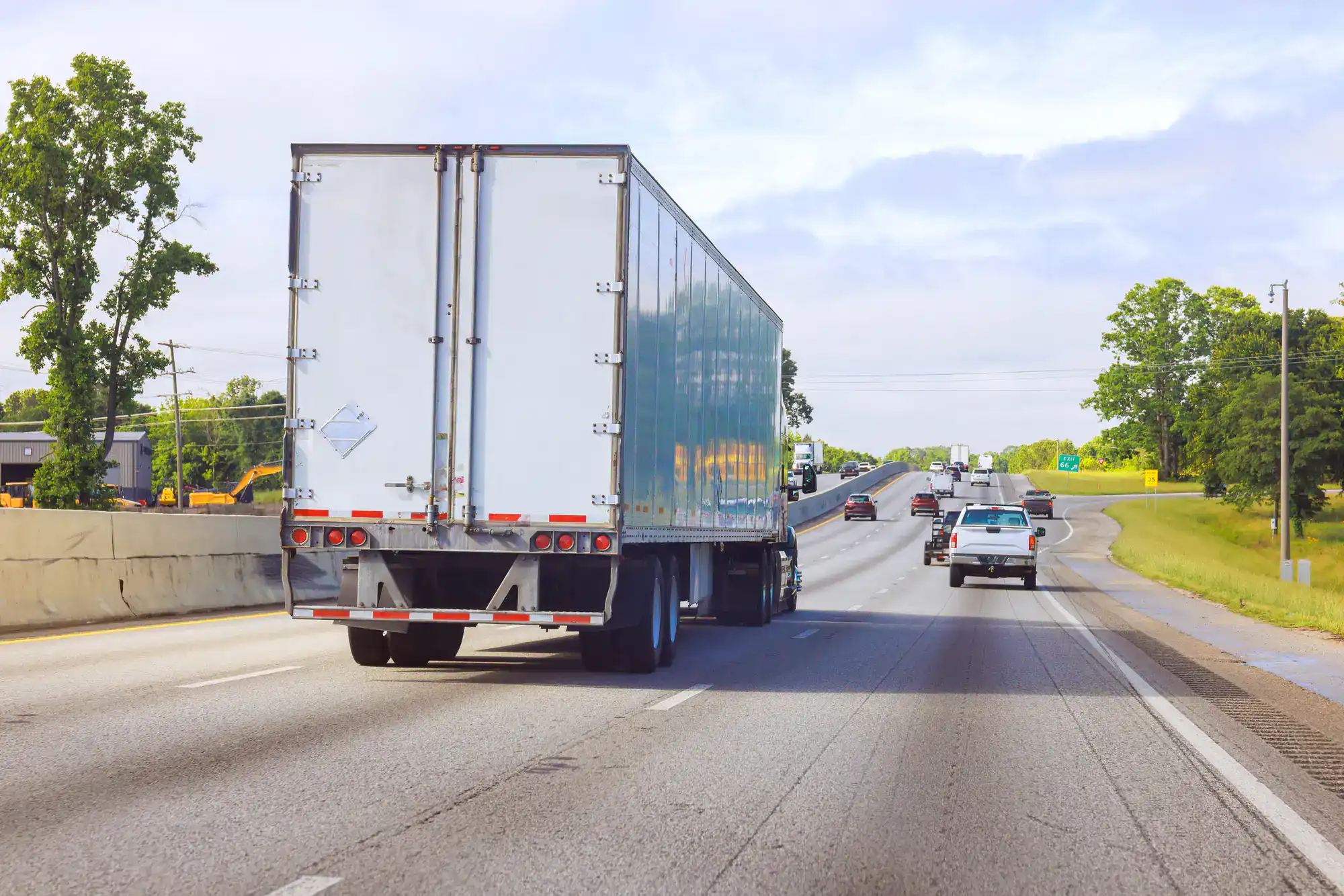
Yes and this is one of the most common points of confusion for operators running through Southeast Los Angeles County. CARB’s Clean Truck Check program applies to any qualifying diesel truck operating on California public roads, regardless of where the vehicle is registered. If your truck is model year 2013 or newer, has a GVWR over 14,000 pounds, and it’s running loads in California whether you’re registered in Texas, Arizona, Nevada, or anywhere else it is subject to the same compliance requirements as a California-registered truck.
The enforcement mechanism doesn’t start at the DMV for out-of-state trucks the same way it does for California-registered vehicles, but CARB’s roadside emissions monitoring devices deployed along corridors like SR-91 and I-605 can flag your truck regardless of plate state. If you receive a Notice to Submit to Testing, you have 30 calendar days to produce a passing result from a credentialed tester. We test and submit results for out-of-state-registered trucks operating in the LA Basin the process is identical to a California-registered vehicle.
A failed test doesn’t automatically mean your truck is out of service, but it does start a clock. CARB’s process requires that you address the emissions issue and pass a retest within the compliance window. If you’re operating in Bellflower and running loads to the Port of Long Beach, a failed test with no retest on record can result in your compliance certificate being flagged which means port terminals and freight brokers can deny you access or loads until you have a passing result on file in CTC-VIS.
The most important thing after a failed test is understanding exactly what caused it. The OBD scan identifies which emissions control system triggered the failure whether it’s a DPF issue, an EGR fault, a sensor problem, or something else. We walk you through what the result means in plain language so you know what repair is actually needed before you spend money at a shop. Once repairs are done, a retest is straightforward same process, same equipment, same direct submission to CARB. Getting that retest done quickly is what protects your ability to keep running loads.
As of 2025, qualifying trucks model year 2013 or newer, GVWR over 14,000 pounds are required to test twice per year under California’s semi-annual compliance schedule. That’s one test every six months. CARB’s schedule also calls for an increase to quarterly testing by October 2027, which would mean four compliance windows per year for most trucks in this category.
For Bellflower owner-operators managing their own compliance without a fleet department, that escalating schedule is worth planning around now. Missing a semi-annual window is already a DMV hold and a potential $10,000-per-day fine situation missing a quarterly window when that schedule kicks in will be just as consequential. The $31.18 annual compliance fee CARB charges is separate from the tester’s service fee, so the total cost per vehicle per year will include both. Knowing that distinction upfront helps you budget accurately rather than being caught off guard when the bill comes.
A Notice to Submit to Testing means CARB has flagged your truck as overdue for compliance most commonly because your semi-annual window has passed without a test on record in CTC-VIS, or because your truck was detected by a roadside emissions monitoring device on a corridor like SR-91 or I-605. The notice gives you exactly 30 calendar days to produce a passing emissions compliance test performed by a CARB-credentialed tester. There is no extension and no grace period.
The first thing to do is call a credentialed tester and get on the schedule immediately not at the end of the 30 days, but as early as possible. If your truck has any underlying emissions issues that cause it to fail, you need time for repairs and a retest before the deadline expires. We can schedule quickly, perform the OBD scan using CARB-certified equipment, and submit your results directly to CTC-VIS the same day. That submission is what clears the NST flag in CARB’s system not the test itself, but the verified passing result on record.
If your truck qualifies under the Clean Truck Check program model year 2013 or newer, GVWR over 14,000 pounds then yes, a valid CARB compliance certificate is required for port terminal access. The Port of Long Beach is roughly 10 to 12 miles southwest of Bellflower via Lakewood Boulevard or SR-91 connecting to the I-710. Port terminals verify compliance status through CARB’s CTC-VIS database, and freight brokers awarding drayage loads routinely require a current compliance certificate before assigning a run.
There is no workaround and no grace period at the gate. If your compliance record in CTC-VIS shows an expired or missing test, you will be turned away regardless of how long you’ve been running that route. For Bellflower-area drayage operators where the Port of Long Beach is a primary destination, keeping your compliance current isn’t a back-office task. It’s a direct operational requirement that affects whether you work that day or not. We submit results directly to CTC-VIS so your record is updated the same day as your test.
The core difference is the credential. CARB’s Clean Truck Check program requires that compliance tests be performed by a state-credentialed HD I/M tester using CARB-certified OBD equipment. General smog shops including most of the results that come up when you search “truck smog check near Bellflower” on Yelp are licensed for passenger vehicle smog inspections under a completely different program. They are not authorized to perform Clean Truck Check testing, and a test performed with non-approved equipment will not be accepted by CARB, regardless of what the shop tells you.
Our testers hold a state-issued CARB credential specifically for heavy-duty inspection and maintenance testing. That credential is publicly listed on CARB’s tester database at arb.ca.gov you can verify it before you book. We also use CARB-certified OBD testing devices, not generic scanners, and we submit results electronically to CTC-VIS immediately after the test. For owner-operators in Bellflower’s dense carrier community where one compliance mistake can mean a DMV hold, a lost port load, or a $10,000-per-day fine working with a credentialed specialist isn’t a preference. It’s the only option that actually counts.
Useful Links
Other Services we provide in Bellflower