Wondering if mobile emissions testing counts as a DMV certified smog check? For heavy-duty trucks in LA County, certification depends on the tester, not the location.

You need emissions testing done. Your compliance deadline is coming up. You’ve seen mobile testing advertised, but you’re not sure if it counts as a legitimate DMV certified smog check or if you need to find a traditional station.
The truth is simpler than most people realize. Certification isn’t about the building. It’s about the tester and the equipment. A mobile service using CARB-credentialed testers and state-approved OBD devices is just as valid as any brick-and-mortar facility. For heavy-duty trucks over 14,000 lbs, mobile testing often makes more sense than driving to a station.
What actually makes emissions testing valid in California, and why the location of the test might be the least important factor you should consider.
When people ask about a “DMV certified smog check,” they’re really asking if the test results will actually count with the state. That’s the right question.
In California, what matters is whether the tester holds proper CARB credentials and uses state-approved equipment. For heavy-duty trucks over 14,000 lbs GVWR, the rules are specific. Testers must complete CARB’s training course, pass an exam with at least 80% accuracy, and renew their certification every two years. The equipment must be on CARB’s approved list of OBD test devices.
The actual location where testing happens doesn’t determine validity. A CARB-credentialed tester working from a mobile unit with approved equipment can submit results directly to the CTC-VIS database just like any traditional facility. Your truck gets the same legal compliance either way.
Most truck operators are familiar with regular smog check stations for passenger vehicles. Those operate under different rules through the Bureau of Automotive Repair. They handle cars, light trucks, and vehicles under 14,000 lbs.
Heavy-duty trucks follow California’s Clean Truck Check program, which started enforcement in October 2024. This program requires CARB-credentialed testers specifically trained for trucks over 14,000 lbs. Not every smog station has these credentials. Some focus only on passenger vehicles. Others might advertise truck testing but lack the proper CARB certification.
The difference matters because only CARB-credentialed testers can submit results to the CTC-VIS database that the DMV checks for compliance. If someone without proper credentials tests your truck, that result won’t show up in the state’s system. You’ll still be flagged as non-compliant, even though you paid for testing.
You can verify a tester’s credentials through CARB’s public database of available-for-hire credentialed testers. This list shows who’s actually authorized to perform Clean Truck Check testing. Before you schedule with anyone, confirm they’re on that list. It takes two minutes and could save you from wasted time and money.
For 2013 and newer trucks, testers also need CARB-approved OBD test devices. These aren’t the same as generic code readers. CARB maintains a specific list of validated devices that can properly scan engine data and submit it electronically. Using non-approved equipment means your test won’t be accepted, even if the tester is credentialed.
Traditional smog stations that haven’t updated their equipment or training can’t legally test newer heavy-duty trucks. Mobile providers who’ve invested in CARB-approved OBD devices and proper credentials can. The building doesn’t make the difference. The certification and equipment do.
Clean Truck Check replaced the old Periodic Smoke Inspection Program starting in 2024. The changes are significant, especially for trucks with 2013 or newer engines.
Under the old system, diesel emissions testing focused on smoke opacity. Testers measured visible exhaust during acceleration. That method worked for older engines but didn’t capture the full picture for modern trucks with sophisticated emissions controls. Newer trucks use diesel particulate filters, selective catalytic reduction, and other systems that the old smoke tests couldn’t properly evaluate.
Clean Truck Check introduced OBD-based testing for 2013+ trucks. Instead of watching exhaust, testers connect directly to your truck’s onboard computer. The OBD system monitors emissions controls in real time while you drive. During testing, the tester downloads data from your ECU showing how well those systems are functioning. This takes about 10-15 minutes for the digital download.
The program also changed who needs testing. Nearly all diesel and alternative fuel vehicles over 14,000 lbs operating in California must comply, whether registered in-state or not. If you’re driving through California with an out-of-state truck, you’re subject to the same requirements as California-registered vehicles.
Testing frequency increased too. Most heavy-duty trucks need testing twice per year, with deadlines tied to your DMV registration renewal date. California-registered motorhomes and certain agricultural vehicles only test once annually. By 2027, OBD-equipped trucks will move to quarterly testing, four times per year.
The stakes went up as well. Non-compliance can result in DMV registration holds, meaning your truck can’t legally operate. Fines can reach $1,000 or more per day, per vehicle. CARB uses roadside emissions monitoring devices to flag potential high emitters. If your truck gets flagged, you receive a Notice to Submit to Testing with 30 days to provide a passing result.
All test results now go directly into CARB’s CTC-VIS database through electronic submission. There’s no paper certificate to mail in. When a credentialed tester completes your test, they upload results immediately. The system updates within days, and you get digital proof for your records. This electronic process is why proper credentials matter so much. Only authorized testers can access the submission system.
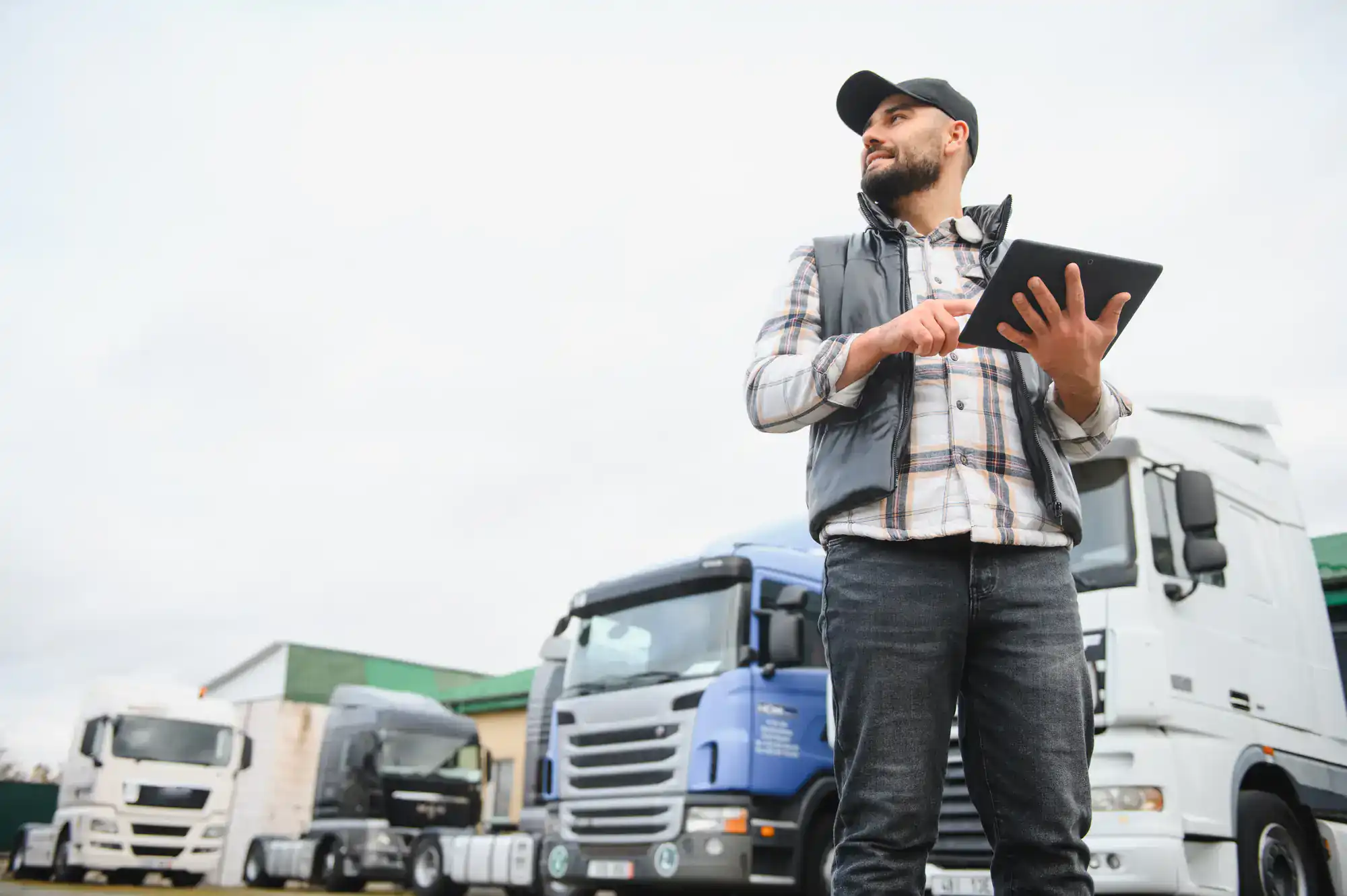
Mobile truck smog check service brings the inspection to your truck instead of making you drive to a facility. For heavy-duty vehicles, this difference changes the entire compliance experience.
Traditional stations require you to take your truck off route, burn fuel getting there, and wait in line with other vehicles. Mobile testers come to your yard, job site, or wherever your truck is parked. The testing itself takes the same amount of time either way, but mobile service eliminates all the travel and waiting.
For fleet operators managing multiple trucks, mobile diesel emissions testing means scheduling inspections at your location and getting several vehicles done in one visit. A credentialed tester can handle 15-40 inspections per day. You keep your trucks where they are and maintain your operation while compliance gets handled on-site.
Mobile testing works best when downtime costs you money. If your truck isn’t moving, it isn’t earning. Every hour spent traveling to a testing facility and waiting for service is an hour you’re not hauling freight.
Consider the math. A traditional station might be 30 minutes away. That’s an hour round trip, plus however long you wait for testing, plus the actual 10-15 minute test. You’re looking at two hours minimum, often more during busy periods. Mobile testing cuts that to 15-20 minutes total. The tester shows up, connects to your OBD port, downloads data, and submits results. You’re done.
For trucks operating on tight schedules, that time savings matters. Long-haul operators passing through California can schedule mobile testing at truck stops or rest areas. Local fleets can coordinate testing during loading or unloading. Owner-operators working from home can get tested in their driveway.
Mobile service also makes sense when you’re managing compliance for multiple trucks. Instead of coordinating trips to a testing station for each vehicle, you schedule one appointment and get your entire fleet tested on-site. This is particularly valuable when deadlines are approaching. A mobile tester can knock out 15-40 trucks in a day, keeping your whole operation compliant without disrupting schedules.
Geographic coverage matters too. Los Angeles County and Riverside County cover a lot of ground. If you’re operating in outlying areas, the nearest testing station might be an hour away. Mobile testers willing to travel long distances bring service to remote locations where traditional facilities don’t exist.
Emergency situations benefit from mobile testing as well. If you receive a Notice to Submit to Testing from CARB, you have 30 days to provide a passing result. If your truck is already on a job or mid-route, a mobile tester can meet you wherever you are instead of forcing you to break your schedule.
The key is making sure your mobile provider holds proper CARB credentials and uses approved equipment. Not all mobile services are created equal. Some are just mechanics with code readers, not certified testers with access to the CTC-VIS system. Always verify credentials before booking.
Start with credentials. The provider must be CARB-credentialed for Clean Truck Check testing. Ask for their tester ID number and verify it against CARB’s public database. This isn’t optional. Without proper credentials, their testing means nothing to the DMV.
Check their equipment next. For 2013 and newer trucks, they need CARB-approved OBD test devices. Ask what device they use and confirm it’s on CARB’s validated list. Generic scan tools don’t cut it. The device must be specifically approved for Clean Truck Check testing and capable of uploading results to CTC-VIS.
Response time and availability matter for time-sensitive operations. How quickly can they schedule you? Do they offer emergency or after-hours testing? Can they handle fleet testing in a single visit? Some providers only work standard business hours. Others understand that trucking doesn’t stop at 5 PM.
Geographic coverage determines whether they can actually reach you. Some mobile testers stick to specific cities or neighborhoods. Others cover entire counties. If you operate across Los Angeles and Riverside counties, you need a provider willing to travel to both areas.
Turnaround time affects your downtime. The actual OBD scan takes 10-15 minutes, but how long until they can get to you? How many trucks can they test per day if you’re managing a fleet? Providers who can handle 15-40 inspections daily are equipped for serious fleet work. Those who only do a few trucks per day might not meet your needs.
Direct communication makes problem-solving easier. Can you reach the actual tester, or do you go through a call center? Owner-operated services often provide more responsive communication because you’re dealing directly with the person doing the work. When questions come up or schedules change, direct contact speeds everything up.
Submission verification gives you peace of mind. After testing, you should receive immediate proof that results were uploaded to CTC-VIS. Some providers give you a digital copy of the submission confirmation right away. Others make you wait or don’t provide documentation. You want instant verification that your compliance is recorded in the state’s system.
Pricing transparency prevents surprises. What’s the total cost per truck? Are there travel fees for your location? Do they charge extra for after-hours service? Get clear answers upfront. The cheapest option isn’t always the best if they lack proper credentials or use non-approved equipment.