When your truck's registration is on the line, 24 hour emissions testing can mean the difference between staying on the road and losing days of income to compliance issues.

Your registration renewal is due in three days. You just realized your Clean Truck Check deadline passed, or maybe you received a Notice to Submit to Testing from CARB with a 30-day clock ticking. Either way, you need emissions testing done now—not next week when the testing facility has an opening.
This is exactly when 24 hour emissions testing matters. You’re not looking for the cheapest option or the most convenient appointment two weeks out. You need someone who can test your truck today, tonight, or this weekend before the deadline hits and your registration gets blocked.
Here’s what actually happens when you’re up against a critical emissions deadline, how emergency testing works, and what to expect when time isn’t on your side.
The term “24 hour emissions testing” gets used a few different ways. Sometimes it means a provider operates around the clock—literally available at 2 AM if you need us. Other times it means same-day service, where you call in the morning and get tested that afternoon.
For heavy-duty trucks in California, it usually refers to mobile emissions testing services that offer after-hours availability and emergency response. These aren’t walk-in facilities with set business hours. We’re CARB-credentialed testers who come to your location when you need us, including evenings, weekends, and sometimes overnight.
The testing itself takes 10 to 15 minutes for most 2013 or newer diesel trucks. That’s a digital OBD scan—plugging into your truck’s engine computer, pulling emissions data, and uploading results directly to CARB’s CTC-VIS database. The “24 hour” part refers to availability and turnaround, not how long you’re waiting around.
Most operators don’t plan to need emergency testing. It happens when something falls through the cracks or when circumstances change fast.
Your compliance deadline is tied to your DMV registration date if your truck is California-registered. For trucks registered out of state, it’s based on the last digit of your VIN. Either way, you’re supposed to test twice a year starting in 2025, and you can submit results up to 90 days before the deadline. That’s a three-month window. If you’re scrambling for same day emissions testing, it usually means that window closed without you realizing it, or you failed an earlier test and ran out of time to fix the issue and retest.
Then there’s the Notice to Submit to Testing. CARB uses roadside emissions monitoring devices across California. If your truck gets flagged as a potential high emitter, you receive an NST letter in the mail. You’ve got 30 days from receipt to submit a passing test to CARB. Miss that deadline and you’re looking at violations and fines on top of the registration hold.
Emergency testing also comes up during equipment failures. Maybe your truck’s emissions system throws a code the week before your deadline. You get it repaired, but now the monitors need to complete their drive cycles before testing. That takes time you don’t have. Or you’re buying a used truck and need to get it compliant before you can register it in California. The seller’s deadline doesn’t transfer to you—you’re starting fresh with your own compliance timeline.
The common thread is urgency. You’re not browsing options or comparing prices. You need testing done within hours or days, and you need it done right the first time because there’s no buffer left for a retest.
Traditional smog check facilities operate during business hours. You drive to them, wait in line, and hope they can fit you in. That model doesn’t work when your deadline is tomorrow and it’s already 6 PM.
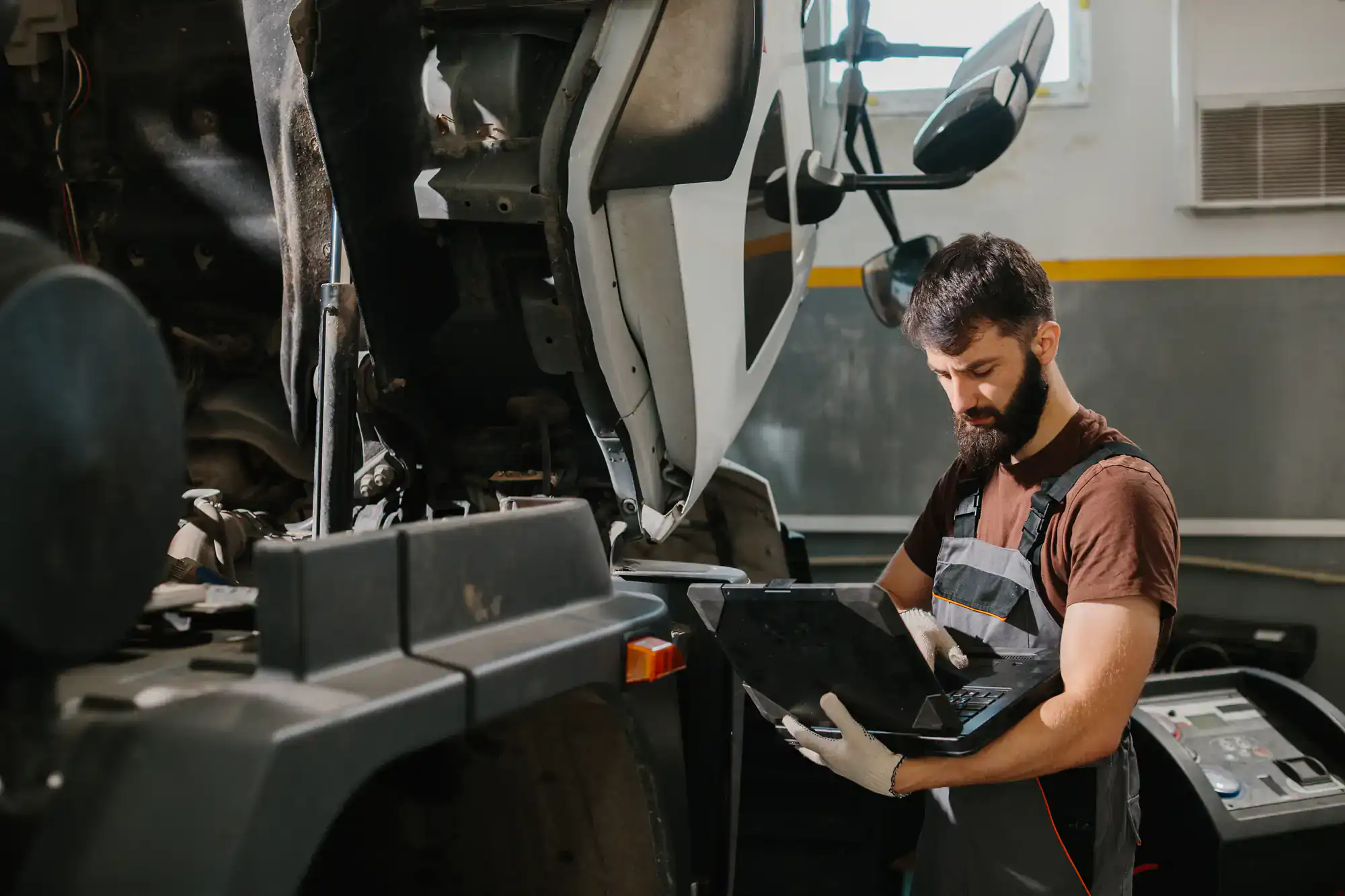
Mobile smog testing flips the process. We come to you—your yard, your job site, wherever your truck is parked. We bring CARB-approved OBD testing equipment, perform the scan on-site, and submit results electronically to the CTC-VIS database before we leave. For 2013 and newer diesel trucks, this is a straightforward process. We connect to your engine’s diagnostic port, download the OBD data (usually takes about 15 minutes), verify everything meets CARB standards, and upload the results.
After-hours and emergency availability depends on the provider. Some mobile testers operate evenings and weekends as standard practice. Others offer emergency response for critical deadlines but charge a premium for it. The key is direct contact—being able to reach the person who’ll be doing your testing, not a call center that takes messages.
When you’re looking for 24/7 emissions testing, ask specific questions. Can we come to your location today? Tonight? This weekend? What’s our turnaround time from the moment we arrive to when results hit the CARB database? Do we have availability to test multiple trucks if you’re running a small fleet? And what happens if your truck doesn’t pass—do we offer guidance on what needs repair, or are you on your own to figure it out?
The best providers in Los Angeles County, CA will give you straight answers. We’ll tell you if we can meet your deadline or if you’re cutting it too close. We understand that a failed test with no time to retest is worse than knowing upfront you need to push for an extension or deal with the registration hold while you make repairs.
There’s a difference between same day service and emergency service, even though they sound similar. Same day emissions testing usually means you call in the morning, we fit you into our route that afternoon or evening, and you’re done before the day ends. It’s responsive, but it’s still somewhat planned.
Emergency testing is when you call at 4 PM on a Friday and need results uploaded before the weekend because your registration expires Monday. Or when you get an NST letter and realize you’ve already burned through 25 of your 30 days. That’s a different level of urgency, and not every mobile provider handles it.
The trade-off is usually cost and availability. Scheduled testing during normal hours costs less because we can plan our route efficiently, hitting multiple customers in one area. Emergency after-hours calls mean we’re making a special trip just for you, often outside our normal service area or outside our normal hours. Expect to pay more, but also expect faster response and more flexibility.
The consequences start immediately. California DMV automatically places a registration hold on vehicles that aren’t Clean Truck Check compliant. That hold prevents you from renewing your registration. No renewal means no current tags, which means you’re technically not legal to operate on public roads.
You can’t just pay the hold and move on. The hold stays in place until you’re compliant. That means registering your truck in the CTC-VIS system if you haven’t already, paying the annual compliance fee (currently $32.13 per vehicle for 2026), and submitting a passing emissions test. Once CARB receives your passing test results, they update the CTC-VIS database, and DMV can see you’re compliant. The hold gets lifted, and you can complete your registration renewal. The whole process takes a few business days minimum, longer if there are issues with your test results or if your truck fails and needs repairs.
While the hold is active, you’re stuck. If you get pulled over, you’re looking at citations for expired registration. If you’re trying to enter a port or railyard, compliance checks at the gate will flag you and deny entry. Some freight brokers and shippers are starting to verify Clean Truck Check compliance before booking loads. Non-compliance doesn’t just cost you in fines—it costs you work.
CARB can also issue violations with penalties up to $10,000 per vehicle per day for non-compliance. That’s not a scare tactic—it’s the actual penalty structure under California’s Clean Truck Check regulation. For a small fleet, a week of non-compliance across three trucks could theoretically hit $210,000 in fines. Most operators won’t see penalties that extreme, but the risk is real, especially if you’re flagged during a roadside inspection or if you’ve been non-compliant for an extended period.
The financial hit extends beyond fines. Every day your truck sits idle because you can’t legally operate it is a day you’re not earning. If your truck generates $500, $1,000, or more per day in revenue, a registration hold that lasts a week while you scramble to get compliant costs you thousands in lost income on top of whatever penalties or fees you’re paying.
Los Angeles County, CA has mobile emissions testing providers, but they’re not all created equal. Some specialize in passenger vehicles and light-duty trucks. Others focus exclusively on heavy-duty diesel trucks over 14,000 lbs GVWR—the vehicles subject to Clean Truck Check requirements.
When you’re searching for a provider, look for CARB credentialing. The tester needs to be officially credentialed by the California Air Resources Board to perform Clean Truck Check testing. They also need CARB-approved OBD testing equipment. Both of these are non-negotiable. If the tester isn’t credentialed or their equipment isn’t approved, the test results won’t be accepted by CARB, and you’ve wasted your time and money.
Ask about service area. Some mobile testers stick to specific parts of LA County. Others cover LA and Riverside counties, willing to travel long distances to reach customers. If you’re in a more remote area or if you need testing outside the typical service zones, confirm they’ll actually come to your location before you book.
Capacity matters if you’re running multiple trucks. A provider who can handle 15 to 40 inspections per day can test your whole fleet in one visit instead of making you schedule trucks individually over several days or weeks. That’s especially valuable when you’re dealing with multiple compliance deadlines hitting around the same time.
Response time is the other critical factor. Can we get to you today? Tonight? Tomorrow morning? If your deadline is Monday and you’re calling Friday afternoon, you need a provider who can move fast. Look for owner-operated services or small operations where you’re talking directly to the person who’ll be doing your testing. We tend to be more flexible and responsive than larger companies where you’re dealing with schedulers and dispatchers who may or may not understand the urgency.
Finally, ask what happens after the test. Do we submit results electronically to CTC-VIS immediately, or is there a delay? How long before you can verify in the database that your truck is compliant? If you’re cutting it close on a deadline, every hour counts. You want a provider who uploads results the same day, ideally within minutes of completing the test.