Clean Truck Check Failed in California

A Failed Test Doesn't Have to Mean a Sidelined Truck

If your truck just failed the Clean Truck Check in Los Angeles or Riverside County, you need a clear path forward — not more confusion. We test 2013+ heavy-duty diesel trucks across both counties and help owners understand exactly what happened and what comes next.
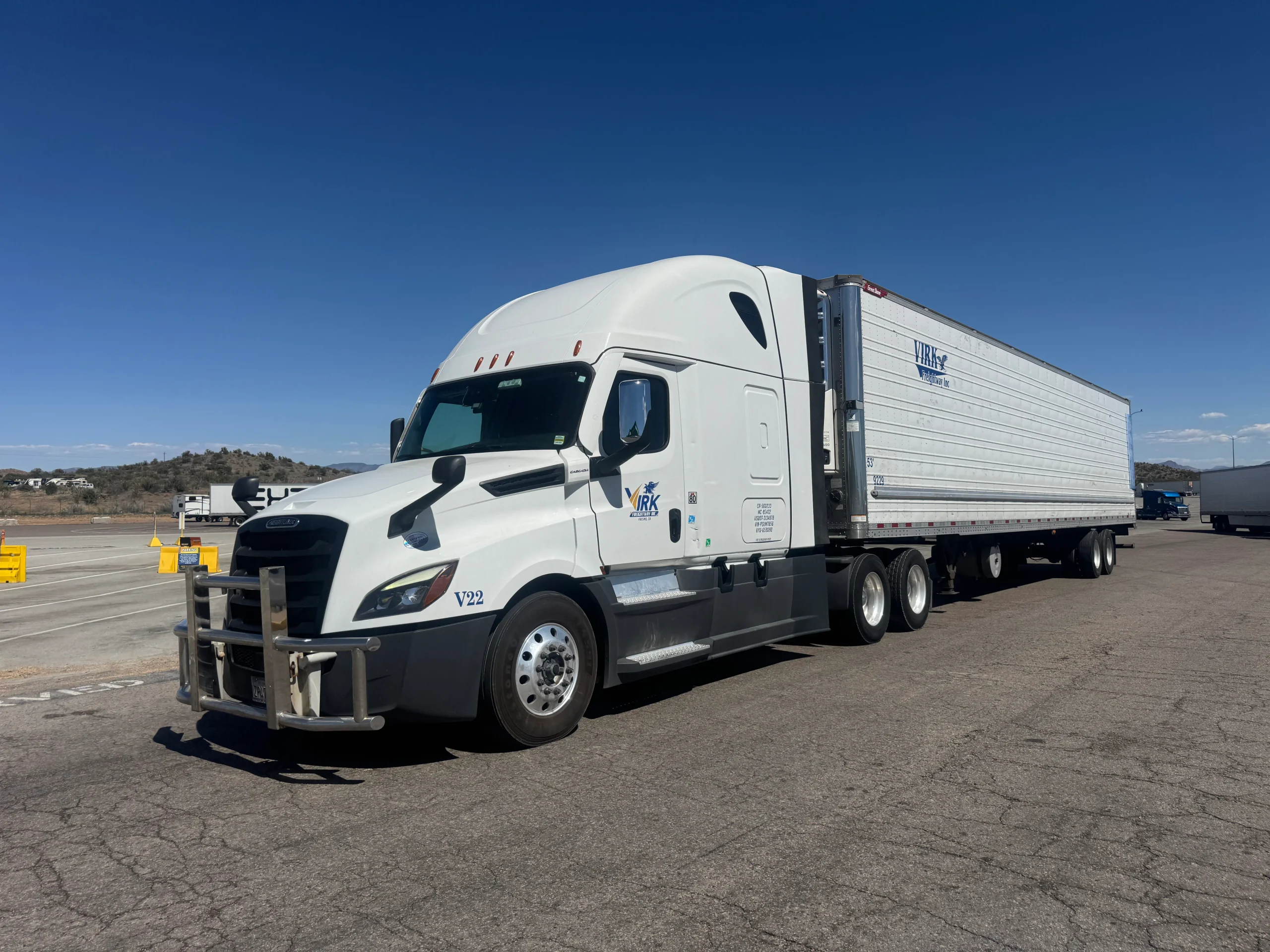
A white semi-truck with a long trailer is parked on a paved lot under a clear blue sky, with hills and other vehicles visible in the background—ideal for a Clean Truck Check in Los Angeles & Riverside County, CA.

CARB-Credentialed Testers Only

Our credentials are publicly verifiable in CARB’s database before you ever call us — no guessing whether your test will count.

Direct CTC-VIS Submission

Results go straight into CARB’s system the same day. DMV holds typically lift within one to three business days after a passing test.

Testing Only — No Repair Upsells

We don’t repair trucks. That means our failure reports are honest — we have nothing to gain by overstating the problem.

Clean Truck Check Fail Reasons Explained

What a Failed Test Actually Tells You

A failed Clean Truck Check result means your truck’s OBD system flagged an active issue — a Diagnostic Trouble Code, a Permanent DTC, or a lit Malfunction Indicator Light tied to your emissions systems. The most common culprits are problems with the diesel particulate filter, the selective catalytic reduction system, or the EGR valve. These aren’t random failures. They’re specific, traceable faults that point to a specific repair. What the failure result gives you is a roadmap. The question is whether the report you received is detailed enough to actually use. A vague result — “your truck failed” — sends you to a diesel shop with nothing to go on. A specific result, with the exact codes and which system triggered them, gets you repaired and back on the road faster. That’s the difference between a compliance problem and a compliance crisis.

Check Out Our Reviews!

All Smog Motors

Need a quick estimate?

Stay compliant and keep your trucks on the road with All Smog Motors. We specialize in CARB emissions compliance checks for heavy-duty trucks, making the process simple, fast, and stress-free. Whether you’re up against a registration deadline or received a notice to test, our certified team will handle your inspection accurately and efficiently so you can avoid penalties and costly downtime. Fill out the form below to schedule your compliance check today and keep your fleet moving without interruption.

Get a free quote

After a Clean Truck Check Failure

What You Get From a Test That Actually Explains Itself

When you know exactly why your truck failed, the repair is faster, cheaper, and the retest goes smoothly — every time.

You’ll know exactly which system failed — DPF, SCR, or EGR — so your diesel shop isn’t guessing when you bring it in.
Your results submit directly to CARB’s CTC-VIS database the same day, so your compliance record updates without any paperwork on your end.
You won’t waste money on parts or repairs that weren’t the actual problem — the specific fault codes tell the whole story.
Once you pass the retest, the DMV registration hold typically lifts within one to three business days — your truck gets back to work.
If you’re still inside the 90-day early test window before your deadline, a failure now gives you time to repair and retest before the hold ever kicks in.
Fleet operators get all trucks tested on-site in one visit, with results submitted for every vehicle — no trips to a fixed station, no disruption to dispatch.

OBD Monitors Not Ready

"Not Ready" Is Not the Same as Failed

This is one of the most common points of confusion we see, and it matters — because the two results have completely different causes and completely different solutions. A “Failed” result means your OBD system detected an active fault. Something is wrong, and the system knows it. A “Not Ready” result means your OBD system hasn’t finished running its self-diagnostic cycle yet. It doesn’t mean something is broken. It means the truck hasn’t completed enough warm-up cycles, driven enough miles, or logged enough engine run time since the last time codes were cleared — or since a battery was disconnected. CARB’s own guidance for a “Not Ready” result is straightforward: continue operating the vehicle under normal business conditions for a few days, then retest. That’s it. Here’s where owners make it worse: they get a “Not Ready” result, assume something is wrong, and clear the codes to try to reset things. Clearing codes resets the entire OBD readiness cycle back to zero. The truck will fail again immediately — this time for the same reason. Every code clear restarts the process. If your truck came back “Not Ready,” do not touch the codes. Drive it normally and come back.

Repair Then Retest Diesel Truck California

The Path Forward After a Failure Is Straightforward

We test. We don’t repair. That’s important to understand — not as a limitation, but as a feature of how this works. When your truck fails, we give you a detailed report: the exact DTCs that triggered the failure, which emissions system is involved, and the readiness monitor status. You take that report to a qualified diesel shop — one that knows DPF, SCR, and EGR systems. They repair the specific fault. Then you call us, we come back out, and we retest. That’s the full sequence. And the clock matters throughout. Under California Health and Safety Code Section 42402, civil penalties for non-compliance can reach $10,000 per vehicle, per day. A truck sitting out of compliance for a week represents real financial exposure — the fines don’t pause while repairs are underway. Speed through the repair and retest process isn’t optional. It’s the difference between a manageable situation and an expensive one.

Frequently Asked Questions

What actually happens to my truck after it fails the Clean Truck Check?
The immediate consequence depends on where you are in your compliance window. If you failed before your deadline, you still have time to repair and retest — that’s exactly what the 90-day early test window is designed for. CARB allows passing tests to be submitted up to 90 days before your compliance deadline, which means a failure early in that window is a manageable repair situation, not a crisis. If you’ve already missed your deadline, the California DMV will place a registration hold on your vehicle — you won’t be able to renew until you pass. Beyond the hold, civil penalties under California Health and Safety Code Section 42402 can reach $10,000 per vehicle, per day. The faster you move through the repair and retest process, the less exposure you carry.
No, and this distinction matters more than most people realize. A “Not Ready” result means your truck’s OBD system hasn’t completed its self-diagnostic cycle — not that it detected a fault. This typically happens after codes have been cleared, a battery has been disconnected, or the truck simply hasn’t logged enough drive time since a recent reset. CARB’s guidance is to continue operating the truck normally for a few days and then retest. The most important thing to avoid is clearing the codes again — that resets the entire readiness cycle back to zero and guarantees another “Not Ready” result. Drive the truck. Let the monitors complete. Then come back.
There’s no fixed repair window built into the program — but the compliance deadline is what governs your timeline. If you failed within your 90-day early test window, you have until your actual deadline to repair and retest before a DMV hold kicks in. If you received a Notice to Submit to Testing, you have 30 calendar days from the date of that notice to submit a passing result. In Los Angeles and Riverside County specifically, enforcement pressure is real. CARB deploys roadside screening sensors along major freight corridors including SR-60, I-10, and I-710, and CHP actively conducts roadside inspections on commercial vehicles throughout both counties. Don’t treat the deadline as flexible.
No — and this is one of the most common mistakes we see. Clearing your codes after a failure might seem like it resets things in your favor, but what it actually does is reset the OBD readiness cycle to zero. Your truck will then come back as “Not Ready” at the retest, because the system hasn’t had time to complete its self-diagnostic monitors. To pass, your truck needs to meet specific OBD readiness criteria: no active DTCs or Permanent DTCs, and either at least five warm-up cycles since codes were cleared, 200 miles driven, or 400 minutes of engine run time. Clearing codes restarts that entire clock. Leave the codes alone, get the fault repaired by a qualified diesel shop, and then retest.
The three systems that generate the most failures are the diesel particulate filter, the selective catalytic reduction system, and the EGR valve. A DPF fault often shows up when the filter is clogged, damaged, or has been tampered with. SCR failures are frequently tied to issues with the DEF system — contaminated diesel exhaust fluid, a faulty dosing injector, or a malfunctioning NOx sensor. EGR faults usually involve the valve itself sticking or failing to operate within spec. In Riverside County’s desert operating environment — particularly in areas like the Coachella Valley where summer temperatures regularly exceed 110°F — heat-related wear on these components is a frequent contributor to failures. Any of these faults will trigger an active DTC, light the Malfunction Indicator Light, and result in a failed OBD test.
We don’t repair trucks — and that’s intentional. Our entire focus is OBD emissions compliance testing for 2013 and newer heavy-duty diesel trucks over 14,000 pounds GVWR across Los Angeles and Riverside County. When your truck fails, we give you a detailed report with the exact fault codes and the specific systems involved. You take that to a diesel shop equipped to handle DPF, SCR, and EGR repairs. Once the repair is done, you call us back and we come out to retest — at your yard, job site, or wherever the truck is located. The fact that we don’t repair means our failure reports have no agenda. We’re not looking for additional work. We tell you exactly what we found, and you take it from there.