Failed a Clean Truck Check in California? Discover the repair process, retest requirements, and how to minimize downtime when your diesel truck doesn't pass carb emissions testing.
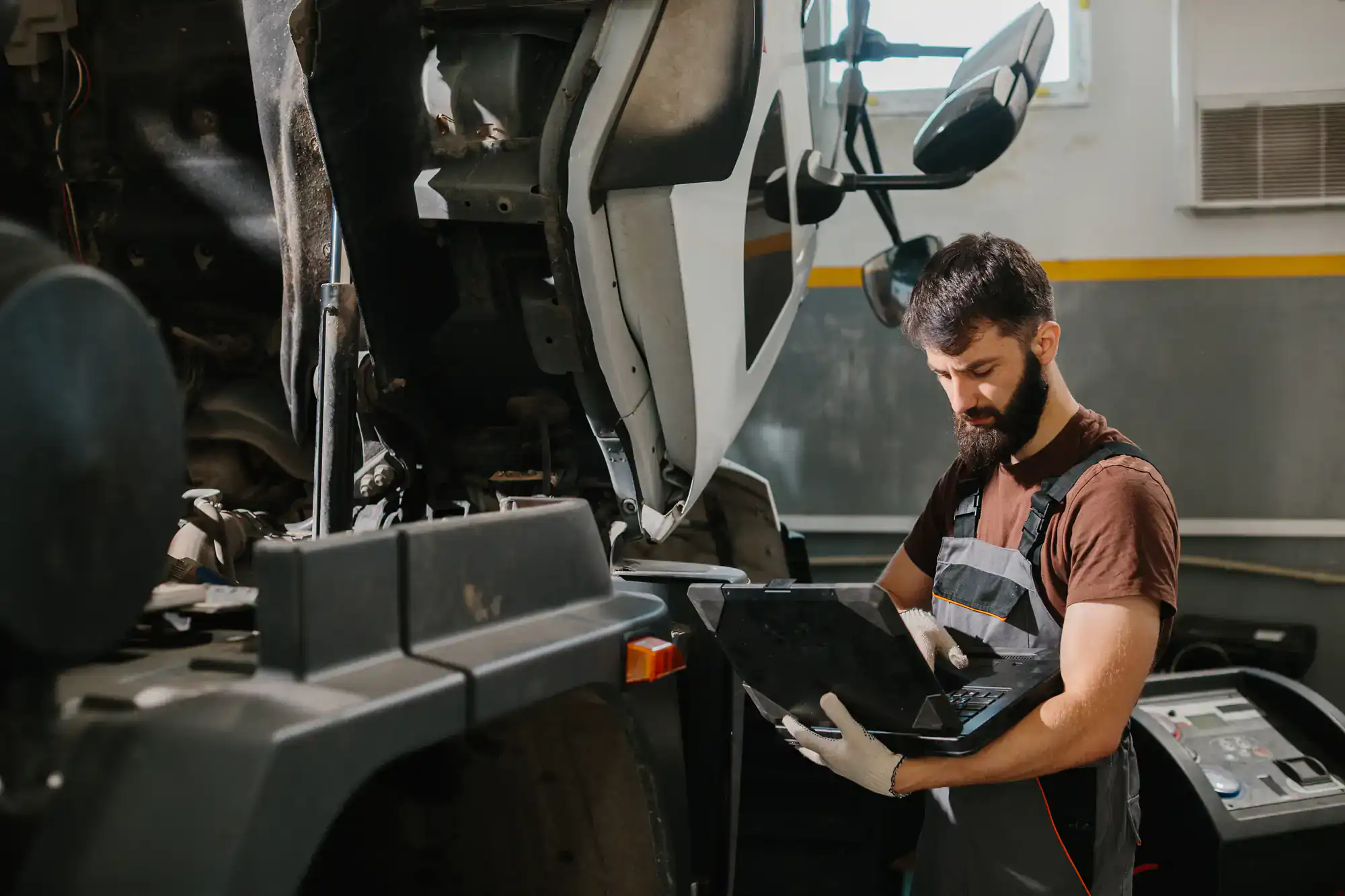
Your truck can fail a Clean Truck Check for several reasons, and understanding why helps you fix the problem faster. carb testing looks at different components depending on your truck’s age and engine type.
For trucks with 2013 or newer diesel engines, the test involves an OBD scan that checks your engine’s onboard diagnostics data. If the system detects fault codes, emissions control issues, or a check engine light, you’ll fail. For older trucks with 2012 and earlier diesel engines, the test includes a smoke opacity test and a visual inspection of emissions control equipment like your DPF, EGR valve, and DEF system.
The most common failure reasons come down to a few key issues. A clogged diesel particulate filter is one of the biggest culprits—when your DPF can’t regenerate properly, it restricts exhaust flow and causes excessive smoke. EGR valve problems, low DEF fluid, faulty sensors, and SCR system malfunctions can all trigger fault codes that lead to a failed test. Any visible evidence of tampering with emissions systems is an automatic failure.
The moment your truck fails a Clean Truck Check, the clock starts ticking. Your carb-credentialed tester will give you documentation showing why your truck failed and what needs to be addressed. This isn’t just paperwork—it’s your roadmap for getting compliant.
You can’t legally operate your truck on California roads until you fix the emissions problems and pass a retest. If your truck is due for registration renewal, the DMV will place a hold on your registration until you submit a passing test. This means no new tags, no legal operation, and no hauling loads until you’re compliant.
If you received a Notice to Submit to Testing from carb because your truck was flagged by roadside emissions monitoring devices, you have 30 calendar days from receipt to submit a passing test. Miss that deadline and you’re looking at fines, potential citations, and enforcement action that can include your truck being pulled out of service during roadside inspections.
The good news is that carb allows you to submit passing test results up to 90 days before your compliance deadline. This window exists specifically to give you time for repairs. If your truck’s compliance deadline is coming up in two months and you test early, you have breathing room to address any issues without the pressure of an immediate deadline.
Here’s what you need to do right away. First, review the failure documentation carefully. Understand which specific systems failed and what fault codes were detected. Second, find a qualified repair shop that specializes in diesel emissions systems. Not every mechanic has the expertise to properly diagnose and fix emissions problems on diesel trucks. Third, get a realistic estimate for both the repair timeline and cost. You need to know if you’re looking at a two-day fix or a two-week ordeal.
Keep in mind that your truck needs to be actually fixed, not just temporarily patched. carb’s testing is thorough, and if you try to clear codes without addressing the underlying problem, you’ll fail the retest. Some truck owners have learned this the hard way—spending money on a retest only to fail again because the root cause wasn’t properly repaired.
Let’s get specific about what actually breaks and causes failures. Understanding these common problems helps you recognize warning signs before test day and gives you realistic expectations about repair costs.
DPF issues are probably the most frequent cause of Clean Truck Check failures. Your diesel particulate filter captures soot from exhaust gases, but when it gets clogged, it can’t do its job. You’ll notice frequent regeneration cycles, reduced power, poor fuel economy, or even a truck that goes into limp mode. A clogged DPF can sometimes be cleaned, but if it’s damaged or beyond its service life, you’re looking at a replacement that can cost anywhere from $2,000 to $8,000 depending on your truck model.
SCR system failures are another major issue. Your selective catalytic reduction system uses diesel exhaust fluid to break down harmful nitrogen oxides. When the SCR catalyst fails, DEF injectors clog, or sensors malfunction, your truck will throw fault codes and fail testing. SCR repairs can easily top $10,000, especially if you need to replace the catalyst itself. Low DEF levels or poor-quality DEF can also cause system failures, which is why it’s critical to use proper fluid and keep your tank filled.
EGR valve and cooler problems show up frequently in older trucks. The exhaust gas recirculation system recirculates exhaust gases to reduce emissions, but EGR coolers can crack or rupture, and valves can stick or fail. When this happens, you’ll see increased emissions, rough idling, and reduced performance. EGR repairs vary widely in cost but often run several thousand dollars depending on what needs to be replaced.
Sensor failures might seem minor, but they’ll fail you just as fast as a major component issue. Oxygen sensors, NOx sensors, temperature sensors, and pressure sensors all feed data to your truck’s computer. When one fails or gives incorrect readings, your OBD system will flag it and you won’t pass. The good news is that sensor replacements are usually less expensive than major component repairs, often in the few hundred dollar range.
One thing that catches some truck owners off guard is the “Not Ready” result. If your truck’s OBD system was recently cleared—maybe because you had repairs done or your battery was disconnected—the system hasn’t had enough drive time to complete its diagnostic checks. You need at least five warm-up cycles before the system is ready for testing. A warm-up cycle means driving your truck so the engine coolant temperature rises by at least 40 degrees Fahrenheit and reaches at least 140 degrees. This typically takes about a week of normal driving.
Getting your truck fixed and retested properly is about more than just throwing parts at the problem. You need the right diagnosis, quality repairs, and enough drive time before retesting.
Start by finding a repair shop that actually knows diesel emissions systems. This isn’t the time to go with the cheapest option or a general mechanic who doesn’t specialize in heavy-duty trucks. Look for shops with experience in DPF cleaning and replacement, SCR system repairs, and EGR service. In Los Angeles County and Riverside County, there are specialists who understand carb requirements and can properly diagnose what’s causing your emissions failure.
Make sure the repairs address the actual problem, not just the symptoms. If your DPF is clogged, simply forcing a regeneration might get you through one test, but if the underlying cause is bad injectors or excessive oil consumption, you’ll be back in the same situation soon. Quality repairs cost more upfront but save you money and downtime in the long run.
Once repairs are complete, you can’t just immediately retest. Your truck needs time to run through its diagnostic cycles and prove that everything is working correctly.
If your OBD system was cleared during repairs—which often happens when fault codes are reset or components are replaced—you need to drive your truck for at least five warm-up cycles before retesting. This gives the computer time to run all its monitors and verify that emissions systems are functioning properly. Try to retest too soon and you’ll get a “Not Ready” result, which means you wasted time and possibly money on a test that couldn’t be completed.
Your retest must be performed by a carb-credentialed tester. You can search for credentialed testers in your area through carb’s online database. Some testers offer mobile service, which can save you time by coming to your location instead of requiring you to drive to a testing facility.
The tester will perform the same type of test that your truck failed originally. For OBD-equipped trucks, that means another scan of your engine’s diagnostic data. For older trucks, you’ll go through another smoke opacity test and visual inspection. If everything checks out, the tester will submit your passing results directly to carb through the Clean Truck Check system.
You don’t need to submit the results yourself—your credentialed tester handles that. But you should verify that the passing test shows up in your CTC-VIS account. Log in and check your compliance status to make sure everything is properly recorded. This is especially important if you’re close to a compliance deadline or if you received a Notice to Submit to Testing.
If you fail the retest, you need to go back to the repair shop and figure out what wasn’t properly fixed. This is frustrating and expensive, which is why it’s so important to get quality repairs the first time. Some common retest failures happen because codes were cleared but the problem wasn’t actually repaired, or because aftermarket parts don’t meet carb standards.
Let’s talk about the financial reality of a failed Clean Truck Check. The costs go beyond just the repair bill—you’re also looking at lost revenue from downtime, retest fees, and potentially towing if your truck is severely disabled.
Emissions testing itself typically runs between a couple hundred to several hundred dollars depending on your truck type and where you go. That’s just for the test. When you add repairs, costs escalate quickly. A DPF replacement can set you back $2,000 to $8,000. SCR system repairs often exceed $10,000. Even “minor” repairs like sensor replacements, EGR valve service, or DEF system repairs can run $500 to $3,000.
Factor in the downtime and the real cost becomes clear. If your truck sits for three days while waiting for parts and repairs, that’s three days of lost revenue. For owner-operators hauling freight, that could mean $1,500 to $3,000 in missed loads. Fleet operators face the same math multiplied across multiple vehicles.
Then there are the potential fines and penalties. If you’re operating a non-compliant truck, you can face fines of $1,000 or more per day, per vehicle. carb enforcement is active and serious—they use roadside emissions monitoring devices and work with California Highway Patrol to identify and cite non-compliant trucks. Getting caught operating a failed truck can cost you more than the repairs would have.
Downtime averages 1.5 to 2.5 days per emissions-related incident, according to industry data. But that assumes you can get parts quickly and your repair shop has availability. In reality, if you need a major component like a DPF or SCR catalyst, you might be looking at a week or more depending on parts availability for your specific truck model.
The total cost of a single emissions failure can easily reach $15,000 to $20,000 when you add up repairs, labor, towing, testing, and lost revenue. For small fleet operators and owner-operators, that’s a significant hit that can wipe out a month’s profit or more.
Some truck owners qualify for financial assistance through California’s Consumer Assistance Program if they meet income requirements. The program can provide up to $1,450 for emissions-related repairs on newer vehicles. It’s worth checking eligibility if repair costs are putting a strain on your budget.