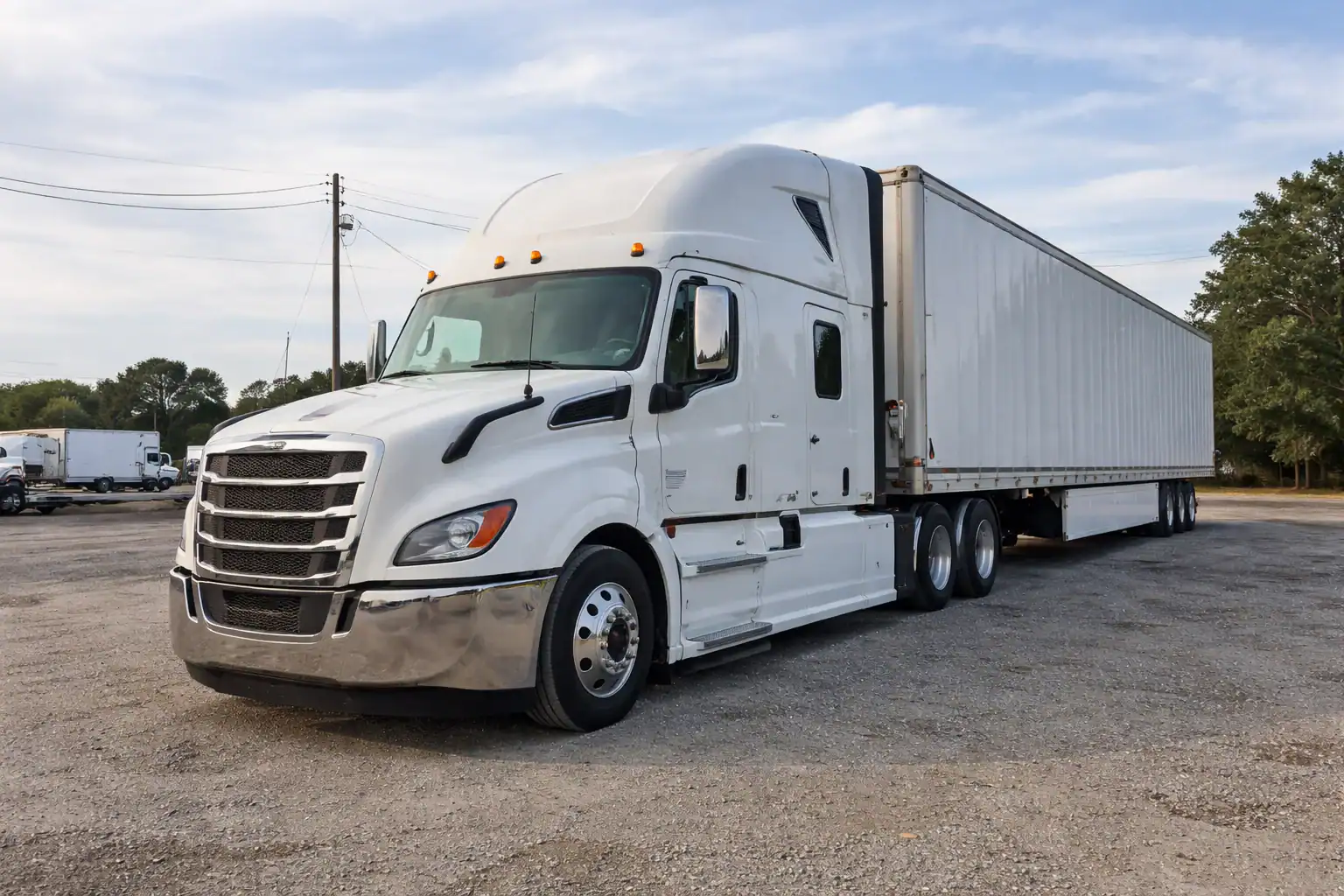
California's Clean Truck Check program requires fleets with 2013+ trucks over 14,000 lbs GVWR to undergo emissions testing twice yearly, increasing to quarterly in 2027.

Not every truck falls under Clean Truck Check requirements, and that matters. The regulation applies specifically to trucks that are model year 2013 or newer with a gross vehicle weight rating over 14,000 pounds. If your truck doesn’t meet both criteria, you’re not subject to this program.
This means older trucks, even heavy ones, follow different rules. And lighter trucks, even newer models, aren’t included either. The focus is on newer heavy-duty diesel vehicles because those are equipped with onboard diagnostic systems that can be tested electronically. Whether your trucks are registered in California or out of state doesn’t change anything. If they operate on California roads, they’re subject to the same testing and reporting requirements.
Testing frequency depends on the year and your truck’s equipment. Right now, in 2025, most fleets are dealing with semi-annual testing, which means twice per year. That changes in October 2027, when trucks with onboard diagnostic systems will need to test quarterly, or four times per year.
Your specific deadlines depend on how your trucks are registered. California-registered trucks follow their DMV registration renewal dates. If your registration expires in January, your testing deadlines fall in January and July. Out-of-state trucks and California-exempt plated vehicles follow a different system based on the last digit of the vehicle identification number. A truck with a VIN ending in 4, for example, has deadlines in February and August.
You’re allowed to test up to 90 days before your deadline, which gives you a window to handle repairs if something fails. But don’t test earlier than that 90-day mark. carb won’t accept results submitted too far in advance, and you’ll end up testing twice.
The annual compliance fee is $31.18 per vehicle in 2025, paid through the CTC-VIS system. That’s the only payment method carb accepts. Payments made anywhere else won’t count, and your trucks will show as non-compliant even if you’ve paid.
Digital reporting happens through the Clean Truck Check Vehicle Inspection System, or CTC-VIS. Every vehicle needs to be registered in that system. Fleet managers can download compliance certificates for individual trucks or print an affirmation of fleetwide compliance if every vehicle in the fleet is current. That fleetwide certificate is useful when working with brokers or freight contractors who need to verify compliance before hiring your trucks.
The inspection itself focuses on emissions control systems. For trucks with 2013 or newer diesel engines, that means an OBD scan using a carb-certified testing device. The tester is checking for active malfunction indicator light issues or emission-related fault codes. If your truck has any active codes, it won’t pass.
Testing must be performed by a carb-credentialed tester. You can use a certified testing facility, bring in a mobile tester to your yard, or use approved telematics solutions if your fleet already has that technology in place. Some companies train their own staff to become credentialed testers, which can simplify scheduling and reduce downtime.
Once a truck passes, the tester submits results directly to carb through the CTC-VIS portal. You’ll receive a compliance certificate, which needs to be kept with the vehicle. Drivers should have access to that certificate in case they’re stopped during a roadside inspection or need to enter a port or railyard.
If a truck fails, you have time to make repairs and retest before the deadline. The 90-day testing window exists specifically for this reason. Waiting until the last minute leaves no room for repairs, and missing a deadline triggers a registration hold with the DMV. Once that happens, the truck can’t be registered or legally operated in California until compliance is restored.
carb also uses roadside emissions monitoring devices and automated license plate readers to screen for high emitters. If your truck gets flagged, you’ll receive a Notice to Submit to Testing in the mail. That gives you 30 days to provide passing results from a credentialed tester. Ignoring the notice leads to fines and registration blocks, so it’s not something to put off.

When you’re managing a fleet, compliance isn’t about one truck. It’s about keeping track of different deadlines, different VINs, and different testing windows all at once. That’s where record keeping becomes critical.
The CTC-VIS system tracks deadlines for you and sends monthly email notifications for any vehicles with deadlines coming up in the next 90 days. But relying only on those emails isn’t enough. Fleet managers need their own internal tracking system, whether that’s a spreadsheet, fleet management software, or a calendar with alerts built in. You need to know which trucks are due, which have been tested, and which are approaching their deadline without a passing result on file.
carb doesn’t just want you to test your trucks. They want proof that you tested them, and they want that proof stored in a specific way. Every vehicle in your fleet needs to be reported in the CTC-VIS database within 30 days of acquisition. If you sell a truck or remove it from service, that needs to be updated within 30 days as well.
Compliance certificates need to be accessible. Drivers should have either a digital or printed copy in the truck at all times. Freight contractors and brokers are required to verify compliance before hiring your trucks, and they’ll ask for proof. If you can’t produce a current certificate, you lose the load.
For fleets, the affirmation of fleetwide compliance is a useful tool. Instead of providing individual certificates for every truck, you can show one document proving your entire fleet is compliant. That only works if every single vehicle is current, though. One truck out of compliance means you can’t use the fleetwide certificate.
Record retention matters too. Freight contractors and brokers are required to keep compliance records for at least five years. If carb requests those records during an audit or enforcement action, they need to be produced within 72 hours. That’s not much time, so having organized, accessible records isn’t optional.
Digital reporting makes this easier, but it also means you need to stay on top of updates. If a truck’s registration status changes, if you add or remove vehicles, or if a truck fails a test and needs repairs, all of that needs to be reflected in the CTC-VIS system. Outdated information can trigger enforcement actions even if your trucks are actually compliant.
Non-compliance has consequences that go beyond fines. The most immediate problem is a DMV registration hold. If your truck isn’t compliant by its deadline, the California DMV blocks registration renewal. That truck can’t legally operate in California until compliance is restored, which means it’s sitting idle while you scramble to get it tested and approved.
Fines are the other issue. carb can issue citations during roadside inspections or if a truck is flagged by emissions monitoring devices. Penalties vary depending on the violation, but they can reach $10,000 per vehicle per day for serious or repeated violations. For fleets, those numbers add up fast.
Shippers and brokers face penalties too. If they hire a non-compliant carrier, they can be fined up to $10,000 for each year that carrier was used. That creates pressure on fleet operators to stay current, because losing access to shippers means losing business.
Ports and railyards have their own enforcement. Non-compliant trucks can be denied entry, which is a problem if your business depends on moving freight in and out of those facilities. Some facilities require proof of compliance before allowing trucks through the gate, so drivers need to have their certificates ready.
The best way to avoid all of this is to treat compliance as part of routine maintenance. Schedule testing during your regular service intervals. Track deadlines the same way you track DOT inspections or registration renewals. Make sure drivers know where to find their compliance certificates and understand what to do if they’re stopped or flagged.
carb isn’t looking to catch you off guard. The system is designed to give you time and flexibility. The 90-day testing window, the monthly email reminders, the ability to test on-site or use mobile testers—all of that exists to make compliance manageable. But it only works if you’re proactive. Waiting until a truck fails or a deadline passes puts you in a reactive position, and that’s when penalties and downtime start piling up.