
Check Out Our Reviews!

Temple City sits right at the junction of the I-10, I-210, and I-605 three of the busiest commercial corridors in Southern California. If your truck runs those routes and it’s not current on its Clean Truck Check, you’re carrying real exposure every mile. CARB transmits non-compliant VINs to DMV nightly, and a registration hold doesn’t come with a warning call.
The San Gabriel Valley sits inside the South Coast Air Basin one of the most air-quality-regulated regions in the country. The mountains to the north trap emissions at ground level, and CARB enforcement in this region reflects that reality. Operators running the I-10 corridor out of Temple City are in one of the most scrutinized zones in the state. That’s not a reason to panic it’s a reason to stay ahead.
What changes when you’re current on your Clean Truck Check is simple: your truck stays on the road, your registration renews without a fight, and you’re not staring down fines that can reach $10,000 per vehicle per day. For owner-operators in Temple City who run their truck as their primary income, that’s not a compliance checkbox it’s the difference between working and not working.
We are a CARB-credentialed heavy-duty emissions testing company serving Los Angeles and Riverside Counties and that includes Temple City and the surrounding San Gabriel Valley. This is not a passenger-car smog shop that also handles trucks on the side. Clean Truck Check testing for 2013-and-newer heavy-duty vehicles over 14,000 lbs GVWR is the only thing we do.
That focus matters because the margin for error in this program is zero. An invalid test wrong equipment, uncredentialed tester leaves your truck non-compliant regardless of what you paid. We are publicly listed on CARB’s credentialed tester registry at arb.ca.gov. You can verify that before you ever call us. We use only OBD devices that hold CARB Executive Orders, and we submit results directly to CTC-VIS at the time of testing.
Temple City is a compact, residential city. There’s no industrial yard on the east end of Las Tunas Drive where you can drop a truck for testing. We built our model around that reality we come to you, wherever your truck is staged.
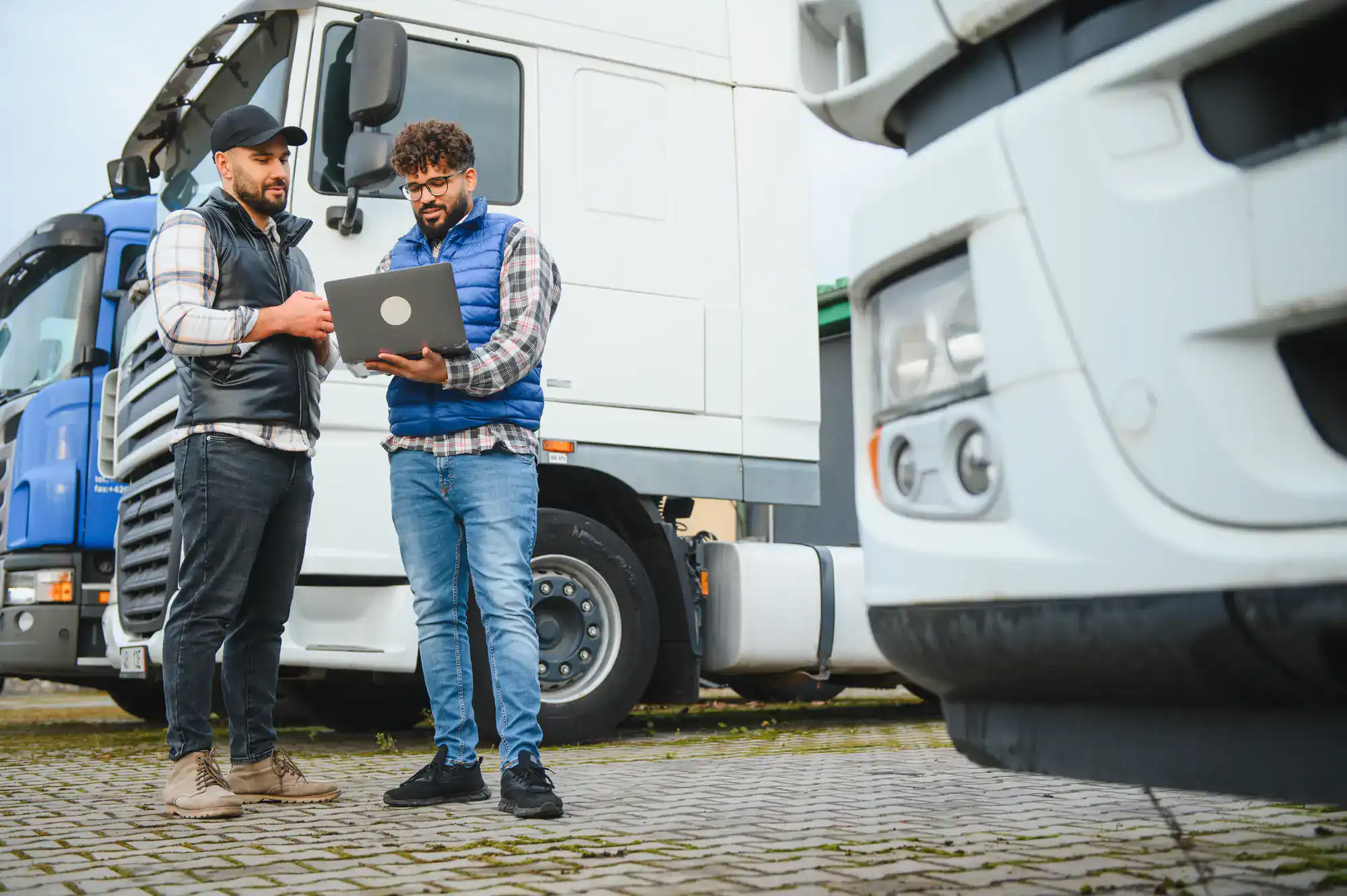
You schedule a time that works for your operation. We come to your truck whether it’s parked at your residence off Rosemead Boulevard, staged at a commercial lot near Las Tunas Drive, or sitting at a yard in adjacent El Monte. You don’t reposition the truck. You don’t drive it to a facility. It stays where it is.
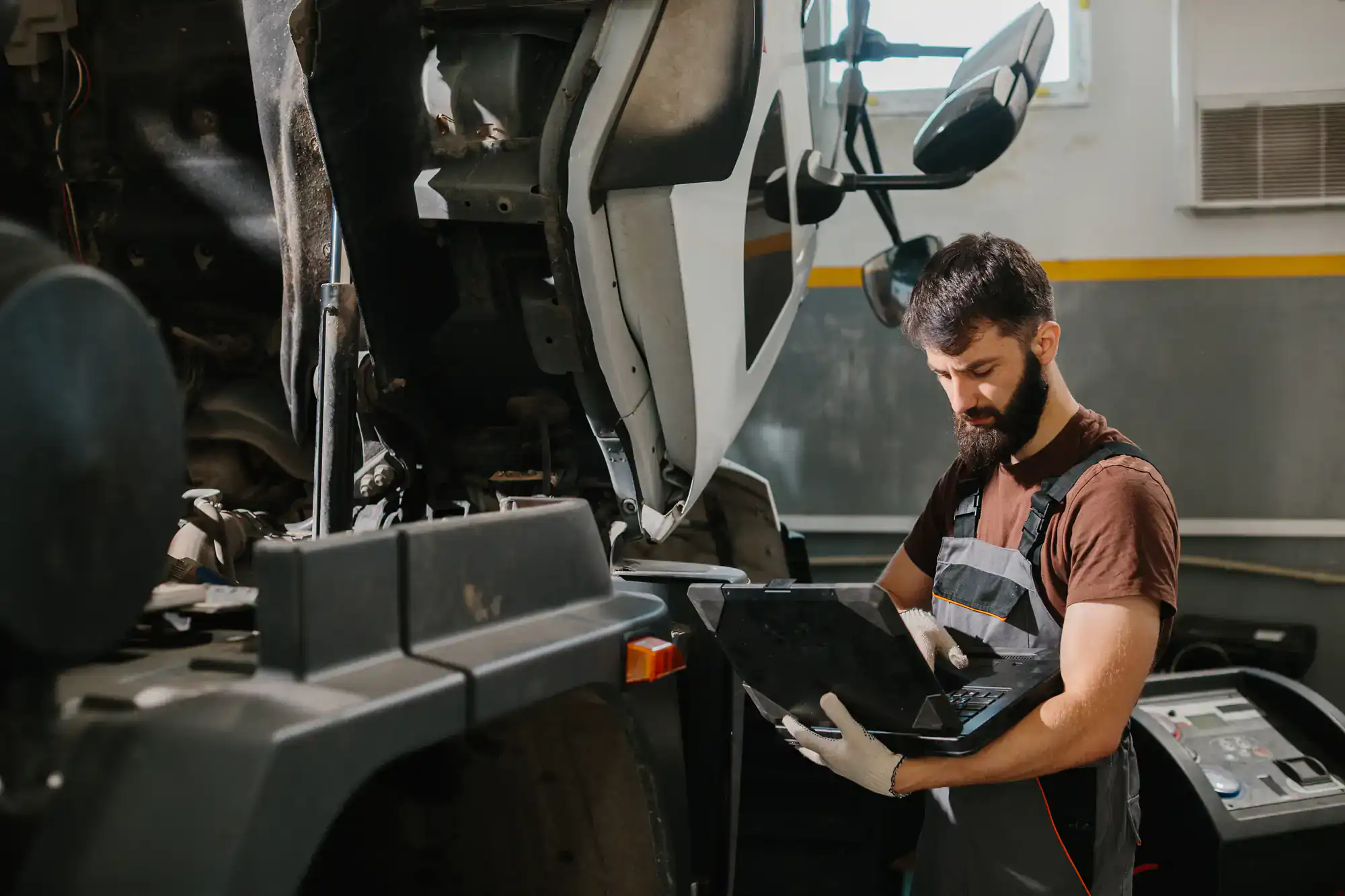
When we arrive, we connect our CARB-certified OBD device directly to your truck’s ECU and pull the diagnostic data the Clean Truck Check program requires. This applies to model year 2013 and newer diesel and alternative-fuel heavy-duty vehicles with a GVWR over 14,000 pounds if your truck doesn’t meet both of those criteria, this specific test doesn’t apply to you, and we’ll tell you that upfront. We don’t run tests that won’t count.
Once the test is complete, we submit the results electronically to CARB’s CTC-VIS database before we leave your location. You don’t log into a portal, you don’t upload anything, and you don’t follow up to confirm it went through. DMV records typically update within three to five business days after CARB receives a passing result. That’s the full process no extra steps left on your end.

Ready to get started?
The Clean Truck Check program requires two separate things: an annual compliance fee of $31.18 (CPI-indexed for 2025) paid through CARB’s CTC-VIS portal, and a passing OBD emissions test submitted by a CARB-credentialed tester using certified equipment. Paying the fee without completing the test leaves you non-compliant. This is the single most common mistake we see across Los Angeles County truck owners who paid the fee and assumed they were done, then hit a DMV registration wall.
Currently, OBD-equipped vehicles require testing twice per year. Starting October 1, 2027, that increases to four times per year. For Temple City-based owner-operators and small fleet managers already managing tight schedules along the I-10 and I-210 corridors, that shift is significant. Getting a reliable testing relationship in place now before the frequency doubles is the practical move.
If you’ve received a Notice to Submit to Testing from CARB, you have 30 calendar days to submit a passing result. If you’re approaching a registration renewal and want to get ahead of it, CARB allows test results to be submitted up to 90 days before your compliance deadline. We serve Temple City and all of Los Angeles County. If your truck is a 2013-or-newer heavy-duty vehicle over 14,000 lbs GVWR operating in California, this program applies to you and we can handle the test at your location.
If your truck is model year 2013 or newer and has a GVWR over 14,000 pounds, yes California’s Clean Truck Check program applies to you regardless of where in the state your truck is registered. That includes Temple City and all of Los Angeles County. The program covers diesel and alternative-fuel heavy-duty vehicles operating on California public roads, and registration location doesn’t create any exemption.
What matters is that both requirements are met: the annual $31.18 compliance fee paid through CTC-VIS, and a passing OBD emissions test submitted by a CARB-credentialed tester. Many Temple City truck owners have completed one without the other and ended up with a DMV registration hold as a result. If you’re not sure where your compliance stands, the fastest way to find out is to check your vehicle’s status directly in the CTC-VIS portal using your VIN or call us and we can help you work through it.
Not on its own. The $31.18 annual compliance fee and the OBD emissions test are two separate requirements under the Clean Truck Check program. Paying the fee registers your vehicle in the system, but it does not substitute for the actual emissions test. Both are required for full compliance, and CARB tracks them independently.
This is the most common compliance gap we encounter when working with truck owners across Los Angeles County. Someone pays the fee, assumes they’re covered, and then gets a DMV registration hold because no passing test result was ever submitted to CTC-VIS. CARB sends compliant VIN lists to DMV on a nightly basis, so if your test is missing, that gap shows up quickly. If you’ve paid the fee but haven’t had an OBD test done by a credentialed tester, your truck is not yet fully compliant and we can come to your Temple City location and take care of that.
The Clean Truck Check program applies specifically to heavy-duty vehicles that are model year 2013 or newer and carry a Gross Vehicle Weight Rating over 14,000 pounds. Both conditions must be true model year and GVWR. If your truck is a 2013-or-newer diesel or alternative-fuel vehicle that meets that weight threshold and operates on California public roads, it falls under this program. That applies whether the truck is California-registered or registered out of state.
Vehicles that don’t meet both criteria older trucks, lighter vehicles, passenger cars are not covered by Clean Truck Check and require different testing if they require any at all. We only perform Clean Truck Check OBD testing on qualifying heavy-duty vehicles. We won’t run a test that doesn’t apply to your truck, and we’ll tell you upfront if your vehicle falls outside the program’s scope. If you’re unsure whether your specific truck qualifies, give us the year and GVWR and we can confirm it in about thirty seconds.
Right now, OBD-equipped heavy-duty vehicles require a Clean Truck Check test twice per year semi-annually. That’s the current testing frequency for vehicles covered under the program in Los Angeles County and across California. Each test result needs to be submitted to CARB’s CTC-VIS database by a credentialed tester using certified OBD equipment.
Starting October 1, 2027, that frequency increases to quarterly four tests per year per vehicle. For owner-operators and small fleet managers running trucks along the I-10 or I-210 corridors out of the Temple City area, that’s a meaningful increase in scheduling and compliance management. The operators who handle that transition smoothest are the ones who already have a testing process in place before the change hits. You can also submit a test result up to 90 days before your compliance deadline, which gives you some flexibility to schedule on your terms rather than scrambling at the last minute.
A Notice to Submit to Testing means CARB has identified your vehicle as a potential high emitter and is requiring you to submit a passing OBD test result within 30 calendar days. That 30-day window starts from the date on the notice not from when you open it or when you call someone about it. Acting quickly matters here.
The process itself isn’t complicated, but it has to be done correctly. You need a CARB-credentialed tester using a CARB-certified OBD device to run the test and submit the results directly to CTC-VIS. An uncredentialed tester or uncertified equipment means the result won’t count, and you’ll still be non-compliant when the window closes. We are mobile and serve Temple City and all of Los Angeles County we can schedule quickly, come to your truck’s location, run the test, and submit the results to CTC-VIS the same visit. Don’t let the 30 days run out while you’re figuring out who to call.
Yes and that matters more in Temple City than it might in other parts of Los Angeles County. Temple City covers just four square miles and is almost entirely residential. There are no commercial truck testing facilities within the city, and no large industrial yards where you can drop a rig for service. For owner-operators who stage their truck at home or at a small commercial lot along Las Tunas Drive or Rosemead Boulevard, driving to a fixed testing location means taking the truck off the road, burning time, and losing revenue.
We are a fully mobile Clean Truck Check service. We come to your truck wherever it’s parked in Temple City or anywhere else in Los Angeles County. We bring CARB-certified OBD equipment, run the test on-site, and submit your results directly to CTC-VIS before we leave. You don’t move the truck, you don’t navigate a portal, and you don’t wonder if the submission went through. For a city built the way Temple City is, mobile testing isn’t a convenience it’s the only setup that actually makes sense.
Useful Links
Other Services we provide in Temple City