
Check Out Our Reviews!

Most truck owners in Santa Monica don’t think about Clean Truck Check until something stops them a DMV registration hold, a Notice to Submit to Testing showing up in the mail, or a fleet manager realizing a deadline passed. By that point, every day the truck sits is money out the door. In a city where the cost of living index sits nearly 58% above the national average, an out-of-service truck isn’t just an inconvenience. It’s a real financial hit.
The commercial vehicle environment here is dense and active. Trucks running deliveries to the Third Street Promenade, hauling materials to construction sites near the former Santa Monica Airport redevelopment zone, or servicing the hotels and restaurants along Ocean Avenue are all operating in a city that takes compliance seriously and CARB has the enforcement history here to prove it. The agency has actually settled an action against the City of Santa Monica’s own municipal diesel fleet for inspection violations. That’s not a distant regulatory warning. That’s documented, local, and on record.
Getting ahead of your testing window CARB allows you to submit a passing test up to 90 days before your deadline means you’re never scrambling. You keep the truck on the road, the registration current, and the operation running the way it should.
We do one thing: Clean Truck Check OBD testing for model year 2013 and newer heavy-duty vehicles with a GVWR over 14,000 pounds. Not passenger cars. Not older opacity-test trucks. Not general automotive service. Just the specific test that applies to your truck, performed with CARB-certified equipment, by a credentialed tester listed publicly on CARB’s official website.
That specialization matters more than it sounds. The OBD test has to be performed with a device that holds a CARB Executive Order. Results have to be submitted directly and electronically to the CTC-VIS database. A test done with the wrong equipment or submitted incorrectly leaves your truck non-compliant regardless of what the technician told you. We eliminate both of those failure points on every single job.
We serve Los Angeles County, including Santa Monica and the surrounding Westside communities of Venice, West Los Angeles, Brentwood, and Mar Vista. We know how commercial vehicles move through this city, and we know what it takes to get your compliance status updated before it becomes a problem.
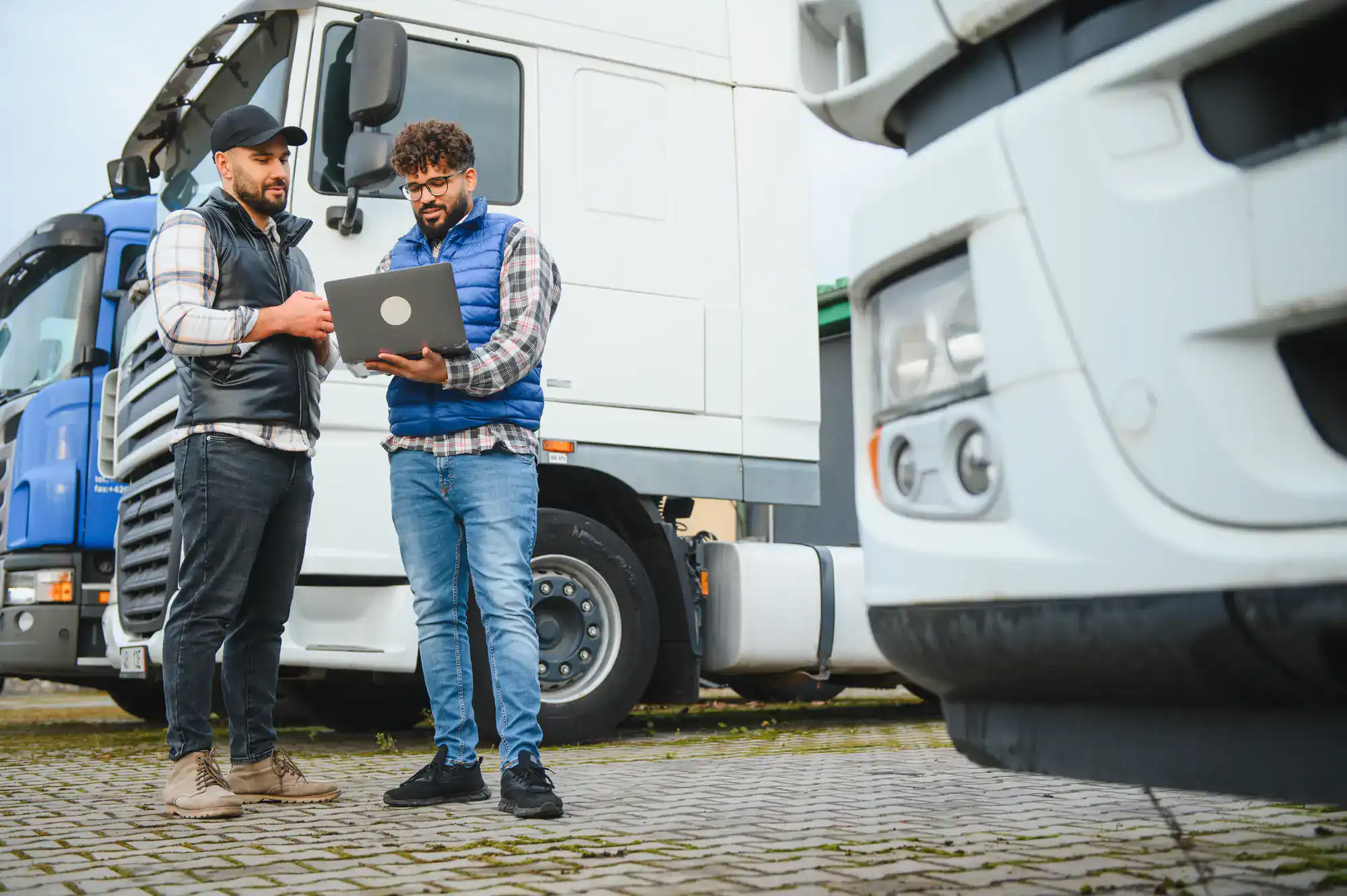
The process starts when you reach out. You share your truck’s information year, make, model, GVWR, and VIN and we confirm it qualifies for Clean Truck Check OBD testing. From there, you pick a time and location that works for you. A fleet yard off Stewart Street, a staging area near the Pico neighborhood, a job site along Cloverfield wherever the truck already is, that’s where the test happens. There’s no repositioning, no navigating Santa Monica’s secondary truck route system just to get to a testing facility, and no pulling a working vehicle off a job mid-day.
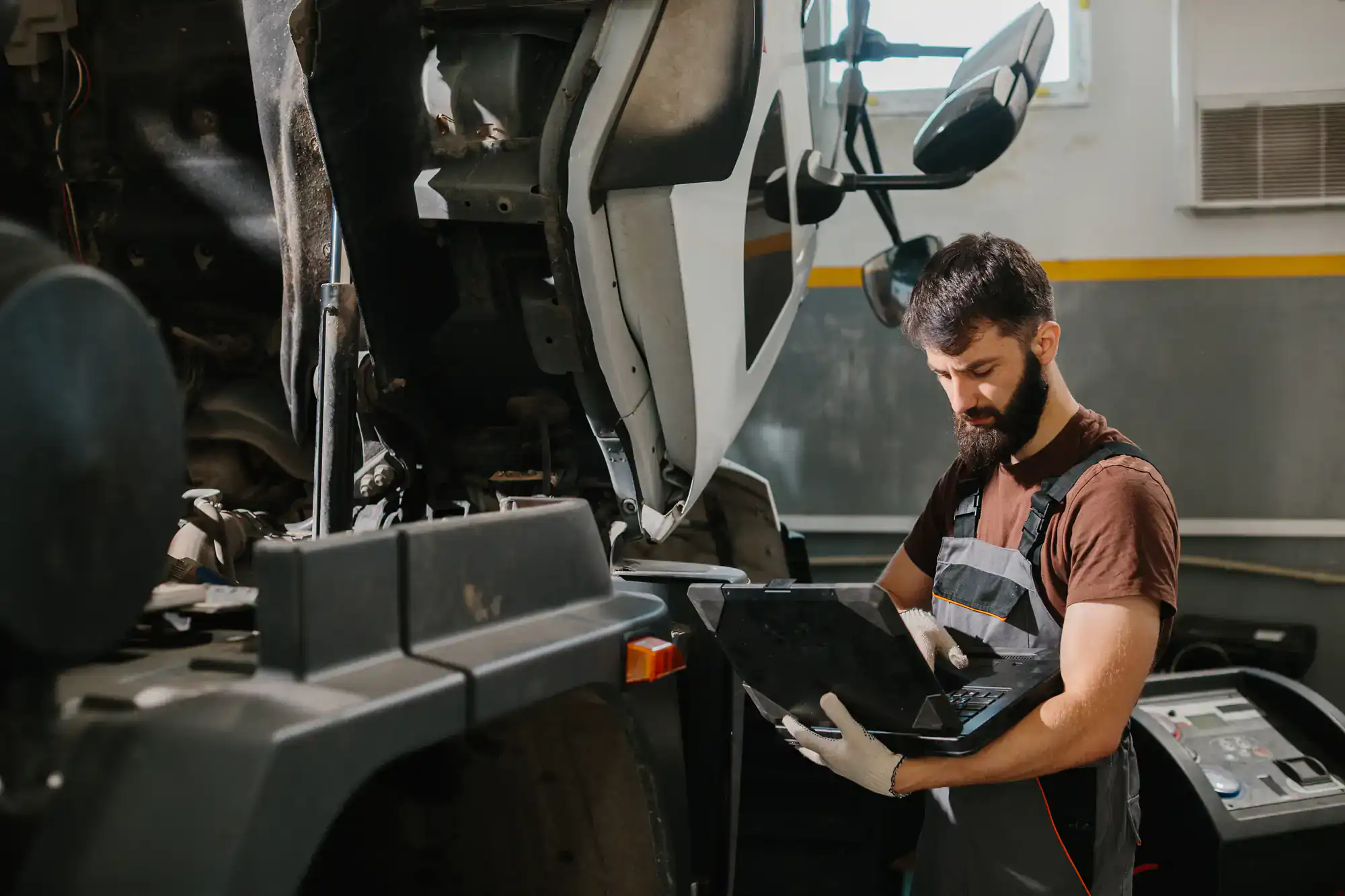
On-site, our technician connects a CARB-certified OBD device to your truck’s diagnostic port and pulls the data directly from the engine control module. The process itself is fast. What takes time at other shops troubleshooting unfamiliar equipment, figuring out the submission portal doesn’t happen here because this is the only type of test we perform.
After the test, results are submitted electronically and directly to CARB’s CTC-VIS system. You don’t have to log into a government portal, upload anything, or follow up to confirm it went through. CARB transmits updated compliance data to the DMV nightly, so your registration status reflects the passing result within a few business days. That’s the whole process start to finish, handled.

Ready to get started?
Clean Truck Check OBD testing through our service applies specifically to trucks that are model year 2013 or newer with a GVWR over 14,000 pounds. If your truck doesn’t meet both of those criteria, this isn’t the test for it and we’ll tell you that upfront rather than take your money for a service that doesn’t apply.
For trucks that do qualify, here’s what the service covers: on-site testing at your location anywhere in Los Angeles County, the OBD diagnostic download using a CARB Executive Order-certified device, and direct electronic submission of your results to the CTC-VIS database. Your compliance fee currently $31.18 per vehicle annually is paid separately through CARB’s system, but the testing process itself is fully handled. If your truck has an active DMV registration hold or you’ve received a Notice to Submit to Testing, that 30-day window is tight, and we can move quickly.
It’s also worth knowing that the current semi-annual testing requirement twice per year increases to quarterly testing starting October 1, 2027. If you’re running multiple qualifying trucks through Santa Monica’s construction corridors, production lots, or delivery routes, building a consistent testing relationship now makes that transition a lot smoother than scrambling to find a credentialed tester when the frequency doubles.
It depends on two things: the model year and the GVWR. Clean Truck Check OBD testing applies to vehicles that are model year 2013 or newer and have a Gross Vehicle Weight Rating over 14,000 pounds. If your truck meets both of those thresholds and operates on California public roads including within Santa Monica city limits you’re subject to the requirement. That applies whether you’re based in Santa Monica or just running regular routes through the city on Lincoln Boulevard, Olympic Boulevard, or PCH.
One thing that catches operators off guard: the requirement applies to out-of-state registered vehicles too. If your truck is registered in Nevada or Arizona but you’re regularly delivering to businesses in Santa Monica, CARB’s Clean Truck Check program still applies to you. The determining factor is operation on California public roads, not where the truck is registered.
A failed test means your truck’s on-board diagnostics flagged an active fault code or emissions-related issue that needs to be addressed before the vehicle can pass. You’ll need to have the underlying problem diagnosed and repaired, then return for a retest. The truck isn’t legally compliant until a passing result is submitted to the CTC-VIS database so the clock is still running on any compliance deadline you’re working against.
In practical terms, this is why using a credentialed specialist matters. We use CARB-certified OBD equipment, which means the test result is accurate and accepted by CARB. If you get a failed result from a non-certified device, you’ve spent time and money on a test that doesn’t count and you still need to get a valid one done. In Santa Monica, where downtime is expensive and parking logistics for a commercial vehicle are already a challenge, you don’t want to repeat the process unnecessarily.
A DMV registration hold tied to Clean Truck Check means CARB identified your vehicle as non-compliant and transmitted that status to the DMV through their nightly data feed. The hold won’t lift until a passing OBD test result is submitted to CARB’s CTC-VIS system and the update cycles through to DMV records which typically takes three to five business days after submission.
The fastest path forward is scheduling a mobile test with a CARB-credentialed tester who can come to your location in Santa Monica, perform the OBD download on-site, and submit results the same day. We handle the submission directly, so you’re not waiting on paperwork or portal access. Once the passing result is in the system, the hold clears on its own through CARB’s nightly DMV transmission. There’s no separate step you need to take at the DMV the data update handles it.
Right now, most OBD-equipped heavy-duty vehicles model year 2013 and newer, GVWR over 14,000 pounds are required to test twice per year, semi-annually, and pay an annual compliance fee of $31.18 per vehicle. That’s the current schedule as of 2025. Starting October 1, 2027, that frequency increases to four times per year quarterly testing for OBD-equipped vehicles.
For fleet operators running multiple trucks through Santa Monica’s delivery corridors or construction sites, quarterly testing on every qualifying vehicle is a significant compliance load. The operators who handle it smoothly are the ones who establish a consistent testing relationship before the frequency change hits not the ones who start looking for a credentialed tester in the fall of 2027. You can also test up to 90 days before your compliance deadline, which gives you real flexibility to schedule around your operation rather than around CARB’s calendar.
Yes, fully. In early 2026, the U.S. EPA issued a partial disapproval of California’s State Implementation Plan related to Clean Truck Check. Some truck owners took that to mean the program was paused, optional, or no longer being enforced. That’s not what happened. CARB has confirmed the Clean Truck Check program remains active and is being enforced statewide including in Los Angeles County and Santa Monica.
DMV registration holds are still being issued. Notices to Submit to Testing are still going out. The annual compliance fee is still required. And fines for non-compliance can reach up to $10,000 per vehicle per day. The EPA action was a federal administrative step in a separate regulatory process it did not suspend CARB’s authority to enforce the program under California law. If your truck qualifies and you haven’t tested, you’re non-compliant regardless of what you may have heard.
Yes that’s exactly how our service is designed to work. We’re fully mobile, which matters specifically in Santa Monica where pulling a qualifying commercial truck off a job site, navigating the city’s designated truck route system, and finding legal parking near a testing facility is a real logistical problem. The OBD test doesn’t require a shop, a lift, or any special facility. It requires access to the truck’s diagnostic port and a CARB-certified device both of which travel with our technician.
Whether your truck is staged near the former Santa Monica Airport redevelopment area, parked at a delivery yard off Stewart Street, or sitting at a construction site along Cloverfield Boulevard, we can come to that location, perform the test, and submit results to CTC-VIS the same day. You don’t lose hours repositioning the vehicle, and you don’t create a compliance problem by taking a working truck out of rotation during a busy job. The test fits around your schedule, not the other way around.
Useful Links
Other Services we provide in Santa Monica