
Check Out Our Reviews!

San Dimas sits at the junction of I-210, SR-210, and SR-57 three of the most actively monitored freight corridors in the South Coast Air Basin. CARB deployed its roadside emissions monitoring devices here first, before most of the state. If your truck gets flagged on one of those corridors, you have 30 days to produce a passing Clean Truck Check test. That clock doesn’t care about your delivery schedule.
For the operators running out of the Arrow Highway industrial corridor the warehouse tenants, the distribution fleets, the owner-operators who park at home in San Dimas and hit the road before sunrise downtime isn’t just inconvenient. It’s lost revenue. We bring mobile testing to your yard, your dock, or your driveway. Your truck doesn’t leave. Your schedule doesn’t change. You get a CARB-credentialed test, direct submission to CTC-VIS, and a compliant VIN in the database without burning half a day driving to a facility that may or may not have the right equipment.
The South Coast Air Basin has the strictest air quality standards in the country. That’s not a distant regulatory fact for San Dimas on a hot August afternoon in the San Gabriel Valley, you can see it. Clean Truck Check exists because of air quality conditions like the ones this region deals with every summer. Getting compliant isn’t just about avoiding fines. It’s the cost of operating a heavy-duty truck in California, and the faster you handle it, the less it disrupts your business.
We don’t test passenger cars. There’s no side menu of services, no generalist smog check operation with a heavy-duty scanner tucked in the corner. Our entire business is built around one thing: OBD emissions testing for 2013-and-newer trucks with a GVWR over 14,000 pounds the exact vehicles covered by California’s Clean Truck Check program. That focus matters when compliance is on the line.
Our CARB credentials are publicly verifiable at arb.ca.gov. Before you hire anyone for Clean Truck Check testing in San Dimas or anywhere in Los Angeles County, look them up. We’re on that list, using only CARB-certified OBD equipment with Executive Order approval. A test run with the wrong equipment doesn’t count your truck is still non-compliant, your DMV hold is still active, and your 30-day NST window is still running.
We know the San Dimas area the industrial parks off Arrow Highway, the fleets moving goods through the 210/57 interchange, the owner-operators who live in the Via Verde neighborhoods and run their trucks daily. This isn’t a market we’re new to. It’s the corridor we were built for.
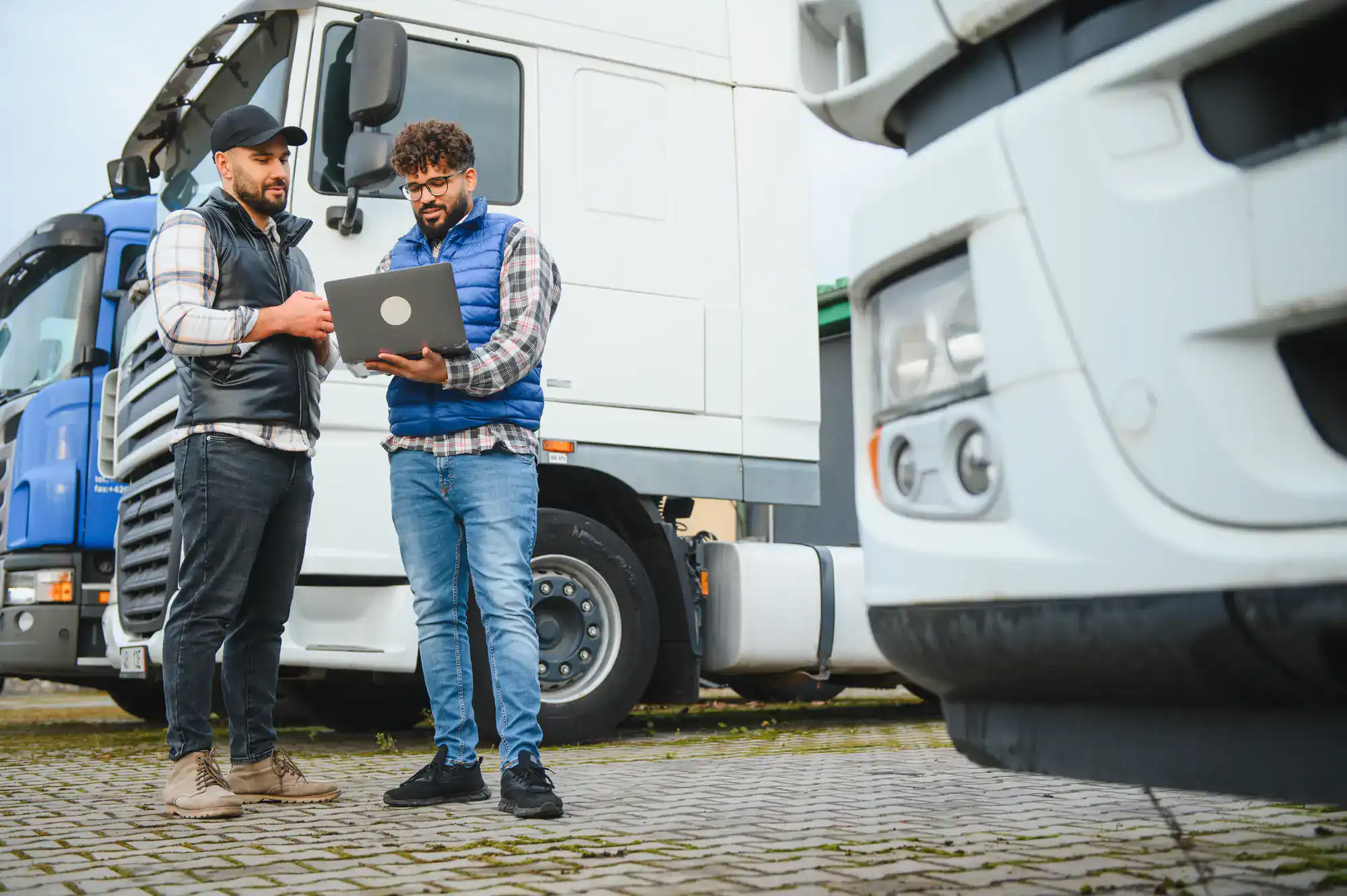
It starts with a call or a booking. You give us the truck details year, make, model, VIN, GVWR and confirm a location. For most San Dimas operators, that’s your yard off Arrow Highway, a business park near the 57, or a residential address if you park your rig at home. There’s no facility to drive to. We come to the truck.
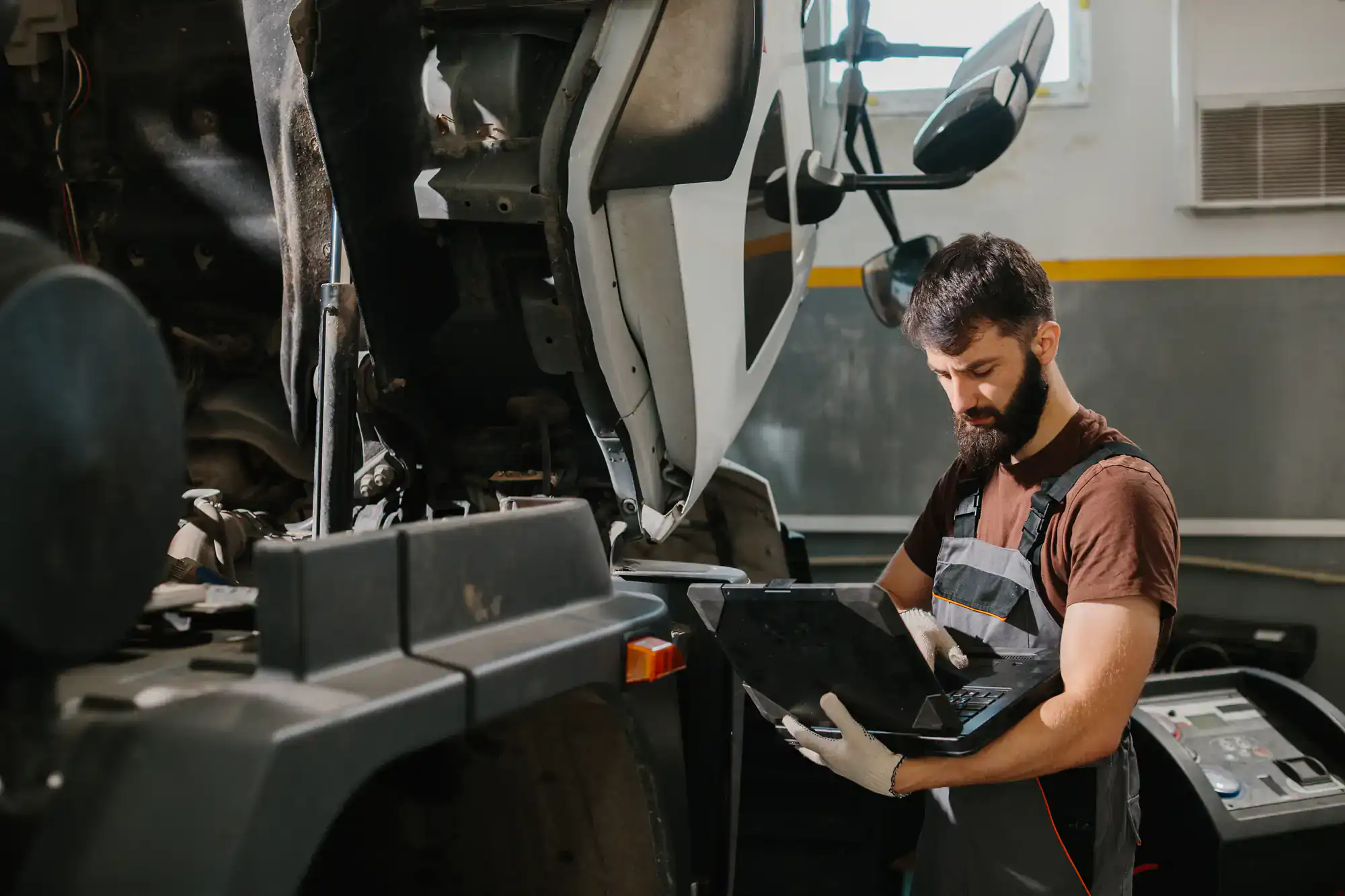
On-site, our CARB-certified OBD device connects directly to the truck’s ECU and downloads the diagnostic data. This isn’t a tailpipe sniffer test or a dynamometer run it’s a direct read of the emissions-related systems built into your 2013-or-newer truck. The process is straightforward and doesn’t require the truck to be taken out of service for more than the time it takes to run the scan. For fleets with multiple vehicles at a single San Dimas location, we can coordinate testing across the fleet in a single visit, which keeps scheduling simple and minimizes any disruption to your operation.
Once the test is complete, we submit results electronically and directly to CARB’s CTC-VIS portal. You don’t log into anything. You don’t mail a form. You don’t follow up to confirm submission. We handle it. CARB’s database updates, and that information transmits to DMV nightly. If you were dealing with a registration hold, the DMV record typically updates within 3 to 5 business days of a passing result. The process is clean, documented, and fully in CARB’s system exactly what compliance requires.
Ready to get started?
Clean Truck Check applies to diesel and alternative-fuel heavy-duty vehicles with a GVWR over 14,000 pounds, model year 2013 or newer, operating on California public roads. If your truck is older than 2013 or under that weight threshold, this program doesn’t apply to you. We only test vehicles that fall within that window so if you’re unsure whether your truck qualifies, that’s the first question to answer before booking anything.
For trucks that do qualify, the compliance picture has a few moving parts. There’s an annual fee paid through CARB’s CTC-VIS system ($31.18 per vehicle in 2025), and there’s a separate, mandatory emissions test currently required twice per year for most OBD-equipped vehicles. A lot of San Dimas operators have paid the annual fee and assumed they were done. They weren’t. The test is its own step, and it has to be performed by a CARB-credentialed tester using CARB-certified equipment. If that box isn’t checked, the VIN doesn’t show as compliant, and DMV won’t clear the registration hold.
One thing worth knowing if you’re planning ahead: starting October 1, 2027, quarterly testing kicks in for OBD-equipped vehicles four tests per year instead of two. For a fleet running ten trucks out of a San Dimas industrial park, that’s forty tests annually. Getting a reliable testing process in place now, before the frequency doubles, is a practical move. Out-of-state trucks that regularly operate on California roads including the I-210 and SR-57 corridors through San Dimas are also subject to these requirements. Registration state doesn’t create an exemption. Operating routes do.
If your truck is model year 2013 or newer and has a GVWR over 14,000 pounds, and it operates on California public roads, then yes Clean Truck Check applies to you. It doesn’t matter whether you’re running locally within the San Gabriel Valley, hauling goods through the 210/57 interchange, or making deliveries to Fairplex in Pomona. If the truck is on California roads, it’s in scope.
The program is enforced through CARB’s CTC-VIS database, which communicates directly with DMV. If your truck isn’t registered and tested in that system, DMV will flag it at registration renewal. CARB also issues Notices to Submit to Testing based on roadside monitoring data and the South Coast Air Basin, which includes San Dimas, was the first region where CARB deployed that monitoring infrastructure. Waiting to find out the hard way is a much more expensive option than just getting the test done.
Paying the annual compliance fee through CTC-VIS is one part of the requirement but it’s not the whole thing. The emissions test is a completely separate step, and it has to be completed by a CARB-credentialed tester using CARB-certified OBD equipment. Until that test is submitted and passed, your truck’s VIN does not show as compliant in CARB’s database, and DMV will not clear any registration hold.
This is one of the most common points of confusion for truck owners in San Dimas and across Los Angeles County. The fee and the test are both required, and neither one substitutes for the other. If you’ve paid the fee but haven’t had the OBD test done yet, your compliance is incomplete. The good news is that fixing it is straightforward one call, one mobile visit, one direct submission to CTC-VIS, and your record updates within a few business days.
Thirty calendar days from the date on the notice. That’s it. A Notice to Submit to Testing isn’t a warning that something might happen it’s a deadline with real consequences attached. If you don’t submit a passing Clean Truck Check test within that window, CARB can escalate to enforcement, and fines can reach $10,000 per vehicle per day in some cases. A DMV registration hold is often the first thing that hits, but it doesn’t stop there.
If you’re operating out of San Dimas and your truck runs the I-210 or SR-57 regularly, you’re on corridors where CARB’s roadside monitoring equipment is active. That’s how NSTs get generated a truck gets flagged as a potential high emitter, and CARB sends the notice. The 30-day window moves fast when you’re also trying to keep your operation running. We’re mobile and can come to your San Dimas location your yard, your dock, wherever the truck is so you don’t lose time chasing down a testing facility while the clock runs.
Yes, and for fleet operators on Arrow Highway or in any of San Dimas’s industrial parks, that’s usually the most efficient way to handle it. Rather than scheduling separate visits for each vehicle, we can coordinate a single mobile visit to your location and work through your fleet systematically. Every truck gets its own CARB-certified OBD test, and every result gets submitted directly to CTC-VIS individually, by VIN so each vehicle’s compliance record is clean and separate.
This matters especially as you look ahead to 2027, when quarterly testing kicks in for OBD-equipped vehicles. If you’re running a fleet of five, ten, or more trucks out of a San Dimas facility, the logistics of managing that many tests per year get complicated fast. Building a reliable, coordinated testing process now before the frequency increases means you have a system in place instead of scrambling every quarter. Reach out with your fleet size and location, and we can put together a schedule that works around your operation.
Yes. The Clean Truck Check requirement is based on where the truck operates, not where it’s registered. If your truck is model year 2013 or newer, over 14,000 pounds GVWR, and it regularly operates on California public roads including the I-210, SR-57, I-10, or any other California highway that runs through or near San Dimas it is subject to CARB’s program. A Nevada plate, an Arizona registration, or a Texas base doesn’t create an exemption.
CARB’s roadside monitoring devices don’t check registration states they monitor emissions. If your out-of-state truck gets flagged on a California corridor, the Notice to Submit to Testing goes out the same way it would for a California-registered vehicle. We test out-of-state trucks. The OBD process is the same, the CTC-VIS submission is the same, and the compliance outcome is the same. If your routes bring you through the San Gabriel Valley regularly, it’s worth getting this handled before a roadside flag forces the issue.
CARB maintains a public list of credentialed testers at arb.ca.gov it’s called the “Available for Hire Credentialed Testers” list, and anyone can look it up before booking. This matters more than most truck owners realize. A test performed by someone who isn’t on that list, or using OBD equipment that doesn’t hold a CARB Executive Order, produces a result CARB will not accept. Your truck stays non-compliant. Your DMV hold stays active. Your NST deadline keeps running. The test itself means nothing if the tester and the equipment aren’t both credentialed.
In the San Dimas market, there are generalist smog stations that have added “CARB diesel testing” as a secondary service. That’s not the same as a dedicated Clean Truck Check specialist operating with verified credentials and certified equipment. Before you hand over your VIN and trust someone to submit your compliance data to CTC-VIS, take two minutes and look them up on CARB’s list. We’re on it. Our credentials are there, our equipment holds Executive Order approval, and every submission goes directly into CARB’s database no manual steps, no gaps, no guessing.
Useful Links
Other Services we provide in San Dimas