
Check Out Our Reviews!

Los Angeles is not a city where non-compliance quietly slides by. CARB transmits VIN-level compliance data to the DMV every single night. If your truck isn’t showing a passing Clean Truck Check test in CARB’s system, a registration hold isn’t a possibility it’s a matter of when. For an owner-operator running loads out of Wilmington or a fleet manager dispatching trucks through the I-710 corridor, that hold means your truck isn’t working. And a truck that isn’t working isn’t making money.
The compliance stakes here are higher than almost anywhere else in the state. The South Coast Air Quality Management District covers all of Los Angeles County and governs air quality for more than 17 million people. Enforcement of diesel emissions standards in this basin is taken seriously not as a formality, but as a public health priority. With 1 in 10 children in LA County diagnosed with asthma and the ports generating significant daily pollution even after decades of cleanup efforts, regulators aren’t looking the other way.
What a passing Clean Truck Check test actually gives you is simple: your truck is compliant, your VIN is cleared in CARB’s database, and your DMV registration processes without a hold. No scrambling before a deadline. No 30-day Notice to Submit to Testing clock ticking in the background. You’re running legal, and you can prove it.
All SMOG Motors does one thing: Clean Truck Check OBD testing for heavy-duty trucks that are model year 2013 or newer with a GVWR over 14,000 pounds. That’s the entire scope of what we do. Not passenger cars, not opacity tests for older rigs, not general smog checks. Just the specific CARB HD I/M testing that newer diesel trucks in Los Angeles are required to pass.
That focus matters because the Clean Truck Check program is not a simple checklist. It requires a CARB-credentialed tester, a CARB-certified OBD device with a valid Executive Order, and direct electronic submission to CARB’s CTC-VIS database. We meet every one of those requirements and our credentials are publicly listed on CARB’s official website at arb.ca.gov, which means you can verify us before you ever pick up the phone.
We serve Los Angeles and Riverside Counties, and we come to your truck. Whether your yard is in Vernon, your staging area is near the Port of Los Angeles in San Pedro, or your fleet is parked in the San Fernando Valley, we bring the equipment to you.
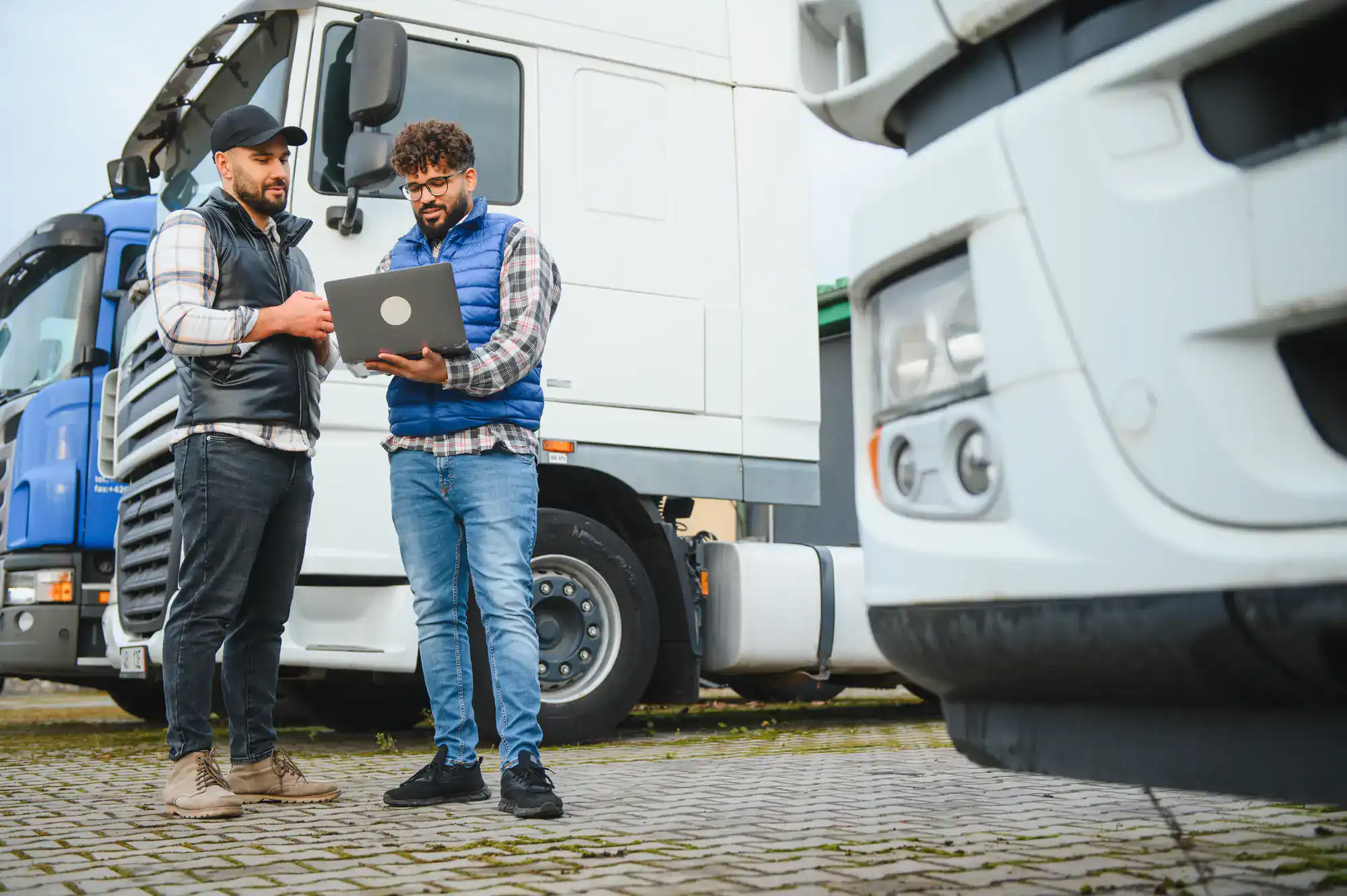
It starts with scheduling. You tell us where your truck is your yard in Commerce, your dock in Wilmington, your lot in Sun Valley and we come to you. There’s no dropping a semi at a fixed facility, no repositioning across the city during peak traffic hours on the I-5 or I-710, and no waiting room. The test happens at your location, on your schedule.
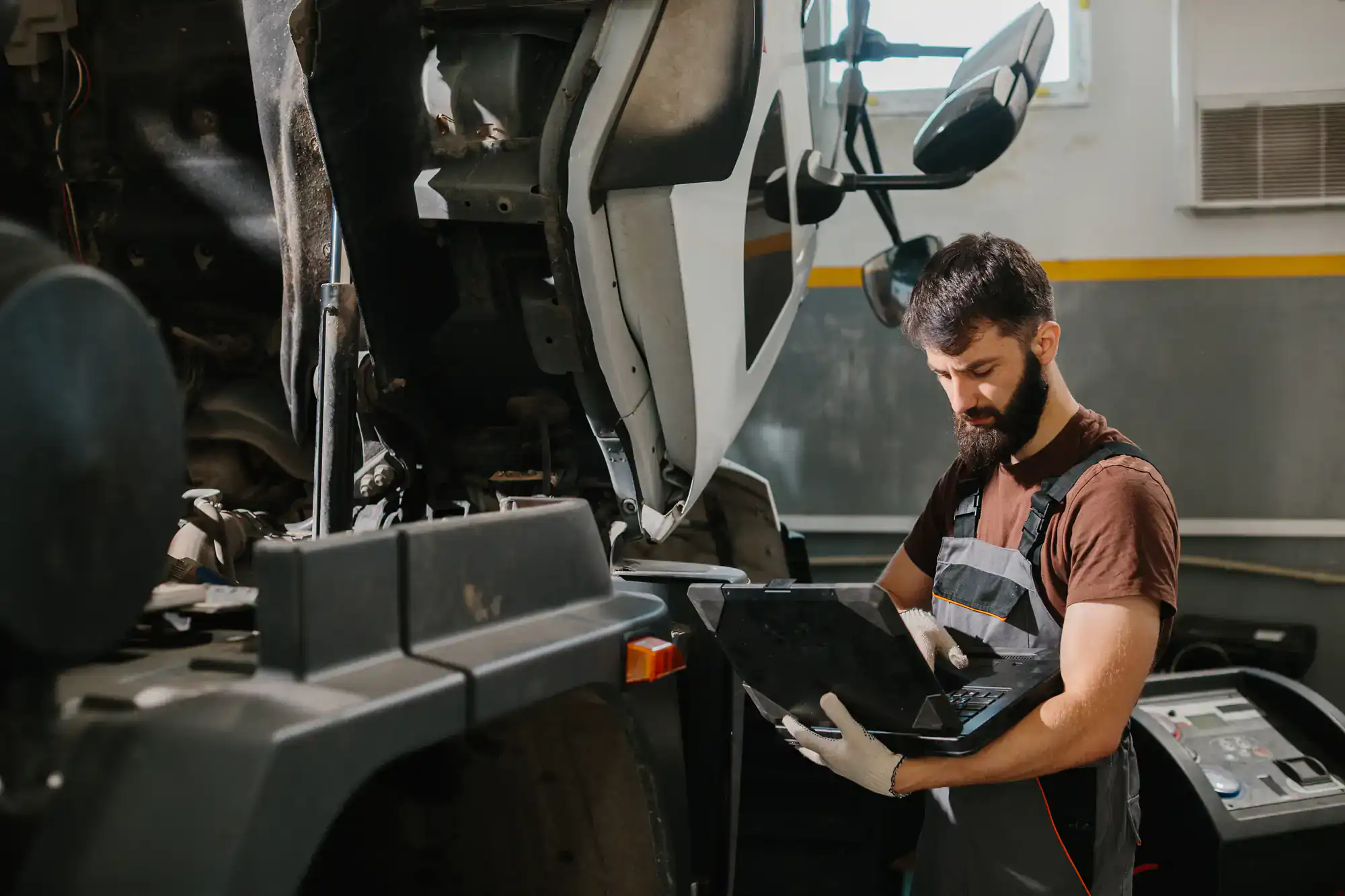
When we arrive, we connect our CARB-certified OBD test device to your truck’s diagnostic port and run the emissions test. The equipment we use holds a valid CARB Executive Order which is what makes the test result legally acceptable to CARB in the first place. This is worth paying attention to, because not every scanner on the market qualifies. Using uncertified equipment produces a result CARB won’t accept, which means the truck owner is still non-compliant even after paying for a test.
Once the test is complete, we submit your results directly to CARB’s CTC-VIS database electronically right there, before we leave. You don’t log into a portal. You don’t upload anything. You don’t follow up to confirm it went through. Your VIN reflects the test result in CARB’s system the same day, and DMV records typically update within three to five business days after compliance is confirmed.

Ready to get started?
The Clean Truck Check OBD test applies to diesel trucks that are model year 2013 or newer with a GVWR over 14,000 pounds. If your truck meets both of those criteria and it operates in California including throughout Los Angeles County it falls under this requirement. The test must be performed by a CARB-credentialed tester using certified equipment, and the results must be submitted to CTC-VIS. All three of those pieces are included when you book with us.
Right now, OBD-equipped vehicles are required to test twice per year semi-annually. Starting October 1, 2027, that frequency increases to quarterly, meaning four tests per year. For fleet operators running multiple trucks through the industrial corridors of Vernon, Commerce, or the San Fernando Valley, that shift is worth planning for now. Establishing a testing relationship before the frequency doubles makes the logistics considerably easier.
One thing worth clarifying: the annual CARB compliance fee and the emissions test are two separate requirements. Paying the $31.18 annual fee does not satisfy the testing obligation. Both are required. If you’ve paid the fee but haven’t submitted a passing OBD test through a credentialed tester, your truck is not fully compliant and the DMV hold risk is still there. We handle the test and the CTC-VIS submission. The rest is on your schedule.
If your truck is a diesel model year 2013 or newer and has a Gross Vehicle Weight Rating over 14,000 pounds, yes CARB’s Clean Truck Check program applies to it, regardless of where in Los Angeles it operates. That includes drayage trucks running port terminals in San Pedro and Wilmington, delivery fleets out of Vernon and Commerce, construction vehicles working job sites across the San Fernando Valley, and everything in between.
The requirement became effective October 1, 2024, and all compliance deadlines on or after January 1, 2025 require a passing emissions test on file with CARB not just payment of the annual compliance fee. If you’re not sure whether your specific truck qualifies, the two things to check are the model year and the GVWR listed on the door placard or registration. Both have to meet the threshold for the requirement to apply.
A failed test means the truck did not pass the OBD emissions check typically because of active fault codes, readiness monitor issues, or a detected emissions system problem. The truck will need to be repaired and retested before it can be shown as compliant in CARB’s CTC-VIS database. Until a passing test is on file, the non-compliance status remains, and the DMV registration hold risk stays active.
The important thing is not to delay after a failed result. CARB transmits compliance data to the DMV nightly, so the window between a failed test and a registration hold showing up can be short. If your truck is running loads through the I-710 corridor or in and out of port terminals in Los Angeles, a registration hold isn’t just an inconvenience it’s an operational problem. Get the repair addressed and schedule the retest as quickly as possible. We can return to your location for the follow-up test once the truck is ready.
No, and this is one of the most common misunderstandings in the Clean Truck Check program. The annual compliance fee currently $31.18 per vehicle and the OBD emissions test are two completely separate requirements. Paying the fee keeps your vehicle enrolled in the program, but it does not substitute for a passing test submitted by a CARB-credentialed tester using certified equipment.
Both are required. If you’ve paid the fee but haven’t had a credentialed tester run and submit an OBD test to CTC-VIS, your truck is not fully compliant in CARB’s system. That means the DMV registration hold risk is still present. Many truck owners in Los Angeles particularly smaller operators and owner-operators who are managing compliance on their own have paid the fee and assumed they were done. They’re not. The test is the piece that actually clears your VIN in CARB’s database and removes the registration hold risk.
CARB allows you to submit a Clean Truck Check test up to 90 days before your compliance deadline. That window exists precisely so you don’t have to wait until the deadline is on top of you to get tested. For fleet managers in Los Angeles running multiple trucks with different compliance dates especially those coordinating with port appointment schedules out of San Pedro or managing dispatch across the Valley that 90-day window is a real operational tool.
Proactive testing means you’re not scrambling when a deadline lands during a busy freight season or when a truck’s schedule makes it hard to pull for testing on short notice. It also means that if a truck does fail and needs a repair before retesting, you have time to address it without the compliance clock expiring. Scheduling ahead is always the lower-stress path, and our mobile service makes it easier we come to your yard, not the other way around.
A Notice to Submit to Testing, or NST, is a formal notice from CARB indicating that your vehicle has been identified as a potential high emitter and is required to submit a passing Clean Truck Check test. When you receive one, you have 30 calendar days to submit a passing test not 30 days to find a tester, schedule, and then test. The 30-day window covers the entire process, start to finish.
In a city like Los Angeles, where traffic, port schedules, and fleet logistics can eat days without warning, that window closes faster than it looks. If you’ve received an NST, the right move is to contact a CARB-credentialed tester immediately and get on the schedule. We’re mobile, meaning we can come to your location in Los Angeles County without requiring you to reposition the truck. We run the OBD test and submit results to CTC-VIS the same day, which is exactly what you need when the clock is running.
Yes. If a drayage truck operating at Port of Los Angeles terminals in San Pedro or Wilmington is a 2013 or newer diesel with a GVWR over 14,000 pounds, it is subject to CARB’s Clean Truck Check requirement just like any other qualifying heavy-duty truck in California. The port’s own Clean Truck Program which has been in place since 2008 and governs Port Drayage Truck Registry enrollment is a separate compliance layer that runs alongside the CARB statewide requirement, not instead of it.
Drayage operators working POLA terminals are already navigating the PDTR, the CARB Drayage Truck Regulation, and the port’s own clean vehicle requirements. The Clean Truck Check OBD test is an additional obligation on top of those. We handle the OBD testing and CTC-VIS submission piece specifically the part that requires a CARB-credentialed tester and certified equipment. If you’re running drayage in and out of the port and need the CARB emissions test handled without pulling your truck from the rotation, mobile testing at your Wilmington or San Pedro yard is the practical solution.
Useful Links
Other Services we provide in Los Angeles