
Check Out Our Reviews!

If your truck operates anywhere near the I-405 or I-105 corridors the two freeways that literally frame Lennox on two sides you already know how much rides on keeping your equipment legal and moving. A DMV registration hold doesn’t just create paperwork. It pulls a revenue-generating truck off routes that run through some of the busiest freight lanes in Southern California. Clean Truck Check compliance is what keeps that from happening.
For air cargo operators near LAX, the stakes are even more specific. Missed pickups, broken delivery windows, and contract penalties don’t wait for you to sort out a compliance issue. Getting your CARB HD I/M testing done on time and done right means your truck is registered, your record is clean in the CTC-VIS database, and you’re not scrambling when the next compliance cycle hits.
There’s also a common misconception worth clearing up right now: paying the annual CARB compliance fee does not mean your truck has been tested. The fee and the test are two separate requirements. A lot of Lennox-area operators have paid the fee and assumed they were covered then found out at DMV renewal that no passing test was ever submitted on their behalf. That gap is exactly what we close.
We do one thing: Clean Truck Check OBD testing for heavy-duty trucks that are model year 2013 or newer with a GVWR over 14,000 pounds. That’s it. No passenger cars, no light-duty vehicles, no opacity testing on older rigs. Just the specific test that CARB requires for the trucks running the freight corridors, cargo ramps, and surface roads in and around Lennox every single day.
Our CARB-credentialed status isn’t a marketing claim it’s a publicly verifiable fact. You can look us up on CARB’s official credentialed tester list at arb.ca.gov before you book anything. The OBD equipment we use is CARB Executive Order certified, which means the test result is one CARB will actually accept. And when the test is done, results go directly into the CTC-VIS database no portal navigation required on your end, no manual steps, no risk of a submission falling through the cracks.
For operators working out of the LAX cargo complex or running routes along Century Boulevard and the South Bay freeways near Lennox, that combination verified credentials, certified equipment, direct submission is what makes the difference between compliance and a fine.

It starts with a phone call or a booking. You tell us where your truck is whether that’s a yard off Lennox Boulevard, a staging area near the I-405, a lot on Century Boulevard, or anywhere else in the Los Angeles County service area. A time gets scheduled that works around your operation, not the other way around.
When our tester arrives, we connect CARB-certified OBD diagnostic equipment directly to your truck’s onboard system. For 2013-and-newer heavy-duty vehicles over 14,000 pounds GVWR, this is the test CARB requires it reads the truck’s emissions-related data electronically and produces a result that’s either passing or failing. The whole process at the truck typically takes under an hour, and your truck doesn’t move from where it’s already parked.
Once the test is complete and your truck passes, we submit the results directly to CARB’s CTC-VIS database on your behalf. You don’t log into any portal. You don’t file anything manually. After submission, CARB transmits the compliant VIN data to DMV typically overnight though DMV records usually take three to five business days to fully update. If you’re working against a 30-day NST deadline or need your registration cleared, booking as early as possible in that window gives you the most room to work with.

Ready to get started?
Clean Truck Check applies specifically to diesel-powered heavy-duty vehicles that are model year 2013 or newer and have a Gross Vehicle Weight Rating over 14,000 pounds. If your truck is older than 2013 or falls under that GVWR threshold, this is not the test for you and we won’t pretend otherwise. The service is built around a specific vehicle profile, and that focus is intentional.
For the fleets and owner-operators working the LAX air cargo ecosystem out of Lennox running 53-foot trailers, flatbeds, and heavy cargo vans on the I-405 and I-105 daily most of that equipment falls squarely within the program’s scope. Under the current CARB schedule, most OBD-equipped heavy-duty vehicles test twice per year. Starting October 1, 2027, that increases to four times per year. If you’re managing multiple trucks, that shift matters now, not later.
The annual CARB compliance fee is $31.18 per vehicle and is indexed to CPI. Again that fee is separate from the test. Both are required. Non-compliance carries penalties of up to $10,000 per vehicle per day, and CARB enforcement in the greater Los Angeles County area, including the communities surrounding LAX, is active. Because Lennox is an unincorporated community with no city-level business license process to prompt compliance awareness, the first signal many operators receive is a DMV registration hold or an NST notice. Don’t wait for either one.
Yes and it applies regardless of what those trucks are hauling or who they’re contracted to. If the vehicle is a diesel-powered heavy-duty truck that’s model year 2013 or newer with a GVWR over 14,000 pounds, it falls under CARB’s Clean Truck Check program. The type of freight, the carrier relationship, and the specific routes the truck runs don’t change that obligation.
For operators working the LAX air cargo corridor out of Lennox whether that’s pickup and delivery runs to the cargo complex, drayage work along Century Boulevard, or long-haul routes that start and end near the I-405 the compliance clock runs the same as it does for any other heavy-duty operator in California. CARB does not carve out exceptions based on industry type. If your truck meets the model year and GVWR criteria, it needs a passing OBD test submitted to CTC-VIS on a semi-annual basis now, and quarterly starting October 1, 2027.
A DMV registration hold means your truck can’t be legally registered until CARB’s compliance record shows a passing test on file for that VIN. Paying the annual compliance fee won’t clear the hold only a passing Clean Truck Check test submitted to the CTC-VIS database will do that. Once we submit a passing result on your behalf, CARB transmits the compliant VIN data to DMV overnight. DMV records typically update within three to five business days after that.
For Lennox operators running trucks on active cargo routes, that three-to-five-day window matters. It’s not instant. If your truck is grounded and you’re working against a pickup deadline or a freight contract, the fastest path forward is to get the test scheduled immediately, get a passing result submitted to CTC-VIS, and then follow up with DMV directly if you need confirmation that the hold has cleared. We handle the submission side the rest of the timeline is on CARB and DMV’s end, and there’s no shortcut around it.
Thirty calendar days from the date on the notice that’s it. A Notice to Submit to Testing, or NST, is CARB’s formal notification that your vehicle is overdue for a Clean Truck Check and that you need to submit a passing test result within that window. It is not a warning that resets or extends. If you miss the 30-day deadline, you’re looking at potential enforcement action and penalties that can reach $10,000 per vehicle per day.
The good news is that 30 days is workable if you move quickly. Our mobile model means there’s no scheduling around a fixed shop location we come to wherever your truck is in the Los Angeles County service area, including Lennox and the surrounding South Bay. Once you receive an NST, the smartest move is to call the same day and get on the schedule. Don’t burn the first week assuming you have time to spare, because the submission still has to clear CARB’s system and reflect in your CTC-VIS record before the deadline counts as met.
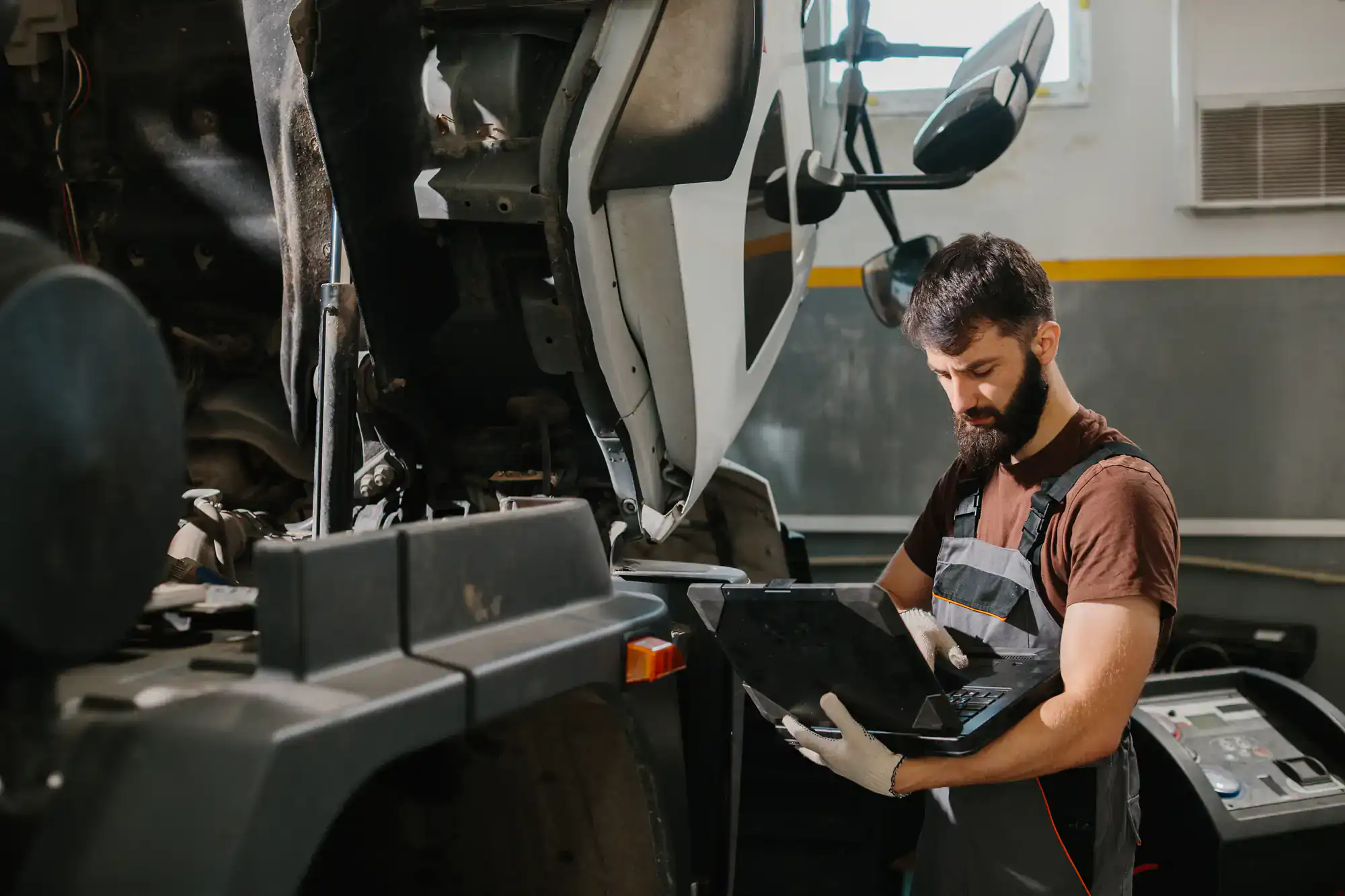
Yes that’s exactly how we operate. The entire test is performed on-site using mobile, CARB-certified OBD equipment. Our tester comes to your truck, connects the diagnostic device to the vehicle’s OBD port, runs the data download, and produces a result. Your truck stays parked wherever it already is a yard, a lot, a staging area, a cargo ramp near LAX, or anywhere else in the Los Angeles County service area.
This matters especially for operators in Lennox and the surrounding South Bay who are running tight cargo schedules. Pulling a truck off a LAX air freight run to drive it to a fixed testing location isn’t just inconvenient it can mean a missed load or a broken delivery window. Mobile testing eliminates that entirely. The only thing you need to do is make sure the truck is accessible when our tester arrives and that the engine has been running long enough for the OBD system to have current data. We’ll walk you through any prep specifics when you book.
Right now, most OBD-equipped heavy-duty vehicles subject to Clean Truck Check are on a semi-annual testing schedule meaning two tests per year. That’s the current requirement under CARB’s program, which moved into full periodic testing enforcement on October 1, 2024, with the first compliance deadline hitting January 1, 2025.
Starting October 1, 2027, the frequency increases to quarterly four tests per year per vehicle. For a single-truck owner-operator in Lennox, that’s a manageable shift. For a fleet manager running ten, twenty, or fifty trucks on LAX cargo routes, that’s a significant increase in compliance events that needs to be planned for now. Establishing a testing relationship with us before 2027 means you’re not competing for appointment slots when every fleet in the South Bay is trying to book at the same time. It also gives you time to understand how your trucks perform on OBD testing and address any recurring issues before the quarterly schedule kicks in.
They are two completely separate requirements, and confusing them is one of the most common and costly mistakes heavy-duty truck owners make in California. The annual CARB compliance fee is $31.18 per vehicle, indexed to CPI, and it’s paid to CARB as part of the program’s administrative structure. Paying that fee does not test your truck. It does not produce a result in the CTC-VIS database. It does not satisfy your compliance obligation for the testing cycle.
The Clean Truck Check test itself requires a CARB-credentialed tester using CARB-certified OBD equipment to connect to your truck, run the diagnostic data download, and electronically submit a passing result to CTC-VIS. Only after that submission is on record is your truck considered compliant for that cycle. This distinction matters enormously in Lennox and across unincorporated Los Angeles County, where there’s no city-level business license renewal or local commercial vehicle process to flag the gap. Many operators find out they’re non-compliant only when DMV refuses their registration renewal at which point the fee has been paid for months and the truck still isn’t compliant because no test was ever submitted. Both requirements have to be met. Every cycle.
Useful Links
Other Services we provide in Lennox