
Check Out Our Reviews!

When a DMV registration hold hits, it doesn’t just create paperwork it pulls a revenue-generating truck off the road. For operators running delivery routes through Glendale’s dense commercial corridors, that’s a real cost. Getting ahead of your Clean Truck Check deadline means your trucks keep moving, your drivers stay on schedule, and your registration renewals don’t turn into emergencies.
Glendale sits inside the South Coast Air Basin, which is the most heavily regulated air quality jurisdiction in the country. CARB enforcement is active here, and CHP has full authority to conduct roadside inspections along the I-5 and SR-134 two of the most trafficked freight corridors in Los Angeles County. Non-compliant trucks aren’t just at risk at DMV renewal time. They’re at risk every day they’re on the road.
The Verdugo Mountains create a natural bowl effect that traps diesel emissions in the valley, which is part of why enforcement in this region is as serious as it is. For Glendale fleet operators whether you’re running distribution trucks out of South Glendale, hauling studio equipment for production vendors near the DreamWorks or Disney campuses, or making commercial deliveries to the Americana at Brand compliance is the floor, not the ceiling. We help you stay above it without pulling your trucks off their routes to do it.
We do one thing: Clean Truck Check OBD testing for heavy-duty diesel trucks that are model year 2013 or newer with a GVWR over 14,000 pounds. That’s it. No passenger cars, no light trucks, no opacity tests on older diesels. Just the specific vehicle segment that CARB’s HD I/M program covers tested with CARB-certified equipment, submitted directly to the CTC-VIS database, and done at your location.
Our credential is real and publicly verifiable. You can look us up on CARB’s official Available for Hire Credentialed Testers list at arb.ca.gov before you ever pick up the phone. For fleet managers in the San Fernando Road industrial corridor who know what’s at stake on the I-5 and SR-134, that verification matters. A test from an uncredentialed tester with non-certified equipment doesn’t count and your truck is still non-compliant, regardless of what paperwork you received.
We serve Los Angeles County, including Glendale and the surrounding commercial zones that feed into the region’s freight and distribution network.

You schedule the test, and we come to you your yard, your lot, your dock, or wherever your trucks are already staged. There’s no trip to a fixed testing location, no navigating the I-5 ramp access off San Fernando Road with a loaded truck, and no pulling a driver off their route for half a day. The testing equipment comes to the vehicle.
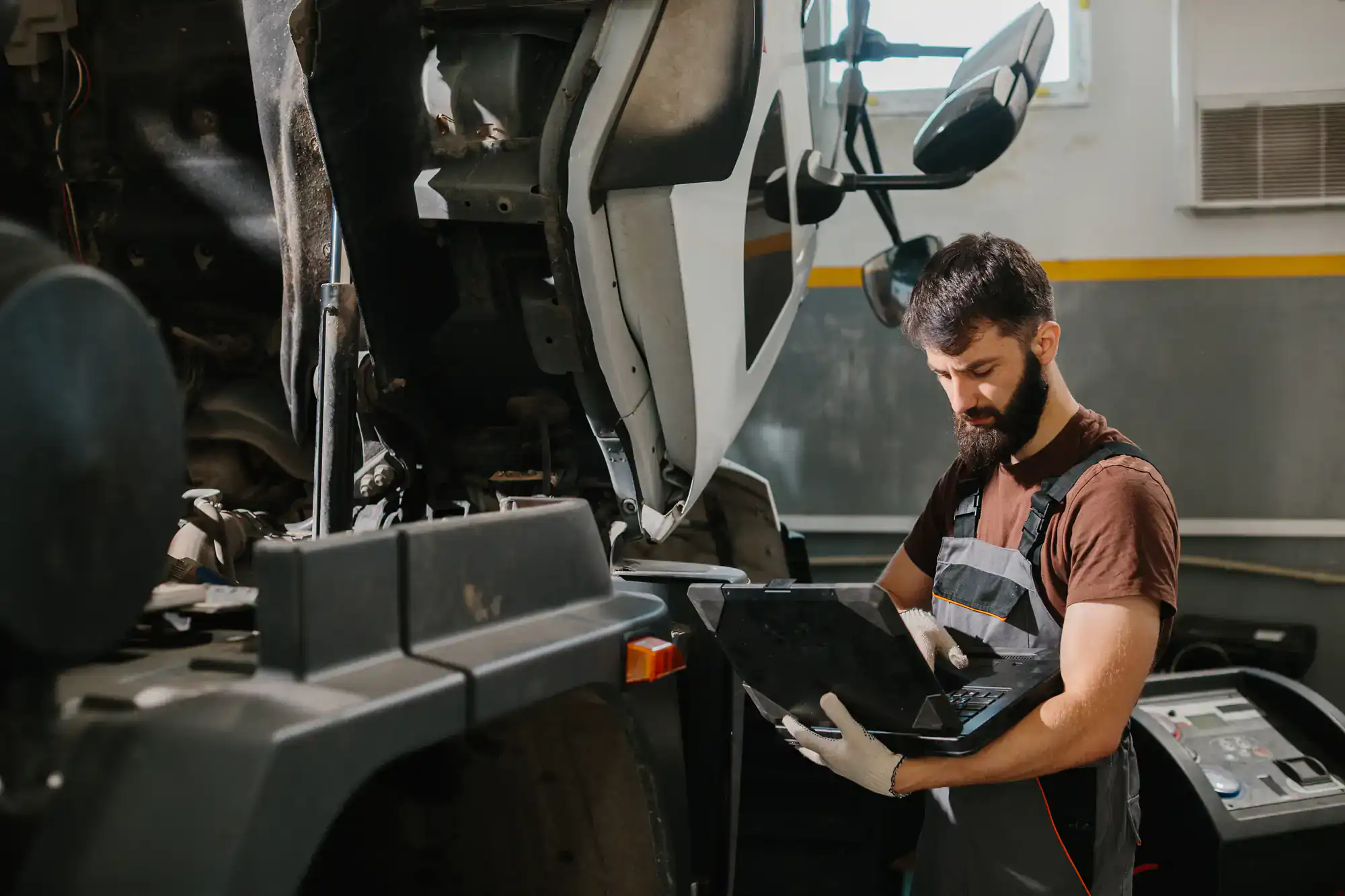
On-site, a CARB-certified OBD test device one that holds a CARB Executive Order, not just a generic professional scanner connects directly to your truck’s ECU. The device reads the onboard diagnostic data and captures the emissions-related information CARB requires. This is the step that trips up operators who use uncertified equipment: if the device doesn’t have an approved Executive Order, the result doesn’t count in CARB’s system.
After the test, we submit results electronically and directly to CARB’s CTC-VIS database. No manual portal entry, no risk of a submission error leaving you exposed. Once CARB processes the passing result, they transmit a compliant VIN list to DMV nightly and your record typically updates within three to five business days. If you have a registration renewal coming up, that timing window matters, and we’ll walk you through it so you know exactly where your truck stands.

Ready to get started?
Clean Truck Check applies specifically to diesel and alternative fuel heavy-duty vehicles with a GVWR over 14,000 pounds and a model year of 2013 or newer. If your truck is older than 2013 or under that weight threshold, this program does not apply to it and we won’t test it, because the OBD testing protocol is built for that specific vehicle segment. Clarity on that boundary matters, because a lot of operators in Glendale are getting mixed signals about what the program actually covers.
For trucks that do qualify, testing is currently required twice per year. Starting October 1, 2027, that frequency increases to four times per year for OBD-equipped vehicles which means if you’re running a fleet of ten qualifying trucks out of South Glendale, you’re looking at forty tests annually by 2027. Establishing a reliable testing relationship now, before that requirement kicks in, is the practical move.
It’s also worth knowing that the $31.18 annual CARB compliance fee is separate from the required emissions test. Paying the fee does not satisfy the testing requirement a distinction that catches a lot of Glendale operators off guard at DMV renewal time. If your truck received a Notice to Submit to Testing from CARB, you have 30 calendar days to submit a passing result. Out-of-state trucks operating regularly on California roads including the I-5 through Glendale are subject to the same requirements as California-registered vehicles. There are no exemptions for out-of-state plates.
If your truck is model year 2013 or newer and has a GVWR over 14,000 pounds, then yes it’s subject to CARB’s Clean Truck Check program, regardless of where in California it’s based or registered. Operating out of Glendale doesn’t create any exemption, and given that the I-5 and SR-134 corridors running through the city are active enforcement zones, the practical exposure for non-compliant trucks here is real.
The program covers diesel and alternative fuel heavy-duty vehicles, and it applies to vehicles operating on California public roads including trucks registered in other states that regularly run routes through Los Angeles County. If you’re not sure whether your specific truck qualifies, the key factors are model year and GVWR. We can help you confirm eligibility before scheduling a test.
A failed test means the OBD system in your truck flagged active fault codes or readiness monitors that didn’t complete typically indicating an emissions-related issue that needs to be diagnosed and repaired before the truck can pass. The test result is submitted to CARB’s CTC-VIS database regardless of pass or fail, so CARB is aware of the outcome.
After repairs are made, your truck needs to be retested. There’s no automatic grace period that extends your compliance deadline just because the truck failed the clock keeps running. For trucks operating in Glendale’s commercial corridors, where enforcement contact on the I-5 and SR-134 is a realistic possibility, getting a failed truck repaired and retested quickly is the priority. We can return to your yard for the retest once the repair work is complete.
CARB allows you to submit a passing emissions test up to 90 days before your compliance deadline. That window exists so fleet operators can plan testing on their own schedule rather than scrambling when a deadline is days away. For Glendale fleet managers juggling multiple trucks with staggered registration renewal dates, that 90-day window is a useful planning tool.
The practical reason not to wait until the last minute is the DMV update timeline. After we submit a passing result to CTC-VIS, CARB transmits the compliant VIN list to DMV nightly but DMV records typically take three to five business days to reflect the update. If your registration renewal is due soon, you need to test with enough lead time for that update to process before you need your plates. Testing 30 to 60 days out is a reasonable buffer for most operators.
A Notice to Submit to Testing means CARB has flagged your vehicle as a potential high emitter and is requiring you to submit a passing emissions test within 30 calendar days of the notice. That deadline is firm. Missing it opens the door to escalating enforcement action, including fines that can reach up to $10,000 per vehicle per day and potential DMV registration holds that ground the truck entirely.
The first step is to schedule your Clean Truck Check test as soon as possible not on day 28. We respond to NST situations with urgency and can come to your Glendale yard or staging area to perform the test on-site. Once the test is complete and the result is submitted to CTC-VIS, you’ll have documentation of compliance. If the truck fails, you’ll need to address the underlying issue and retest before the 30-day window closes, so moving quickly from the moment you receive the notice is critical.
Yes and for fleet operators in South Glendale’s industrial corridor, that’s exactly how our mobile service is designed to work. Rather than sending trucks one at a time to a fixed testing location and dealing with the scheduling and routing headaches that come with repositioning heavy vehicles through Glendale’s surface street congestion, we come to your yard and work through your fleet on-site.
Fleet testing visits can be scheduled to cover multiple trucks in a single appointment, which reduces disruption to your operation and keeps your drivers on their routes. Each truck gets its own individual OBD test with results submitted directly to CTC-VIS there’s no batch processing or shared compliance record. Every VIN is tested and submitted separately. If you’re managing a fleet with trucks on different compliance deadlines, that can also be coordinated during scheduling so each truck is tested within the appropriate window.
Yes. CARB’s Clean Truck Check program applies to all qualifying heavy-duty vehicles operating on California public roads the registration state doesn’t create an exemption. If your truck is model year 2013 or newer, has a GVWR over 14,000 pounds, and regularly operates in California, it needs to be tested and compliant in CARB’s CTC-VIS system regardless of whether it carries California, Nevada, Arizona, or any other state’s plates.
Out-of-state operators running freight routes through Los Angeles County including the I-5 corridor through Glendale are among the most common enforcement targets precisely because many are unaware the requirement applies to them. CHP has authority to conduct roadside inspections, and a non-compliant out-of-state truck is treated the same as a non-compliant California truck under CARB’s program. We can test your out-of-state vehicle and submit the result to CTC-VIS to bring you into compliance before you encounter an inspection on the road.
Useful Links
Other Services we provide in Glendale